The 27th of August brought something we had almost forgotten how to appreciate: rain. After months of unrelenting dry weather, the heavens finally opened, and the landscape received a thorough soaking. I had been caught in it during what turned out to be an unexpectedly enjoyable morning bike ride, and by the time I returned home, I was thoroughly drenched.
Over a cup of coffee, Sue and I found ourselves having the same thought. After such a prolonged drought, what must all those creatures born over the past few months make of this strange, wet stuff suddenly falling from the sky? They had known little else but dry ground and bright sunshine, so perhaps the rain was as bewildering to them as it was welcome to us.
Earlier, Sue had watched, fascinated, through the lounge window as three young pigeons wandered around the driveway, walking in rather confused circles. Their bewilderment was understandable; they had apparently never encountered rain before and seemed unsure what to make of it. Meanwhile, their more experienced elders had sensibly taken shelter in the trees along the river bank, leaving the youngsters to discover the mysteries of British weather for themselves.
On such a thoroughly wet day, Sue was treated to a birthday lunch at the Wheel and Compass, having been invited out by Doreen. Charlotte had also been invited, as her birthday was fast approaching, making it something of a joint birthday celebration. Not to be outdone, Sean, Jim Crawford and I decided that we should not miss out on lunch either, so we headed to the Coach and Horses in Lubenham, where we enjoyed a two-course Senior Citizens’ lunch for the very reasonable price of £15. All three of us opted for liver and onions, followed by bread-and-butter pudding. Yummy!
Later that evening, when the gang gathered in the Garden Room for our weekly pool games, the weather decided to put on a spectacular show of its own. A heavy downpour arrived as a thunderstorm rattled across Harborough, accompanied by almost continuous flashes of lightning that illuminated the sky for several hours. After the long, dry spell we had endured, the rain was certainly welcome, although perhaps not quite so welcome when accompanied by thunder and lightning!
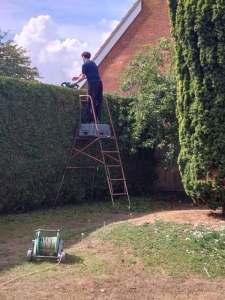 The following morning, with further thunderstorms forecast, Charlotte brought Lucas over to earn some money by cutting the hedges at Willow Bank. In a few days he would be flying to Norway with two friends for an adventure, and being a Scandinavian country, it would presumably require him to have plenty of spending money. Every little helps!
Fortunately, the storms held off until late afternoon, giving Lucas and me enough time to make good progress and give most of the hedges a much-needed trim. Only part of the hedge along the driveway remained untouched. By then, however, the heavens opened, and we were forced to scurry for the safety of the garage as lashing rain swept across the garden and yet more cracks of thunder ripped across the town.
 It did cross my mind that, if Lucas, symptomatic of his generation, had spent rather less time consulting his mobile phone throughout the day, we might have finished the job before the heavens decided to intervene. Still, I suppose there are some things that even Google cannot predict!
Meanwhile, over the previous couple of days, Jamie had rented an apartment in Canary Wharf, London, where he was live streaming and demonstrating his BD software to clients. While there, he met up with several of them, and, once business was concluded, they apparently decided that they might as well ‘hit’ the town. It seems that even a business trip to London can turn into a social occasion when the opportunity presents itself!
On 25 August, one of the musical greats of our generation, the singer-songwriter, actress, businesswoman and philanthropist Dolly Parton, passed away at the age of 80. She had my respect not only for her music and undoubted kindness, but also for her wit and her steadfast refusal to get drawn into the nonsense of politics. Her sense of humour was perfectly illustrated by two of her memorable quotations: “I’m not offended by all the dumb blonde jokes because I know I’m not dumb… and I also know that I’m not blonde.” And, on the subject of political allegiance: “My daddy was a Republican, my mama was a Democrat, and I’m a hypocrite!”
Both remarks seem to capture something of the Dolly Parton persona: warm, self-deprecating, sharp-witted and, above all, determined to do things her own way.
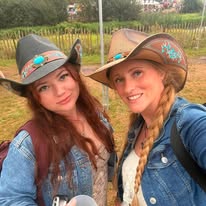
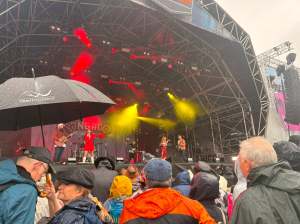
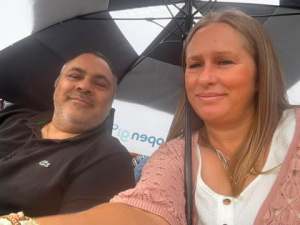
Keeping with the musical theme, over the final weekend of August, Sarah and her friend Jess headed off to Stanford Hall for the Long Road Festival, a celebration of country, Americana and roots music. They camped among the festival-goers and, despite what sounds like a thoroughly soggy night, sang and danced their way through the evening. Clearly, a little rain was not going to dampen their enthusiasm.
Not to be outdone, Charlotte and Suraj attended the local Manor Fest Music Festival in Manor Park, Rothwell, where they likewise enjoyed an evening of live music, presumably managing to stay at least marginally drier than Sarah and Jess.
Sue and I, meanwhile, opted for a rather quieter weekend, content to carry on with the usual routine of life at Willow Bank. There were, however, moments of excitement, although perhaps not quite of the festival variety. Indeed, excitement reached giddy heights on Sunday afternoon when we spent several hours peeling and freezing pears.
 A whole treeful had ripened, providing us with considerably more fruit than we could possibly eat fresh, so into the freezer they went, safely stored away in readiness for the winter. Come the colder months, they should make excellent crumbles, which, in our household, is probably every bit as eagerly anticipated as a weekend of live music.
On the August Bank Holiday, 31 August, the Rothwells headed to Milton Keynes for the apparently essential task of clothes shopping for Lucas and Ellis.
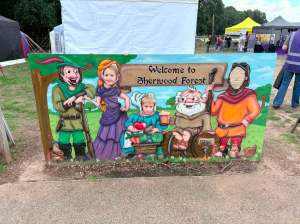
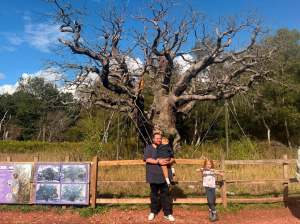
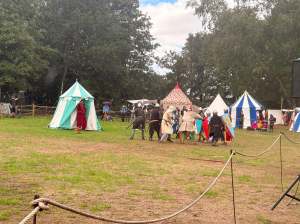
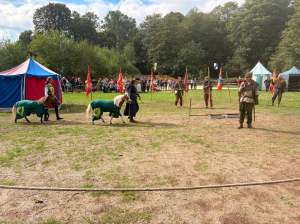
Meanwhile, the Newbold Verdons enjoyed a considerably more adventurous day in Sherwood Forest at the Grand Finale weekend of the Robin Hood Festival, which was celebrating its 40th anniversary. There were demonstrations of all things suitably medieval, including archery, sword fighting, and quarterstaff fighting, all performed, thankfully, by people who presumably knew what they were doing. They also took the opportunity to visit the legendary Major Oak, the ancient tree famously associated with Robin Hood and his merry men. It was probably just as well it was 2026, and they didn’t encounter any actual outlaws.
Sue and I opted for the quieter pleasures of Harborough. I spent time at the allotment mulching three vegetable beds—not quite as exciting as sword fighting, perhaps, but considerably less likely to end in a trip to A&E. Sue popped over to check on her friend Sue’s bungalow to make sure everything was in order.
After a fleeting afternoon visit from Jamie, our only real excitement arrived that evening when we booked a trip to Hadrian’s Wall for later in October.
The 2nd of September brought a miserable weather forecast for our trip to see Sue’s sister, Philippa. We woke to a dry but overcast sky, which remained with us for most of the journey along the M5 towards Bristol. From there, however, the turn-off towards our intermediate destination of Lynmouth was a different story, with poor visibility caused by rain, mist and the road spray thrown up by other vehicles.
We stopped shortly after 1 pm at a park in Tiverton to eat our packed lunch under cover in an entirely appropriate pavilion before hitting the road again for the final leg of our journey. Our accommodation for the next two days was the Rising Sun Hotel, before we would eventually move on to Buckfastleigh.
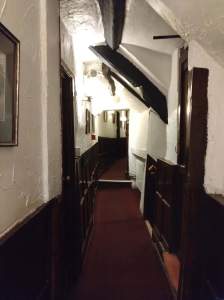
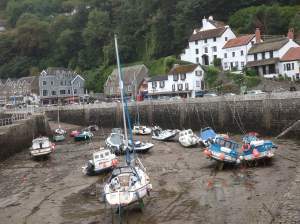 The Rising Sun is described as being ‘set beside Lynmouth’s small harbour’, a 14th-century thatched inn ‘with a charm that’s impossible to manufacture’. Its age, atmosphere and location certainly do most of the talking. This is one of those places that feels rooted in the village’s story: a building that has looked out over the water for centuries and still welcomes travellers today.
We arrived just after 2 pm, parked on the road next to the harbour and, in a light drizzle, found the hotel and checked in. Returning to the car, we collected our luggage and climbed three sets of narrow stairs to our room, tucked away beneath the eaves of this incredibly quirky and historic building. Pleased with our room, we wondered about the generations of patrons who must have occupied this same space over the centuries. Wonderful!
Mindful of the parking difficulties in such a small seaside town, we made our way to the tourist office, just a few steps away, and bought a parking permit to cover the length of our stay. We then moved the car into the harbour car park.
After coffee back in our room, we set off for a wander around the town. We had visited Lynmouth in the past with some of the family for a day, and it was also a place where Sue had holidayed with her family as a child. We checked out various places to eat that evening and spent some time looking at the exhibition in the Church of St John the Baptist, centred on the Lynmouth flood of 1952.
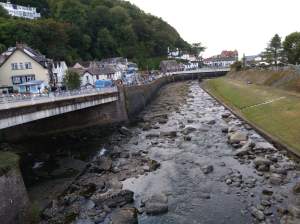
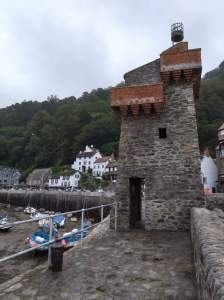 The flood destroyed nearly 100 buildings in the village, swept away many bridges and claimed the lives of 34 people. The church itself was flooded but, remarkably, survived without structural damage. From there, we visited the small museum next to the harbour, which was also dedicated to the 1952 flood. We watched a newsreel showing the aftermath and perused the many photographs and memorials to those who did not survive.
Returning to the hotel, we had refreshments in the bar and chatted with a pleasant couple who were visiting from their holiday home in Minehead. We then changed for dinner and made our way to the nearby Bath Hotel, where we enjoyed an exceptional meal. Finally, we returned to our room and finished the evening watching television.
Unlike our recent trip to Lowestoft, the most significant difference between these two seaside resorts is that the seagulls here do not wake you at the crack of dawn and then continue their demonic, deafening calling throughout the day. Either they are a rare breed of dumb gulls, communicate telepathically, or are simply extremely considerate and polite to their human neighbours. There are not many of them around, but most of the rooftops and chimney pots appear to have their own resident avian, surveying the comings and goings below with intense curiosity.
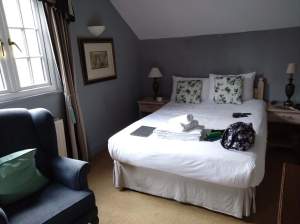
 We took breakfast at 8 am in the hotel restaurant, whose kitchen is under the auspices of Head Chef Ross Kinnes. Born and raised in the small fishing village of St Monans on Scotland’s east coast, his passion for cooking with local, seasonal ingredients has taken him from award-winning country houses in St Andrews to Michelin-starred kitchens in Wales. Holding 2 AA Rosettes in multiple Scottish hotels and having worked as a private chef for a member of the royal household, he also spent 18 months in Japan as Executive Chef, overseeing seven hotels and restaurants. Most recently, he was honoured with membership of the Master Chefs of Great Britain, a society recognising the country’s finest culinary talent.
We couldn’t wait to see what would be served up, and we were not disappointed. I opted for Eggs Benedict and Sue for a mundane Full English. Both were beautifully presented and very tasty. The Eggs Benedict came with the unusual addition of shredded ham hock, which was delicious.
I had plotted a 3.61-mile walk on my GPS, starting from the hotel, for our morning activity and, just before 10 am, we set off through intermittent drizzle. Crossing the East Lyn opposite the hotel, we followed a steep path that hugged the cliff of Countisbury Hill. For part of the way, we had four students for company who were undertaking their Duke of Edinburgh’s Award and found the ascent just as exhausting as we did, with regular stops for a much-needed breather.
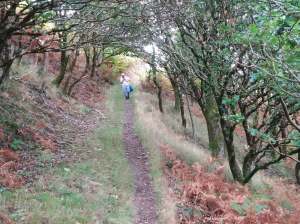
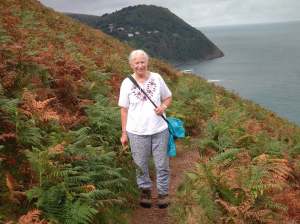
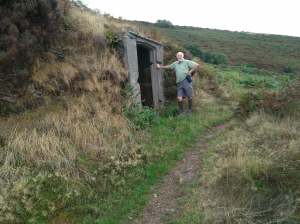
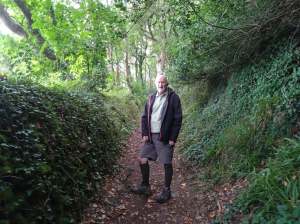 Though we kept an eye open for seals, whales, Great White Sharks and anything else that might emerge from the sea below, we were sadly disappointed. Reaching the apex of our route, we crossed the A39 and began the long, winding descent to Lynmouth by way of the oak forest above the East Lyn. Pestered by flies on the higher section, we were pleased when a breeze sprang up to provide some relief.
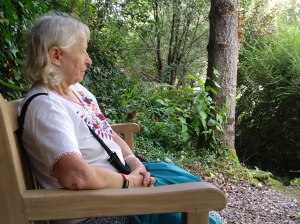
Reaching the river by way of a steep zigzag path down into the gorge, we crossed the watercourse and then followed its course until we reached the site where ten cottages were swept away in the 1952 flood. We spent some time recovering from the descent by inspecting the pretty memorial garden now occupying their former site.
It was while we were sitting and discussing the historical disaster that Sue made friends with a young robin, hoping, no doubt, that we were carrying food. Moving on, we soon made it back to the comfort of our room and the welcome sight of cups of coffee and tea.
We then relocated to the hotel lounge, with its gorgeous view over the harbour, armed with refreshments acquired from the bar while our room was cleaned by the hotel staff. From our comfortable perch in the lounge, we watched several couples on the rocky foreshore searching for treasure among the jumble of boulders. Sue promptly determined that she should do likewise.
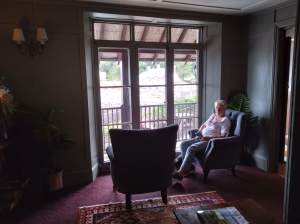 After donning suitable footwear, I joined her in a fruitless search for anything of interest or value, other than a few jet-black pebbles that Sue decided were worthwhile presenting to her sister at a later date. As the mist descended, accompanied by the obligatory drizzle, we returned to the refuge of our room.
We had our evening meal at one of the three fish restaurants in the town, which had been recommended to us by a local. We had the compulsory large cod and chips that you have to eat at some point during a visit to the seaside, though I supplemented my portion with a tub of mushy peas to add a touch of sophistication to the meal.
Sated, we walked a few steps to The Barque, part ship and part cabinet of curiosities. Today (3rd September) was Merchant Navy Day, so they and we were raising a glass to the men and women of the Merchant Navy, past and present.
Inside, the pub is fashioned to resemble the interior of a traditional three-masted sailing ship and, like the Rising Sun Hotel, is deliciously quirky. In our chosen booth, where we went to quench our thirst, there was a hank of tobacco within a frame which dated from 1535, mould and all. It was a great way to finish the evening before retiring to our room and sleep.
We woke to a thoroughly rainy day. The surrounding countryside was shrouded in sodden cloud, while out to sea the horizon had disappeared completely, merging into a thick grey blanket that looked like a serious warning to any shipping unfortunate enough to be caught in it. It was hardly the sort of morning that encouraged lingering outdoors, so we enjoyed breakfast at the hotel instead: a light selection of cereals followed by kippers for me and mushrooms on toast for Sue.
After checking out, we packed the car and then walked the short distance into the shops, where we bought a small packet of Marmite fudge for later consumption. It was an intriguing combination of flavours that, on paper at least, had absolutely no business being mixed. Nevertheless, the sheer oddity of it stimulated my curiosity sufficiently to give it a try. Whether it would prove to be a stroke of culinary genius or a regrettable experiment remained to be seen.
By the time we left Lynmouth and set off for Buckfastleigh, the rain had stopped, and visibility had improved considerably. We had been looking forward to driving across Exmoor, particularly after having travelled through the area a few days earlier on our journey down from Leicestershire. Unfortunately, without first checking the route, I had set the SatNav to ‘Quickest Route’ and confidently set off.
Somewhere well into the journey, it dawned on us that the little piece of technology in the corner of the windscreen had other ideas. It had selected the M5, thereby depriving us of the adventure we had been anticipating through ‘Lorna Doon country’. By the time we realised our mistake, there was little point in turning back.
Two hours later, we finally pulled into Paul and Philippa’s driveway and parked inside their empty garage. We were greeted by Philippa, who provided a much-needed and very welcome cup of refreshing coffee. Paul was away helping out at The End of the Road Festival, Salisbury in Wiltshire, until next Monday, so he was unfortunately absent from the proceedings.
After presenting Philippa with a very late Christmas present, a wooden hedgehog house, we settled down to some good-natured family banter before enjoying lunch. Philippa had prepared homemade soup, followed by scones and cheese, which made for a thoroughly enjoyable and comforting meal.
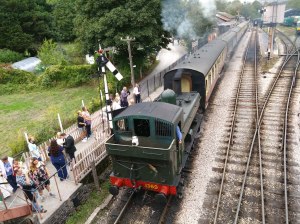 During the afternoon, the three of us walked the short distance to Buckfastleigh Station, the starting point of the South Devon Railway. The station had closed to passengers in November 1958, although goods traffic continued along the line until 10 September 1962. It was subsequently reopened as the Dart Valley Railway, a heritage railway, on 5 April 1969, with the South Devon Railway Trust taking over the running of the line on 1 January 1991.
From the station, engaged in conversation, we crossed the track and made our way towards the River Dart, where we enjoyed a short and pleasant ramble along its bank. At one point, I became involved in an unexpected tug of war with a friendly dog that had found a stick and was determined to chew it to pieces. Unfortunately for me, he was considerably more determined than I was. After a brief contest, I conceded defeat and left him in possession of his wooden treasure. He seemed perfectly satisfied with the outcome.
On our return towards the station, we stopped to observe and photograph the 3.15 pm steam train from the access bridge overlooking the track. We remained there until it departed about half an hour later. As the locomotive gathered speed beneath us on its journey towards Totnes, steam and smoke swirled around the bridge, creating a wonderfully atmospheric scene and providing an excellent opportunity for photographs.
We then deviated briefly to the small museum located on the platform, where several historic photographs were on display. Among them were photographs showing our hosts’ house in the distance, providing an unexpected and rather fascinating connection between the railway’s history and the place where we were staying.
Returning to Paul and Philippa’s, we spent the remainder of the afternoon chatting and watching television until tea. It had been a pleasant day, despite the unpromising start and my SatNav-induced failure to experience Exmoor once again.
After a mostly peaceful night, disturbed only by the call of an owl and the howl of some creature somewhere in the distance, we were up and ready for breakfast by 8.30 am. It was a bright, warm morning and, using our passes, we caught the bus into the market town of Totnes, situated at the head of the estuary of the River Dart. The town dates back to 907, when its first castle was built. By the twelfth century, it had become an important market town, and its former wealth and importance can still be seen in the number of merchants’ houses built during the sixteenth and seventeenth centuries.
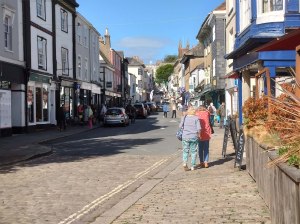
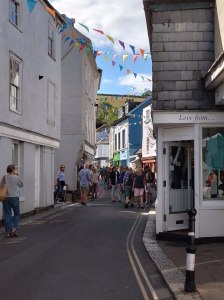 After disembarking, we made our way up the main shopping area along Fore Street, joining the many tourists and locals busily intent on retail therapy of one sort or another. It was market day, and there were bargains to be had. We made the first of our own in one of the charity shops, where we bagged a toast rack and a book containing the list of Queen Elizabeth’s wedding presents from 1947. We later added a pair of slip-on shoes from a roadside stall, followed by several more items to fill up a rapidly burgeoning shopping bag.
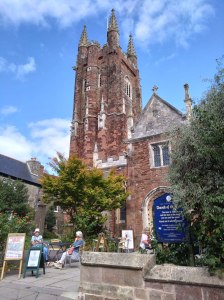 Reaching St Mary’s Church, as Fore Street gave way to High Street, we diverted to investigate. With its imposing red tower and distinctive pinnacles reaching high above the neighbouring buildings, the church was built as part of the Benedictine Priory of St Mary. In the fifteenth century, the townspeople arranged with the priory for its complete rebuilding. Sue and I spent some twenty minutes investigating the interior before joining Pip, who was sitting on a bench in the sunshine, listening to a busker playing cross-legged on the pavement.
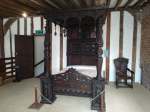
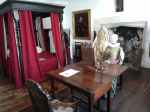 Moving on up to the top of the High Street, we retraced our steps on the opposite side of the street to the small town market. Here, we foraged for more bargains, coming away with some olive bread. Just a few steps away, we entered Totnes Museum, housed in what was once an Elizabethan merchant’s house, built around 1575, possibly for the local merchant Walter Kellond, although recently uncovered research has called this into question.
Fending off several eager volunteer guides, we eventually made our way through the building and perused most of the exhibits and artefacts. I was particularly fascinated by the Babbage Room, which presents the history of Charles Babbage, the Victorian mathematician who invented the Difference Engine and Analytical Engine, working with Ada Lovelace. These were mechanical precursors of the modern computer.
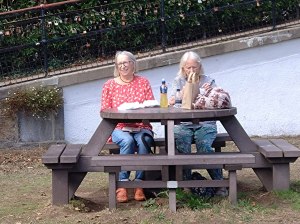 We finished our visit to Totnes with a picnic of Cornish pasty and sausages on the banks of the River Dart, before enjoying ice creams and catching the bus back to Buckfastleigh for coffee and cakes on the patio. After our evening meal, the three of us settled in the lounge and saw the evening out chatting, surfing the net and watching television, suitably oiled with appropriate refreshments.
A bright, sunny third day in Buckfastleigh began leisurely with a late breakfast. By late morning, we were ready to set off on a walk devised by Pip that would take in a few geocaches, a picnic by the River Dart and finish with a grave visit.
Ascending steeply out of the town, we passed the ancient lime kilns before reaching Holy Trinity Church, the 13th-century parish church of Buckfastleigh, which was burnt out by arson in 1992. It now stands derelict, although it is still used for burials. It is believed that the fire was started beneath the altar by Satanists. The church graveyard is also the burial place of the sinister squire Richard Capel, or Cabell, whose monstrous behaviour inspired Sir Arthur Conan Doyle, creator of Sherlock Holmes, to write The Hound of the Baskervilles. Cabell was alleged to have escaped punishment for the murder of his wife in the 1600s after making a pact with the Devil in exchange for his soul.
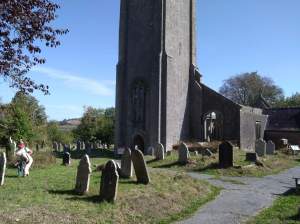
 Pip is a member of a group recording the information on the gravestones, putting the data online, and producing a book of their work once the project is complete, as all the church records were destroyed in the fire.
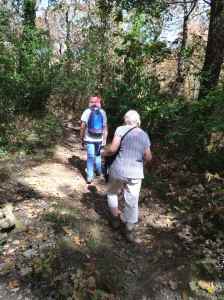
Quickly passing through the graveyard, our path took us along a series of typically narrow Devonshire country lanes, passing several geocaches that Pip had hidden herself in the past. Reaching Hembury Woods, we stopped for a picnic beside the river, enjoying the quiet serenity, accompanied by the sound of rushing water and the antics of a grebe searching for food in the depths. When our peace was disturbed by a family of four who also thought the spot was perfect for food and play, we decided it was time to move on.
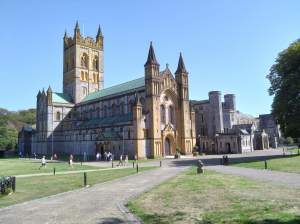
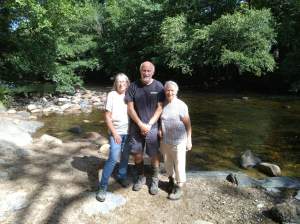 Our next port of call was Buckfast Abbey, where, after a bit of a fuss, we found a table overlooking the church and settled down with drinks we had bought from the café. The bustling Abbey grounds soon emptied when the call to the service bell began to ring out at 2.55 pm, as worshippers made their way inside, leaving us less faithful visitors to enjoy our refreshments and shopping in relative peace.
As we left to visit the Abbey cemetery, I bought Sue a little gift of a peridot pendant as a late birthday present. Sue was keen to visit the grave of Anne Widdecombe, who, as a member of the congregation, had recently been interred at the Abbey. Former MP and MEP Ann Widdecombe was recently killed in a ‘targeted attack’, according to reports, with counter-terrorism police leading the investigation into her alleged murder.
We found her grave in a section of the cemetery that was quite hidden away from the rest, behind a stand of trees. A rather contentious politician, she had suffered an awful death, and no doubt the Abbey authorities did not want her grave to become a target for any further incidents.
Leaving Buckfast Abbey behind, we finished off our trek with a lengthy walk through the town and back to Pip’s home, set high above the old Plymouth Road, where a much-deserved rest awaited us.
The evening was a tasty meal prepared by Pip, more chat and a bit of TV before we climbed the staircase to another peaceful night’s sleep.
After breakfast we caught the bus to Plymouth. The 50-minute journey through the Devonshire countryside on a bright, sunny morning was a joy. It was interesting to catch glimpses of the towns and villages along the way, with Pip providing a running commentary on what there was to see in each place and throwing in a few personal memories to help pass the time. The journey seemed to go remarkably quickly, and before long we were leaving the countryside behind and arriving in the busy city centre.
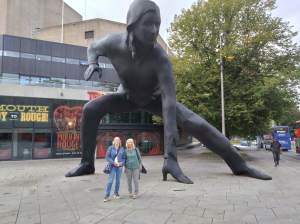 Leaving the bus at the main terminus, we made our way down towards the Barbican, the historic heart of Plymouth and one of the most attractive parts of the city. Situated close to the famous Mayflower Steps, the Barbican was also where Plymouth Boat Trips berthed, and it was here that we would enjoy a one-hour cruise around the harbour and Plymouth Sound.
We had originally planned to catch the 2 pm cruise, but changed tack when, on enquiring at the ticket office, we discovered that another boat was due to depart shortly. With around twenty other hardy mariners, we boarded and settled ourselves on a port-side bench towards the stern, aft of the helmsman’s cabin. This position offered a little shelter from the inevitable sea breeze while still providing an excellent view of the passing scenery. As the boat moved away from the Barbican, a running commentary was provided over the Tannoy, pointing out the various landmarks and explaining the fascinating history of the waters through which we were travelling.
The cruise took us out across Plymouth Sound, passing Plymouth Hoe, the famous Drake’s Island and the spectacular views across to Mount Edgcumbe. We then passed the Royal William Yard before heading towards the River Tamar and one of the largest naval dockyards in Western Europe. Here the character of the waterfront changed dramatically, from the historic and picturesque to the highly restricted world of the Royal Navy, where warships and nuclear submarines awaited their next assignment, refit or, in some cases, their final fate.
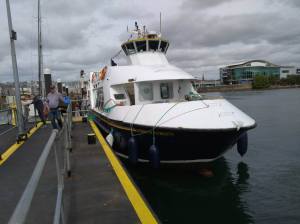 The whole waterfront is steeped in history, and there can surely be no better way to appreciate the scale and importance of Plymouth’s maritime heritage than from the water itself. Its history extends back to the Bronze Age, developing from a trading post at Mount Batten into the thriving market town of Sutton. In 1439, Sutton was formally renamed Plymouth when it was granted borough status.
The settlement went on to play a significant role in English history. In 1588, an English fleet based here helped defeat the Spanish Armada, while in 1620 Plymouth became the departure point for the Pilgrim Fathers as they set sail aboard the Mayflower for the New World. During the English Civil War, the town remained loyal to Parliament and was besieged by Royalist forces between 1642 and 1646. Then, in 1690, a dockyard was established on the Tamar for the Royal Navy, helping Plymouth develop further as a major naval and commercial port during the Industrial Revolution.
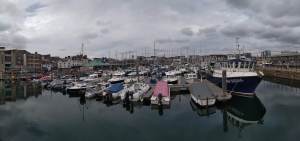 Sue and I had visited Plymouth after we were married, although my only real memory of that earlier visit is of Plymouth Hoe. Here Sir Francis Drake, the intrepid explorer, seafarer and local hero, is immortalised in a statue. He is said to have been playing bowls on the Hoe when news arrived that the Spanish Armada had been sighted. According to the famous story, Drake insisted on finishing his game before setting off to help defeat the Spanish, although whether he actually said that he had time to finish the game because there was sufficient time to beat the Spanish remains part of the legend rather than fact. Either way, it makes for a splendid tale and is very much part of Plymouth’s folklore.
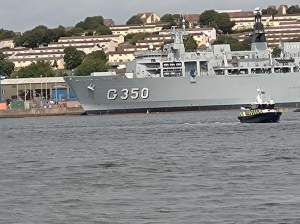
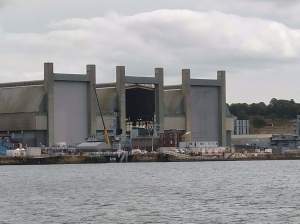 There were far too many sights and stories along the route to recount in detail; such is the vastness of Plymouth’s maritime history, but I was particularly impressed by some of the more modern aspects of the naval waterfront. We passed a couple of frigates in dry dock undergoing refits, their hulls exposed as they received the attention necessary to keep them operational. More striking still were two nuclear submarines awaiting dismantling. One of these was HMS Conqueror, the submarine responsible for sinking the Argentine cruiser ARA General Belgrano during the Falklands War in 1982. Seeing these immense vessels at close quarters provided a sobering reminder that Plymouth’s naval history is not confined to distant centuries but continues into the modern era.
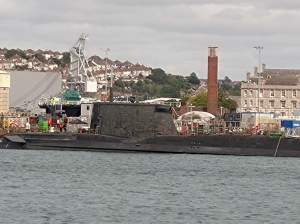 We also saw three other submarines, resting after patrols, their crews presumably enjoying a rather more peaceful existence than the vessels’ appearance might suggest. The contrast between the centuries-old buildings of the Barbican and the huge naval vessels lying further along the waterway was remarkable. Plymouth has clearly managed to carry its history into the present rather than simply preserving it as a museum piece.
Eventually we returned to the Barbican, where we decided that it was time to exchange maritime history for something rather more edible. We had a very pleasant lunch at a restaurant on the harbourside, which gave us a 10% discount on the production of our cruise tickets. Hunger satisfied, and feeling suitably rested, we made our way towards the Mayflower Steps.
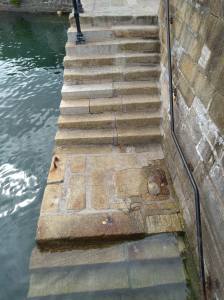 The Mayflower Steps mark the spot from which the Pilgrim Fathers are believed to have finally left England aboard the Mayflower on 6 September 1620, before crossing the Atlantic and eventually settling in North America. The actual steps from which the Pilgrims departed no longer exist, but a granite block bearing the ship’s name marks the approximate site, while a tablet commemorating the historic voyage was erected alongside in 1891. Standing there, it was easy to imagine the significance of that departure and the uncertainty faced by those who were about to undertake such an extraordinary voyage into the unknown.
Having contemplated our ancestors’ appetite for adventure, we decided that the most appropriate response was to enjoy ice creams and spend the afternoon sitting in the sunshine on a bench overlooking the harbour. It was a pleasant way to round off our time in Plymouth, watching the boats come and go while enjoying the warmth of the afternoon sun.
Eventually, however, it was time to catch the bus back to Buckfastleigh, where we met Paul, who had returned from his duties at the End of the Road music festival. After the evening meal, we had another quiet end to the day, chatting and watching television. It had been a full and enjoyable day, with a mixture of countryside, maritime adventure and several centuries of history thrown in for good measure.
During the night the weather decided to remind us that Devon is not guaranteed sunshine, and it rained heavily throughout the hours of darkness. By breakfast time it was still pouring down. Had it been another dry day, we would have visited Widecombe Fair, the annual fair held in the Dartmoor village of Widecombe-in-the-Moor on the second Tuesday of September. The fair is particularly well known as the subject of the traditional folk song Widecombe Fair, featuring the unfortunate Uncle Tom Cobley and his friends on their journey to Widecombe.
Alas, it was not to be. With the weather showing no sign of relenting, we made an early start for home, leaving Buckfastleigh behind and beginning the journey north.
We stopped for an hour in Thornbury to visit Chris Tippets, an old friend from our college days with whom we have kept in touch over all these years. Chris does a great deal of voluntary work in the local community, and we met him in the Over-60s Tea Room in the Town Hall, where, among other things, he helps at a Memory Clinic supporting people experiencing the early signs of dementia.
We spent a very pleasant hour scoffing coffee and cake while catching up on each other’s news and reminiscing about times gone by. Eventually, one of the locals needed Chris’s help with their phone, so we took that as our cue to leave him to his good work and set off once more to complete our journey home.

Alice was selected to carry the flag at the annual scout parade.
 It had been another enjoyable Devon adventure, combining good company, beautiful countryside, maritime history, sunshine, ice cream and, inevitably, a generous helping of rain to ensure that we hadn’t forgotten where we were.
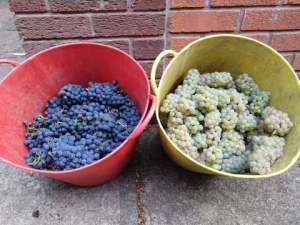
Sue had picked up a chest bug during our stay in Buckfastleigh and spent the following day recovering in bed. Meanwhile, I picked the first batch of grapes in readiness for juicing and helped our next-door neighbour trim his hedge by lending him the platform I use when cutting mine.
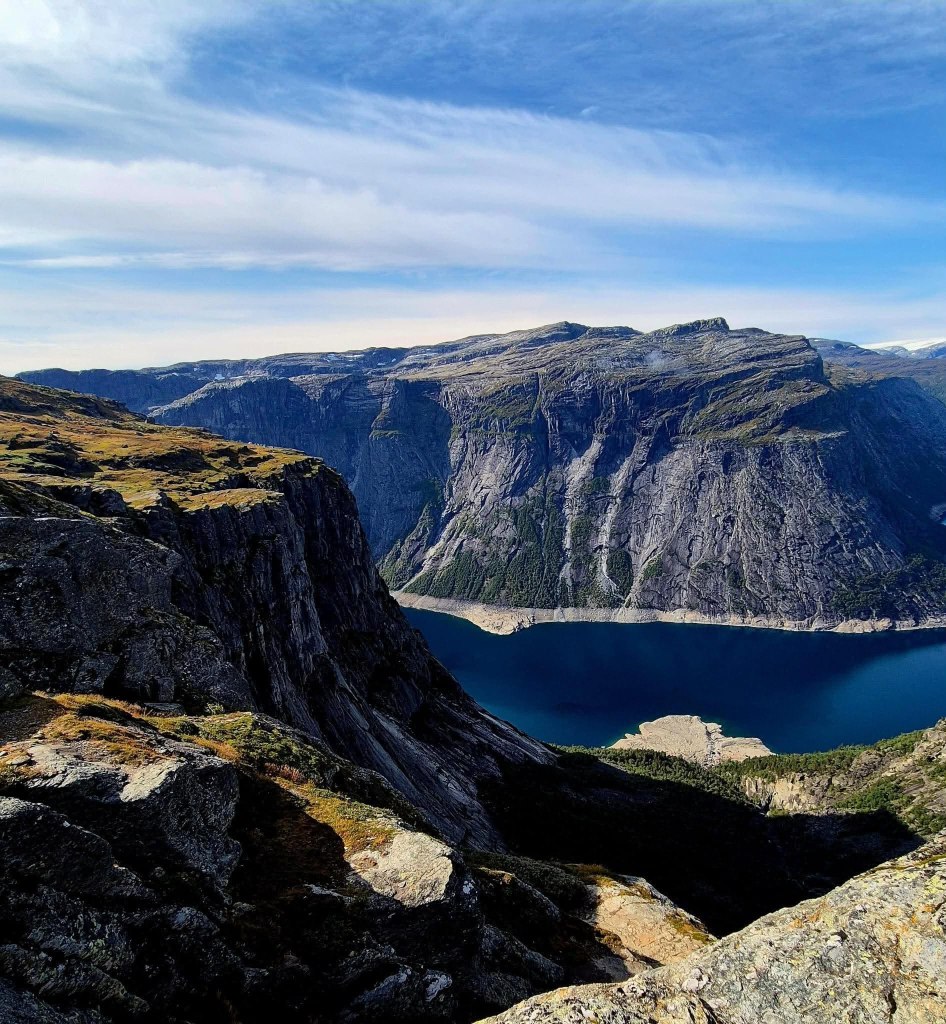
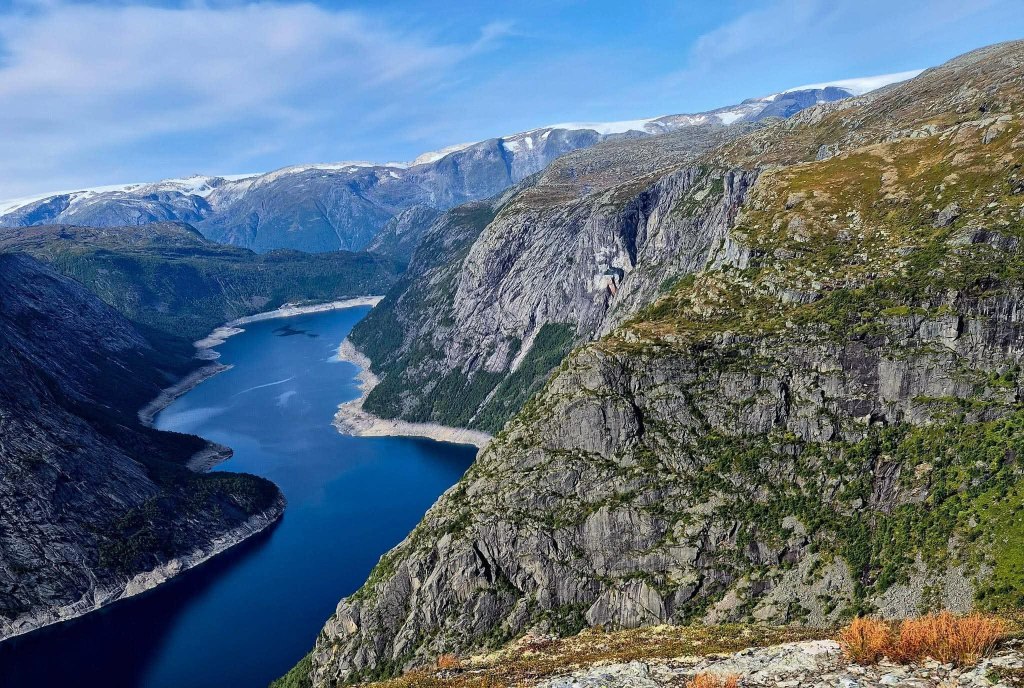
Lucas provided some photos of his jaunt to Norway.


Leave a Reply