With no rain falling in Market Harborough throughout June and July, August began in much the same vein. With none forecast for at least another week, the watering can has been in constant use on the vegetables, fruit trees and flower pots. The water comes from two barrels which, in more typical British weather, collect rainwater from the Garden Room roof. During this prolonged dry spell, however, I have been replenishing them by pumping water from the River Welland.
Thankfully, the allotment has a tap, allowing me to use a hose. Unlike many parts of the country, which are now subject to hosepipe bans, we have, for the time being at least, escaped such restrictions.
Across Europe, Spain and France continue to suffer devastating wildfires, forcing hundreds of thousands of people to flee their homes. The UK has experienced its own outbreaks, but thankfully nothing on the scale of the catastrophe unfolding on the continent. It is a sobering reminder that what once seemed exceptional is becoming an increasingly familiar feature of modern summers.
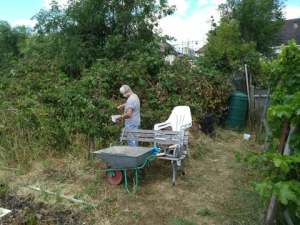 On 1st August, after preparing two beds at the allotment ready for planting leeks, Sue and I picked two large tubs of blackberries from the brambles growing wild along the boundary hedge. That evening we sampled some with ice cream, and they were absolutely delicious, a simple seasonal pleasure that somehow tasted all the sweeter after the effort of picking them.
Later that evening we had an unexpected visitor when Ruth called in with an anniversary gift: two beautiful crystal glasses to accompany the bottle of champagne that she and Jamie had presented to us in Lowestoft. It was a thoughtful surprise and a lovely way to round off the day.
On the increasingly hot morning of the 3rd, Sue attended a U3A class that she had attended before Covid struck, but which unfortunately folded under the weight of the pandemic restrictions. This was a ‘taster’ session to gauge interest in restarting the group and was held in the park next to the allotment that I gave up last year. Around 150 people had expressed an interest, and more than 30 attended this first of two introductory sessions. On her return to Willow Bank, Sue reported that she had thoroughly enjoyed herself and would certainly continue if the class is revived.
Meanwhile, I enjoyed a morning bike ride through the parched fields of south Leicestershire before making the rare expedition into town to visit Savers and replenish my dwindling supply of food supplements. While I was there, I took the opportunity to call in on Jim Hankers for a coffee and a chinwag. He had just returned from walking the dog, and for the next hour we proceeded to put the worlds of rugby, football and Donald Trump to rights. It struck me afterwards just how often those three subjects seem to dominate conversations these days. Whether discussing the fortunes of a rugby club, the latest football controversy or the seemingly endless political theatre across the Atlantic, everyone appears to have an opinion, and, naturally, the solution!
On a day forecast to dump a decent amount of precipitation on the Leicestershire countryside, the morning began promisingly enough. Over breakfast, a thick grey blanket of cloud drifted overhead, releasing little more than a few spits and spots onto the lounge window before rather dishearteningly giving up.
I was meeting John in Stamford for another walk and, with waterproof jacket and umbrella packed into my rucksack, I set off expecting showers and slippery roads. Apart from a short stretch of damp carriageway near Corby, however, the sullen grey sky stubbornly refused to surrender the life-giving rain that we dust-bound Midlanders so desperately yearned for.
Still unable to drive, John caught the 9.50 a.m. bus from Bourne, and I collected him from a bus stop on the outskirts of Stamford. From there we drove just a couple of minutes down the Old Great North Road (Ermine Street), once the principal highway between England and Scotland from medieval times until well into the twentieth century. It later became the famous coaching route used by the mail coaches travelling between London, York and Edinburgh.
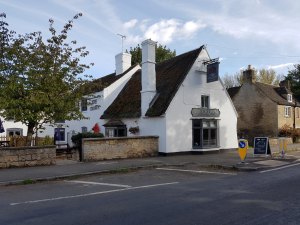 Parking behind The Crown, our chosen venue for lunch, I pulled on my walking boots, powered up my trusty GPS and also switched on a tablet running the same mapping app, keen to compare its performance with my dedicated navigation unit.
We set off through the attractive limestone village of Great Casterton. The Romano-British settlement developed in the protective lee of a Roman auxiliary fort, built on the north bank of the nearby River Gwash during the early Claudian campaigns of the propraetor Aulus Plautius around AD 44. Before the Roman invasion, Great Casterton lay within the territory of the Coritani, much of the surrounding landscape being heavily forested.
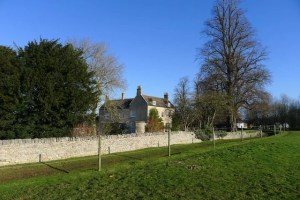 Leaving the village behind, we crossed the busy and noisy A1, the modern Great North Road, by way of a narrow bridge before venturing into the Lincolnshire countryside via the listed Ingthorpe Farm. Here we encountered several friendly dogs and a solitary pony which, now that the clouds had dispersed and the strengthening sunshine had begun to warm the day, seemed far more interested in sheltering beneath a tree than feasting on the carpet of windfall apples scattered beneath it.
Only a few hundred metres farther along the path we exchanged pleasantries with a couple of horse riders who had set out from the farm for a morning hack. As is often the case on our walks, conversation flowed freely while we followed an easy route across harvested fields to Empingham Road. From there we took a winding field track to Steadfolds Lane, a name that immediately struck a chord with me, as I once lived on a Steadfolds Lane in Thurcroft.
We followed the lane until it became Ingthorpe Lane before deciding to shorten the planned route. The original path required us to cross the A1 on foot, and neither of us fancied dashing across four lanes of one of Britain’s busiest roads. Instead, we opted for the safer alternative, returning to Ingthorpe Farm and once again using the bridge to cross above the relentless stream of speeding traffic.
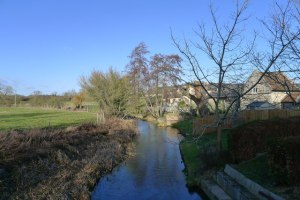 With time still to spare before lunch, we made another small diversion, following the banks of the River Gwash. The detour proved worthwhile as we spotted two trout holding station in the clear water before reaching the ancient bridge leading to the cemetery of the Norman Church of St Peter and St Paul.
Just a few steps beyond stood The Crown, where we enjoyed an exceptional lunch that was more than worth the wait.
 Pleasantly satiated, I dropped John back at the bus stop in time for his journey home before making my own way back to Willow Bank, arriving just as Sue returned from Corby, where she had chosen to watch what she described as a thoroughly disappointing film.
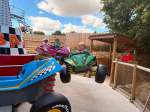
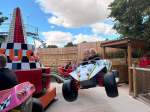
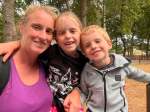
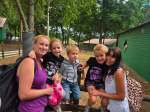
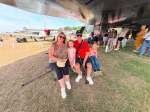
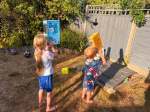
With the summer holidays in full swing, the family have been making the most of the hot, dry weather and getting out and about. Charlotte and Ellis dusted off the canoe and took to the water, while Sarah and her family have been enthusiastically exploring local attractions, including East Midlands Airport, Wheelgate Park and Wicksteed Park.
Thursday is pool night at Willow Bank, when my ex-rugby-playing chums gather for an evening of friendly competition. Now and then we also have Nala as our guest, if Jamie drops her off on his way into town for an evening meal with his mates.
This week Nala was staying overnight because Jamie had been asked to help out the following day at MeatLink, the company he used to work for. Although he left a couple of years ago, he still lends a hand whenever he can. Jamie knows how much I enjoy Nala’s company and, while her visits usually guarantee a somewhat disturbed night’s sleep, for some strange reason I had the best night’s sleep I can remember, not waking until 8.15 a.m.
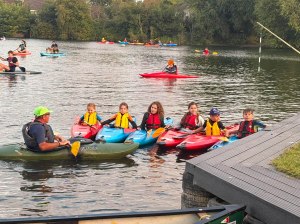
Alice in her kayak lesson
On a much sadder note, while we were playing pool, Jim Crawford told us that his younger sister had passed away suddenly the previous day. It is understandably a traumatic time for the family, and he said that an evening of pool might help take his mind off the tragedy, if only for a little while.
The following morning, Nala accompanied me to the allotment, where I picked blackberries and sweetcorn. As usual, one of the lady allotment holders came over armed with dog treats. Unsurprisingly, she remains the only person Nala doesn’t bark at.
Later that morning, Sue collected Doreen from her apartment and, as a birthday treat, took her for lunch at the Bell in Gumley. Sue reported that both the food and the value for money were excellent. Better still, they hold a midweek pie night. That certainly sounds worthy of further investigation!
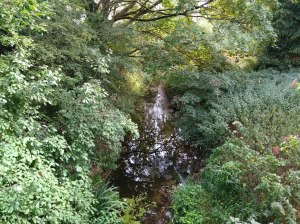
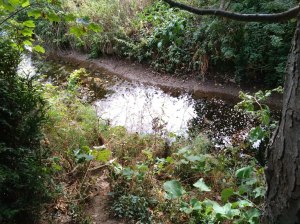 An indication of just how little rain we have had in south Leicestershire this summer can be seen in the River Welland, now reduced to little more than a trickle as it passes Willow Bank. In all the decades we have lived here, I have never seen the river so low, with vegetation along both banks rapidly encroaching onto what would normally be the riverbed itself. One can only wonder where the fish, crayfish and the occasional otter have gone.
On the fifth official heatwave of the year, with 70% of the country declared to be in drought, though, amazingly, Severn Trent were still not implementing a hosepipe ban, Charlotte, Lucas and Ellis arrived at Willow Bank to collect Sue before driving to Newbold Verdon. There, the four of them joined Sarah, Alice and Archie in her people carrier and, together, they journeyed to Tenbury Wells to visit family friend Sheila.
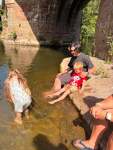
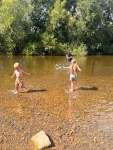
It was an excuse for Charlotte and Sarah to do a spot of shopping in the town, while the children enjoyed some fun in the very shallow River Teme. For lunch, they had a picnic in Sheila’s garden, accompanied by fish and chips from the local chippy. Sue reported back that they had had a wonderful day out and that Sheila was looking well, although she was a little quieter than usual.

Back in Harborough, I amused myself by making a jar of pickled onions and picking sweetcorn, tomatoes and cucumbers. Unlike most summers, as we have not been venturing abroad, I have been able to keep on top of watering the garden and allotment vegetables, and everything, apart from the pickling onions, has produced in abundance.
Unfathomably, the pickling onions have remained stubbornly small, with most not being of a size worth bothering with. Consequently, instead of the five or so litres of pickled onions I usually produce, this year it is just the one jar. Frustratingly, all the other onions have performed superbly and are of enormous size. I can only assume that the extended heat is responsible for such a pathetic showing. It seems that, despite all the watering and attention, the pickling onions have decided that this was the year to go on strike. Still, there is always next year, assuming, of course, that the weather decides to behave itself.
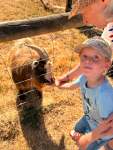
The 12th of August was truly an astronomical day! Not because it was the day I began harvesting my huge crop of red onions, nor because Sue met up with Sarah, Alice and Archie at Mini-Meadows Farm near Welford. And it certainly wasn’t because they had great fun feeding the farm animals or, as the temperature nudged past 30°C, cooling off at the afternoon foam party.


No, the real reason was that we witnessed the most significant solar eclipse visible from the UK since 1999. For much of the country, more than 90% of the Sun was covered by the Moon, while the eclipse was also visible across large parts of Europe, with totality making a rare appearance over Iceland and Spain. The next total solar eclipse visible from the British Isles won’t arrive until 23 September 2090, by which time I suspect I’ll have rather less interest in harvesting onions!
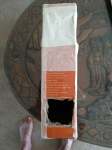

 During the morning, I constructed an eclipse viewer from a cardboard box and some silver foil. Although it worked, the resulting image was somewhat disappointing. A simple colander and a sheet of white card, however, produced a far better image, and in quantity! Every little hole became a tiny projector, creating dozens of miniature crescent Suns. Who knew the kitchen cupboard contained such sophisticated astronomical equipment?
Meanwhile, Sue’s sister Philippa and her husband Paul had a rather more impressive experience. They witnessed totality from aboard a cruise ship in the Mediterranean, off the coast of Spain. I think their view probably had the edge over mine, although I’m fairly sure they didn’t have a colander!
The following day brought another record-breaking day of heat, with the temperature gauge on the patio showing a staggering 42°C. We were both up early: Sue to drive to Newbold Verdon to look after Alice and Archie while Sarah and Lee were at work, and me to take advantage of the relative coolness of the morning for my bike ride.
As I cycled along, I passed plenty of like-minded people making the most of the cooler conditions, either running, cycling or walking their dogs before the heat became unbearable. Unfortunately, my morning ride came to an abrupt and rather expensive end just 200 metres from home when I suffered a double whammy: a puncture followed by the rear derailleur giving up the ghost and snapping completely off. After pushing the bike home, I spent an increasingly hot and unpleasant hour struggling to replace the inner tube, before eventually conquering the problem and pushing the bike to the cycle shop to have a new set of gears fitted. By then, the conditions were beginning to feel more like an oven.
Back at Willow Bank, it was far too hot to contemplate working outside, so I turned my attention to the kitchen sink tap, which had recently come loose from its mounting. Like the inner tube, it proved to be another fiddly job. After feeling around for the right spanner and then contorting myself inside the cupboard to tighten the awkwardly positioned nut, I finally managed to secure it. Another hour well spent!
The rest of the afternoon was devoted to sensible behaviour: sheltering from the furnace outside and listening to music.
Sue, meanwhile, wasn’t quite so fortunate. After taking an energy-sapping walk with the children to visit Lee’s parents on the other side of the village, she returned to play games with the little ones until the paddling pool inevitably took precedence. By 5 pm she was back at Willow Bank, completely worn out. After pizza for tea, she headed straight upstairs for a well-earned lie-down. It had been another day when the heat had definitely won.
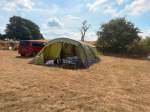

 Just the following day, Sarah and the family, armed with their palace of a tent, headed into Derbyshire for a weekend of camping with friends.
Early that morning, I pulled on my waders, fired up the chainsaw and, accompanied by next-door neighbour Mike, paddled downstream along the River Welland. We had previously spotted a sizeable log jam that didn’t bode well for the winter floods, so we set about demolishing it. After just over an hour of sweaty toil, we had cleared the obstruction and restored the river to a free-flowing state. Another public service completed!
After a quick shower, Sue and I caught the 11.06 am bus into Leicester. Sue had a physiotherapy appointment at the Royal Infirmary the following Monday, so we were doing a practice run to make sure she knew exactly where to go. With the route completed and notes made of the relevant street names, we turned our attention to something considerably more enjoyable: lunch.
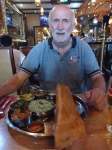 We headed to the Kayal, where, after some much-needed refreshing drinks on yet another scorching day, we both opted for the Businessman’s Set Lunch. It proved to be an excellent and surprisingly filling meal at just £6.95. Great food, great value and, most importantly, somewhere cool to sit!
Returning to Willow Bank, we both felt that doing very little for the rest of the day was probably the wisest course of action. Being outside in such heat is surprisingly exhausting, even when you’re only wielding a chainsaw and paddling down a river. And, after all, we’re retired!
Sunday the 16th brought a welcome change in the weather, with temperatures dropping to much more comfortable levels and, for the first time in several days, encouraging Sue and me to be a little more energetic. After the relentless heat of recent weeks, the cooler air felt positively invigorating.
As usual on a Sunday morning, Sue made her early pilgrimage to Saddington Car Boot, while I decided to tackle a job that had been waiting patiently for my attention. I got the ladders out and climbed onto the roof to retrieve our windvane, part of which had been blown down during one of the winter storms. Although it had clearly seen better days and was lying in several pieces, a closer inspection revealed that it wasn’t beyond saving. Rather than consigning it to the bin, I decided it could be repaired and set about planning its resurrection.
When Sue returned, we decided to make the most of the cooler weather and go blackberry picking. During one of the recent bike rides, I had discovered several bushes absolutely laden with fruit, and they seemed too good an opportunity to miss. We hopped on our bikes and cycled to the old runway on the edge of town, once part of the long-abandoned Second World War airfield. The blackberry bushes were certainly living up to expectations, and for the next hour and a half we battled our way through the prickly undergrowth, emerging with a very respectable haul of large, juicy berries.
Given the almost complete absence of rain for the past two months, it was something of a surprise to find the blackberries in such abundance. Nature, it seems, had managed to produce a bumper crop despite being given very little water to work with.
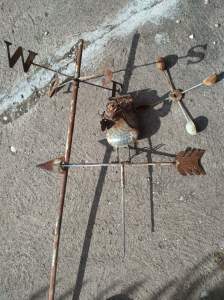
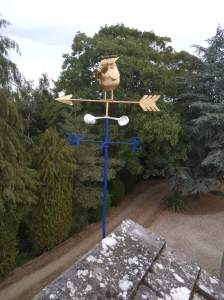 Back at Willow Bank, Sue set about sorting and freezing our fruity bounty, while I turned my attention to the windvane. I ground away the accumulated rust from the metalwork before treating the various pieces with acid to remove the remaining corrosion. After lunch, I washed the acid off, dried everything thoroughly and gave the metalwork a coat of grey primer. Once that had dried, I sprayed the individual components in their appropriate colours. It was beginning to look rather less like the wreckage from a winter storm and rather more like a windvane again.
By the time the paint had dried, I was able to reassemble all the pieces. Then came the final, and probably least enjoyable, part of the operation: getting the ladders out again. I climbed back onto the roof, carefully mounted the newly restored windvane in its rightful position and stepped back to admire the result. After several months lying around in pieces, it was once again proudly pointing into the wind. Whether it will survive the next winter storm remains to be seen!
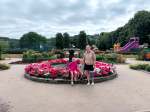
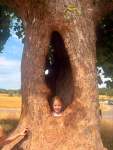
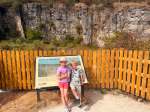
Meanwhile, Sarah and family were certainly making the most of their camping weekend and showing no sign of slowing down. They continued their busy itinerary with visits to Kedleston Hall, Cromford Mill and the National Stone Centre. Quite where they found the energy to fit it all in after camping, travelling and sightseeing is anyone’s guess. Perhaps they have discovered a secret source of energy that the rest of us haven’t been told about.
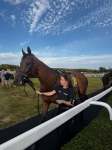 Jamie, meanwhile, decided that if racing was on the agenda, four wheels were by no means essential. He headed off to Market Rasen, where the competitors had four legs rather than four wheels. I suspect his day at the races wasn’t particularly successful from a betting perspective, as there was no triumphant announcement on the family Messenger group. Given that Jamie is usually quick to share good news, the silence was probably all the evidence required!
On the 17th, Sue was already walking into town to catch the bus to Leicester when I finally woke and made it downstairs for breakfast. We have the Life360 app on our mobiles, which allows us to see where the other is at any given time. It is particularly useful when one of us forgets where the other has gone, but, more importantly, it provides an added safety feature should either of us ever get into difficulty.
Sue was heading to the Royal Hospital for a physiotherapy session, having practised the route there a few days earlier so that she knew exactly where she was going. I kept an eye on her progress via the app and was pleased to see that she arrived safely and in plenty of time. The session was held in a group of six patients and lasted an hour and a half. It provided useful information about the condition itself, together with advice and practical guidance on pelvic floor exercises. Sue found the whole session extremely useful and came home feeling that the journey had been well worthwhile.
While she was away, I once again climbed the ladder onto the roof, this time to repair the television aerial. Our well-fed pigeons appear to regard the aerial as their own personal playground and, in the process, had managed to dislodge or lose several of its reflectors and directors. With the aerial repaired, I turned my attention to the flat roof above the staircase. I filled some of the small cracks that had appeared where the roofing felt meets the brick walls with mastic and then repainted the entire roof with silver reflective paint. Hopefully, this will not only seal the cracks but also help reflect some of the sun’s heat during the warmer weather.
Finally, I cleaned out the guttering before dismantling the ladder and putting it safely away. By then, I had done quite enough climbing for one day!
It had been a cool and pleasantly comfortable day, although, disappointingly, the forecast rain once again failed to materialise. As the afternoon wore on and the garden continued to look increasingly thirsty, there was little alternative but to bring out the watering can once more. The long-running battle between me and the weather continued, with the watering can winning yet again.
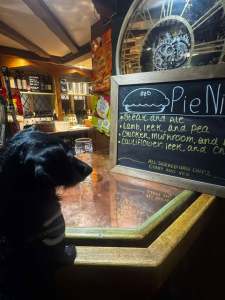
Nala picking which pie to have.
Hallelujah!!! Overnight, we finally had some rain. Not a huge amount, admittedly, but enough to produce a few glorious puddles for me to enthusiastically splash through on my morning bike ride. After weeks of dust, cracked ground and vegetation looking increasingly desperate, even a modest downpour felt like a biblical event.
Even better, for the first time since the mists of time, the watering can remained firmly in its place. I almost felt guilty walking past it without having to fill it up. I suspect it may now be suffering from abandonment issues.
There was more good news, too. Bridgett took Sue to the Bell at Gumley as an early birthday treat and treated her to lunch. Sue, therefore, spent the afternoon being wined and dined, while I, sadly, had to fend for myself at Willow Bank.
My lunch was a rather less glamorous affair: a couple of home-grown sweetcorn and a peanut snack bar, accompanied by the sophisticated entertainment of Bargain Hunt on the television. Still, the sweetcorn had travelled no further than the garden, so technically I was enjoying farm-to-table dining. Admittedly, the farm was about thirty yards away, and the table was in the kitchen, but these are mere details.
On Wednesdays, Sue will often combine a spot of shopping at the Company Shop in Corby with an afternoon film at the Savoy Cinema. On the 19th, however, she had me for company, and we were both keen to see the much-talked-about The Odyssey.
 The film is a big-screen adaptation of Homer’s ancient Greek epic, The Odyssey, which tells the story of Odysseus, King of Ithaca, and his extraordinary ten-year struggle to get home following the Trojan War. Along the way, he encounters an assortment of mythical creatures, monsters and gods, while battling storms, temptation and the occasional bout of divine interference, all in an effort to be reunited with his wife, Penelope.
Fortunately, neither of us needed a crash course in Greek mythology before taking our seats. We had both been introduced to the story during our schooldays, although quite how much of Homer we actually remembered from those lessons is open to debate! We were therefore pleased to discover that, despite its considerable running time of two hours and forty minutes, the film stayed reasonably faithful to the original tale. The principal characters and the main episodes were recognisable, and the long journey home retained the essential spirit of the ancient story.
Inevitably, some of the dialogue sounded rather too modern for ancient Greece, while the action sequences were unmistakably Hollywood, with considerably more crashing, fighting and spectacle than Homer might have envisaged.
Despite these liberties, we both thoroughly enjoyed the film. It was entertaining, spectacular and, most importantly, kept us interested throughout its lengthy running time. For a story written nearly three thousand years ago, Homer’s tale has certainly stood the test of time.
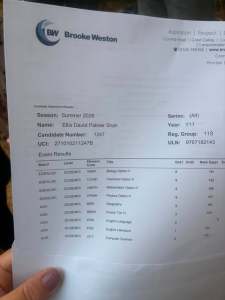
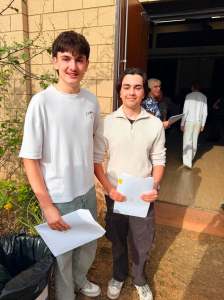 The GCSE results were released on the 20th, and Ellis and Joey were among those who had done exceptionally well. Ellis achieved excellent grades across all nine subjects he took, with most awarded A* and the remainder A. Joey is super happy with his results and has all his options available to him and, like Ellis, has got some important decisions to make. A fantastic achievement and one that deserves a huge well done to them both, and, of course, to Mum and Dad and, by implication, the grandparents too! We can all bask in a little reflected glory.
That afternoon, Sue met with the solicitors acting on behalf of her good friend Sue, who is now living in a care home and suffering from dementia. They met at her bungalow to discuss the possible sale of the property and, importantly, to consult Sue about what type of care would be most appropriate for her in the future.
Sue feels rather uncomfortable about having to make such important decisions on her friend’s behalf, which is entirely understandable. However, as there are no family members available to consult, I feel it is far better that these decisions are made by someone who knows her well, understands her circumstances and, above all, visits her regularly. It may be a difficult responsibility for Sue, but at least her friend has someone looking out for her interests and making sure that her wishes are considered.
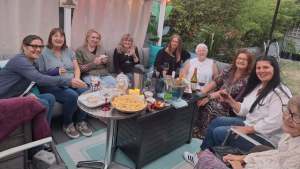 As the temperatures began to fall back to more normal British summertime levels, Sue and I took the opportunity to entertain some of the family with a barbecue. Charlotte already had a girls’ evening arranged, Ellis and Lucas had separate lads’ evenings planned, while Suraj opted to stay at home and enjoy the rare luxury of a quiet evening to himself.
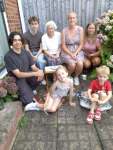
Taking their places were Lee’s parents, Ian and Diane, who arrived first with Sarah, Lee, Alice and Archie. Jamie and Ruth appeared about an hour later. And, of course, I mustn’t forget Mia and Nala, whose services were absolutely vital to the smooth running of the evening, particularly when it came to sweeping up dropped scraps and disposing of any unfinished food. They approached these duties with a level of enthusiasm that would have impressed even the most dedicated member of the catering team.
Surprisingly, this was Ian and Diane’s first visit to Willow Bank, although Ian had technically been here once before. Many years ago, when Lee was courting Sarah, Ian had dropped him off at the end of the drive. So, strictly speaking, he had previously visited the property.
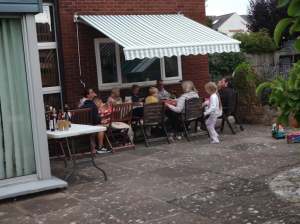 While I attended to the incineration of the meat element of the meal, occasionally having to fend off the enthusiastic attentions of Alice and Archie, Sue had already prepared the salads and everything else that accompanied the barbecue. She then joined everyone beneath the patio canopy, where the conversation and banter flowed freely.
By the time the cooking was complete, the evening temperature had begun to fall noticeably. Jumpers and jackets were quickly produced and donned before everyone queued up to fill their plates. Unfortunately, for the second time in a row, Sue managed to fall over. This time she scraped her knees, but thankfully she avoided the additional embarrassment of involving me in the incident by depositing the contents of her plate all over me. I considered that a small but significant improvement on her previous performance.
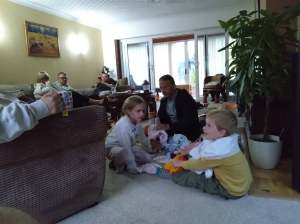
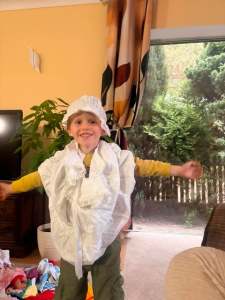 With the meal finished and the temperature dropping further as daylight faded, we retreated indoors for warm drinks, along with further supplies of beer and wine. Sue then produced the dressing-up clothes, and Alice and Archie proceeded to entertain us with a succession of increasingly imaginative costumes. There was much dressing, undressing and general theatrical activity, with the two of them clearly enjoying having an appreciative audience.
Eventually, however, even the most energetic performers succumbed to tiredness. The costumes were put away, the evening drew to a close, and it was time to bundle Alice and Archie into the car and take them home, leaving Willow Bank considerably quieter than it had been a few hours earlier.
The 23rd began with the opening of cards and presents, as it was Sue’s birthday. We were going away for a few days to celebrate, but also to visit David and Genya in their new home in Lincolnshire. Before setting off, I gave the garden a thorough watering. With no rain forecast for the duration of our absence, every plant, shrub and vegetable that could be reached by hose or watering can received a generous soaking. It was one less thing to worry about while we were away, although given the continuing drought, I suspected the garden would be grateful for every drop.
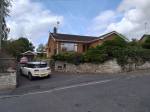
With that job completed, we set off on the roughly two-hour journey to Laughton, where we were booked to stay for the next two nights at the Ingram Arms Inn. To our surprise, the traffic was remarkably light virtually all the way, making the journey unusually straightforward and, for once, genuinely enjoyable. We arrived in Laughton around midday and, after a quick stop, reset the SatNav for David and Genya’s new home in nearby Northorpe.
Our timing was slightly awkward. David was in Wakefield and would not be returning until the following day, while Genya was babysitting and would not be home until the day after that. We also had Sunday lunch booked for 1.30 pm, leaving us with a couple of hours to fill. Fortunately, Northorpe was only a nine-minute drive away, although finding the house itself proved rather more challenging and took us another fifteen minutes of searching. Eventually, we located the property, parked on their driveway and set off on foot to explore the village.
Our first destination was the Norman church of St John the Baptist, but, frustratingly, we found it firmly shut. Having travelled all that way, we were naturally rather hoping for a peek inside, but the church was clearly not entertaining visitors that day. We therefore contented ourselves with exploring the village itself, taking our time as we wandered along its quiet lanes and looked at the houses and surrounding countryside.
Northorpe immediately reminded me of Ritya, the small village in central Bulgaria where David and Genya had previously lived. The architecture was, of course, quite different, but there was a similar sense of peace and isolation about the place. It had that wonderfully quiet rural atmosphere that seems increasingly difficult to find, a place where the pace of life appears to have slowed and where you could, if you wished, hide away from the chaos and noise of the modern world.
We spent some time wandering around the churchyard, looking at the gravestones and wondering about the people who had lived and died in this tiny community over the generations. It did not take long to ramble through the settlement, but our impression was firmly established: Northorpe was a very pretty, peaceful and rather secluded place in which to live. Eventually, with the clock reminding us that lunch was approaching, we returned to the car and set off back to Laughton, arriving just in time to take our seats for Sunday lunch.
Lunch was a pleasant and leisurely affair, and once we had eaten, we checked into the Ingram Arms. Our accommodation consisted of one of six separate units set around the car park, rather like a small motel attached to the pub. After settling ourselves in and making a restorative cup of coffee, we set off once again, this time to explore Laughton itself.
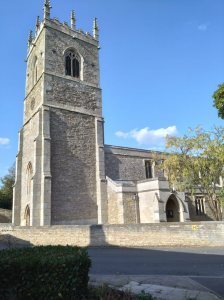
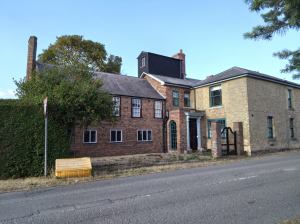 Laughton has a considerably longer history than its modest size might suggest. It was recorded in the 1086 Domesday Book under the names “Lacestone” and “Lastone”, when it had 29 households, while a village school was established as long ago as 1566. It is considerably larger than Northorpe, although the two villages share many of the same architectural characteristics and the same unmistakable rural Lincolnshire atmosphere. Laughton was certainly busier, with more houses and people, but it retained much of the peaceful character we had enjoyed in Northorpe.
Once again, however, the local church proved to be a disappointment. It too was frustratingly closed. We decided at least to walk around the building, only to discover that our intended route was blocked. The western side, where the vicarage had once stood, had apparently become part of the property’s garden after being sold into private ownership. The new owner had clearly decided that public access was not part of the deal, so our attempted circumnavigation came to an abrupt halt. We retreated and continued our exploration elsewhere.
Eventually, we returned to the Ingram Arms and ordered drinks in the bar. There we were able to observe some of the village’s social life first-hand. A group of locals were amiably playing pool against one another, their game accompanied by the usual friendly banter, before gradually gathering around a table where cheese and crackers had been laid out. It struck us that this was probably a regular village ritual, the sort of informal gathering that provides an opportunity for neighbours to meet, chat and maintain those community relationships that are so easily lost in larger towns and cities.
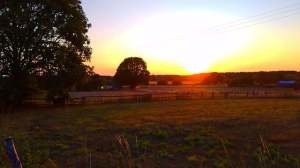 After a pleasant drink and a little more people-watching, we returned to our room. By then, the day was drawing to a close, and we sat outside for a while watching the sun sink over the Lincolnshire countryside. The light softened the fields and distant buildings, providing a suitably tranquil end to Sue’s birthday. Eventually, we retreated indoors, switched on the television and, having been on the go since early morning, decided it was time to call it a day.
Breakfast was at 8 am and, as we were currently the only guests staying at the Inn, we had the dining room more or less to ourselves. We were served a full English breakfast, which was substantial enough to keep us going for most of the morning. Sue, however, was disappointed to discover that there were no cereals on offer. The Inn, like many pubs that serve a Sunday lunch, closes its doors for business on Mondays and Tuesdays, presumably to give the staff a well-earned breather after the weekend. We had eaten in the restaurant the previous evening and, once again, the fare was good, plentiful and satisfying.
After breakfast we retired to our room for a while, until at around 10.30 am David rang to say that he was back home after taking Genya to Scunthorpe railway station, where she was catching a train to fulfil a babysitting commitment. A short drive later, we arrived at their new home, where David gave us a brief tour of the rooms before making coffee. We settled down with our mugs and spent the best part of an hour doing what families do best: swapping news, catching up on events and filling each other in on what had been happening since we last met.
The tour then continued, taking in the garden and Genya’s impressive workroom. There was plenty of evidence of the work that had already gone into making the property their own, with changes and personal touches appearing throughout the house. David also talked us through the plans they still had to put into operation, explaining how they intended to improve the layout and make better use of the available space. It was clear that they had already given considerable thought to how they wanted their new home to look and function.
The house and garden seem ideally suited to their needs, and once all the planned improvements have been completed, it should make a wonderfully snug and cosy Lincolnshire nest for them in the years ahead. Another coffee followed, naturally, and our conversation ranged widely, wandering happily between family memories, current events and plans for the future. It was one of those conversations where an hour disappears almost unnoticed.
By 2 pm, we decided that we had been sitting around long enough and that Banjo was probably beginning to wonder whether we had forgotten about him. We therefore headed out for a walk in the nearby woods. Our destination was Owlet Wood, part of the Coversands Heathland, an area of sandy heathland that once covered large parts of northern Lincolnshire. Over the years, birch has naturally colonised the site and woodland has gradually developed, creating a pleasant mixture of trees, heath and woodland trails.
The journey to the woodland car park, in our separate cars, was not entirely straightforward. On one of the narrow back roads we encountered a crew of road workers carrying out repairs. They looked distinctly puzzled to see us approaching, which should probably have been our first warning that something wasn’t quite right. We must have passed a road-closed sign without noticing it, because we swept straight past, making our way along the narrow lane at a reasonable rate of knots. Before long, however, the reason for the road workers’ puzzled expressions became apparent. Barriers had been placed at intervals along the road for roughly a mile, and we simply negotiated our way past each one until eventually we reached a T-junction that was completely blocked off.
Not wishing to admit defeat and retrace our entire route, we decided on a slightly unconventional solution. We removed the barrier, drove through and, displaying at least some respect for the road workers, put it back in place behind us. Having successfully completed our impromptu off-road diversion, we eventually reached the car park, where there were only a handful of other vehicles.
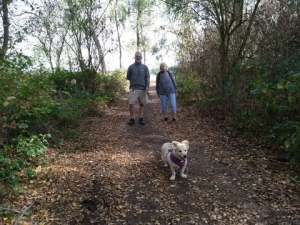 We were soon on one of the many trails through the wood, with David and Banjo leading the way. Sadly, the prolonged drought had clearly taken its toll on the woodland. Despite it being August, there was already a carpet of fallen leaves beneath our feet, while more were drifting down from the trees as we walked. Some species had already lost so much of their foliage that they looked as though winter had arrived several months early. The trees appeared tired and stressed, a sorry sight after such a prolonged period without meaningful rainfall.
Nevertheless, the walk itself was enjoyable. The woodland provided some welcome shade from the still-warm afternoon, and our conversation continued much as it had at the house, returning repeatedly to family, old memories and what everyone was doing now. With so much to talk about, the hour passed remarkably quickly.
Eventually we said goodbye to Owlet Wood and headed back towards Laughton. We left David to continue his journey on to Northorpe, while we returned to our accommodation at the Ingram Arms. We promised to meet up again the following morning, bringing to an end another thoroughly enjoyable day of catching up, exploring and putting the world to rights over several cups of coffee.
As the Ingram Arms was closed until Wednesday, we decided to take our evening meal at the Black Horse in the neighbouring village of Blyton. It proved to be an excellent choice. The pub offered a great menu at very reasonable prices and, despite the establishment being full, our meals arrived surprisingly quickly. The food was good, plentiful and thoroughly enjoyable.
Just across the road was an ice cream parlour that appeared to have built up quite a reputation. It described itself as a family-run Ice Cream Parlour & Café, offering more than 75 award-winning ice creams and desserts. We had passed it several times during our stay, and there had always been a queue outside, which was usually a pretty good recommendation in itself. So, after finishing our meal at about 7.30 pm, we decided to indulge ourselves. Remarkably, even at that time of the evening there was still a queue, but it moved quickly enough, and our ice creams were well worth waiting for. They were excellent and certainly lived up to the parlour’s reputation.
Breakfast the following morning was, once again, a rather lonely affair, with Sue and me the only guests staying at the Inn. The owner seemed pleased to have some company and chatted with us at the table before donning her cook’s hat and disappearing into the kitchen to prepare a full English breakfast. Having cooked it, she then swapped her cook’s hat for her waitress’s role and served it to us herself. It was a rather more personal breakfast service than we were accustomed to!
 Genya had returned home late the previous evening after her babysitting duties, and, as we were keen to see her before leaving the area, we packed up the car, checked out and drove back to Northorpe. We spent about an hour chatting with Genya and David, during which time David and I also attempted to discover why his electric garage door stubbornly refused to open fully. Despite our best efforts, the mystery remained unsolved, so eventually we said our goodbyes and set off for Gainsborough.
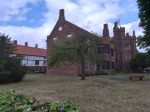
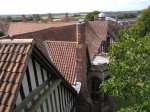
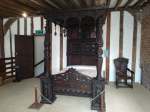
Our destination was Gainsborough Old Hall, a remarkable five-hundred-year-old manor house and one of the best-preserved medieval manor houses in England. Built during the latter part of the fifteenth century, the Hall subsequently developed into a fashionable Jacobean residence before falling upon harder times. Over the centuries, parts of the building had been put to some decidedly less aristocratic uses: sections of the Hall became a rather raucous theatre, other areas were divided into cramped tenements and, at one point, the building even served as a pub. It has certainly had a varied life.
We had sensibly bought our entrance tickets online the previous evening and, after finding a parking space nearby, set off to explore this fascinating building, which is now cared for by English Heritage.
Gainsborough has an intriguing place in English history. Towards the end of July 1013, the Danish king Sweyn Forkbeard and his son and heir, Cnut, better known to us as Canute, arrived in Gainsborough with an army of conquest. Sweyn defeated the English opposition, forcing King Æthelred the Unready to flee the country, and was subsequently declared King of England. He returned to Gainsborough with Cnut, where the two established themselves at Gainsborough Castle, believed to have occupied the site of the present-day Old Hall. Sweyn’s reign, however, was remarkably brief. He died, or perhaps was killed, in Gainsborough just five weeks later. Cnut then established his base elsewhere. For those few weeks in 1013, Gainsborough was, in effect, the capital of both England and Denmark, making it the ‘capital that never was’.
The Old Hall itself dates from much later. Thomas Burgh acquired the manor of Gainsborough in 1455 and between about 1460 and 1480 built the impressive medieval stronghouse that stands today, with its great timber-framed hall and substantial brick tower. Its distinguished visitors have included King Richard III, who stayed there in 1483, and King Henry VIII, who visited in 1541.
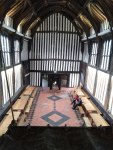
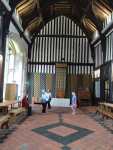 We found the Hall fascinating, and particularly liked the way the history was brought to life. Many of the information boards had QR codes which could be scanned with a mobile phone, allowing us to listen to recordings telling the stories of some of the people who had actually lived and worked in the building. Hearing those personal accounts made it much easier to imagine the Hall when it was a busy and lived-in home rather than the historic monument we see today.
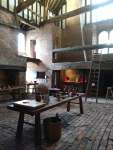
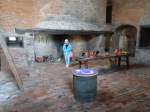
 We particularly enjoyed exploring the kitchen, with its impressive fireplaces and working areas, and climbing the tower, from which there were good views across the present-day town. It was easy to imagine how imposing the building must have appeared in its heyday.
Eventually, we left the Old Hall behind and returned to the car, pausing first to have a brief look at the River Trent nearby. The river was looking rather brown and muddy, hardly at its most picturesque, but it was interesting to stand beside such an important waterway. Our two hours of free parking were almost up, however, so we either had to move on or start paying.
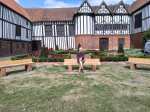
 Fortunately, we soon found a convenient roadside parking space nearby which offered another two hours free parking. From there we set off to investigate Marshall’s Yard, a modern shopping and leisure precinct created from Gainsborough’s industrial past. The development occupies the former site of a steam-engine and boiler-making works and provided an interesting contrast to the medieval Old Hall we had just visited.
We then wandered into the old town centre and spent some time browsing a couple of antique shops, resisting, with varying degrees of success, the temptation to take home some of the treasures on display. Eventually, we returned to the car and headed south towards Waltham on the Wolds.
Earlier in the day, Jamie had invited us to join him, Ruth and Joey for an evening meal after they had been to view a house in Melton Mowbray that they were considering buying. We arrived at around 4 pm, let ourselves into the house, made ourselves a coffee and kept Nala company while we waited for them to return. They arrived home at about 5 pm.
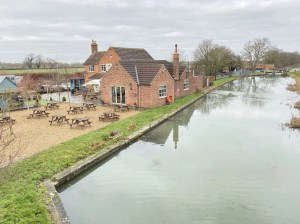 Joey was working that evening at a restaurant in Melton and therefore couldn’t join us, so the four of us set off for what was once known as the Rutland Arms, dating from 1910, but is now called the Dirty Duck. Situated on Duck Lane in Woolsthorpe, in the beautiful Vale of Belvoir, it is one of Jamie’s favourite local hostelries. He often visits it by boat with Ruth and Nala, travelling along the Grantham Canal, so it was particularly appropriate that we should enjoy our meal in the beer garden alongside the water.
We sat, ate and chatted as the evening gradually cooled, with the canal providing a tranquil backdrop. Eventually, the sun began to sink towards the horizon, and it was time to make our separate ways home. It had been a thoroughly enjoyable few days: good food, good company, an excellent historic building to explore and, to finish, a pleasant evening beside the canal, a fitting end to our little Lincolnshire adventure.
Comment: With the world in the chaotic state it currently occupies, it seems appropriate to state the obvious. Much of the news we are subjected to appears to revolve around the actions of the narcissistic Donald Trump. His combination of self-interest, grifting and apparent stupidity seems to have infected the political landscape on a scale unlike anything I can remember in my lifetime. Perhaps the citizens of the United States will eventually recognise the erosion of their democracy, the staggering national debt of $40 trillion, and the alienation of much of the civilised world. Surely, his influence can only begin to diminish once he and his sycophantic administration are gone.
The forthcoming mid-term elections should, in theory, provide the democratic mechanism for voters to bring about that change. Yet, with around a third of Americans still seemingly prepared to idolise their president regardless of what he does, that outcome is far from certain. Even more troubling is the administration’s apparent determination to interfere with, or reshape, the electoral process to its own advantage.
I predicted last year that the mid-terms might not take place at all. After all, it hardly seems to be in the Republicans’ interests to allow an election that could seriously threaten their grip on power. The obvious question, therefore, is not simply whether the mid-terms will happen, but, if they do not, exactly how would Trump and his administration attempt to prevent them?


Leave a comment