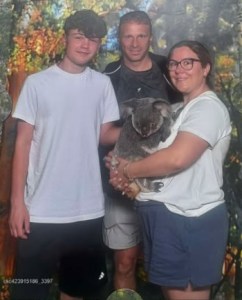
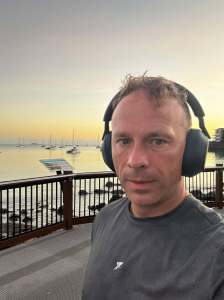
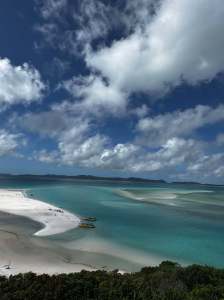
 Jamie and the family’s Australian adventure showed no signs of slowing down, featuring impromptu flights, boat trips and encounters with the local indigenous wildlife. It seems they were determined to tick off as many unforgettable experiences as possible before heading home.
On the 5th, Charlotte, Suraj and Ellis invited us over for Sunday lunch and, naturally, we jumped at the chance.
After Sue’s customary early-morning expedition to Saddington Car Boot Sale in search of a bargain, an undiscovered Rembrandt or perhaps the odd diamond tiara mistakenly labelled as costume jewellery, and after I had wrestled with Nala’s “help” while transplanting seven cape gooseberry plants into the raised beds, we set off for Rothwell.
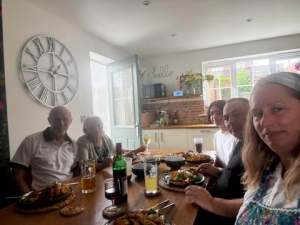
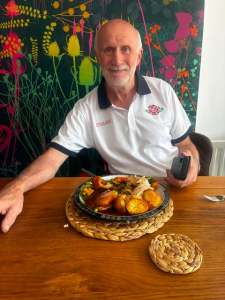
When we arrived, our hosts were all hard at work putting the finishing touches to what proved to be a delicious lunch, so Sue and I wisely stayed out of the way in the snug, sipping refreshments while supervising proceedings from the comfort of our chairs.
Suitably replete once the table had been cleared, Sue and Charlotte settled down to a fiercely contested game of Rummikub, while I took Nala for a walk in what had become a decidedly stifling afternoon. On our return, Suraj gave me a tour of his impressively organised garage workshop, where he pursues his surprisingly lucrative sideline of renovating old bicycles and selling them on. It is remarkable what a little skill, patience and elbow grease can do for a neglected bike, qualities I suspect he occasionally wishes were available for people as well.
Ever hopeful, at 1.00 am on the 6th of July, I dragged myself out of bed to watch England take on Mexico at altitude in Mexico City. On switching on the television, I was dismayed to discover that kick-off had been delayed by an hour due to torrential rain and thunderstorms. There was also the breaking news that a red card shown to a USA player had been rescinded by FIFA following a series of phone calls from Donald Trump to its president, Giovanni Vincenzo Infantino.
The rest of the world no longer expects the US President to pay much attention to rules, regulations or laws, but if the reports are true, FIFA appears to have sunk to a new low. The organisation has long attracted criticism, but overturning a referee’s decision following political intervention would leave even the most cynical football fan wondering whether the rulebook is now written in pencil. Creating and presenting a so-called Peace Prize to Trump had already raised eyebrows; this latest episode, if nothing else, will do little to restore confidence.
The atmosphere inside the Mexico City Stadium whenever the national side are playing is rather like ancient Rome’s Colosseum when the lions were facing the Christians, intimidating, deafening and not somewhere you’d choose for a quiet afternoon.

From an England perspective, the match itself was 101 minutes of high drama with a fairy-tale ending. Mexico were fanatical in their support and skilful on the pitch. England, meanwhile, stuck resolutely to their game plan and, despite the setback of having a player sent off, every man stood tall when it mattered. The reward was a thoroughly deserved 3–2 victory.
The tempo throughout was utterly frantic, wonderfully entertaining for any neutral, but enough to leave supporters of either side reaching for the blood pressure tablets. The Australian-Iranian referee had an excellent match, keeping firm control throughout and ensuring the game never boiled over into anything more sinister.
England now face Norway in the quarter-finals on Saturday. As for Belgium, who are due to meet the USA, they, and perhaps the rest of the footballing world, may well be wondering what FIFA’s next surprise will be. With a precedent apparently now established, perhaps Sir Keir Starmer should give Infantino a ring and politely request that Jarell Quansah’s red card is also rescinded so he can take his place in the quarter-final. After all, it seems a well-timed phone call may now be as valuable as VAR.
A quote from a Fox News reporter summed it up: “The 2026 FIFA World Cup will be remembered for one thing: the USA cheated and lost. The Trump stain is all over it now.”
A surprising observation from a Republican-aligned media outlet, but one that rings true. Although a measure of justice was served when Belgium triumphed 4–1, had the USA won, the fact that Folarin Balogun was allowed to play the entire match would have left the victory forever tainted. To many, it would have been further evidence that the malign influence of Trump had corrupted yet another institution that should have remained above political interference.
Football is a truly global game and, while far from perfect, it is not something to be tampered with lightly. I suspect that supporters from every nation represented at the finals, and many from those that were not, were cheering Belgium on. It is both a result and a controversy that will not soon be forgotten. As for US soccer, it had a golden opportunity to demonstrate its integrity by declining to select Balogun, thereby earning the respect of football supporters around the world. Instead, it chose to become complicit in what many will see as the corruption of the sport.

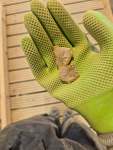
 As the third heatwave of the summer swept across the UK, members of the family have been keeping themselves busy. Jamie, Ruth and Joey have been scuba diving off the Great Barrier Reef, Alice has been helping to tidy the village by litter-picking with a friend, and Lucas has unearthed several fossils during his archaeological expedition to Brymbo.
On a day when the temperature reached 30°C (8th), I travelled once again to the University of Birmingham as part of the TrialMed research initiative. As TrialMed were in the process of moving premises, it appeared that I had to sign the consent forms again, despite having completed them only a few weeks earlier. Why this couldn’t have been done online using a PDF form was a question to which nobody seemed to have an answer.
So, once again, I braved the vagaries of the British rail network. I boarded the 10.05 am train, which eventually departed at 10.25 am. The explanations came thick and fast over the tannoy: the crew had arrived late, the train in front was running slowly, and there had been a signalling failure. As if that wasn’t enough, we were then informed en route that, after Leicester, the train would not be stopping again until Nottingham. Fortunately, I was changing at Leicester anyway, and my next two trains both departed on time from their advertised platforms, a rare triumph for the railway timetable.
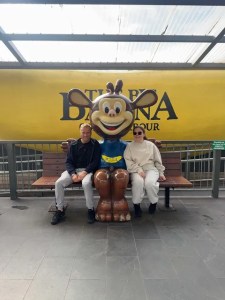
Jamie and Ruth going bananas down under.
I arrived at the University of Birmingham at midday and made the short walk to the TrialMed offices. With time to spare before my 1.00 pm appointment, I treated myself to a Meal Deal in the on-site café. The appointment itself took all of ten minutes, just long enough to sign the paperwork, and then it was back to the station to retrace my steps home.
The return journey was refreshingly uneventful, with every train arriving on time. The only diversion of interest was sharing my carriage with a class of teenagers from a Hinckley school who had clearly succeeded in exhausting their teachers during a day trip somewhere in Birmingham. Happy days, although I suspect only for the pupils. Those carefree school outings are now, sadly, a distant memory.
Sue was waiting to collect me from Market Harborough station.
Thursday evenings are when a group of former rugby-playing chums gather at Willow Bank to play pool, enjoy a beer, listen to 1970s music and, naturally, put the world to rights.
It is fair to say that, as the years have rolled by, we have all experienced one medical drama or another, some courtesy of our rugby-playing days, others simply the result of growing older. Thankfully, the NHS has always stepped in promptly to deal with whatever life has thrown at us, and we have all continued to march on.
Paul, one of our younger members (by the grand margin of a year or two), has had a particularly difficult time. Already under regular surveillance following an earlier bout of skin cancer and treatment for blocked arteries, he had a pacemaker fitted at the beginning of the year. During our evening soirée, he told us that he had now been diagnosed with bladder cancer and was due to begin a course of three chemotherapy sessions the following day.
The encouraging news was that it had been detected during a routine urine test only a few days earlier, allowing the system to swing swiftly into action and give Paul the very best chance of a full recovery. We all wished him well and assured him of our support in the weeks and months ahead.
The situation carried a certain irony. Paul works for an American company, based in a country where serious illness can bring not only the anxiety of the diagnosis itself but also the added burden of wondering how to pay for treatment, with the very real risk of financial ruin. Here in the UK, as in many other democratic nations with universal healthcare, treatment is based on clinical need rather than personal wealth. It is one of those things that many of us perhaps take for granted until moments like these remind us just how fortunate we are.
In the early hours of 12th July, Sean and I settled into the Garden Room to watch England book their place in the World Cup semi-finals in Florida. After extra time, they eventually overcame a dangerous Norway side 2–1 and now face Argentina in the next round.
With both teams having a goal ruled out, it was another nail-biting, emotional roller coaster for supporters of both nations.
It was the perfect way to round off a superb Saturday of sport. England’s cricketers defeated India by 57 runs, while the rugby team completed the day’s hat-trick of victories with a commanding 73–8 win over Fiji. Not a bad day’s work for England’s sporting heroes.
On the 13th (thankfully not a Friday), I attended an appointment with my GP to discuss my prostate cancer diagnosis. I assumed the consultation would simply be an opportunity to answer any questions I might have, and it was. However, to my surprise, after examination, I came away with a two-week course of antibiotics to treat a possible urinary tract infection.
That afternoon, I attended Leicester General Hospital for a scheduled urine flow test as part of the ongoing monitoring of my prostate. After waiting in a busy reception area, I was called in 15 minutes early for an ultrasound scan to determine how much urine was in my bladder. Following the flow test, I was scanned again to see how much remained.
After another ten-minute wait in reception, I saw the consultant, who informed me that everything looked fine and that I would continue on the active surveillance programme.
By the time I arrived home just 20 minutes later, the consultant’s report had already appeared on the NHS App. Once again, I was surprised to read that he had recommended to my GP that, once my current course of antibiotics is complete, I should begin taking methenamine hippurate together with vitamin C to acidify my urine and help prevent any further infections.
 As for my own experience, I simply cannot praise the NHS highly enough for its efficiency, professionalism and, above all, its humanity.
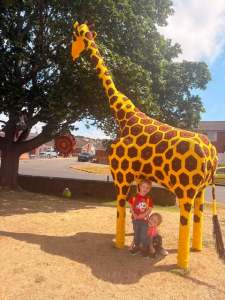
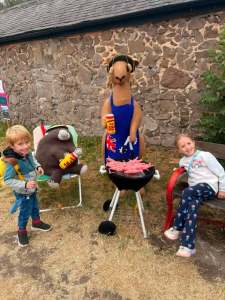
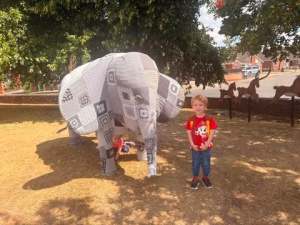
As in previous years, Sarah took the children to the nearby village of Cosby, where the streets had once again been transformed by an incredible collection of knitted and crocheted installations created by the local community.
This summer’s theme is Around the World in 80 Displays, a globe-trotting textile adventure celebrating wildlife from across the planet. Some of the creations looked so remarkably lifelike that it was hard to believe they had been made entirely from yarn.
Lucas returned home after spending a couple of weeks as an archaeologist and reported that camping had been a little challenging during the first week, but by the second week he had settled into a routine. He and his friends were the only first-year participants, with everyone else returning from previous years. He enjoyed the experience so much that he already intends to sign up again next year.
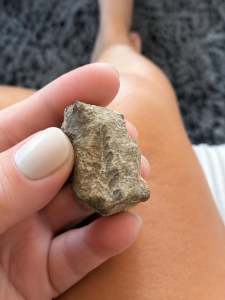
 Although they were not allowed to remove anything from the protected excavation site, they spent one leisure day exploring an area across the road that was not protected. There, if they found anything, they were allowed to keep it. Lucas unearthed a fossilised leaf, which made a fitting souvenir of his archaeological adventure.
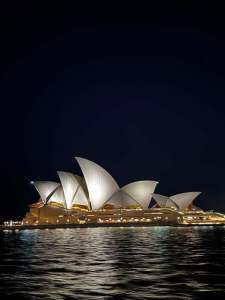
 As Jamie, Ruth and Joey’s Australian adventure draws to a close, they have returned to Sydney to do a little last-minute shopping for gifts to bring home.
Charlotte has managed to get hold of some photographs from Ellis’s end-of-year prom and posted the best one on the family Messenger group.
The family are immensely proud of how well little Alice is reading. She is currently top of her age group and fourth across the whole of the East Midlands.
On the day that Jamie and the family flew home from Sydney, England faced Argentina in the World Cup semi-final. Unsurprisingly, the South Americans seemed hell-bent on disrupting England’s rhythm by fouling the players in white both on and off the ball. It was therefore rather ironic that the first yellow card of the match was shown to Anderson, arguably the player who had been kicked the most.
England took the lead and, despite a few heart-stopping moments, appeared to be coping well with the increasing Argentine pressure. Then came a series of managerial decisions from Thomas Tuchel that ultimately cost England a place in the final against Spain.
The German manager substituted goalscorer Gordon, one of the few players consistently troubling La Albiceleste’s defence, and replaced him with centre-back Ezri Konsa. England switched to a back five and effectively parked the bus with more than 20 minutes still to play. The subsequent introductions of Nico O’Reilly and Dan Burn only reinforced the defensive mindset, making it seem as though Tuchel was simply throwing defenders onto the pitch in the hope that sheer numbers would see England through.
From that point onwards, England virtually abandoned any attempt to attack or even retain possession, relying instead on a compact, increasingly desperate defence to hold out. It never looked like a sustainable plan, and Argentina’s two goals felt almost inevitable against such overly cautious tactics.
I watched the match with early cautious optimism in the Garden Room alongside my rugby chums, but by the final whistle it was difficult to escape the conclusion that England have the players; it is the tactics that have once again let them down.

 After driving from Heathrow to Market Harborough, Jamie and the family watched the match with friends. At half-time, Ruth called in at Willow Bank to collect Nala and Minnie the rabbit before continuing home. After the final whistle, Jamie and Joey arrived to collect Barney, the remaining rabbit, before driving the Lamborghini back to Waltham on the Wolds.
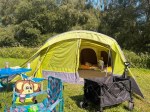
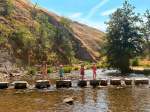
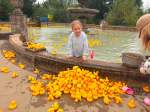
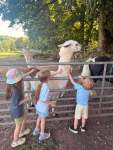
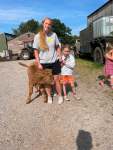
 While the weather held, Sarah took her little gremlins camping at Intake Farm near Stoke with a friend and her children. They appeared to have a wonderful time, feeding the animals, exploring the farm and enjoying each other’s company. Judging by the smiles in the photographs, it was exactly the sort of summer adventure children remember long after the tents have been packed away.
On Friday 17th June, the family descended on Willow Bank for a long-overdue BBQ. In years gone by, these gatherings had been a weekly summer tradition, before giving way to Curry Nights during the winter. They had been sorely missed, so it was wonderful to have everyone together again.
By 5 pm the clan had assembled, the only absentee being Joey, who was spending the day with his father. Once again, the weather was gloriously hot and sunny, making the shade provided by the dining room awning and garden umbrella worth their weight in gold.
Jamie and I manned the gas and charcoal barbecues, juggling an impressive mountain of meat and fish while trying not to incinerate either ourselves or the sausages. Meanwhile, the Garden Room pool table was in constant use, and the younger members of the family happily entertained themselves with a game of football on the lawn before deciding that the apple tree was far more exciting. Their impromptu climbing expedition caused Sarah rather more concern than it did the aspiring mountaineers.
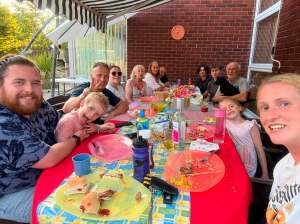
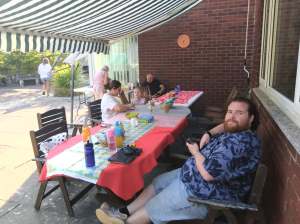
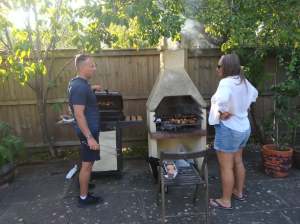 Once everything had been cooked and an enormous selection of salads had been laid out, we all settled down to enjoy the feast. Sue was the last to take her seat but, just as she arrived, disaster struck. She tripped, sending the contents of her plate flying directly onto me. Before anyone had time to fetch a dustpan or even apologise, Mia and Nala launched a highly efficient clean-up operation, enthusiastically hoovering up the fallen food with all the professionalism of a canine rapid-response unit. Sue, meanwhile, simply returned to the barbecue and kitchen to assemble a replacement plate, thankfully managing the second attempt without incident.
With appetites well and truly satisfied, and before anyone escaped the washing-up, conversation turned to our forthcoming Golden Wedding Anniversary celebration. As we were all due to travel to Lowestoft the following weekend, plans were made for meals, outings and other activities, with plenty of suggestions and the usual good-natured family debate.
By around 8.30 pm, everyone began making their way home. Sue and I were left to restore order to the garden, load what felt like half the contents of the kitchen into the dishwasher, and reflect on a thoroughly enjoyable afternoon. It was a welcome reminder that, while BBQs inevitably involve a little smoke, a lot of food and the occasional airborne dinner, nothing quite beats having the whole family together.
The 18th of July proved to be a day of redemption for English sport. Just three days after the football team had been controversially denied a place in the World Cup Final by Argentina, England’s rugby team exacted a measure of revenge by beating the Pumas in Santiago, also amid a fair amount of controversy. As the old saying goes, what goes around comes around.

 Not content with one sporting triumph, England’s footballers then rounded off their World Cup campaign in style. Facing France in the third-place play-off, they produced a spirited and entertaining display to claim a thoroughly deserved 6–4 victory. After the heartbreak of the semi-final, the players showed admirable character, refusing to wallow in self-pity and instead giving the fans one final performance to savour. Eight goals, end-to-end excitement and an English victory over the French; there are certainly worse ways to spend a Saturday evening!
Staying with the theme of sport, there is perhaps no better insight into the character a nation displays than the way its teams play the game and conduct themselves in both victory and defeat.
Over the weekend of 18–19 July, Argentina suffered two painful defeats: first in the football World Cup final and then against England in the rugby international. Naturally, both results were a huge disappointment for the nation, but, in my view, accepting defeat gracefully did not appear to be part of the script, as evidenced by the disgraceful scenes at the end of both matches.
There is no doubting the immense talent within both Argentine teams. However, they lost because, rather than allowing that talent to speak for itself, they too often resorted to gamesmanship, intimidation and attempts to gain an advantage by pushing the boundaries of the rules. Only when the matches were slipping away did they fully display the skill, flair and teamwork for which they are rightly admired.
Argentina is, of course, far from alone in producing sportsmen and women who are prepared to bend or break the rules in pursuit of success. Nevertheless, there remains a perception that, in parts of South American sport, such behaviour is more readily tolerated than many would like. Whether justified or not, that perception does little to enhance the reputation of sport, where fairness, respect and graciousness in both victory and defeat should always take precedence.
How sad that such remarkable talent can sometimes be overshadowed by conduct that detracts from the spirit of the game.
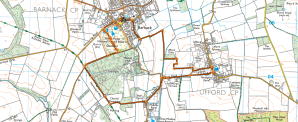 On the 22nd of July, John and I met up for a ramble after he was hospitalised and operated on for a bleed on the brain shortly after our last hike. Unfortunately, he is not able to drive, so he caught the bus to Barnack, notable for its former limestone industry, its Anglo-Saxon parish church and an unusual early Bronze Age burial. Hills and Holes, an area of Roman and later quarrying, is now a nature reserve and through which we were later to pass. There is some confusion as to when he will be able to drive. On contacting the DVLA, he was told that he can when his doctor says its ok, but when he contacted his doctor, he said it must be the DVLA who makes the decision. On contacting his insurance company, they pronounced that it is the DVLA or a doctor that decides whether he is fit to drive. A catch twenty two, I think.
I met John as he stepped off the bus, and together we drove the short distance to The Millstone, a delightful pub dating back to 1672, where I parked up, switched on my GPS, and we set off on our walk.
Leaving behind this attractive village of honey-coloured limestone cottages, we headed out into the Cambridgeshire countryside, scorched by weeks of relentless sunshine and a distinct lack of rain. Much of the vegetation had turned the colour of straw and become brittle underfoot, with only the hardiest trees and hedgerows retaining any hint of green. Remarkably, many of the cereal fields had already been harvested, leaving behind nothing more than short stubble to suggest there had ever been life growing there. We passed paddocks where horses and cattle grazed with their noses pressed to the ground, searching in vain for anything that wasn’t dry, brown or withered.
It had been some time since our last walk, so there was plenty to catch up on and, as a result, much of the beautiful Cambridgeshire scenery passed by almost unnoticed. We debated the many controversies surrounding the Football World Cup, England’s rugby tour of Argentina, and the arrival of Britain’s new Prime Minister. So engrossed were we in putting the world to rights that our pace became decidedly leisurely, and on several occasions I failed to pay proper attention to the GPS. Each wrong turn meant retracing our steps, leaving us well behind schedule for our planned 12.30 p.m. lunch back at The Millstone. To make up time, we reluctantly abandoned part of the route that would have taken us through the village of Ufford.
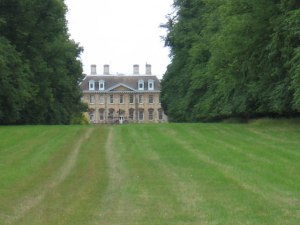
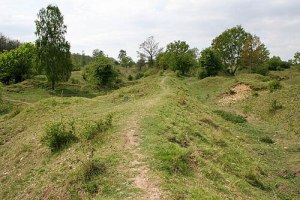 The final section of our ramble led us past Walcot Hall, an impressive privately owned country estate, before finishing on the outskirts of Barnack at the Hills and Holes Nature Reserve. By then we felt we had more than earned our lunch. We continued solving the world’s problems over an excellent fish and chips, washed down with a couple of fine local ales.
On the drive home, I dropped John off in Stamford, where he was able to catch a more convenient bus back to Bourne, bringing another enjoyable day’s walking, conversation and companionship to a fitting close.
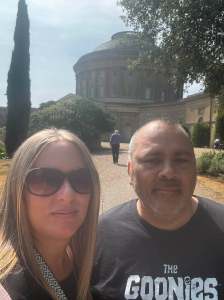
The following morning, Sue and I set off for Lowestoft on the east coast. We had booked into the Parkhill Hotel on the outskirts of the town for the eve of our Golden Wedding Anniversary, but first we had planned a stop at the magnificent Ickworth Estate, an Italianate palace in the heart of the Suffolk countryside. Conceived by Frederick Hervey, 4th Earl of Bristol (1730–1803), the extravagant Rotunda reflects his passion for classical Italian architecture and his grand ambition to create one of Britain’s finest art galleries. He clearly wasn’t one for thinking small.
There was just one guided tour available that day. Thanks to delays on the journey, we arrived with barely a minute to spare, slipping into the 10.45 a.m. tour and joining forces with an American mother and daughter to swell the party to the dizzying number of four.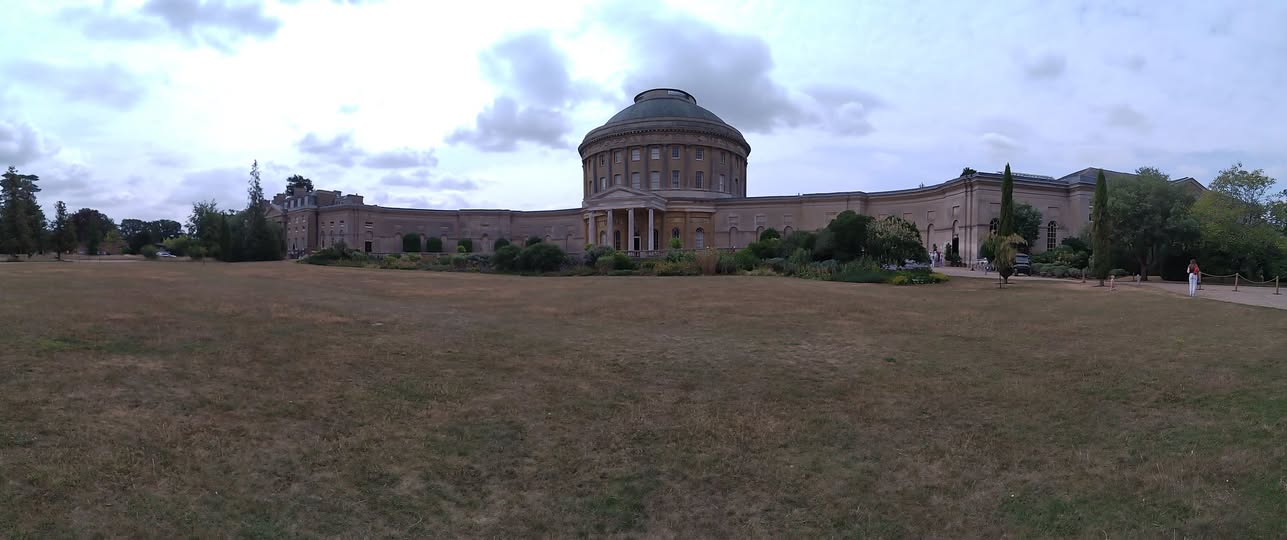
Our guide led us through the state rooms on the ground floor, explaining the history of the house and its treasures with increasing difficulty, punctuated by frequent pauses as he searched for the right facts. Having been a guide at Ickworth for seven years, I couldn’t help wondering whether he was beginning to show the early signs of dementia, often struggling to recall information that I am sure had once come effortlessly. It was rather sad to witness.
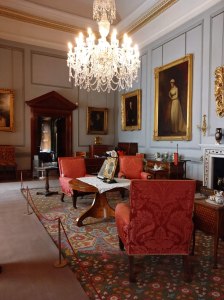
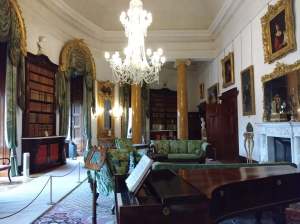 Once released from the tour, we explored the upper rooms at our own pace before descending into the fascinating ‘below stairs’ world, where the servants once kept the great house running with military precision while their employers enjoyed the glamorous life upstairs.
Ordinarily we would have spent an hour or two wandering through the extensive parkland, but, like so much of the country, the landscape had been left parched and scorched by more than a month of relentless sunshine. Instead, we found the welcome shade of a magnificent plane tree, enjoyed our picnic, and then continued our journey towards Lowestoft.
We checked into the hotel at around 2.30 p.m. and, after a restorative coffee in our room, drove the short distance to Gunton Warren Local Nature Reserve. After several hours in the car, we were both in need of a leg stretch, so a stroll along the coast seemed the perfect remedy.
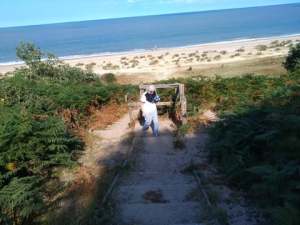
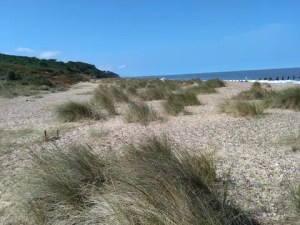 Corton Sands is a mixture of coarse sand and shingle, divided by rows of weather-beaten wooden groynes, with a broad grassy strip beyond the beach separated by a concrete promenade. We spent a peaceful hour ambling along the shoreline, inspecting any pebble that caught our eye in the optimistic belief that the next one might prove to be something special. Sue struck gold, or at least amber, discovering a small rounded piece that was quickly tucked safely into her pocket, ready to show Lucas at the first opportunity.
 With our energy levels beginning to ebb, we returned to the car and headed back to the hotel for a well-earned rest. The original plan had been fish and chips on the pier, followed by a trip to the cinema. Instead, comfort won the day. We enjoyed a chicken burger and gammon steak in the hotel restaurant before retiring to our room for an evening in front of the television and an early night.
Such are the subtle adjustments one makes with advancing years. Once upon a time we’d have been chasing the nightlife; these days we’re delighted if the pillows are plump and the remote control works.
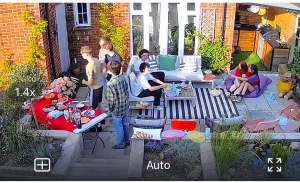
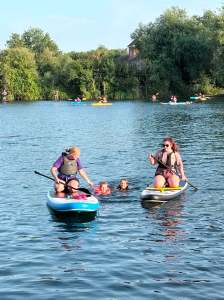
Later that evening, birthday boy Ellis hosted a casual garden BBQ for his mates. Sarah bravely took the kids paddleboarding, while Jamie, never one to suffer, indulged in a romantic-looking spa bath with his pal Tommy.

On waking, I surprised Sue with the first of several presents to mark our Golden Wedding Anniversary: a framed card I had designed earlier in the week, along with a 1976 Year Book, commemorating the year we were married. After breakfast came the second surprise, a beautiful crystal clam shell with ’50 Years’ intricately engraved within the crystal itself.
Although we had overslept and arrived for breakfast rather later than intended, there was still plenty of time to wander around the hotel’s extensive grounds before checking out. It was yet another gloriously warm morning, but thankfully a gentle sea breeze kept the relentless heat of the past month at a far more comfortable and enjoyable level.
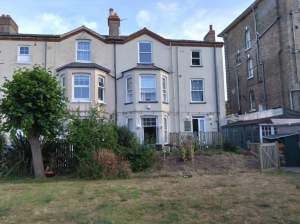
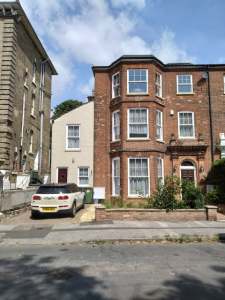 Our curiosity satisfied, we set off for our accommodation for the weekend, just ten minutes away towards the centre of town. Casa Carlotte House, at 5 North Parade, is an impressive seven-bedroom semi-detached Victorian residence, built in the 1880s and retaining period features throughout. Over the years, it has also been used as both a filming location and accommodation for several films and television productions.
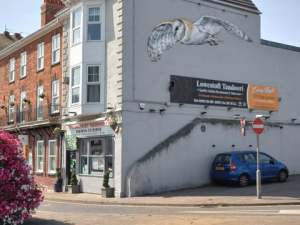 After parking outside, we decided to test Google’s prediction that the restaurant we had booked for the evening was exactly nine minutes away on foot. To its credit, it was spot on. The Lowestoft Tandoori, nominated as one of the three best restaurants in Norfolk and one of the top five in the UK, stands on the edge of the town’s historic quarter. We had noticed it during our previous visit to Lowestoft a year earlier, so expectations were understandably high.
On our way back to the car, we paused in the welcome shade of the park beside Casa Carlotte. Here stands an impressive memorial dedicated to the seamen of Lowestoft who lost their lives during the Second World War. It was a peaceful spot to sit for a while before continuing our day.
As we were unable to access the property until late afternoon, we made our way down to sea level via one of the many Scores that are unique to Lowestoft. These ancient, narrow pathways plunge directly from the clifftop to the beach, providing townspeople with a quick route to the shoreline. While many seaside towns have winding paths or roads leading down to the sea, Lowestoft’s Scores seem remarkably direct. The name derives from the Old Norse word skar, meaning a cleft or notch.
Passing through one of the many caravan parks that line this stretch of coast, we followed the concrete sea wall towards the town centre, making the most of the refreshing breeze. With the tide at its highest, the narrow strip of sand had disappeared beneath the waves, but from our elevated vantage point we were treated to excellent views of the sea, watching gulls, cormorants and the occasional inquisitive seal bobbing in the water below.
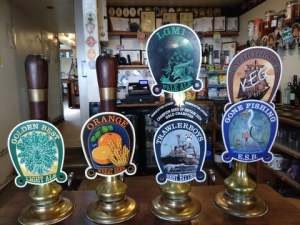 Eventually leaving the sea wall behind, we wandered into the town centre and gratefully settled into the bar of the Triangle Tavern for a couple of refreshing drinks and a well-earned rest for our increasingly weary feet.
Feeling suitably revived, we returned to our accommodation, where entry was gained by using a key code to open the secure key box beside the front door, an altogether less glamorous arrival than the grand Victorian façade might have suggested.
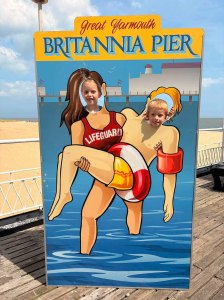 After an initial explore of the house, we chose our bedroom, unpacked our cases and made ourselves a well-earned coffee. It wasn’t long before Charlotte and her family arrived after having also visited the Ickworth Estate on their way; they were soon followed by Sarah and hers, who had stopped off in Great Yarmouth to enjoy amusements on the pier. Once the initial excitement of discovering the house’s many facilities had subsided, and everyone had successfully claimed their preferred bedrooms, we gathered on the patio with drinks in hand while awaiting the arrival of Jamie, Ruth and Nala.
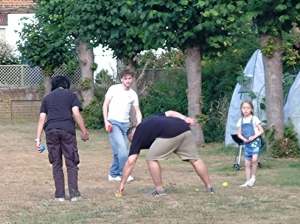 They appeared at around 6.00 pm, and for the next hour and a half the family threw themselves into games with Archie and Alice in the large rectangular field behind the house, which was shared by all the surrounding properties. It proved to be the perfect playground for burning off youthful energy before the evening’s celebrations.
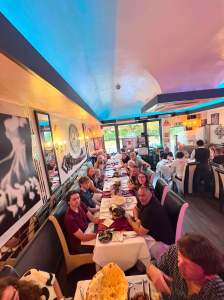
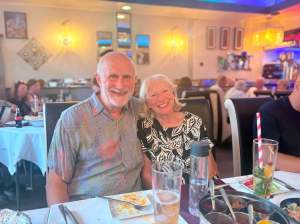 By 7.30 pm we had all changed into our finery and were making our way into town, following the nine-minute route that Google had so carefully rehearsed for us earlier in the day. Our destination was clearly proving popular. A sizeable queue had formed outside, and every table was occupied, apart from the one reserved for our party of twelve. The waiting diners looked distinctly unimpressed as we swept past them to claim our table, but thankfully they soon dispersed into the warm evening sunshine in search of dinner elsewhere.
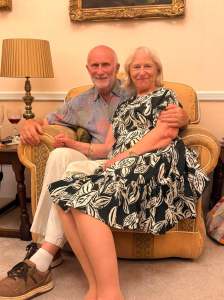
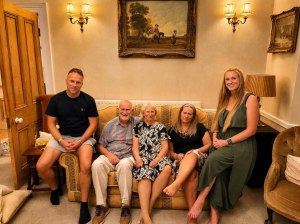 The unimaginatively named Lowestoft Tandoori turned out to be exactly the hidden gem we had hoped for. Without doubt, both the food and the service were exceptional. Over the past fifty years, Sue and I have travelled extensively, dining in restaurants ranging from humble cafés to some of the world’s most prestigious establishments, yet neither of us can recall receiving such consistently outstanding food served with such warmth, efficiency and genuine kindness.
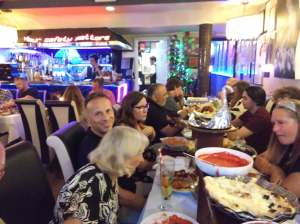 Complimentary dishes and drinks seemed to arrive almost as quickly as those we had actually ordered. Before long we were gloriously overfed, happily content and wondering whether we might need rolling rather than walking back to the house. After leaving a well-deserved and generous tip, we returned to Casa Carlotte for champagne toasts, more family games and the usual Palmer family nonsense, with plenty of laughter to round off a perfect evening.
The following morning I was the first to wake, courtesy of Nala, who climbed onto our bed and, through a barrage of persistent kisses, made it abundantly clear that she expected to be taken for a walk immediately. After two circuits of the field behind the house and a brief wander through the park opposite, I rewarded myself with a much-needed coffee. Soon afterwards, Sarah joined me, accompanied by Alice, who was keen to spend a little quiet time reading her book.
Over the next couple of hours, the rest of the family gradually emerged from their various nests, each preparing breakfast at their own leisurely pace, while the house slowly came to life once again.
It was unanimously decided that a trip to the beach was in order. After a quick consultation with Google, Pakefield Beach got the nod. Described as a delightful mix of sand and shingle, backed by marram grass, dunes and colourful fishing boats, it promised exactly the sort of traditional seaside experience we were after. The promenade stretches from Lowestoft Beach as far as Pakefield Church, lined with an attractive row of pastel-coloured beach huts. Popular with anglers, horse riders, windsurfers, kite surfers and those seeking a quieter, more rural stretch of coastline, it seemed the perfect destination for a large family with children.
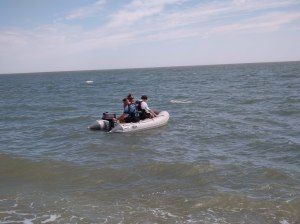
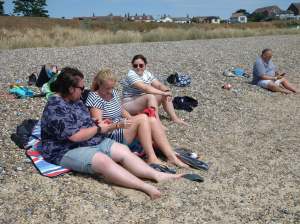
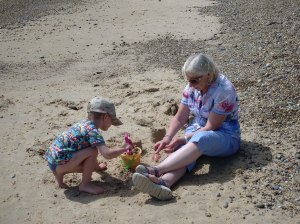
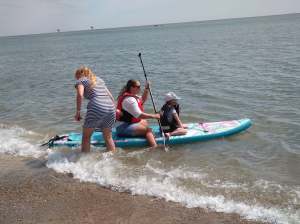
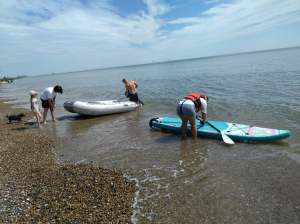
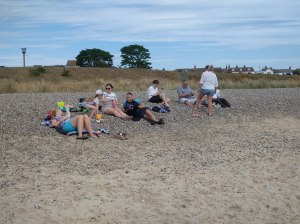
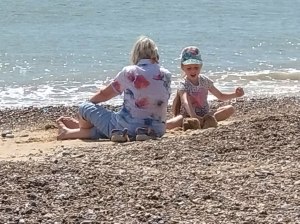 Just twelve minutes later we were staking our claim on a sparsely populated patch of sand and shingle, establishing what could only be described as a temporary Palmer family colony. Buckets and spades soon appeared, sandcastles rose proudly before succumbing to the inevitable tide, and an impressive collection of pebbles preceded a lengthy game of beach petanque. A frisbee flew in every conceivable direction, a football was enthusiastically booted around, and as the offshore breeze strengthened, a kite was flown. Jamie fetched his inflatable boat from the car, attached the outboard engine and ferried the more adventurous members of the family out to sea. Meanwhile, Charlotte launched her inflatable paddleboard, offering similar excursions, although her passengers quickly discovered that this version relied rather more on human horsepower than petrol.
By early afternoon, the fresh sea air had sharpened everyone’s appetite, so we packed everything away and wandered into the village. Fish and chips proved the overwhelming favourite, although there were a few alternative choices for the less traditional. Laden with our feast, we returned to the clifftop and occupied one of the picnic tables, happily demolishing the classic British seaside fare. The ever-optimistic seagulls hovered patiently nearby and were rewarded with the occasional morsel, although they clearly felt we could have been a little more generous.
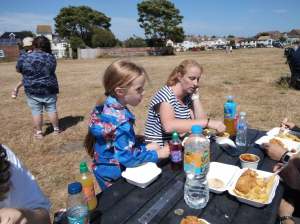 Back at Casa Carlotte, the pace slowed considerably. Some reached for board games, others disappeared behind laptops or mobile phones, while Suraj and Lee undertook the important logistical task of visiting the local supermarket to procure pizzas for the evening. Their mission was a complete success, and the pizzas were later heated in the kitchen and disappeared almost as quickly as they emerged from the oven.
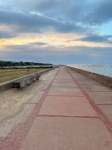 Our evening entertainment was a family walk to Ness Point, Britain’s most easterly location, which Sue and I had explored the previous day. Leaving the house, we descended the cliff from North Parade and, while Alice and Archie happily exhausted themselves in the children’s playground below, the adults sensibly rehydrated with drinks from the nearby beach bar. Refreshed, a game of frisbee inevitably broke out, accompanied by some equally inevitable tree climbing.
As the sun began its slow descent towards the horizon, Alice and Archie treated us to an impromptu display of gymnastics and acrobatics on the outdoor stage. Their energetic performance received rapturous applause from an audience who may have been just a little biased.
 Soon afterwards, the family split into two expeditions. Sue led the larger, more energetic party across the scrubland towards the seawall and Ness Point. I, meanwhile, formed a smaller breakaway faction who concluded that the shortest route to the seawall was also the shortest route back to the beach bar. After careful consideration, and with remarkable unanimity, we decided that further exertion would be reckless and that additional refreshments were the only sensible course of action.
 Eventually, the explorers returned, curiosity satisfied and legs thoroughly tested. Fortunately for them, we had thoughtfully been keeping the bar staff busy in their absence, so they were soon able to quench their thirst and recover from their epic expedition.
As darkness gradually settled over the coast, we climbed back up the cliff to Casa Carlotte for one final drink before turning in. After a day of sea air, sunshine and enough activity to tire even the youngest members of the family, an early night was welcomed by almost everyone, although a few aching muscles quietly reminded us the following morning that we’d perhaps packed rather a lot into one very enjoyable day.
Sunday (26th) began, as expected, with Nala’s enthusiastic wake-up yelp; her version of a gentle alarm clock comes with absolutely no snooze button. Venturing outside, I discovered we’d had a light shower overnight, so I hurriedly rescued the patio cushions before they had the chance to become oversized sponges.
Charlotte, Sarah and the children were the next to rise at 7.30 am, eager to visit Kessingland Car Boot Sale. By 8.30 am the rest of the tribe had surfaced, dressed, some fuelled themselves with breakfast and piled into the cars for the 15-minute drive, crossing the River Waveney en route. Although threatening clouds hovered overhead, they showed admirable restraint and kept their contents to themselves as we wandered up and down the four long rows of stalls. As always, a fascinating assortment of bargains, curiosities and things nobody really needed somehow found new homes, before being discreetly squirrelled away in the boots of our cars.
On the way back, Sue, Jamie, Ruth, Nala and I made a slight detour to Kessingland Beach so that Nala could enjoy a well-earned run across the sand. She approved of this change to the itinerary far more enthusiastically than anyone else.
Sunday lunch had been booked for 12.30 pm at The Wherry Inn on Oulton Broad, but with time to spare, most of the family decided to visit Carlton Marshes Nature Reserve to see what wildlife they could spot before lunch. Ruth, Ellis and I chose a different approach to pre-lunch exercise. Ruth headed off for a run in the park, while Ellis and I settled for the less strenuous activity of putting the world to rights over a chat before joining everyone else at the restaurant.
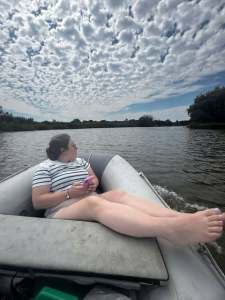
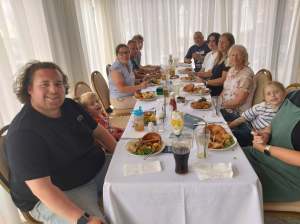 Set on the edge of Oulton Broad, The Wherry promises a peaceful escape, with broad waters, passing boats and a relaxed atmosphere, complemented by classic dishes and generous hospitality. Happily, it delivered on every count. The carvery was excellent and generous enough to leave us all feeling satisfyingly overfed, prompting more than a few mutterings about the urgent need to burn off at least some of the calories we’d enthusiastically consumed.
With this worthy ambition in mind, most of the family set off afterwards to explore a nearby tropical garden. Ellis and I, however, bravely sacrificed further sightseeing in favour of the peace and comfort of Casa Carlotte; someone had to make sure the sofas didn’t feel neglected.
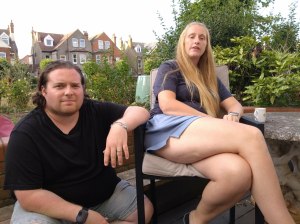
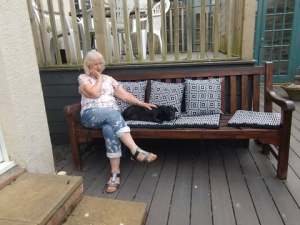 By 4.00 pm we were all reunited back at the house, refreshments once again in hand, admiring the various plants that had somehow accompanied us home from the day’s outings. Funny how a trip to a car boot sale can so easily turn into an unexpected visit to a garden.
The early part of the evening was spent keeping Alice and Archie entertained while we worked our way through the contents of the many doggy bags rescued from our feast at the Lowestoft Tandoori. Eventually, the two exhausted youngsters were packed off to bed for an early night. Ruth had work the following morning, so she and Jamie said their goodbyes and headed back to Waltham on the Wolds.
The rest of the grown-ups then retired to the dining room for several highly entertaining games of Uno. What began as a friendly family card game gradually evolved into something more akin to psychological warfare, with accusations of tactical cruelty and suspiciously well-timed Draw Fours flying around the table. Eventually, however, even the fiercest competitors succumbed to tiredness, and we all climbed the stairs in search of our beds.
Departure day began early, with most of the family (apart from the two teenagers, who clearly subscribed to a different time zone), enjoying breakfast before tidying their bedrooms and returning the lounge and kitchen to the condition in which we had found them three days earlier. By 10 a.m. we were travelling in a loose convoy towards Anglesey Abbey, a National Trust property in the village of Lode, just north-east of Cambridge.
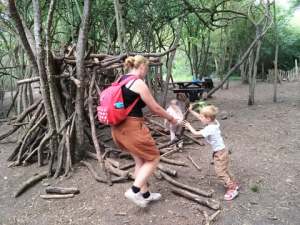
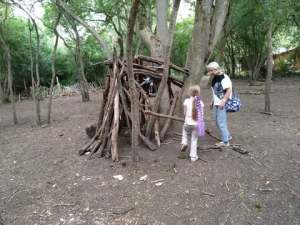 The estate comprises a country house built on the remains of a priory dating from between 1100 and 1135, together with 98 acres of beautifully landscaped gardens and a working watermill. We all reunited around midday and began by exploring the children’s woodland play area, followed by the den-building zone, where the younger members of the family enthusiastically demonstrated that a few sticks and branches could become an impressive fortress.
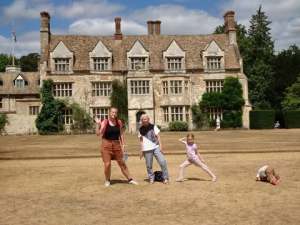 Afterwards we turned our attention to the house itself. The estate was purchased in 1926 by brothers Urban Huttleston Broughton (later the 1st Baron Fairhaven) and Henry Rogers Broughton, who were attracted by its proximity to the racing town of Newmarket. They had inherited an enormous fortune from their American grandfather, the oil magnate Henry Huttleston Rogers, and devoted their lives to breeding racehorses, collecting fine art and creating magnificent gardens. The house is extensive and filled with an impressive collection of paintings, furniture and artefacts assembled by the brothers. It is fascinating to explore and is certainly well worth a visit.
By mid-afternoon we had completed our tour of the house, and with a fair distance still to travel home, Charlotte and her family set off first. Sue and I followed a little later after enjoying an impromptu picnic on a bench near the visitor centre. Still determined to squeeze every last drop from the day, Sarah and her family stayed behind to wander through the gardens, return to the children’s activity area and visit the working watermill.
It has been many years since Sue and I possessed the stamina to pack quite so much into a single day. Although the journey home was slowed by holiday traffic, it passed without incident, and before long I was back in the garden, hosepipe in hand, giving the greenhouse and increasingly desperate vegetable plots a much-needed drink. Judging by their appearance, they had begun to fear they had been permanently abandoned to the relentless drought. With little rain forecast for at least another week and much of Europe continuing to endure extreme heat and devastating forest fires, they may well have had good reason to worry.
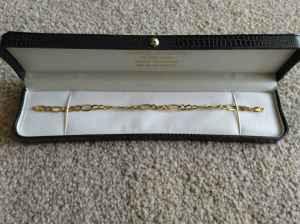
Gold Bracelet

Then and Now
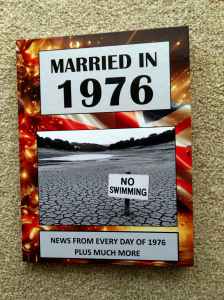
1976 Memories
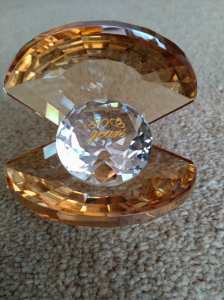
Crystal Memory
July has been a wonderfully busy month for the whole family, full of laughter, adventures and precious time together. Celebrating our Golden Wedding Anniversary felt like the perfect pause amid the whirlwind, a chance to remember that, while the world often seems consumed by meteorological disasters, political corruption, wars, despotic leaders and an uncertain future, the things that truly sustain us are much closer to home.
Fifty years of marriage is a reminder that life is measured not by the headlines, but by the moments we share with the people we love. The world has never been perfect, and perhaps it never will be, yet kindness, family and enduring friendships continue to give us reason for hope.
So here’s to the next fifty years. With a little luck, a great deal of love, and fingers firmly crossed that the planet survives long enough for us to celebrate them.


Leave a Reply