26th January 2020
Our one overnight stay is here in Manaus, the gateway to the Amazon. It serves as the main base for most rainforest expeditions and, in a similar fashion, offers the widest range of tour opportunities for visiting cruise ships.
Last night, we could have forgone our evening meal (perish the thought!) and joined a caiman hunt in small boats, presumably using torches or an onboard searchlight to catch the glow of their eyes in the darkness. These creatures, along with their kin, the crocodile and alligator, are the only animals that truly send shivers down my spine. In my view, these prehistoric carnivores have had their time, and I see no place for such calculatingly dangerous creatures to exist alongside the human race, unless stuffed and displayed in a glass case as a cautionary tale for misbehaving children! Needless to say, we opted to stay on board and enjoy a ‘Burns Night’ celebration with traditional Scottish fare instead.
Rather than dashing off on yet another river excursion or seeking the comfort of an air-conditioned coach for a rainforest discovery, Sue and I decided to spend the day exploring the city that we had travelled so far to reach.
After an early breakfast, we disembarked and took the complimentary shuttle bus to the harbour terminal, just a short distance away. Having planned our route weeks in advance using Google Earth, I had saved the necessary map in Google Maps on my phone. However, as I have discovered before, Google’s offline maps can be frustratingly awkward and buggy. In future, I’ll stick to the far more reliable ‘Here Maps,’ which has served me well in the past.
Aware of the many warnings, both in the literature and over the ship’s tannoy, about pickpockets in the city, I chose to travel light. No rucksack or camera (I would rely on my phone), and the small amount of cash I carried, like my phone, was securely stowed in the zipped pockets of my shorts, along with the boarding card required for re-entry onto the ship.

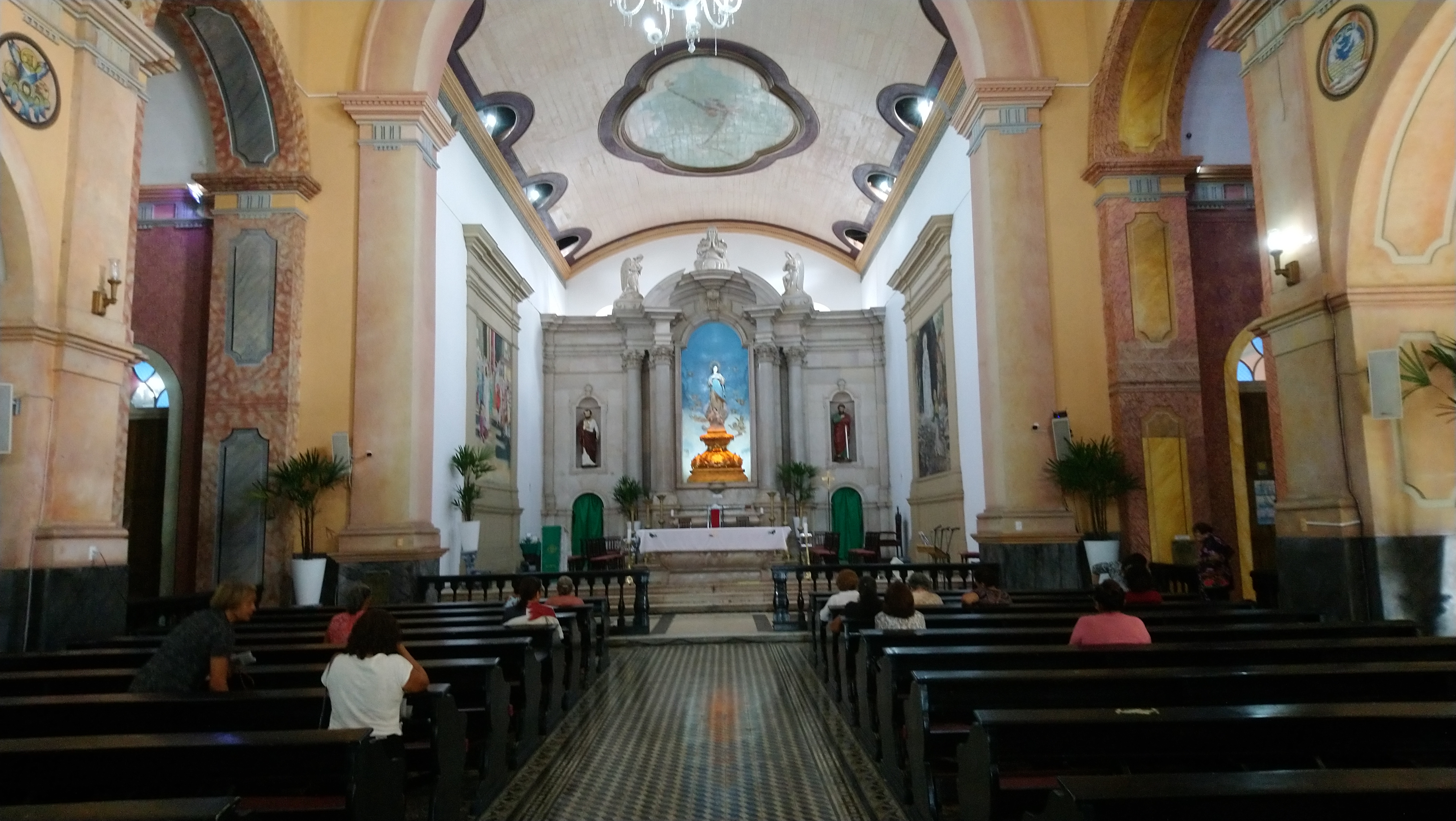
Rejecting the persistent attention of taxi drivers at the terminal, we set off to visit the city’s cathedral, Our Lady of the Conception, just a short five-minute walk away. Though still early, the sky was clear, and the heat and humidity were already building rapidly. We had been concerned that, being a Sunday, many of the places we hoped to visit might be closed, but as it turned out, we needn’t have worried.
The cathedral stood atop a small hill, safely above even the worst Amazonian floods. In front of it lay a pleasant, tree-filled park, with winding cobbled paths leading up to a rather steep flight of steps to the entrance, quite the penance for any sinner with a physical impairment!
Running alongside the cathedral, in the centre of the main street, stood the ‘Little Big Ben’ of Manaus. Despite its name, it bore little resemblance to its London counterpart, aside from the fact that it was, indeed, a clock on a tower.

Inside the cathedral, it was refreshingly cool. Though not as elaborate as many we have visited, it was all the better for its simplicity. Scattered among the pews sat a variety of the city’s citizens, some gazing quietly at the modest cross on the altar, others with heads bowed, possibly in prayer or perhaps just dozing.
In a side chapel, I struck up a conversation with one of the parishioners, me in English, he in Portuguese, yet somehow, we managed to exchange names, where we were from, and the fact that I had three children while he had two. A considerate policeman intervened and, also speaking Portuguese, insisted that we visit the adjacent museum to see the sacred icons. With great thoughtfulness, he guided us to its rather inconspicuous entrance. We lingered there for a while, appreciating the cool interior; it seems you can’t have an icon publicly sweating!
We continued along our planned route, weaving through the bustling street market, where people were engaged in a spot of holy-day shopping. Food stalls lined the way, offering unknown delicacies with tantalising aromas whispering, Try me. As a family, we’ve sampled street food in many a questionable country over the years without suffering any ill effects. So why, I wondered, did the ship’s ever-present mantra keep playing in my mind? Make sure everything is properly cooked, check that glasses and cutlery are clean, avoid eating fruit skins, and be mindful that refrigeration may not be up to the standard you’re used to. Avoid ice cubes… and so on.

Guiltily, we resisted the temptation to sample even the smallest morsel. Well… we had just had breakfast, hadn’t we? I bet they would have tasted exquisite. Damn you, Magellan!
At the top of the street lay the next item on our list: the Manaus Opera House. Built entirely from imported European materials and inaugurated in 1896, the Teatro Amazonas stands as a symbol of the region’s former ‘golden era’ during the rubber boom. According to the literature, it’s ranked as one of the world’s most elegant theatres, and I must agree. It’s truly magnificent, easily on a par with the Royal Albert Hall in London, if not better.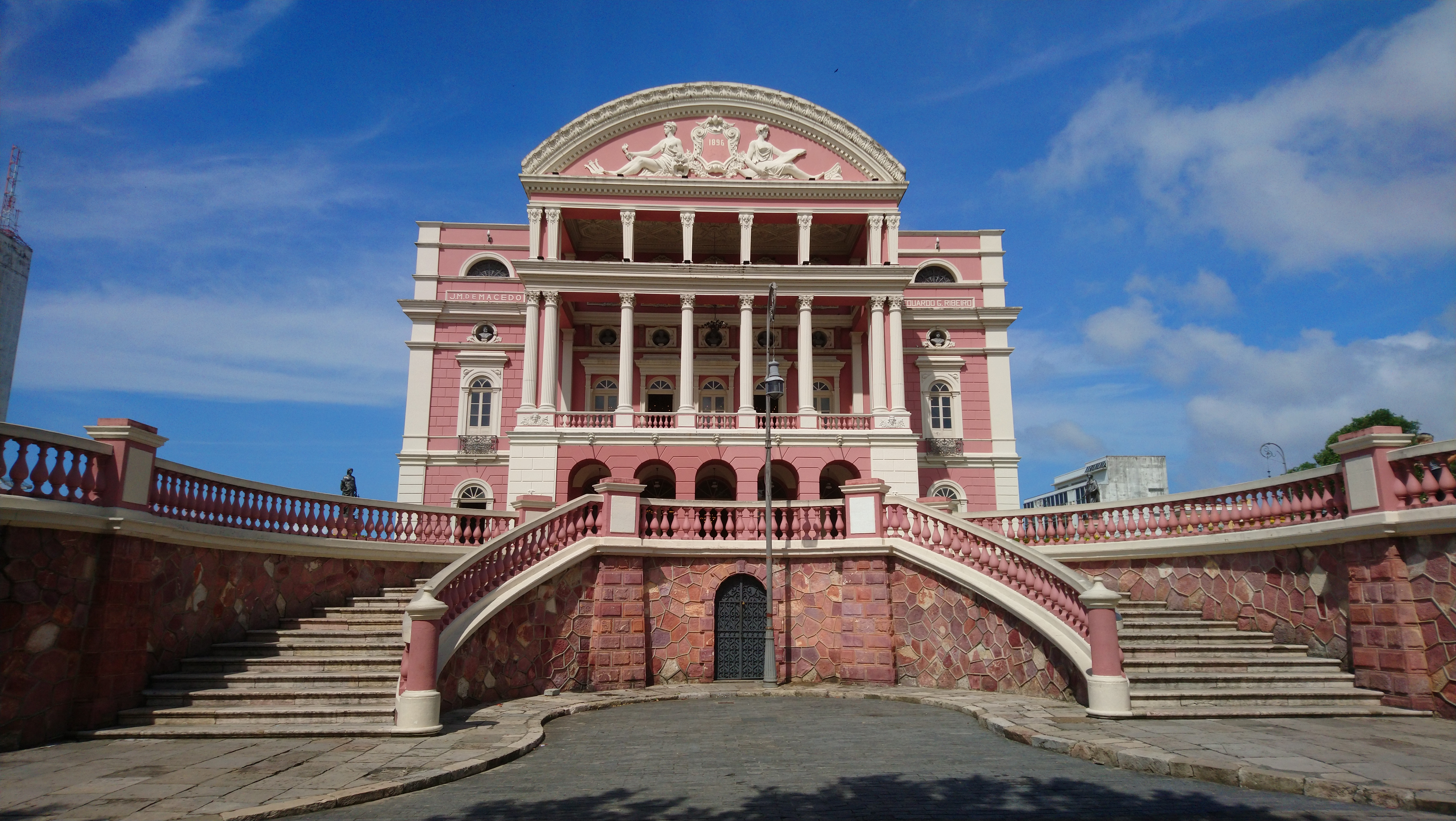
Pleasingly, the ticket office accepted our $10 entrance fee, and we joined a small group of fellow visitors under the guidance of one of the staff. As is often the case, the tour was conducted in English, widely acknowledged as the universal language, leaving other nationalities to navigate any language barriers on their own.
Our guide was young but, as you’d expect from someone employed at the state’s premier attraction, highly knowledgeable. We learned about the building’s construction, the materials used, the people responsible for its creation, and some of the notable productions staged there over the years. The theatre is still actively used for opera and plays, though fortunately for us, not today, otherwise, it would have been closed to tourists.
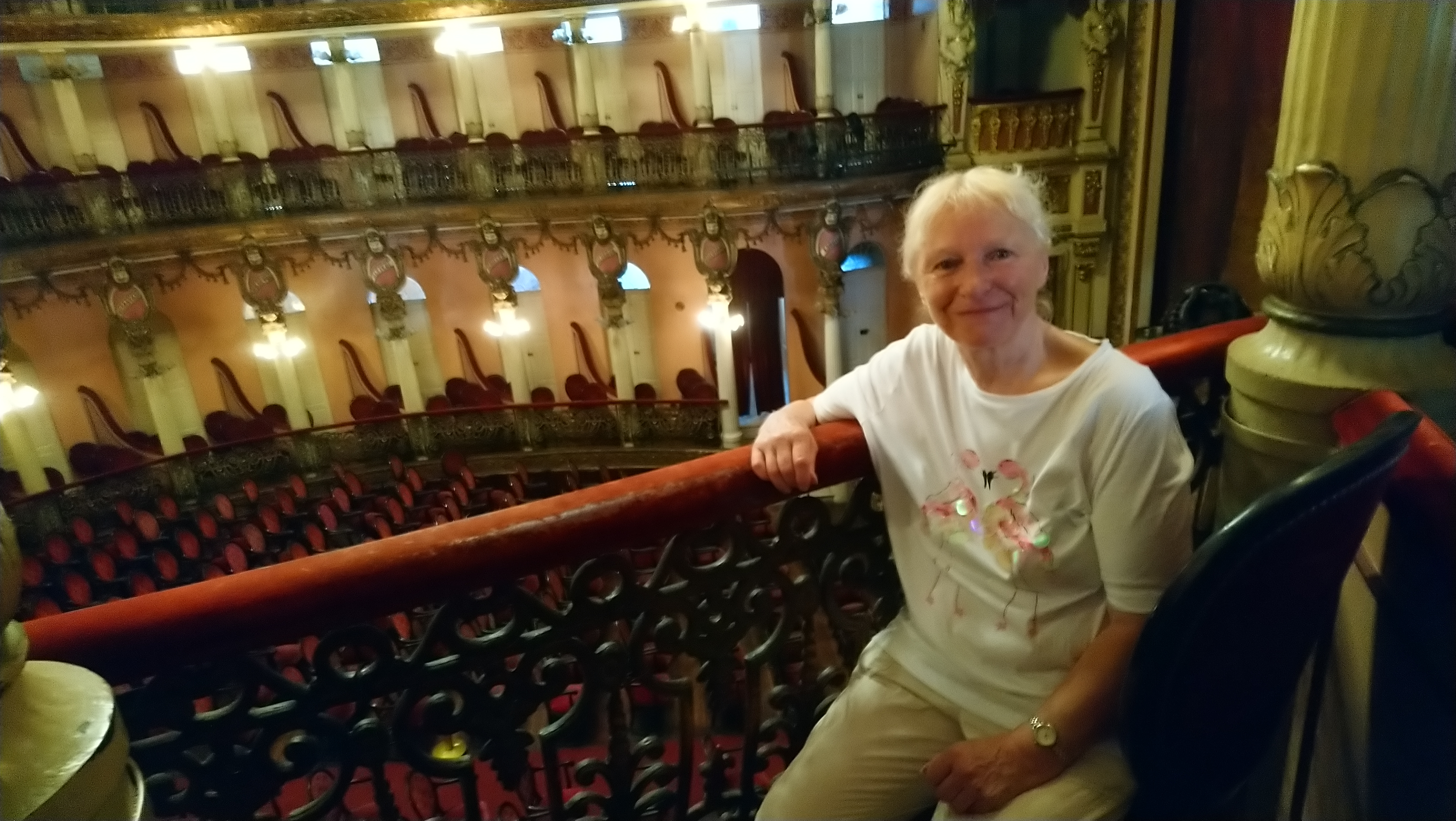
We sat in the private boxes, spread across five levels, before passing through the ridiculously elaborate ballroom, now no longer in use. Along the way, we admired numerous busts of composers, Rubber Barons, and Brazilian dignitaries. We marvelled at the many paintings on display and the remnants of the original décor, now preserved in small sections behind protective glass.
The opulence was as breath-taking as the extravagant attire once worn by opera-goers, lavish garments shipped from Europe, entirely unsuited to the Brazilian climate. The women must have endured considerable discomfort in the name of fashion.
The Teatro Amazonas is a place well worth visiting. Though it wasn’t on my bucket list, it certainly should have been.
Google next guided us through the increasingly oven-like city streets to the 19th-century colonial-style Palácio Rio Negro. Originally built as the private residence of German rubber baron Waldemar Scholtz, it later became the Governor’s residence. The building sits at one end of a small, elongated park that follows the course of a narrow stream, eventually spilling into the Rio Negro.
Unlike many of the buildings we passed on our way, Palácio Rio Negro is remarkably well preserved, a striking contrast to the surrounding architecture. Now thoroughly roasted, we were overjoyed to discover that the building housed a ‘rest’ room with blissfully icy air conditioning. Heaven! Sitting on top of an air-con unit with chilled air blowing between a raised T-shirt and skin is, without question, one of life’s great pleasures!
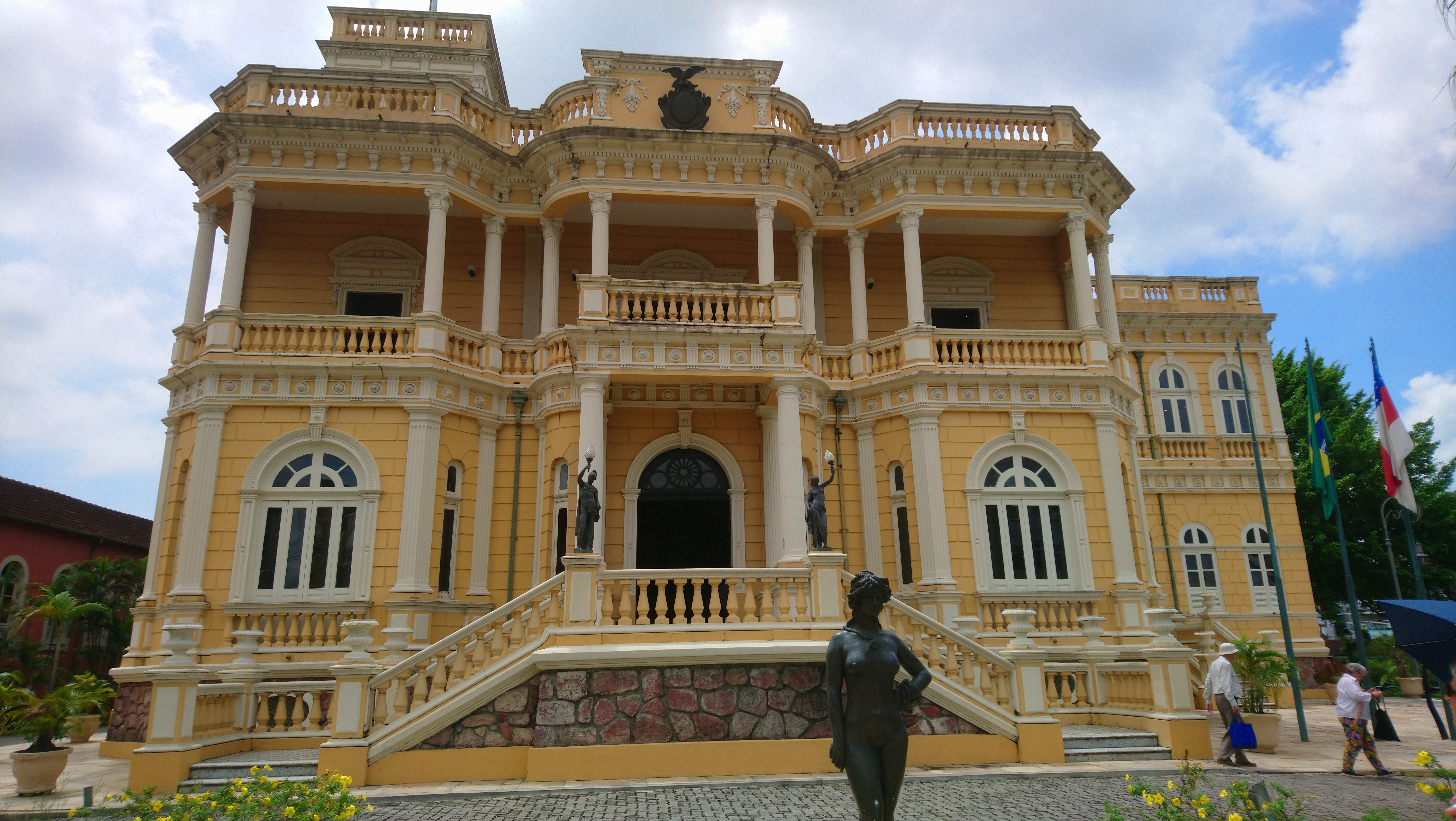
We lingered here for quite some time before exploring this free yet intriguing glimpse into another rubbery slice of extravagance. A handful of other visitors had also taken time out of their day to explore, mostly Brazilians with a keen interest in their history. Most exhibits had brief descriptions in English, while the paintings, curiously, were largely European scenes. Oddly enough, one even featured Blériot’s first flight.
Having thoroughly explored the rooms, we indulged in a final blast of freezing air before bracing ourselves for the journey back to the ship. Google directed us through the park and then along the riverfront, leading us in a wide arc back to the terminal. Once beyond the park, the route became far less picturesque, past rows of weathered, poorly maintained boats moored against a crumbling concrete embankment. Across the water, the favelas came into view: small, square houses stacked precariously atop one another, with barely any space in between, seemingly marching up the hillside. Not a place a European would, or should, venture at any time of day.

The sun was high, merciless, and unrelenting. Heat radiated off the road and walls; there was no escape. Our walk quickly turned into a trek, then a slog. It wasn’t far, but by the time we reached the sanctuary of a cool shuttle bus, we were utterly drained.
Five minutes later, we climbed the ship’s gangplank, Sue scuttling off to the cabin for a cold shower while I made a beeline for the ice dispenser in the buffet restaurant. Aaaah… bliss!
Many glorious gulps of freezing liquid later, Sue joined me. Swapping roles, I descended below for what I soon discovered was a not-so-cold shower (curse that Brazilian sun!) while Sue took over monopolising the ice dispenser.
Weeks ago, we had planned to venture out again in the afternoon to visit the MUSA Amazonian Museum and the fish market, both conveniently close to where the ship was berthed. But the cool cocoon of the Magellan proved too tempting. They would have to wait for another time, perhaps.
At 6 p.m., the ship drew anchor, eased away from her berth, and bid farewell to the principal city of the Amazonas. Yes, Manaus, you gave us a hard time today, but your wonders are considerable, and we only briefly scratched the surface. I’d love to return one day, to see more, to experience more.
 Palmer Family
Latest Comments