6th June 2022
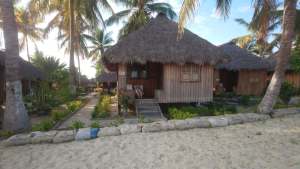
Our bungalow.
Other than the gentle sound of surf on soft white sand, a good night’s sleep was aided by complete silence. We were among the first to arrive for breakfast at 7:10 am, and the fare was the best we’ve had so far. The only issue was the rectangular slabs of butter, which caught many out (including Sue), as they were easily mistaken for small blocks of cheese.
Today was a rest day. Many in the group chose to stay by the pool, venturing occasionally to the beach, while we opted for a walk along the shore towards the town centre. The sea was refreshingly cool, and we preferred wading in the shallows to trudging through the hot sand. Along the way, I arranged a river trip with a local fisherman for later in the day. However, after a mile of walking under an increasingly fierce sun, Sue decided to opt out and not accompany me, preferring to remain in the shade of the hotel.
Our trek along the coast revealed clear evidence of the two cyclones that struck the island last March. Many buildings had been flattened or left beyond repair; it was remarkable that our hotel, comprising individual bungalows, seemed untouched.
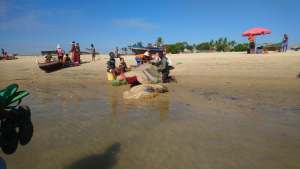
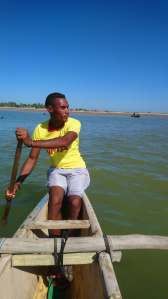
Leaving Sue to cool off in our bungalow, I met up with my new fisherman friend, Edgar. We wound our way through a series of alleyways to where his dug-out canoe was pulled up on the muddy bank of the river, which emptied into the sea further along the beach. With the help of a friend, he launched the craft, with me already on board, into a slow-moving, mangrove-lined waterway.
Edgar spoke excellent English and, as expected, was very knowledgeable about the local fauna and flora we paddled past. Frustratingly, many of the bird species he pointed out had already flitted away by the time I had my camera ready. We pursued a strikingly blue kingfisher for several hundred metres before I finally managed to snap the elusive little tease. Most of the other birds, however, escaped my slow-witted reactions!
The only creatures that were easy to photograph were the numerous blue land crabs scuttling around the mangrove roots, but I didn’t bother with them.
Reaching the estuary, we diverted slightly into another river and landed on a small sandbank, which allowed us to leave the canoe and wade across to a fishing village on the far bank. On the shore, many locals were patiently waiting for ferry canoes to take them to a market just down from our hotel. Edgar led me on a gentle walk through this bustling little settlement, originally established by Norwegian missionaries in the mists of time.
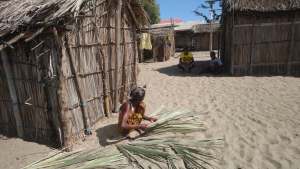
In a part of the village set aside for boatbuilding, we came across an old lady weaving mats from palm leaves, while her husband sat in the shade of their hut. I sat with him for a while, chatting aimlessly. He probably understood nothing of what I was saying, and I certainly couldn’t make sense of his replies, but we smiled and laughed together before I shook his hand and wished him well.
We explored the village thoroughly, wandering through its alleys and open spaces. Edgar chatted with friends and answered my many questions. He’s 34, married, and has a young daughter; attracting tourists to the village is now his main source of income.
Returning to our canoe, we crossed the estuary to a beach on the far shore. After a short stroll, we arrived back at my hotel, where Sue was reading on the verandah of our bungalow. Together, we headed to the restaurant for a lunch of soup and fish.
By now, the sun was high in the sky and far too hot for Sue to venture far. Keen to visit the town market, I left her in the shade of the verandah and trekked into the furnace along the coastal road. The vegetable market proved rather disappointing, vendors crouched in the shade while their produce slowly cooked on the pavement under the blazing sun. I opted to return to the hotel by rickshaw and was glad of the decision, judging by the sweat pouring from the peddler as he strained to haul my fish-and-soup-laden stomach to its destination.
At 3.30 pm, our group gathered for a 22 km drive to the Avenue of Baobabs, one of the highlights of our trip and the reason we had endured a 12-hour minibus journey to get here. The final 11 km was along a very bumpy dirt track, shared with ox carts and lorries. The dust was thick and relentless, but we were sealed in our air-conditioned metal and glass cocoon. It was only the locals on foot who choked in the swirling clouds.
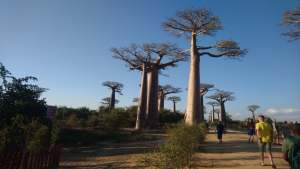
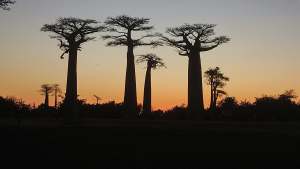
We stopped a couple of times to photograph solitary examples of these extraordinary trees before continuing to the avenue itself. Here, Sue and I took dozens of photos, many destined for deletion, before positioning ourselves for the grand finale at sunset. This is the moment when iconic images of these trees so often appear in glossy magazines and travel brochures.
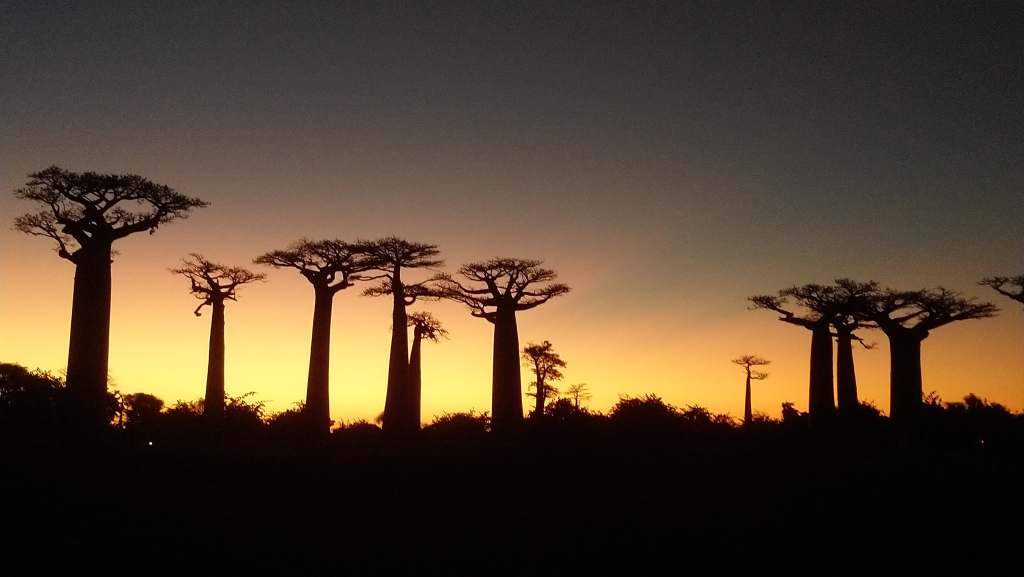
As the sun began to dip towards the horizon, I found a spot where it would set between two fine specimens and began shooting in sunset mode. I was prepared to be underwhelmed; the silhouettes against a yellow-tinged sky were impressive, but not quite what I’d hoped for. Then, momentarily distracted by a group photo with the trees as our backdrop, I almost missed the first signs of real colour spreading across the heavens.
All conversation ceased as we stood in awe, watching a spectacular palette of reds, oranges, and pinks flood the sky. Even a few birds took to the air, seemingly as captivated by the scene as we were. Eventually, with SD cards suitably full, we reassembled in the deepening dusk as moonlight and stars began to claim the sky. It had been more than worth those bone-rattling hours in the minibus.
Back at our accommodation, we gathered once again with the group for an evening meal and plenty of refreshments, before retiring ahead of another early start, our journey north due to begin at 6:30 am.
7th June 2022
Today began with another very early start on our journey back to Antsirabe. Departing at 6 am, we retraced the route taken two days earlier, though instead of a steady descent into the evening darkness, we now wound our way ever upwards towards our accommodation at the Coloeur Café Hotel.
There were frequent bush stops for those in need, and we lingered for a while in a bustling street market in one of the mountain villages. Strangely, it’s Easter in Madagascar at the moment, and with a large Christian population on the island, today, Easter Monday, meant no school and plenty of locals dressed in their Sunday best. In contrast, the north of the island is predominantly Muslim.
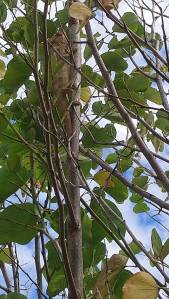
We stopped once more at the restaurant previously visited, perched high in the mountains and again enjoyed an excellent lunch. Our eagle-eyed guide spotted a green chameleon climbing in one of the garden trees. Although it seemed determined to remain hidden, some of us managed a half-decent photo through the tangle of twigs and leaves.
Later in the journey, the bus came to a sudden halt when the guide spotted another chameleon as we passed through a small village. We quickly disembarked, only to discover, disappointingly, that although it was vividly coloured, it had sadly been squashed on the road. Hopefully, it wasn’t by our vehicle. Respectfully, we put our cameras away. The locals looked on with bemusement at our odd little gathering around what was, after all, just a bit of roadkill. Still, I’m sure they’d do the same if they had been in the UK and it had been a flattened hedgehog!
Once again, the latter part of our journey took place in darkness, but this time, we were navigating a winding mountain road with a perilous surface and little to no signage. To add a little extra spice, we drove through twenty minutes of torrential rain. The road was busy with locals, carts, and oxen. With no electricity in these villages, there’s no street lighting, and the roadside stalls clinging to the verges were dimly lit by small, handheld torches.
The rare, oncoming vehicles rarely dipped their headlights, leaving everyone else dazzled, so it was little surprise when our driver, by now eleven hours into his shift, collided with a Madagascan bobsleigh. These are low, flat carts on small wheels, pushed from behind by two people and used to transport all manner of goods. Thankfully, there was minimal damage, but it served as a stark reminder of how dangerous night driving can be here. I certainly wouldn’t attempt it.
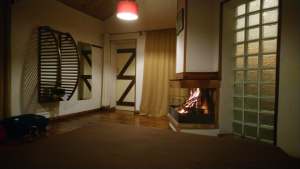
We finally arrived at our hotel around 7 pm and were relieved to find we’d been given the same room as before. One of the staff kindly lit the fire for us, and we settled in with some snacks we’d brought along. With the internet connection surprisingly fast, we spent the rest of the evening catching up with the news on our phones.


Leave a Reply