(4th June)

A bleary-eyed breakfast at the ungodly hour of 5.45 am was the prelude to a long and arduous journey to Morondava, in the arid southwest of Madagascar. Our marathon trek, lasting 14 hours, began and ended in darkness, leaving us thoroughly exhausted and more than ready for bed.
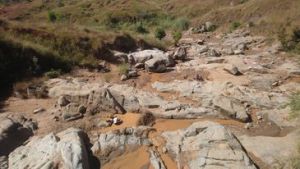
We set off from the cool, damp heights of the Madagascan plateau and descended gradually to the hot, humid lowlands at sea level. Along the way, there were, of course, several stops: essential “bush breaks” to relieve ourselves behind trees, boulders, tufts of grass, or whatever cover the landscape afforded. We paused for lunch at a restaurant boasting spectacular views of the valley below, and made several brief scenic stops to photograph rivers, waterfalls, bridges, and, memorably, a lone chameleon, spotted on a tree by our eagle-eyed guide as we passed in the bus. We also encountered a spirited local man panning for gold in the river below a bridge. As we looked on, he triumphantly unearthed a few shimmering flakes and proudly told our guide that this modest endeavour was funding his son’s university education.

Our winding and often precarious route took us along a road whose surface ranged from hazardous to downright dangerous. The final stages, driven in darkness, brought additional hazards, cattle and locals looming out of the gloom like ghosts. As we descended from the high plateau, the scale of deforestation became starkly apparent. Sadly, there was ample evidence of slash-and-burn practices still in use, stripping the landscape and causing erosion, an environmental tragedy with consequences for both the planet and the local population. There was much to observe and keep the mind engaged, though forestry, regrettably, was not among the highlights.
Early in the journey, we passed through many small settlements, their inhabitants industriously engaged in farming, working in fields, herding zebu cattle along the road to fresh pasture, or marching purposefully towards unseen tasks. Though clearly poor, they worked with dignity and always greeted us with smiles and waves. At one river crossing, we stopped, and Sue kindly handed out a packet of pens she had thoughtfully brought for just such an occasion, delighting a crowd of eager, beaming children.
As we neared our destination, the landscape grew increasingly parched. Shrubs and trees gave way to tall, scruffy grasses with razor-sharp edges. Then, as we approached the coast, vegetation and small settlements became more frequent once more. A spectacular sunset painted the sky in vivid reds and oranges, and through the deepening twilight, we began to glimpse the strange silhouettes of Baobab trees, eerily majestic, like sentinels of another world. They are, indeed, peculiar-looking trees.
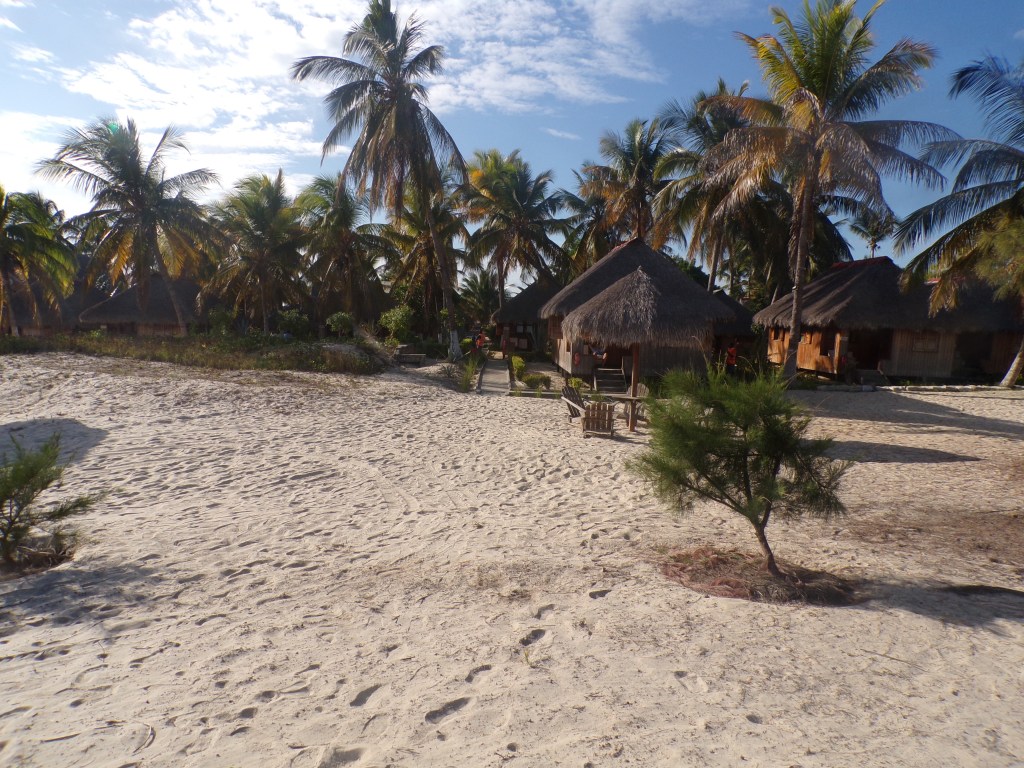
We arrived at our accommodation, Renala au Sable d’Or, around 8 pm. After checking into our beachside chalet, we enlisted the help of a staff member to force open my stubborn suitcase, which had decided to jam shut. With that solved, we shared a few snacks left over from the day before and gratefully settled down for the night.
 Palmer Family
Leave a comment