1st February 2020
The night before we were due to drop anchor off the port of Icoaraci, situated on the banks of the Pará River, Sue wasn’t feeling too well; she had cold shivers and a sore throat, so she wisely opted for a bowl of warming soup in the buffet before heading for an early night.
By the following morning, she was feeling much better. Dosed up with paracetamol, she declared she was looking forward to our trip down the Guamá River to the small island of Boa Vista do Acará, where we would experience the rainforest.
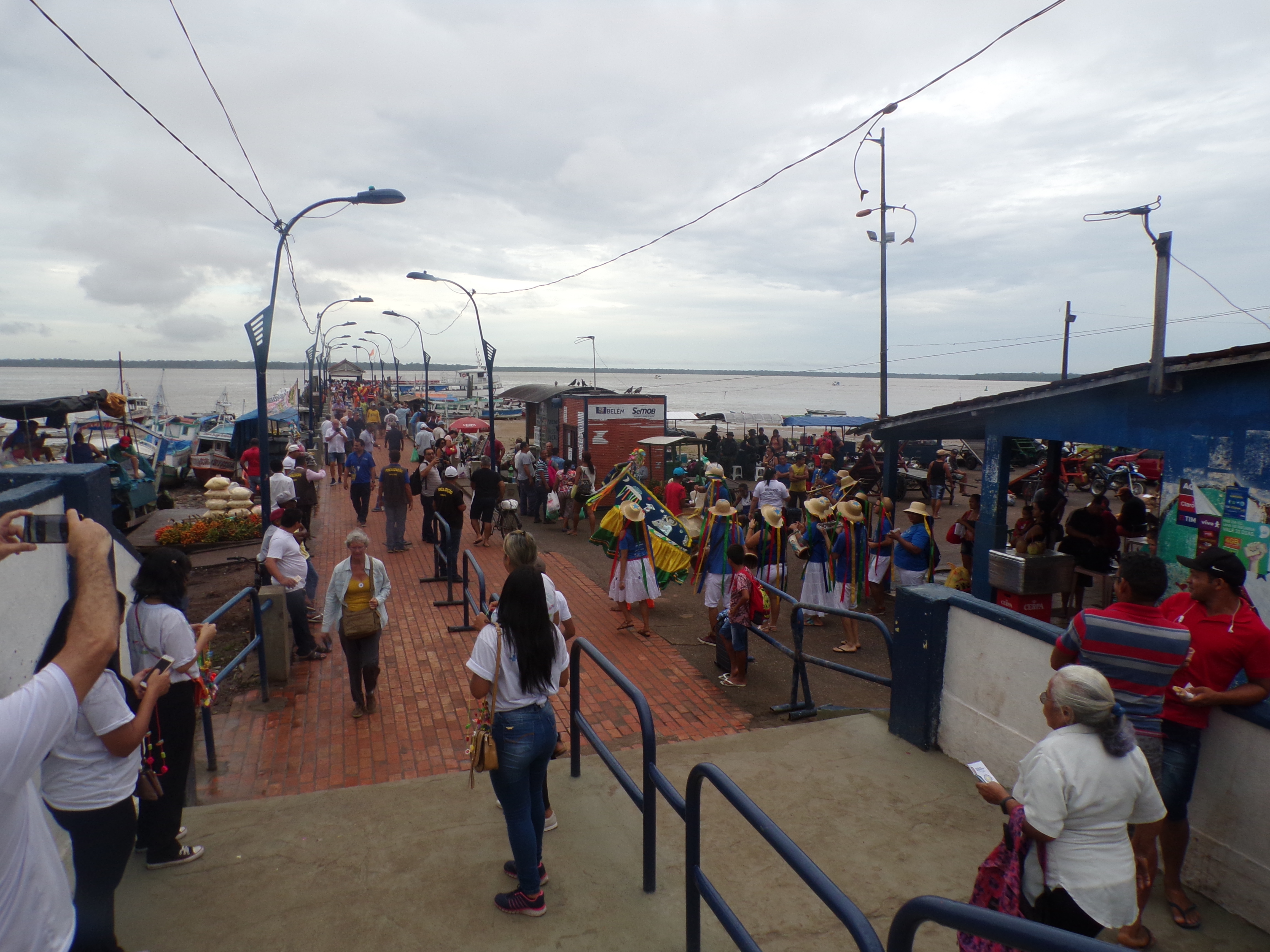 The Magellan arrived at 6:30 am, anchoring about half a mile offshore. Icoaraci serves as the gateway to the city of Belém, which takes its name from the Portuguese for Bethlehem. In the past, it was the most popular tourist stop in Amazonia, but Manaus has since taken over that mantle.
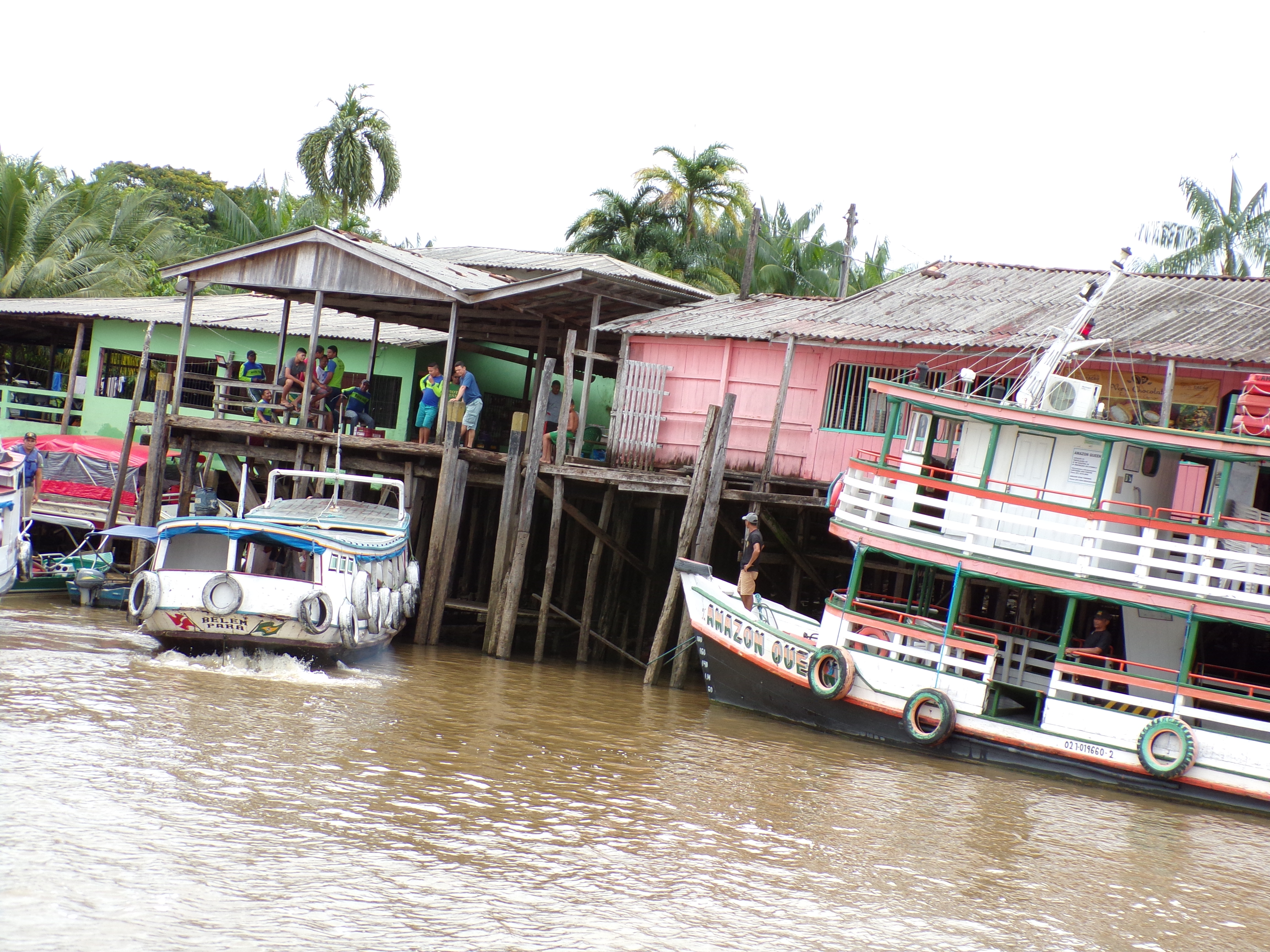
 We took a tender boat over to one of the many piers, tightly packed among moored ferries, fishing boats, and other commercial vessels. Throughout the day, the tender crews had to jostle for space, struggling to maintain their small section of the pier against incoming local craft, searching for a place to tie up. Eventually, they devised a clever trick; the moored tender wouldn’t leave until another one had arrived to swiftly take its place. However, this meant that passengers on the outgoing tender had to remain in cramped conditions for much longer than usual.
Safely on land, we passed hordes of locals heading in the opposite direction to catch one of the dozens of available ferries. Many took the time to cheerily say hello. The authorities had arranged a band and a colourful dance troupe to welcome us; however, I couldn’t help but wonder whether their presence was actually to celebrate their citizens departing for work.
As we left the pier, something stood out: there was a heavy presence of police and troops, as is often the case in South American countries. No doubt this was intended to reassure arriving foreigners, but for me, it always has the opposite effect!
We boarded a refreshingly cool, air-conditioned bus. Amazonian coaches are not renowned for their comfort or functioning air conditioning, so this was more than welcome. We had about an hour’s drive to the port of Belém, which, unfortunately, is too shallow to accommodate a ship the size of the Magellan.
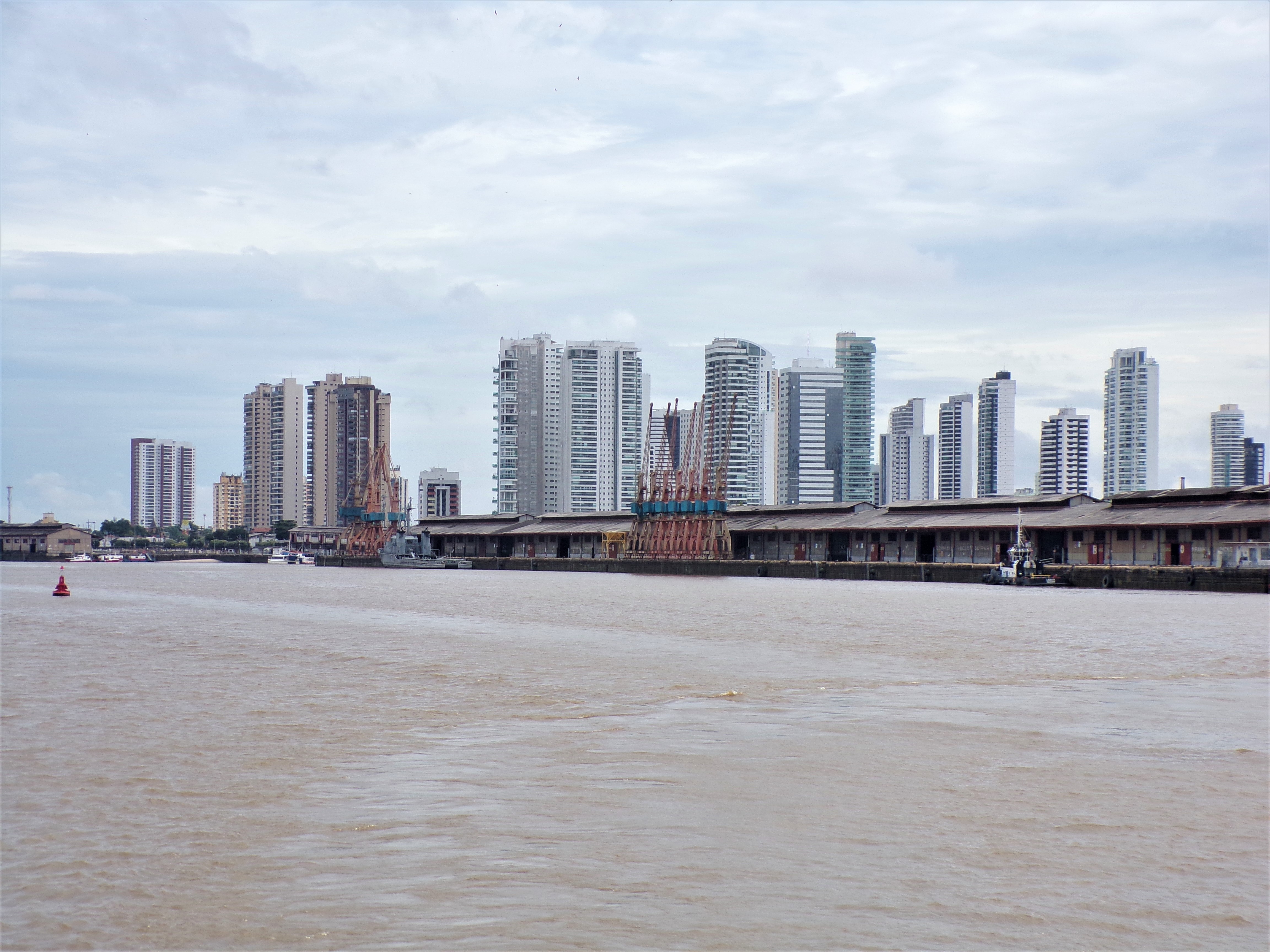 It was clear that Icoaraci, once a thriving and important industrial hub, had now fallen on hard times, and its citizens were living in extreme poverty. The decrepit buildings and appalling living conditions stretched all the way to the wealthy skyscraper apartments in central Belém. The city had once boasted many magnificent buildings, but years of neglect had left them in a state of disrepair, a ramshackle shadow of their past glory.
To make matters worse, graffiti was scrawled everywhere, even over newer structures. Not the artistic, thought-provoking kind seen in the works of Banksy-inspired street artists, but crude black squiggles and slashes that defaced buildings for no reason other than the gratification of a warped mind.
Ten cruise ships used to visit this city every month. That number has now dwindled to just ten in six months. Don’t these vandals realise why?
To make matters worse, the city, once known for its quiet, peaceful atmosphere and reputation as a safe place to live, has become anything but. Since Rio and the larger cities further south cracked down on their appalling crime rates, the ‘bad guys’ have moved north to cities like Belém. Now, as in Rio, razor wire and steel bars are everywhere, surrounding most buildings of any value.

On the journey out of Icoaraci, I became quite adept at spotting local gang members keeping watch over their territory from street corners, knowledge no doubt enhanced by watching Colombian and Mexican gangland series on Netflix. Some, exuding a quietly sinister yet calculated coolness, brazenly wore bulletproof vests, presumably in preparation for the occasional shoot-out.
We arrived at the regenerated and surprisingly smart-looking dock, where we boarded our craft for the trip down the Guamá River, accompanied by four heavily armed police officers. The boat was identical to many of the small ferries plying their trade up, down, and across the Amazon: two roofed decks for protection from the sun and rain and, for the benefit of us soft foreigners, rows of plastic garden chairs to sit on.
It was immediately obvious from the other boats around us that the locals didn’t get the luxury of seating. Instead, they stood, crouched, or, on occasion, slung a hammock from an internal post, far more practical for a long journey.
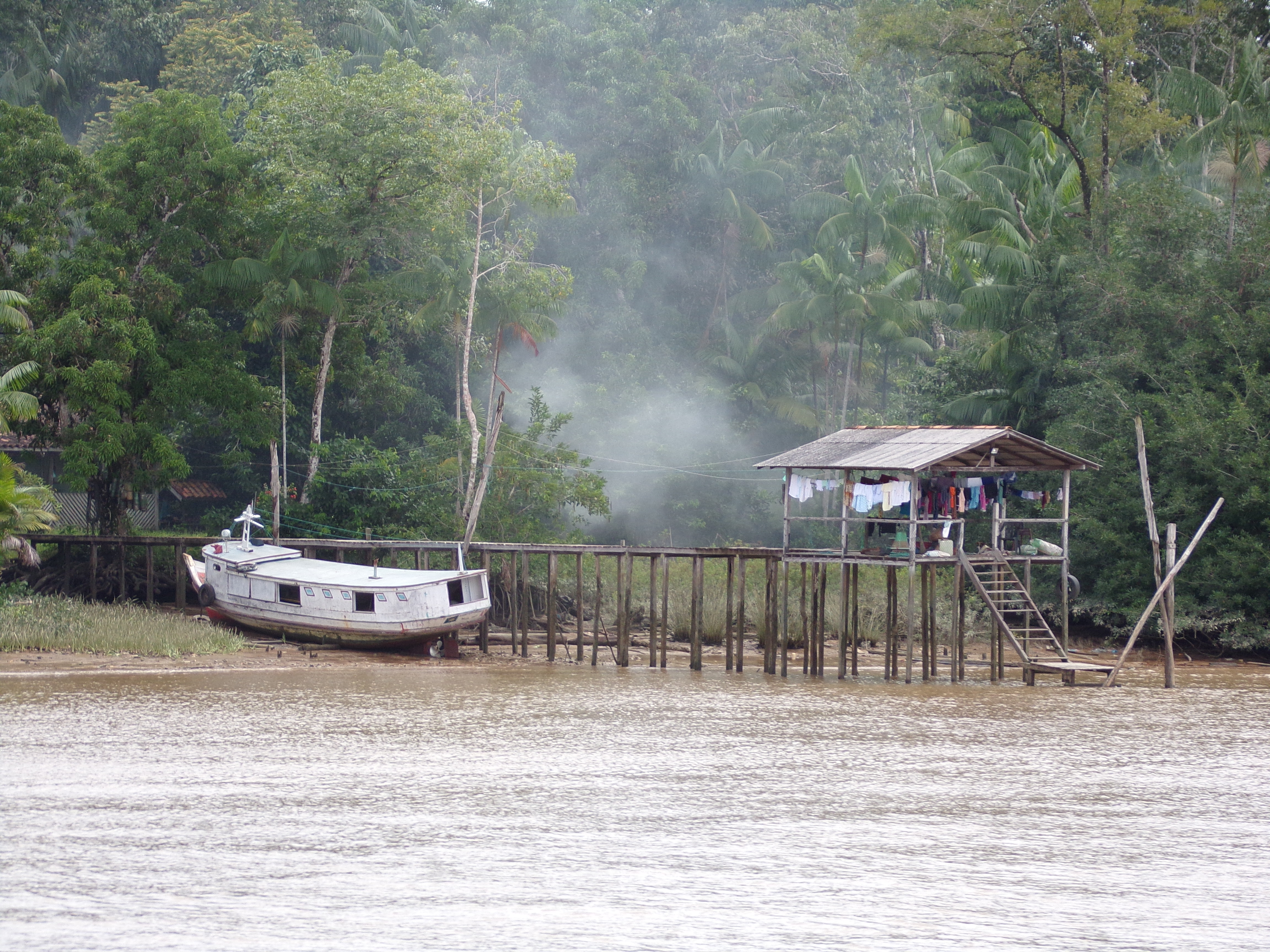 As we headed up the Pará River, its waters stained brown by the erosion of thin rainforest soil, we watched the line of city skyscrapers slowly fade into the distance. Our attention soon shifted to the barges, precariously laden with motorised vehicles, crisscrossing our path, as well as the occasional small motorboat zipping by, usually carrying just one or two occupants.
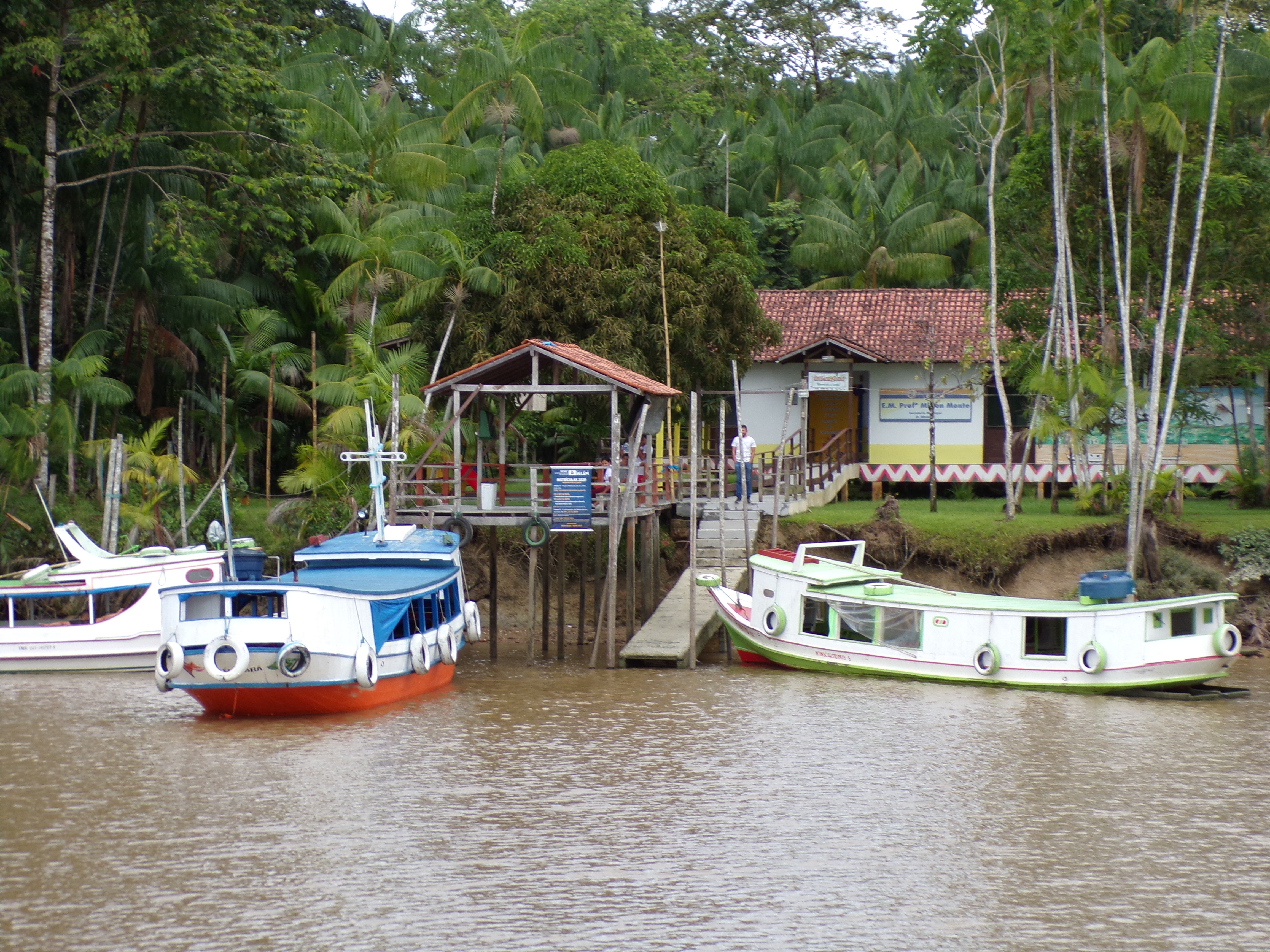 Turning out of the main channel, we glided into the much narrower Guamá River. Here, the rainforest pressed in much closer on both banks. Long stretches of the shoreline were lined with mangrove-like bushes, thin, spindly trunks exposed by the low tide, growing directly from the river mud.
Every so often, we passed a wooden jetty protruding into the thick sludge, often with a beached canoe alongside. Beyond the jetties, elevated wooden walkways led into the forest, where rudimentary wooden dwellings, partially hidden among the trees, provided shelter for local inhabitants. Whenever we passed an occupied home, we were met with enthusiastic waves from its residents, gestures that some of us cheerfully returned.
The river traffic here consisted mostly of small boats, often carrying entire families. Their engines roared as they raced past, only to be forced to slow as our backwash threatened to swamp them.

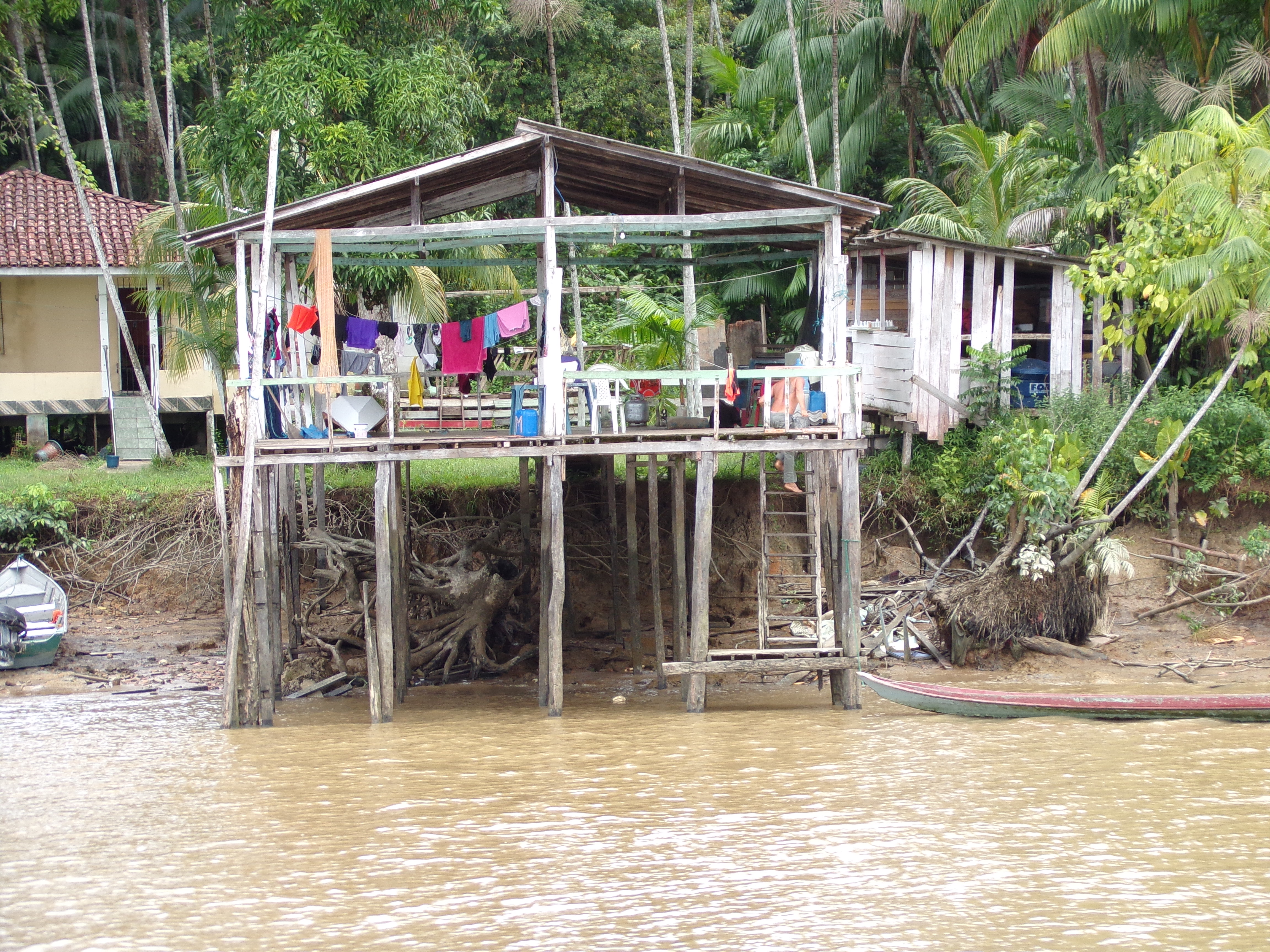
Before long, we pulled alongside a jetty noticeably larger than any we had encountered so far. It appeared to be the main departure point for a small settlement. Several moped taxi riders were perched on a low wooden fence, chatting idly as they waited for business from the frequent boat arrivals. However, during our visit, I didn’t see anyone take them up on their services.
Disembarking, we were each issued a hard hat, supposedly as protection from falling Brazil nuts. Have Brazilian health and safety gone mad? Perhaps. But this was the season when Brazil nuts plummeted from heights of over 30 metres! I was soon to discover that these nuts grow inside a shell remarkably similar in both size and appearance to a coconut, with up to fifteen tightly packed inside. A direct hit from one of those would certainly leave a mark!
Annoyingly, a tune kept running through my head: Brazil nuts keep falling on my head…
After a short walk to a small cluster of thatched huts, we watched a demonstration by a sprightly old gentleman, dressed only in a pair of tatty shorts, on how to crack open these ‘coconuts’ and extract their contents.
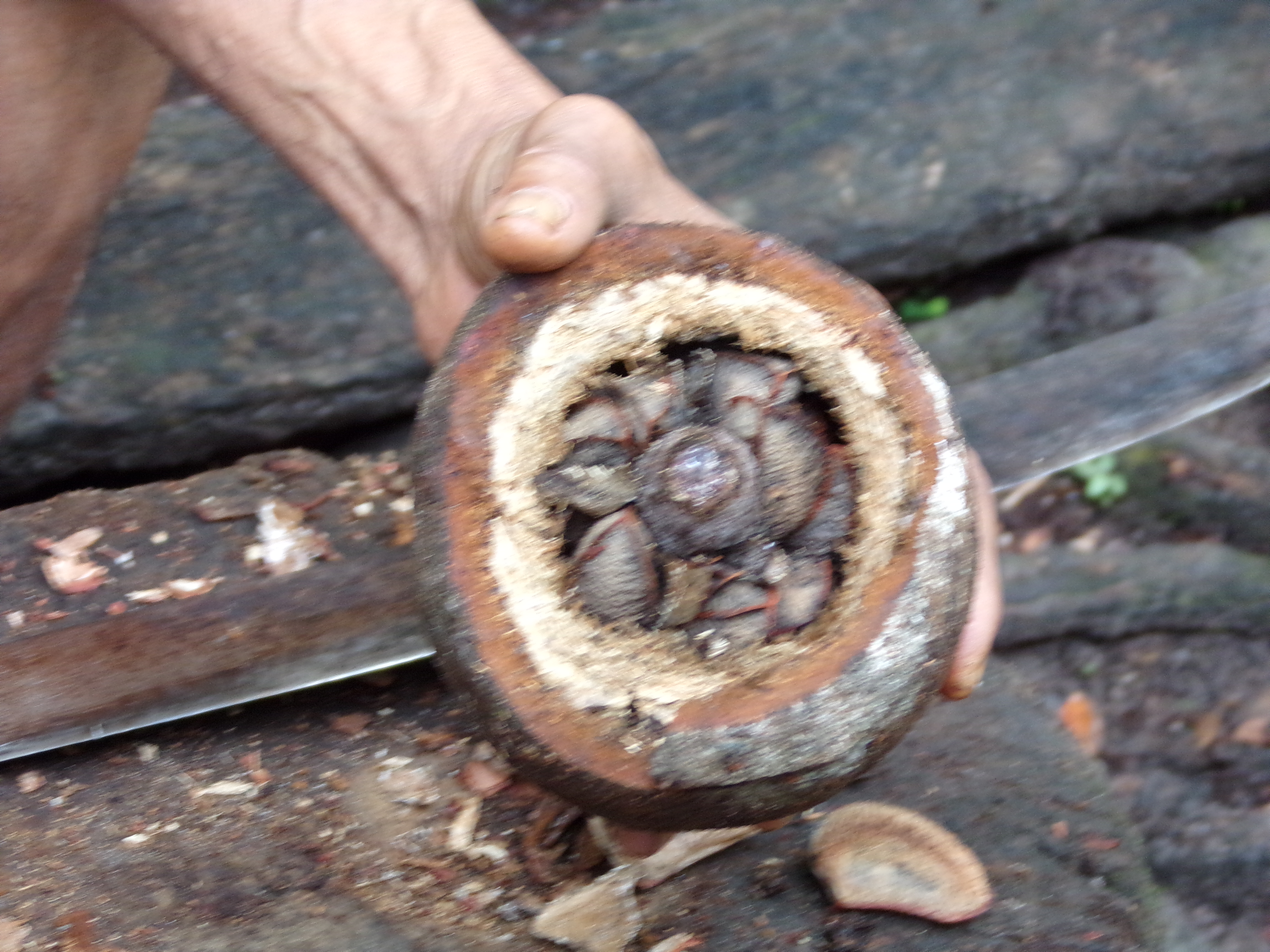
 We had the chance to taste the nuts, which, unsurprisingly, had a fresh, creamy, unmistakably Brazil-nutty flavour, delicious. What I hadn’t realised, however, was that if they aren’t roasted within a few hours, they become inedible after just two or three days. You learn something new every day!
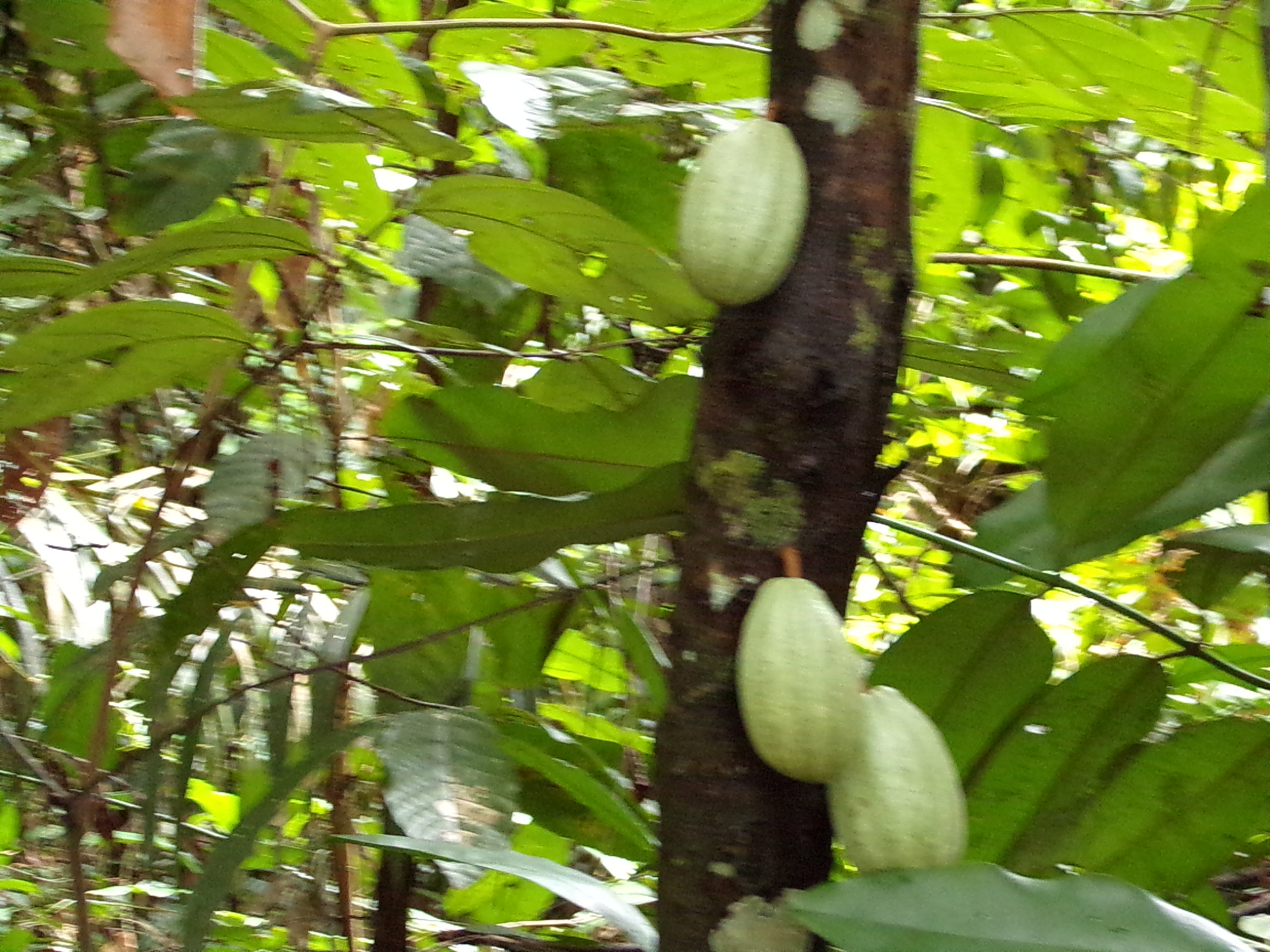 Upon discovering that our nut-splitting expert was 75 years old, we were even more astonished when he shinnied up the narrow trunk of a surprisingly flexible tree, climbing to a height of 30 metres or more, to demonstrate how the nuts are collected. Watching him was both fascinating and surreal, especially when he descended in just a second or two by sliding effortlessly down the trunk. If ever there was an incentive to eat Brazil nuts, this was it!
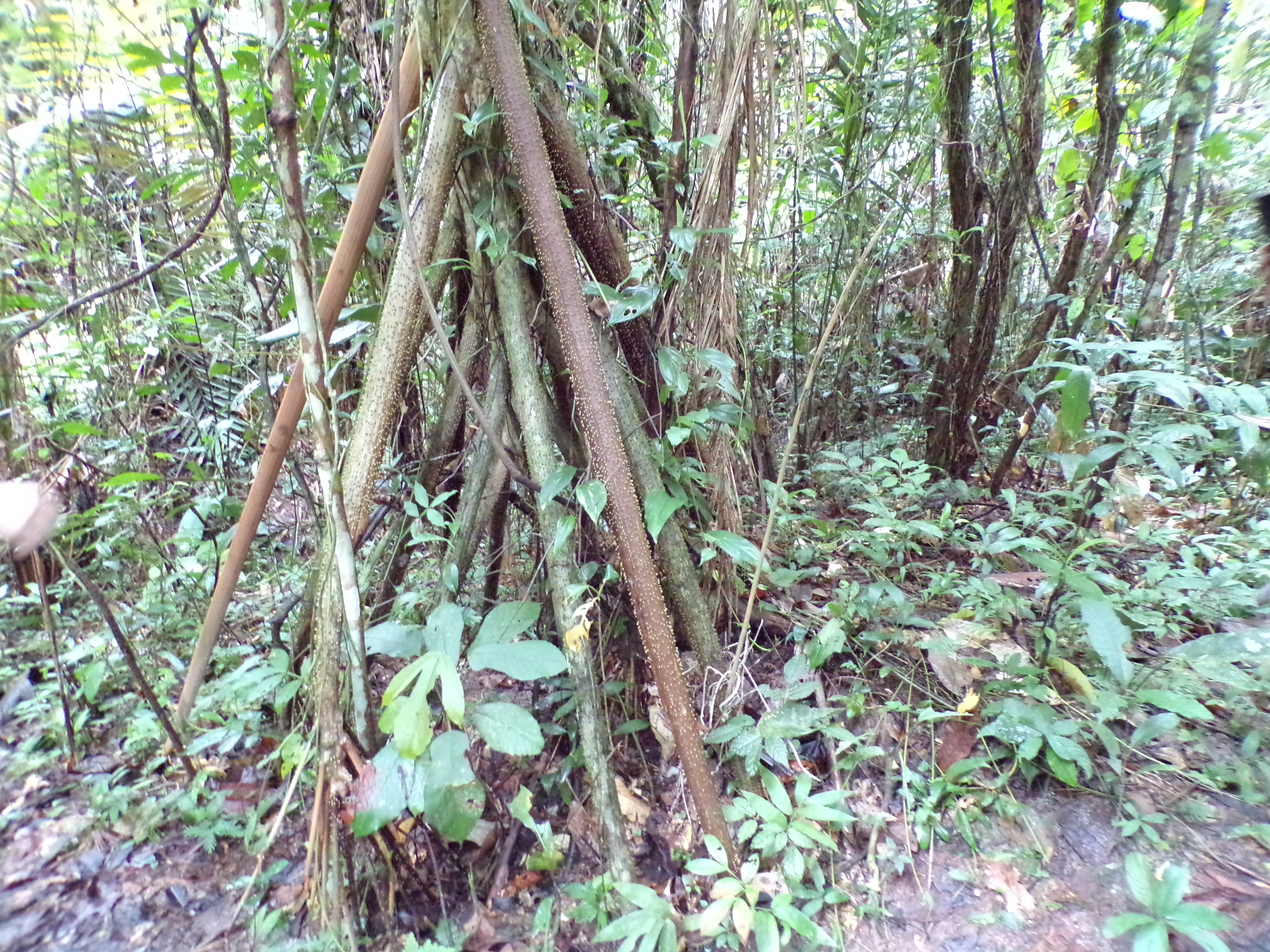
We then spent an hour navigating a series of narrow trails through the dense, stifling jungle, where the humidity clung to us like a second skin. Every so often, we stopped as our guide pointed out a particular tree or plant, explaining its unique properties and uses. We listened patiently, snapping photos, sweating profusely, and longing for even the slightest breeze to cut through the oppressive heat. Our guide was incredibly knowledgeable, and under different conditions, I’m sure I would have absorbed more of his insights. Fortunately, my photos will serve as a useful prompt for my memory later!
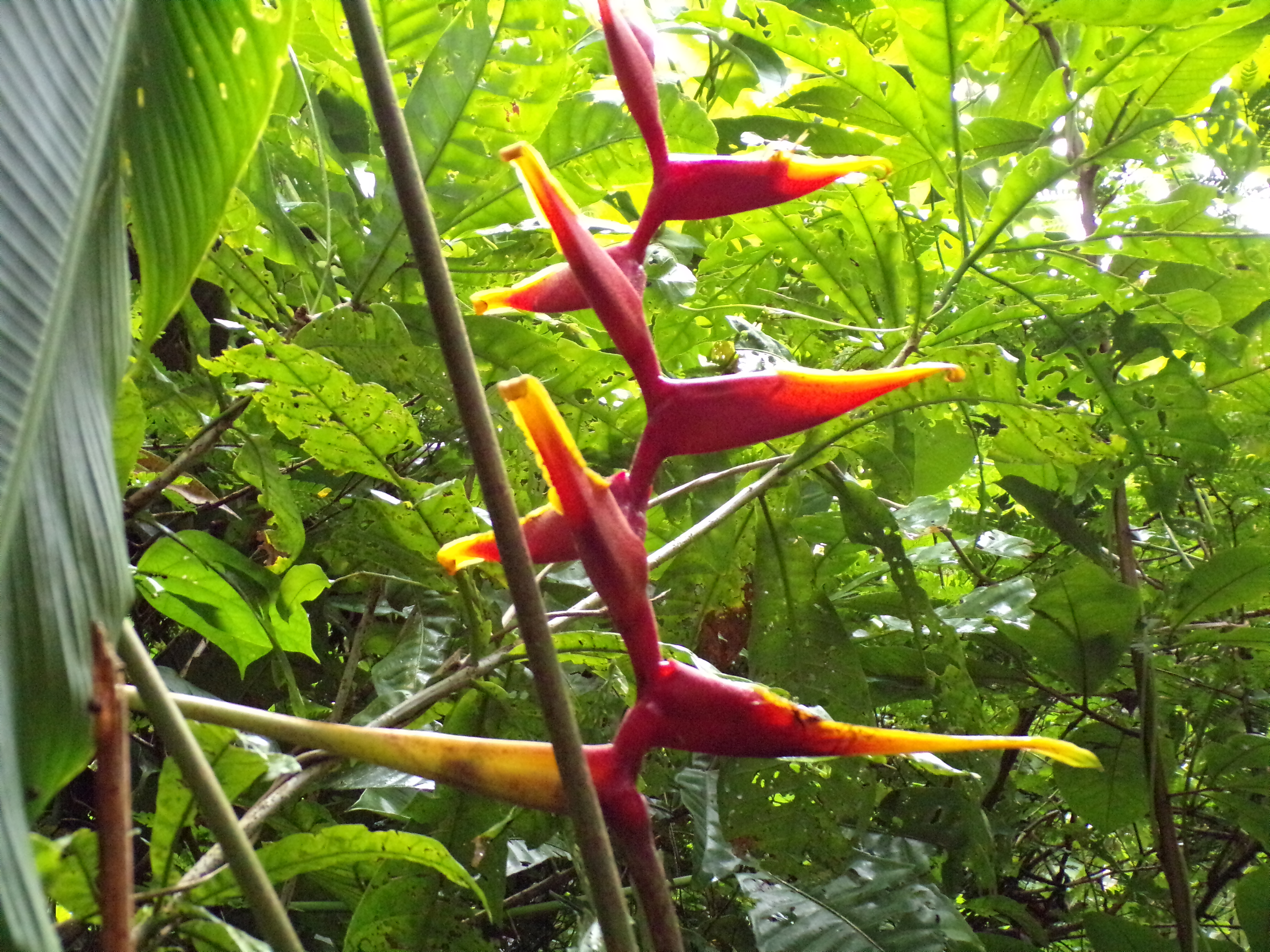
Retracing our steps to the boat, we were soon greeted by the welcome relief of moving air, cooling our overheated bodies and reviving us just enough to enjoy a selection of local fruits served by the boat crew. I thoroughly enjoyed all those I sampled, though not all of our fellow explorers shared my enthusiasm.
Back in Belém, we once again appreciated the icy freshness of the air-conditioned coach. However, our return journey to the tender boat in Icoaraci was delayed due to a public demonstration in the city, forcing us to take a lengthy detour.
W e had initially planned to spend a couple of hours exploring Icoaraci, but Sue was feeling quite exhausted, so we opted instead for the comfort and safety of the ship.
 Palmer Family
Leave a comment