13th January 2020
On the afternoon of our first sea day en route to Leixões, we discovered that our cabin stewardess had removed all the bottles, glasses, and the kettle from the room and neatly arranged them on the floor. Had she simply forgotten to replace them after cleaning the surface they had been resting on, or were we in for a change in sea conditions with the ship about to be tossed about? It turned out to be the latter.
The first violent pitch and roll struck just before the Captain’s ‘Meet and Greet’ cocktail party. Naturally, at that moment, most passengers were in the process of changing into dinner jackets and elegant evening wear. You can imagine the chorus of feminine grumbles when an announcement came over the Tannoy advising everyone to wear flat-soled footwear for the upcoming function. A matter of health and safety common sense, of course, but, unsurprisingly, 100% of the male passengers had no complaints about this particular adjustment!
Despite the occasional unpredictable lurch, the Captain’s function went ahead without incident, as did the evening’s Show Time and our dinner in the Kensington Restaurant. Free seasickness tablets were available at the Reception Desk, and Sue was among the first to take advantage of this thoughtful but necessary offer. They worked. Even as the sea conditions deteriorated further overnight, we both slept soundly.
After breakfast, we set off on our first circuits of the ship. The sea was choppy, the wind bracing, and the temperature distinctly chilly. We managed six circuits, just over a kilometre, in good time. The bow-to-stern stretches, aided by ferocious tailwinds, were completed at speed, whereas the return legs were considerably slower. The trickiest part was approaching the steps to the next deck level; with the deck tilting unpredictably, careful judgement was required to negotiate the narrow approach. Any 747 pilot landing at Heathrow in hurricane conditions would have applauded the skill on display.
We endured two days of sailing through uncomfortable seas before finally arriving at the Portuguese port of Leixões, the main hub for exporting the region’s famous Port wine to the rest of the world. The city of Porto, just 30 minutes away by Metro or bus, was the destination of choice for most tourists arriving by sea.
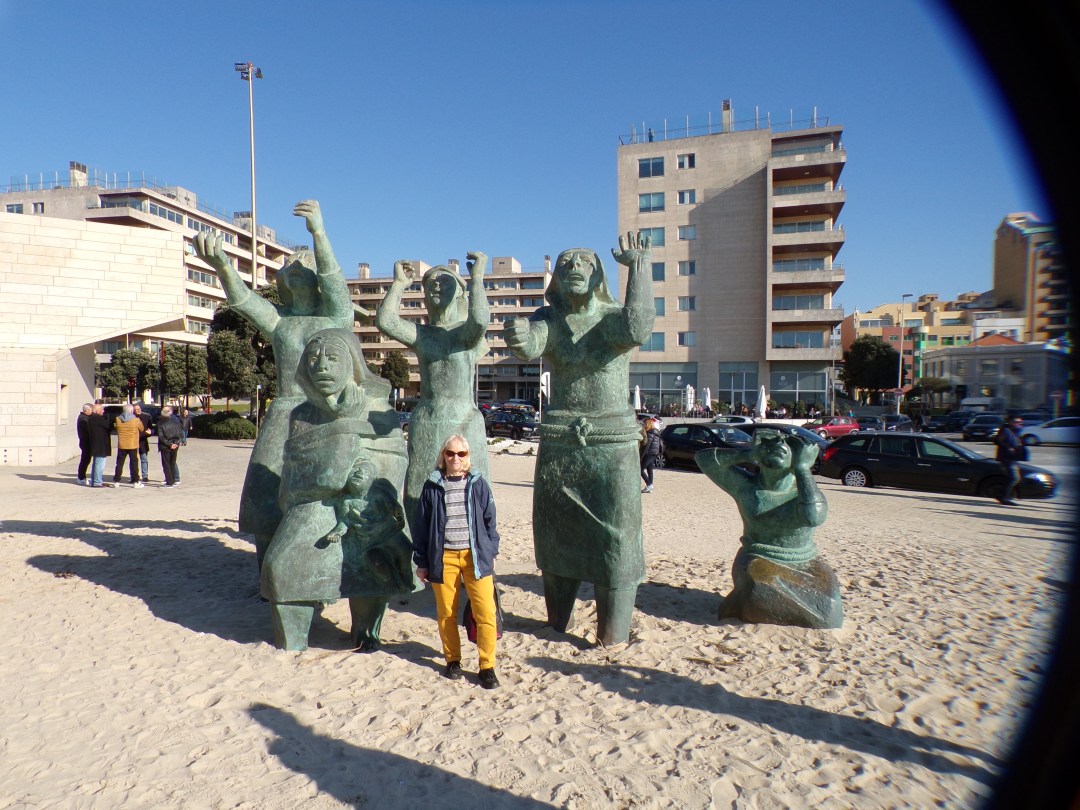
The sky was clear and cloudless, and the warmth of the sun suggested a beautiful day. Yet, when we disembarked at 11 am, you wouldn’t have thought so; most of the locals milling around the dock entrance were bundled up in quilted jackets, with some even wearing hats and gloves. It was easy to spot the northern Europeans among them; we were the ones in short-sleeved shirts, looking decidedly pale.
Rather than joining the crowds boarding tour buses or public transport to Porto, we decided to explore this small township on foot. So, joining the Sunday promenade of locals along the beachfront walkway, we set off along the coast towards the River Douro.
We stopped frequently to take in the scenes of local life, families playing on the beach, surfers skimming across the towering breakers, dog walkers, skateboarders, and couples enjoying leisurely meals at the many restaurants lining our route. It was a perfect day to be in Portugal.

Our first real stop was at a small fort, just a few hundred yards from the port, beyond an impressive wind sculpture suspended above a small roundabout. After paying a modest €1 entrance fee, we spent around 20 minutes exploring this little piece of history. The parapets offered excellent views, and I was surprised to see that all the original cannons appeared to be intact. Though the fort seemed unassuming from the outside, it certainly packed a formidable amount of firepower.
The wooden walkway traced the high tide line, meandering along the shore, bustling with locals and a handful of cruise passengers, some intent on heading somewhere, others content to sit on the many wooden benches, watching the waves crash against the offshore rocks in a relentless, rhythmic display of liquid fireworks.
Eventually, we arrived at a larger fort on the banks of the Douro strategically positioned to guard Porto’s river entrance. Nearby, a long stone jetty stretched out along the beach, taking a severe battering from the waves as high tide approached. Earlier, we had seen people risking selfies on a smaller promontory, engulfed in the spray of crashing waves. Here, however, there were no such daredevils; the sheer force of the sea would have swept any hapless photographer away.

We didn’t attempt to explore this fortification; time was not on our side, and we had a ship to catch. The Magellan waits for no man! Retracing our steps, we made a brief detour to a supermarket for some much-needed refreshments before tackling the ridiculously steep gangplank back onto the ship.
We sailed on time at 4 pm. Just five fleeting hours in port, but that is the nature of cruising. You dip your toes into another culture, and then, like the wind, you move on.
 Palmer Family
Leave a comment