26th September 2019
We had booked a couple of days away for a bit of rambling and for Sue to revisit a few childhood locations that she remembers with great fondness. I also saw it as a good opportunity to test my knee and foot, and it turned out to be just that.
The weather forecast for our stay was dreadful, with heavy rain expected throughout the week. However, we had chosen comfortable accommodation and, with typical British resilience, resolved to make the best of whatever came our way.
Despite the BBC Weather app predicting meteorological Armageddon, we woke on the 23rd to a lovely morning in Harborough. Light, overcast skies accompanied us on our drive to our accommodation, the Colwall Park Hotel, perfectly situated at the foot of the Malvern Hills and an ideal base for hiking, with several trails beginning nearby.
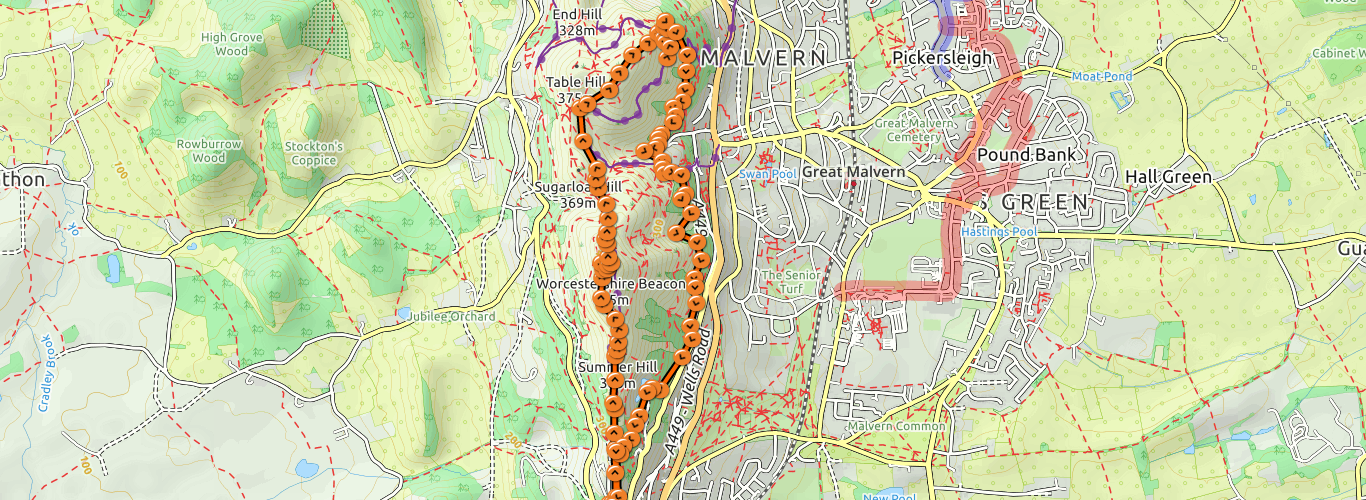
After parking up outside the hotel and changing into more suitable footwear, I loaded our route onto my GPS, and we set off, fingers crossed that the forecast downpour would turn out to be another false prophecy. As we climbed towards the Worcestershire Beacon, the sun broke through, and the views became increasingly magnificent.

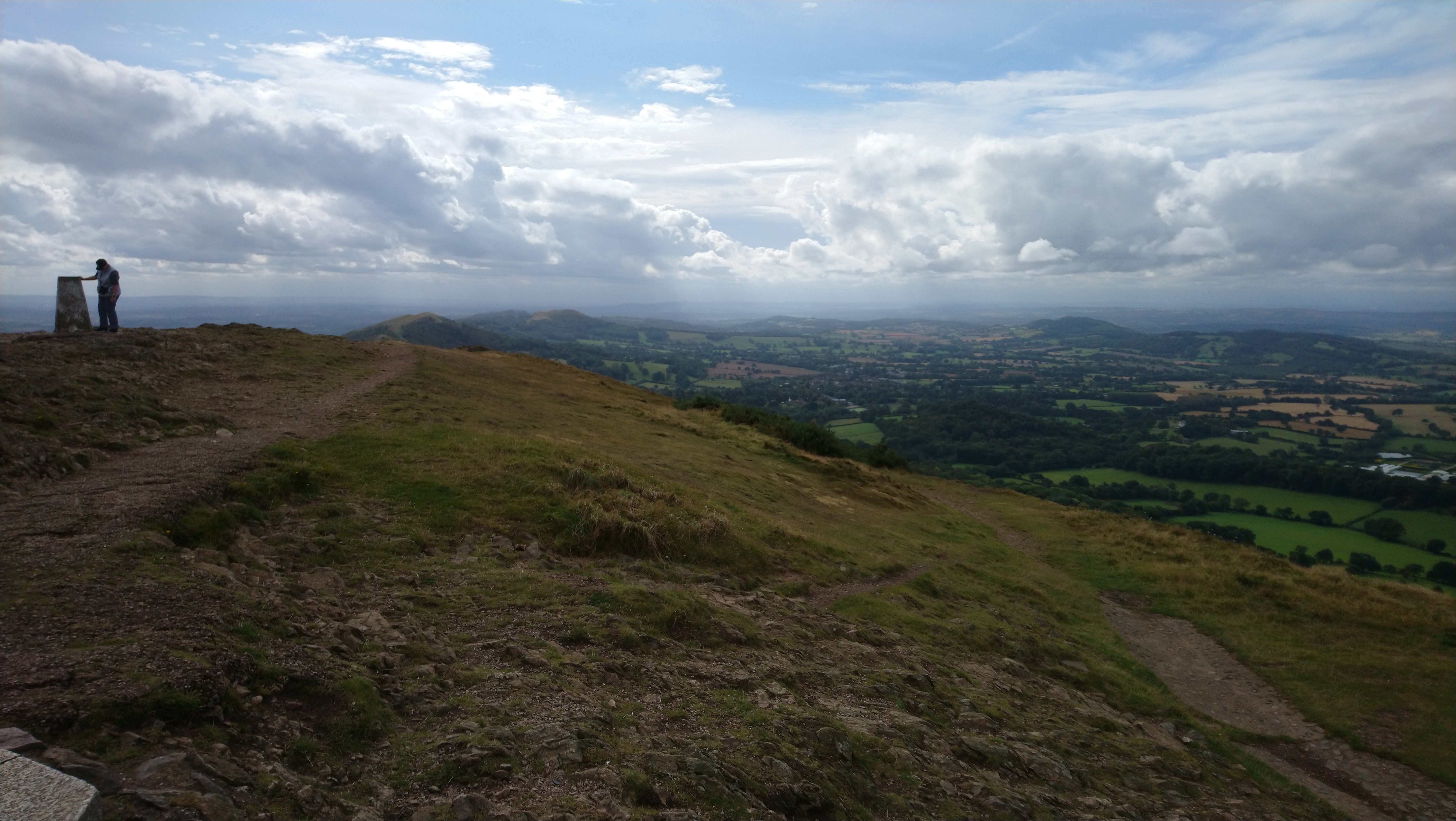
 We encountered a few other Monday walkers, though I suspect the BBC’s dire forecast had deterred all but the intrepid (or foolhardy). The early autumn sunshine, tempered by a pleasant cooling breeze, kept us from overheating on the steeper sections. The air was exceptionally clear, offering sweeping views, Welsh mountains to the west, Clee Hill to the north, and Bredon Hill to the east.

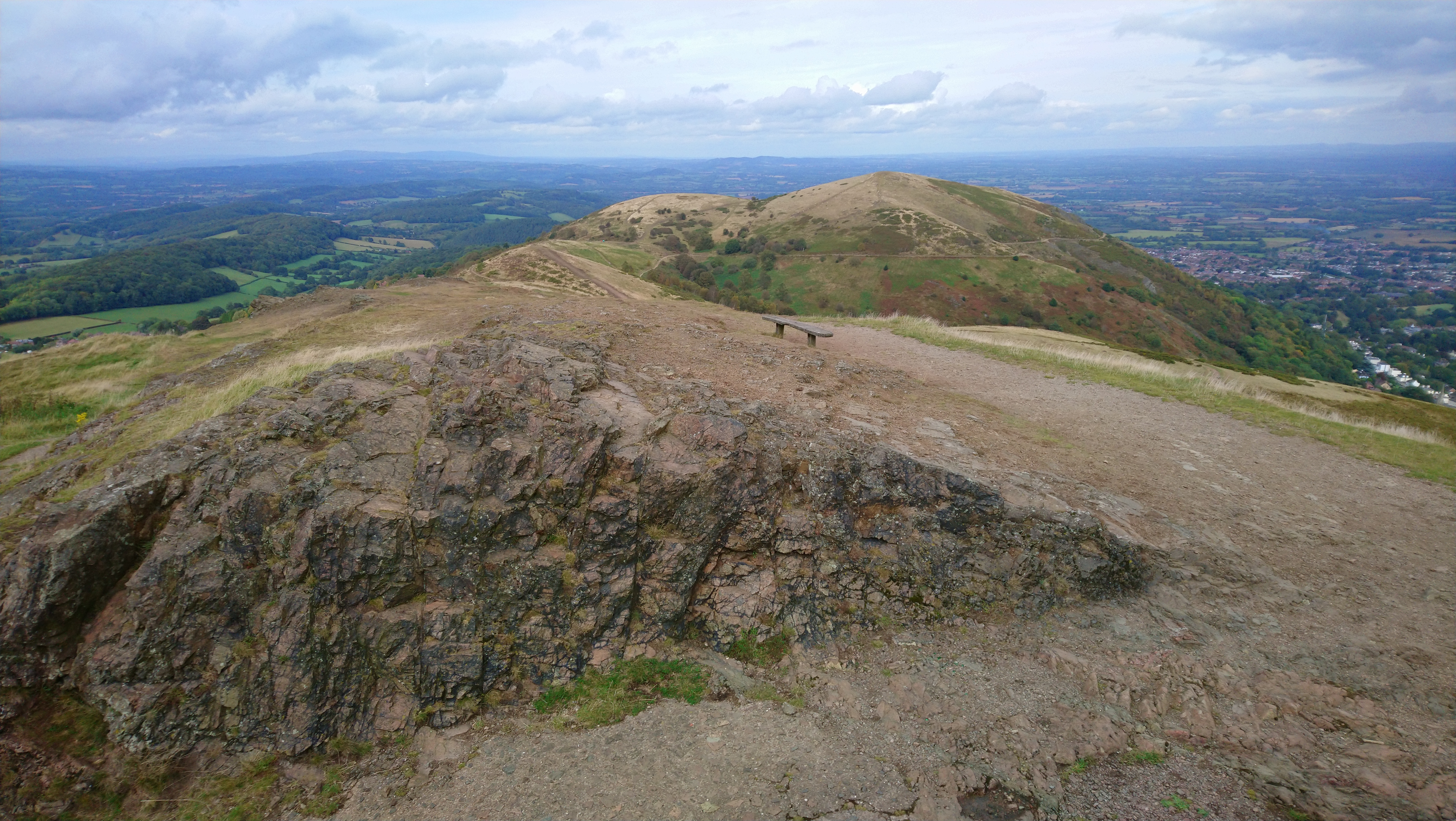
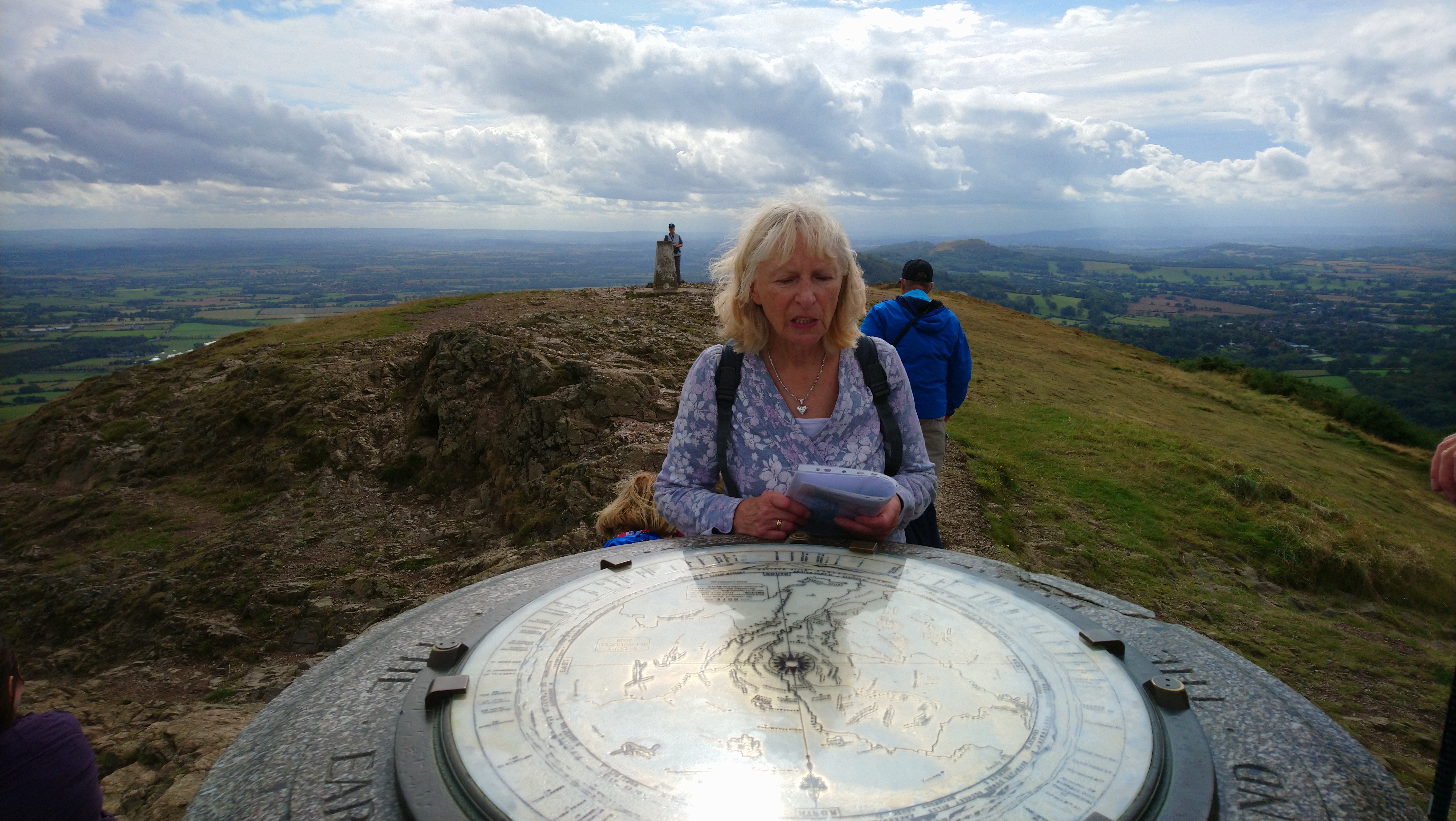
 As we neared the Beacon, dark clouds began to gather ominously in the southwest. We stopped in the lee of the Beacon cairn to take photos and enjoy our packed lunch, where we struck up a conversation with some fellow summiteers from Utah, USA. They were in the UK for six weeks, visiting friends in Malvern (which we could see far below us), who had recommended the climb for the views. They were eager to descend before the rain arrived, leaving us to finish our lunch and watch the approaching weather.
I was heartened that both knee and foot were holding up well under such strenuous exertion. However, the next section led downhill to St Ann’s Well, and my knee was far less appreciative of the descent than it had been of the climb!
 St Ann’s Well is believed to have been used by Worcester monks living in a hermitage on the Hills while they built Great Malvern Priory in 1085. References to the well date back to the 13th century, and it appears on maps of the Foley Estates from 1744. However, it wasn’t until the 19th century that it gained real significance.
A café now sits beside the well, a wonderfully atmospheric spot to enjoy a coffee, or perhaps something stronger. Unfortunately, it was closed today. There is, of course, the option of sampling the well’s spring water, though a rather prominent sign advises against it. I suspect the café proprietors may have had a hand in that warning, keen to preserve their sales. I tried the water anyway, faintly soapy in taste but otherwise unremarkable. This is being written several days later, and I have yet to experience any ill effects (so far).
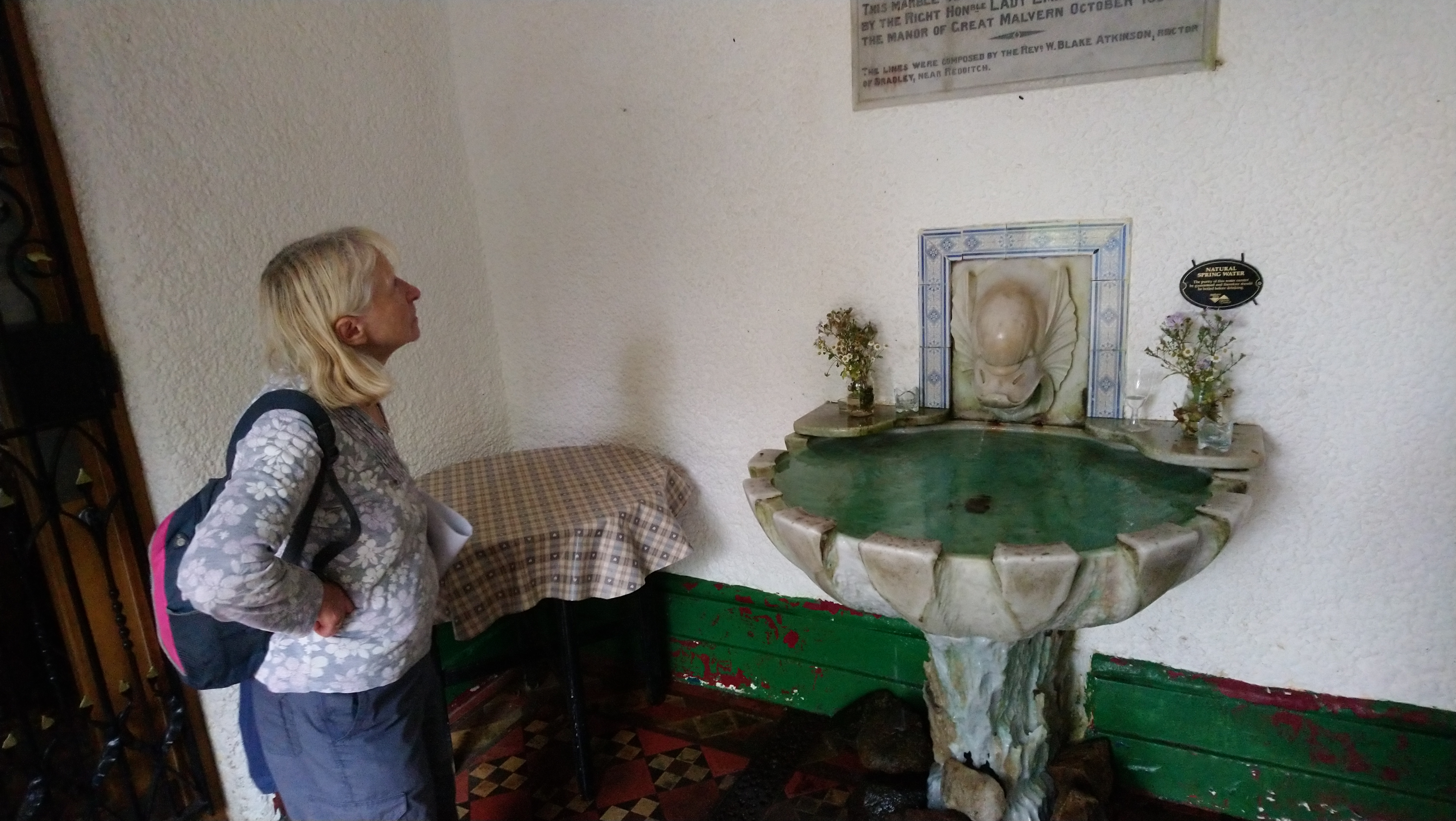
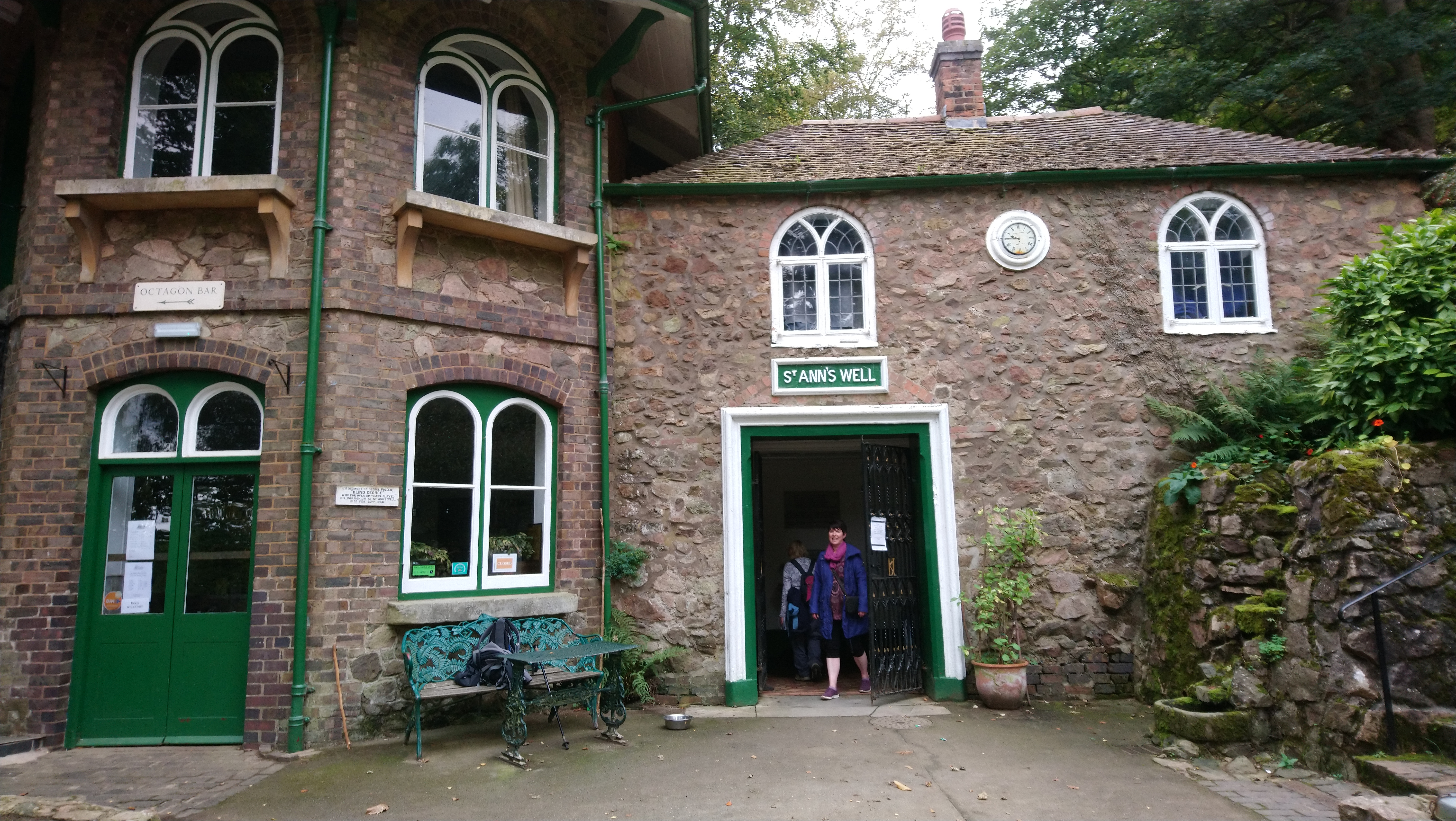 As we left the well and continued along the eastern slopes, the rain began to fall. Fortunately, much of our route took us beneath the canopy of the wooded gradient, offering some shelter from the downpour. However, as we reached a higher section we had trodden that morning, it became clear that the rain was settling in for the day.
Optimistically, we decided to give the sun a chance and took a brief detour to the Wych Inn, the highest pub in Worcestershire, boasting panoramic views towards the Cotswolds. A dry seat and some refreshments were welcome. Our original plan had been to continue along the eastern slopes to Holy Well and then ascend the hill towards our hotel, but as the cloud thickened and visibility dwindled, we opted for the more sensible (and much shorter) return along our morning’s path. My GPS logged a very encouraging 9.75 miles for the day.
After changing into dry clothes, we later returned to the Wych Inn (this time by car) for dinner. Unsurprisingly, apart from one other patron, we had the place to ourselves. While waiting for what turned out to be an excellent meal, Sue entertained herself by studying the pub’s history through its many wall paintings and photographs. At one point, she engaged in a lengthy conversation with the barman about shopping opportunities in Ledbury.
That night, our sleep was interrupted by torrential rain and a thunderstorm. By morning, the downpour had only intensified, with water filling the road gutters and overflowing drains. Breakfast, however, was a triumph, beautifully cooked and artistically presented. I suspect this hotel will receive a glowing review from us!
Our original plan was to drive to our next accommodation, The Throckmorton near Coughton Hall, and follow a pre-planned walk. However, as the rain showed no sign of relenting, we instead decided to visit the nearby British Camp and Holy Well, which we had missed on our curtailed hike the day before.
A short 15-minute drive took us to the 3,500-year-old Iron Age hill fort known as the British Camp atop Malvern Beacon. To our delight and surprise, as we parked, the rain stopped, and the sun emerged. Seizing the opportunity, we set off to climb the Beacon and were rewarded with a dry ascent and spectacular views. The site has a classic hill fort layout, with clearly defined ditches and mounds. It’s easy to see why it was chosen. When first built, it would have dominated the surrounding landscape, just as it does today.
We had the summit to ourselves, though a few dog walkers were traversing the lower slopes as we made our way back to the car. This archaeological site certainly deserves more than the cursory visit we gave it, a perfect picnic spot on a warm summer’s evening.
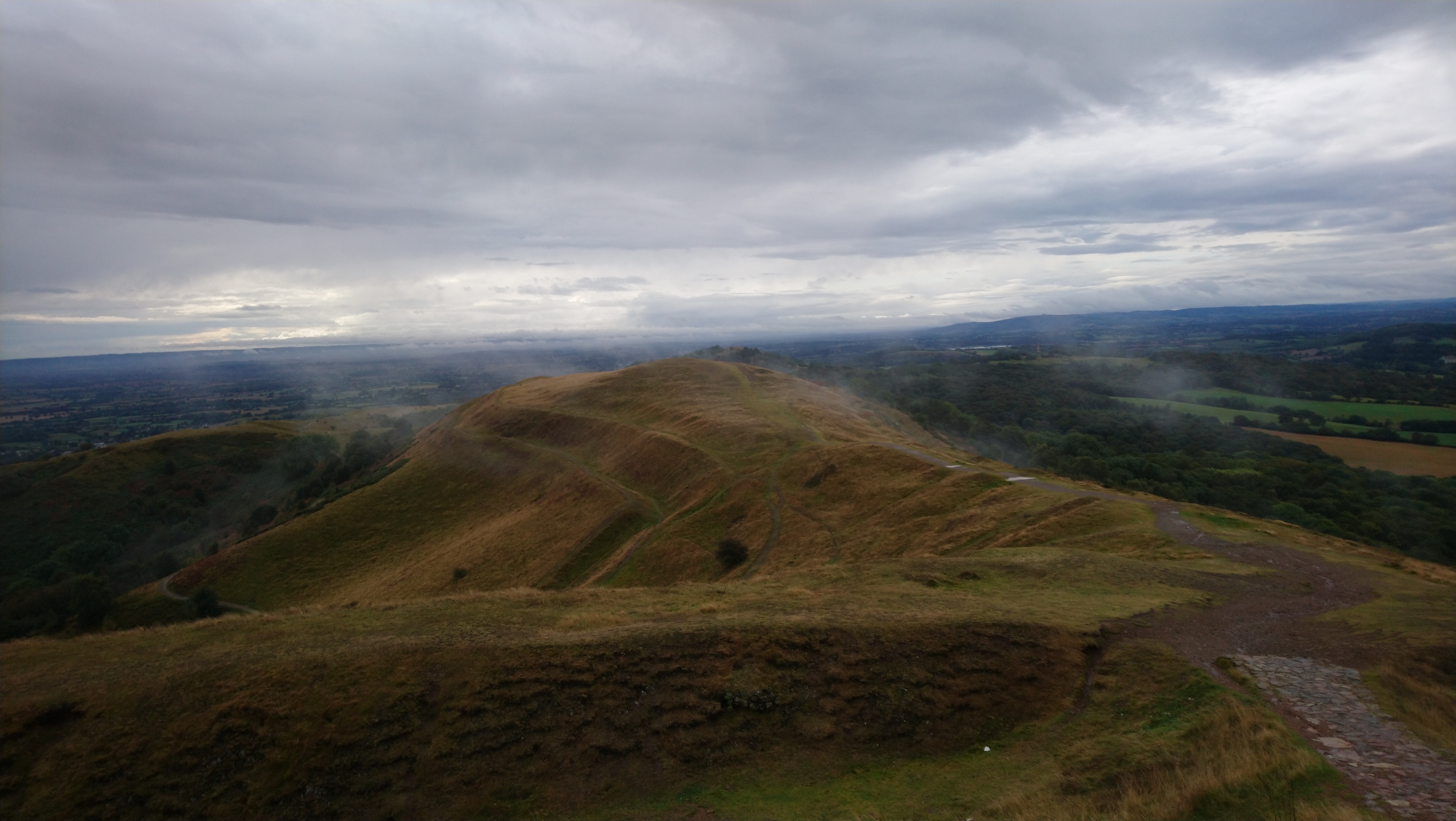
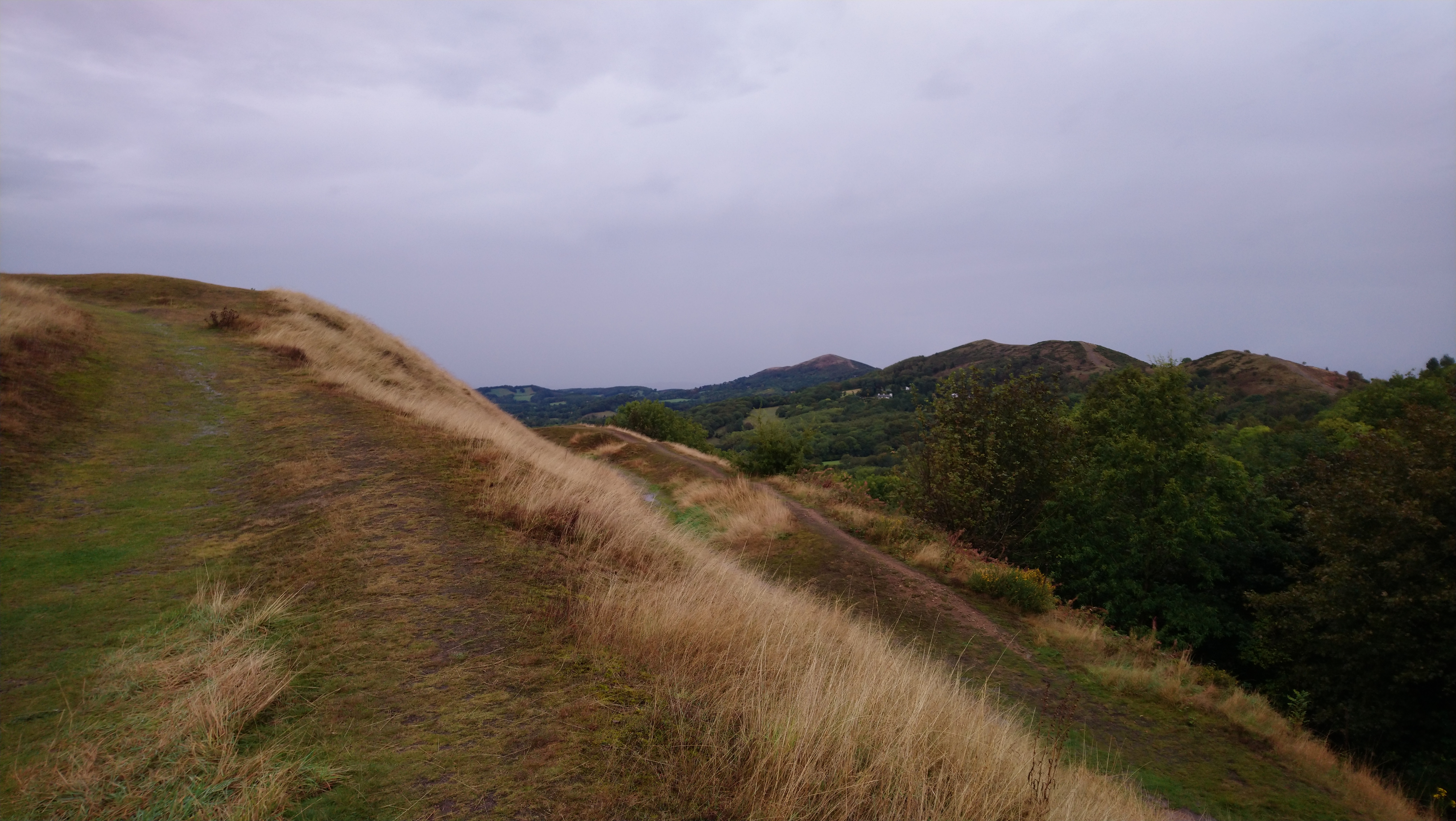
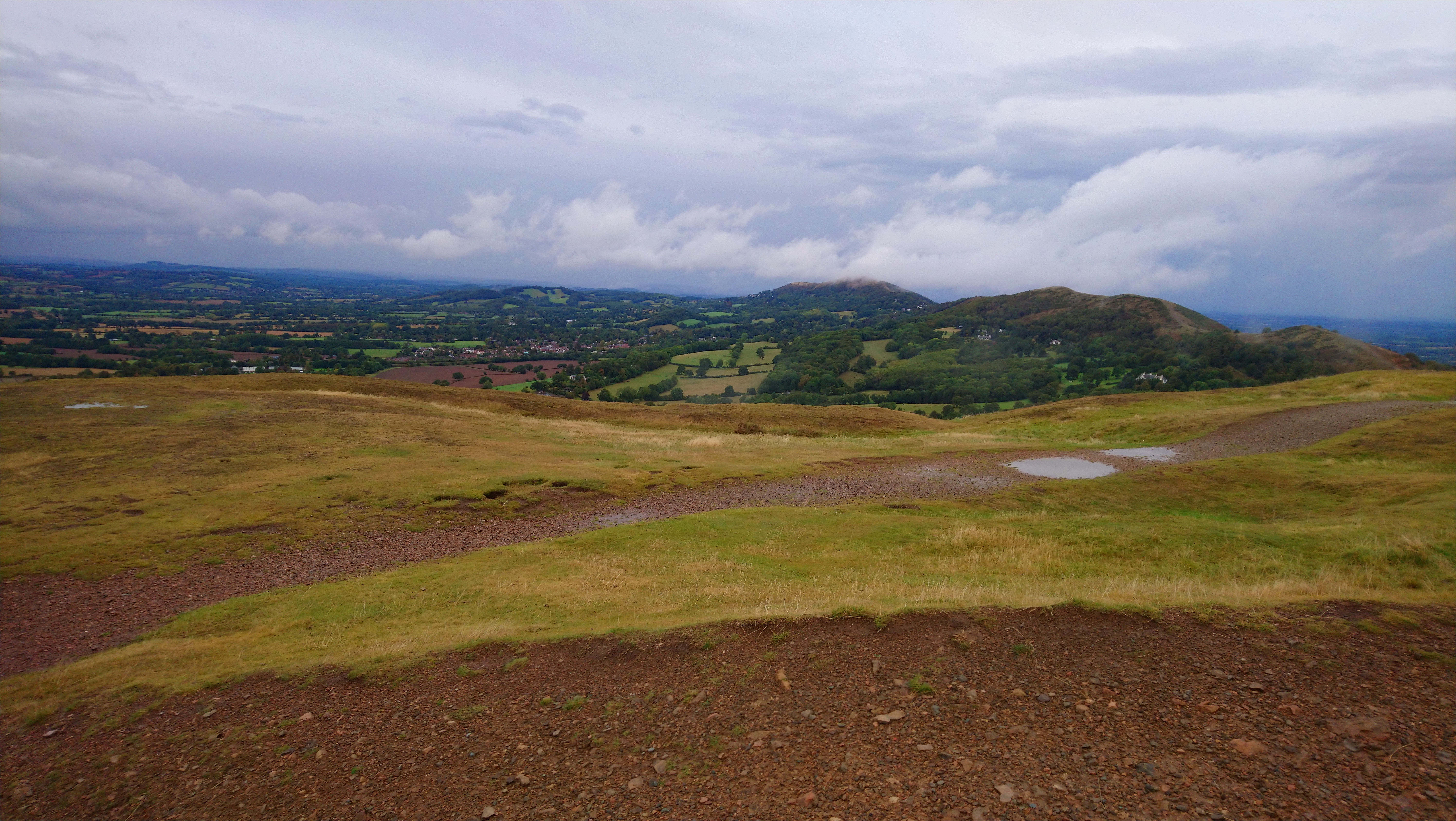
Moving on, we partly retraced our route to The Kettle Sings, a fashionable English tea room established by Miss Millie Stephens in 1928 and positioned along Jubilee Drive, built to celebrate Queen Victoria. Sue has fond childhood memories of stopping here after long family walks in the Malverns. Unfortunately, the café doesn’t open on Mondays or Tuesdays, so the much-anticipated coffee was not to be. Instead, Sue settled for taking a few nostalgic photos to send to her sister, who is currently in China.
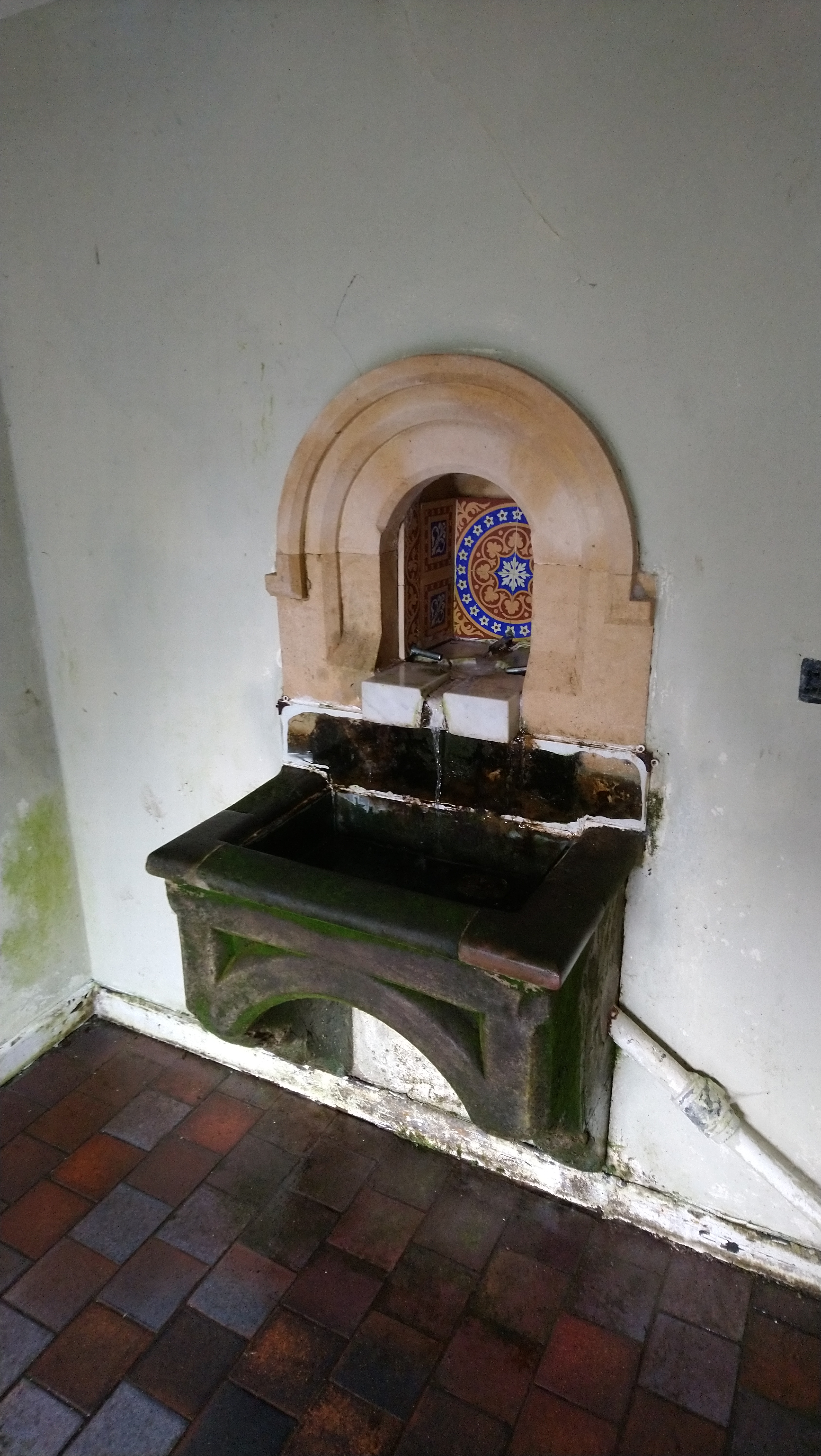
With the forecasted rain still holding off, our next stop was a small, tucked-away cottage, the location of the Holy Well. Like Saint Anne’s Well, its water gushes into a decorative ceramic trough within a small side room attached to the cottage. The earliest records of the well date back to 1558, but it gained particular fame as the source of Malvern Water, supposedly the only bottled water the late Queen would drink.
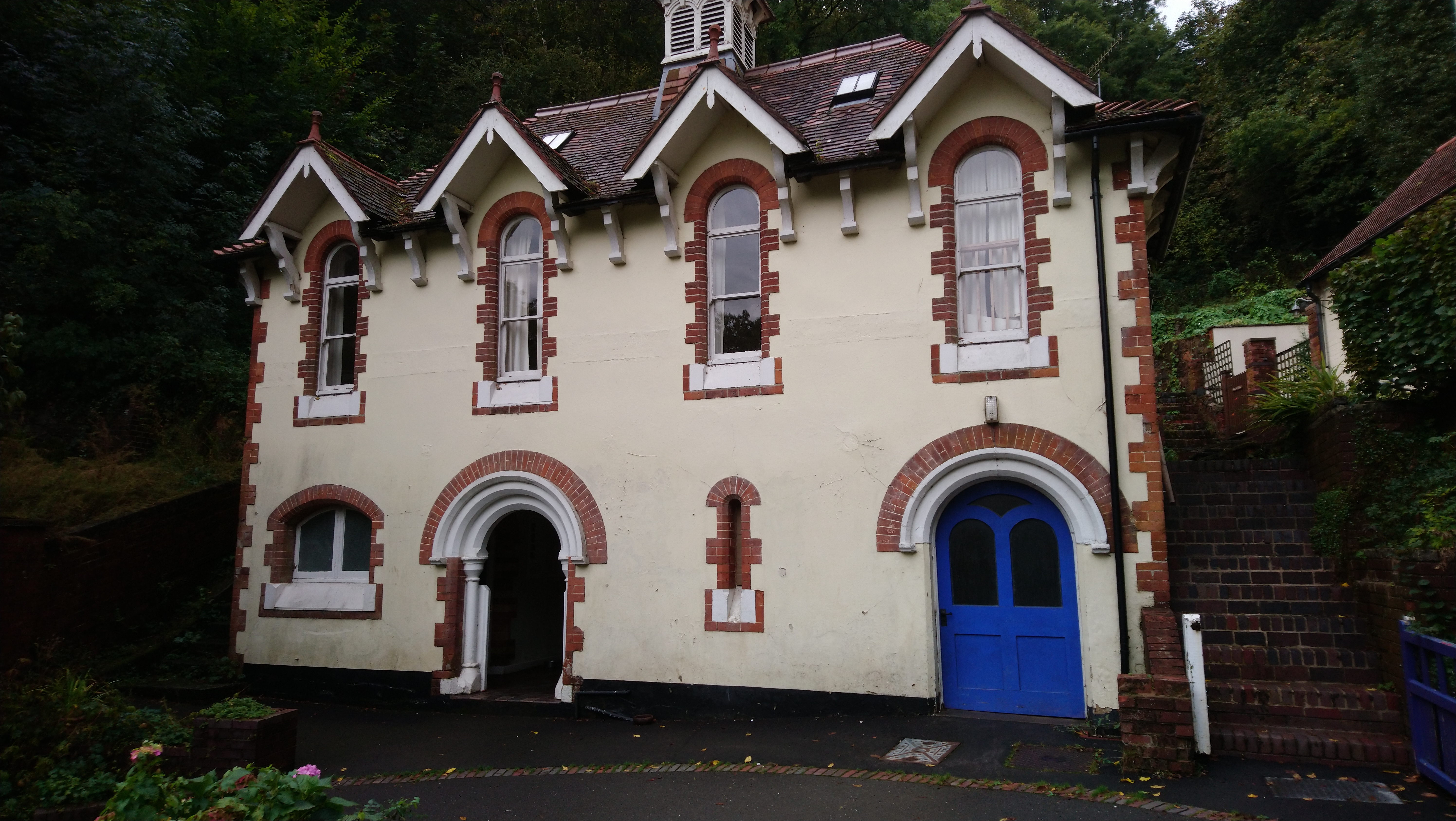 I found that, unlike the water from St Anne’s Well, this one lacked any faintly soapy taste, though neither did it carry the regal essence I had half-expected. A small bottling plant operates from a garage next to the cottage, not a vast enterprise, but one with an impressive history. If you follow the story, you’ll see that they once took on the might of Coca-Cola… and won.
 Still blessed with fine weather, we drove for an hour to The Throckmorton pub in Coughton. Here, we enjoyed a drink and lunch while a brief shower passed through. Intrigued, I opted for a pulled BBQ jackfruit wrap, a vegetarian choice that proved surprisingly flavoursome. I’d happily have it again.
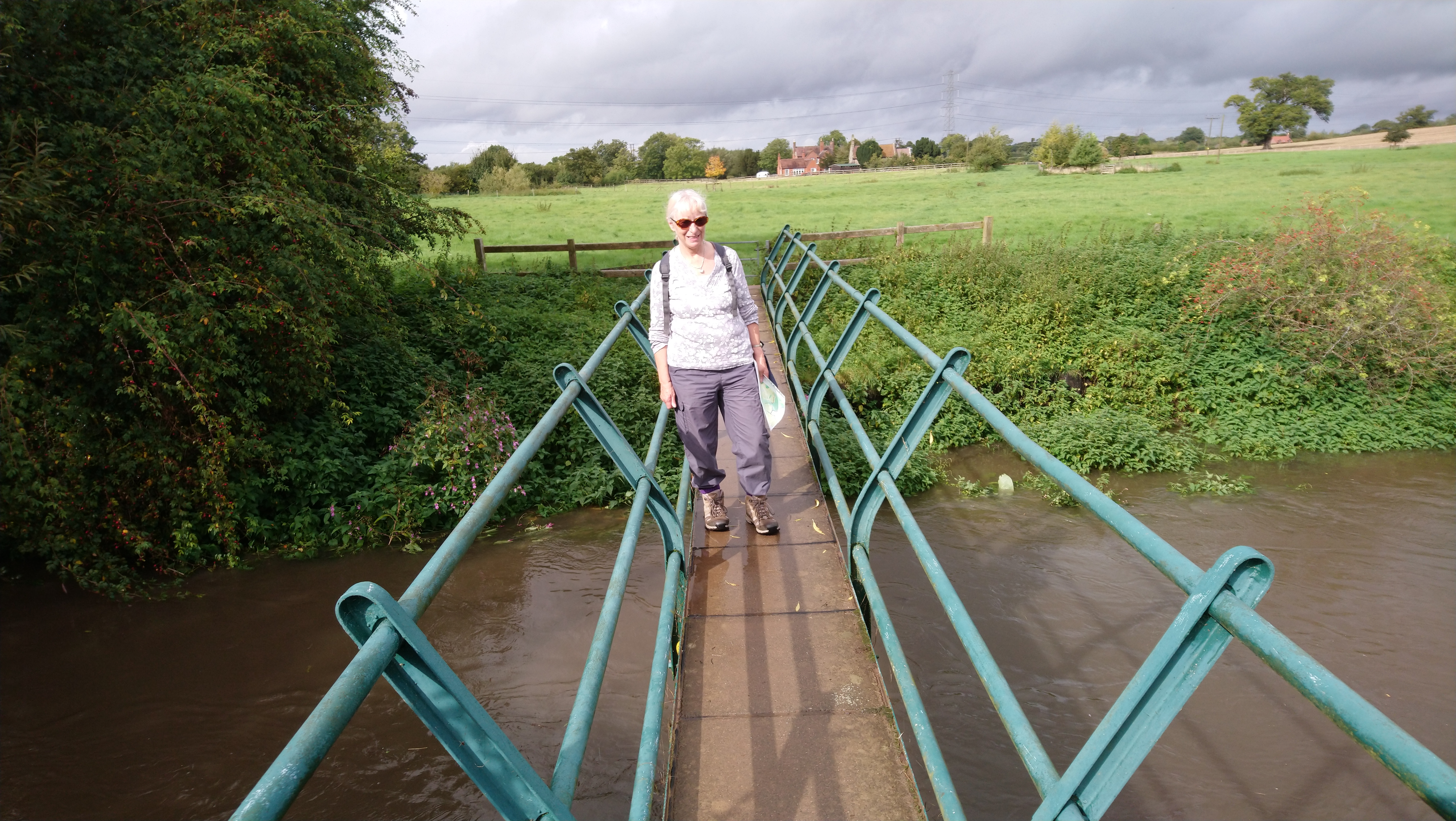
Well-fortified, we laced up our hiking boots, powered up the GPS, and set off through the fields next to Coughton Hall on what turned out to be a long and tiring walk. The first part of our route followed the Millennium Way, tracing the picturesque River Arrow. Dark, rain-heavy clouds scudded across the landscape, but thankfully, none passed overhead to unload on us.
During the entire 4.5-hour trek, we encountered no other walkers but plenty of wildlife, geese, horses, sheep, cows, and even muntjac deer. A couple of small hills added a welcome pulse-raiser, but for the most part, we meandered through water meadows and expansive woodlands set aside for pheasant shooting, of which we startled quite a few.
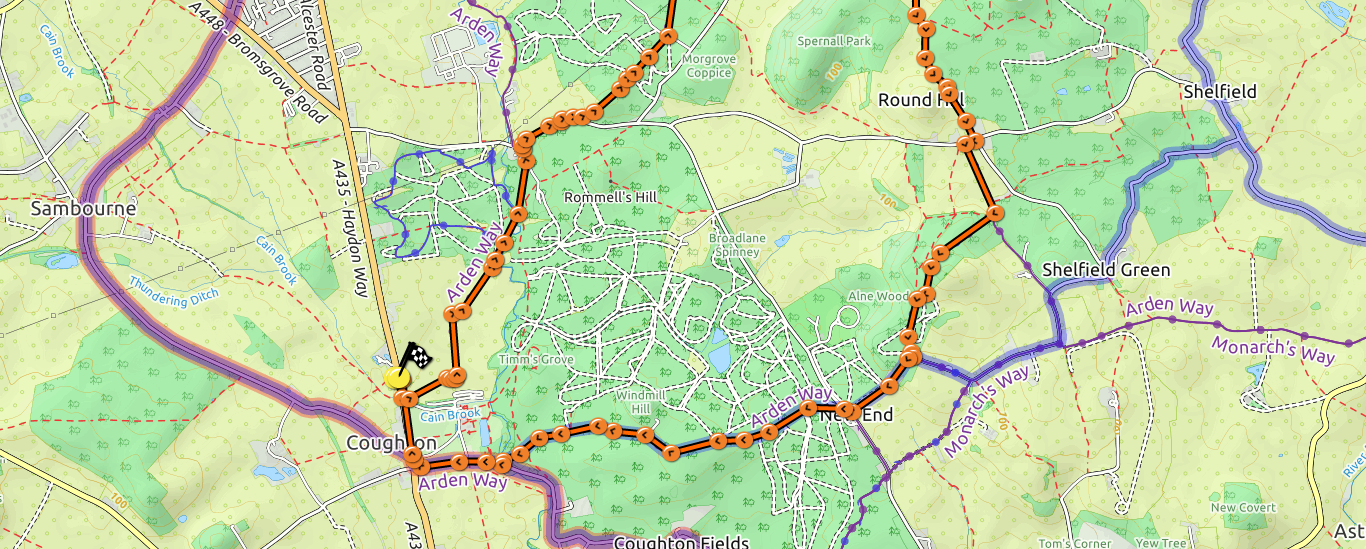

Our return leg followed the Arden Way trail, and it was here that fatigue truly set in, muscles and bones protesting with every step. With only a couple of places along the entire route to sit and rest, the final stretch began to feel like a bit of a slog.
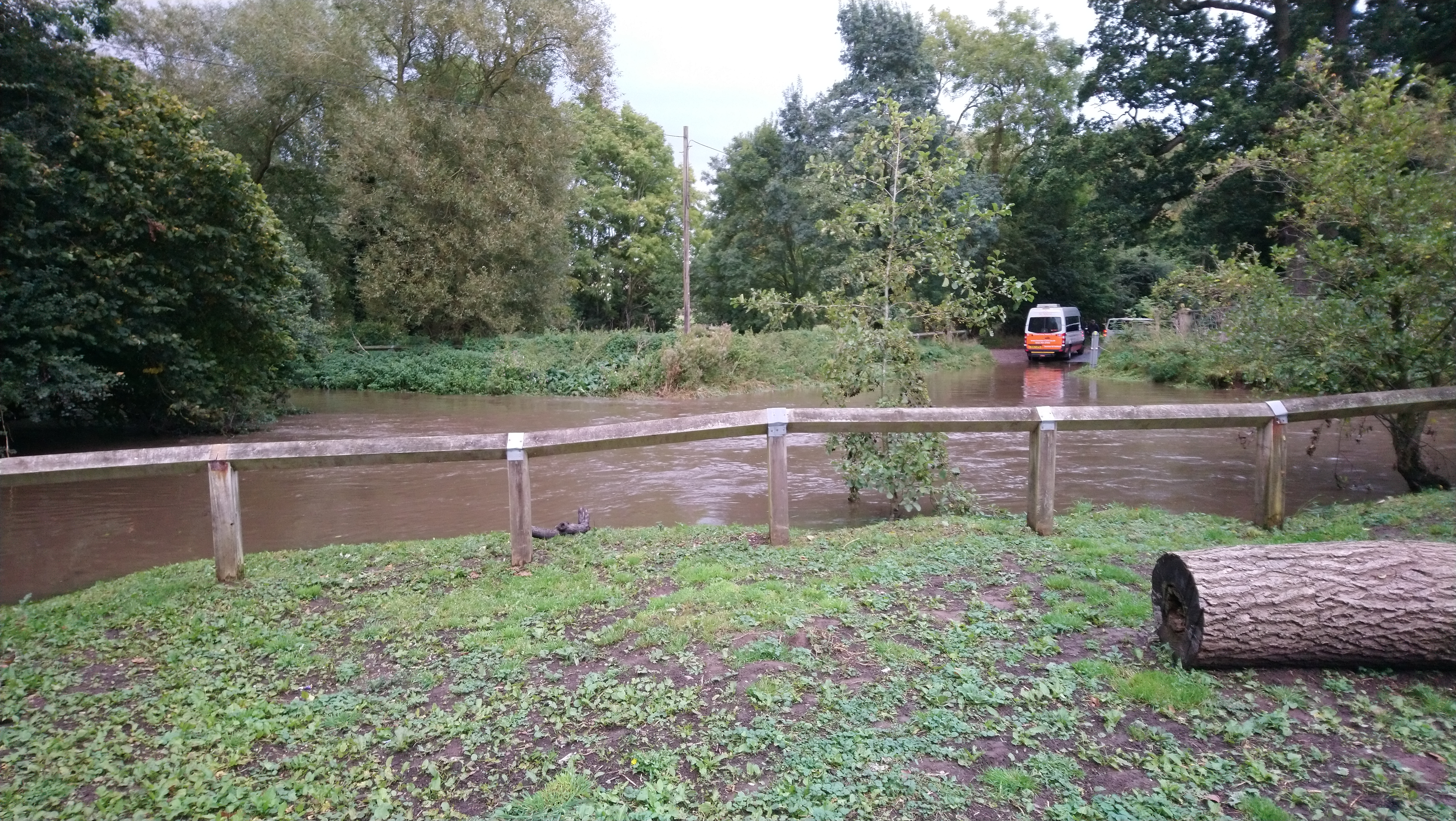
As we neared the River Arrow, we stumbled upon an unexpected scene, a mini-bus full of senior citizens from a nearby residential home stranded mid-ford. The rather overconfident driver had attempted to cross despite the river being in full flood. A taxi stood nearby, presumably arranged to ferry the unfortunate passengers to safety.
We stopped to chat with the driver and his assistant for a while. The engine was well and truly flooded, going nowhere. Later, during our evening meal, we learned that this was the second time the same driver had made this mistake; it had become hot local gossip!
Back at the Throckmorton, we eased our aching limbs with coffee before changing for dinner in the pub restaurant. That night, we slept soundly.
The next morning, after a late breakfast, we checked out at 10:30 a.m. We had chosen the Throckmorton as our base due to its proximity to Coughton Hall, Sue’s U3A history group has a visit planned later in the year. Unfortunately, she hadn’t managed to book a spot on the trip, as it filled up quickly while we were away.
The Hall was less than a two-minute drive from the pub, and we were in luck; just as we arrived, a guided “taster tour” was about to begin.
Joining a small group of eight, we followed a knowledgeable volunteer guide through the house, uncovering the remarkable history of the Throckmorton family. They were clearly survivors, skillfully navigating the shifting tides of history and often turning adversity into advantage. The family still occupies the north wing, while the rest of the house and grounds are now in the care of the National Trust (see what I mean about opportunists?).

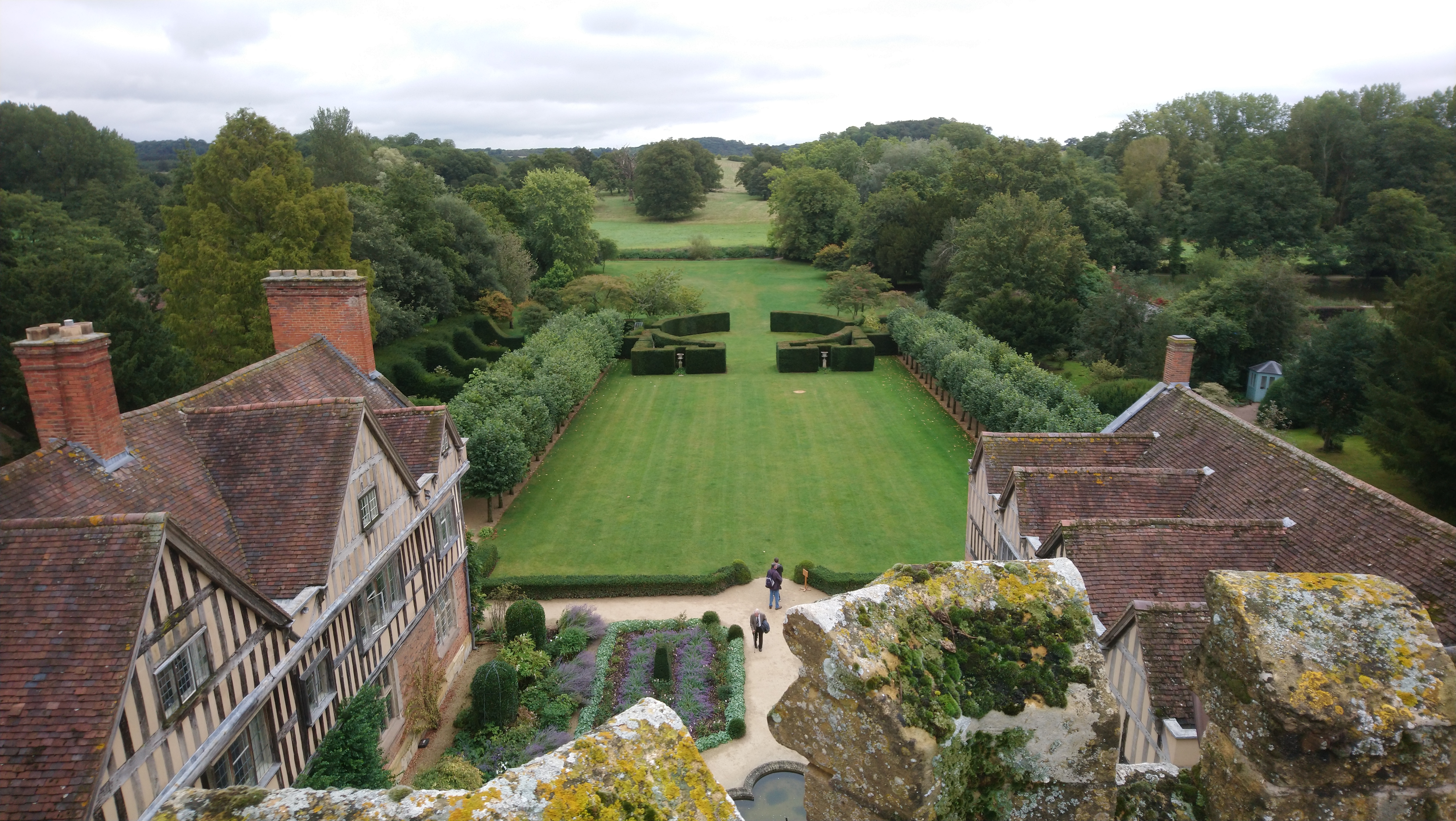


After our guided tour, we took another walk through the house, giving ourselves a second chance to take in the fascinating details of this snapshot of well-to-do life through the ages. Unlike Sue, I wouldn’t typically choose to wander around a stately home over painting the garage door and watching it dry, but I have to admit, I found the Throckmorton family’s history genuinely absorbing.
We rounded off our visit with a look at the church, the extensive walled garden, and, of course, the gift shop before setting off on the drive back to Harborough.
A varied and interesting few days away, made all the better by the unexpectedly decent weather, perhaps it really is true that the sun shines on the righteous!
 Palmer Family
Leave a comment