26th January 2019
Now that we are heading north along the coast of Central America, we are beginning to see more signs of life in the sea around us. Occasionally, we encounter a freighter swiftly passing a mile or so away in the opposite direction, something we did not witness during our entire Atlantic crossing. However, the real fascination lies in the appearance of wildlife.
This morning, after breakfast on the 23rd, Sue and I stood on the top deck overlooking the prow of the ship, captivated by the seabirds (species unknown) skilfully using the ship’s updraft to sustain their weaving, back-and-forth flight as they patiently awaited startled flying fish bursting from the waves. Frightened by the noise and motion of the Columbus, the fish took to the air, fins outstretched, desperate to escape the perceived danger below, seemingly unaware of the real threat from above.
As they launched skyward, often in groups, the waiting predators reacted instantly, diving like fighter pilots in pursuit of their prey. The fish that skimmed at length over the rolling Pacific waves were the most reckless, yet they provided the greatest excitement for those of us watching from the ship. Would the chasing birds catch up before they splash back into the safety of the sea? Even so, sanctuary was not guaranteed; if the bird was close enough, it would plunge into the depths, leaving behind a blurred streak of bubbles in the deep blue. If successful, it would resurface, lingering briefly to swallow the flash of silver clutched firmly in its beak. If not, it would take to the air once more and, like a seasoned ace, rejoin the hunt.

A little later, we were delighted to spot two turtles frantically paddling to avoid being sucked into the ship’s bow wave. Fortunately, they managed with ease, though it certainly looked like a strenuous workout for them.
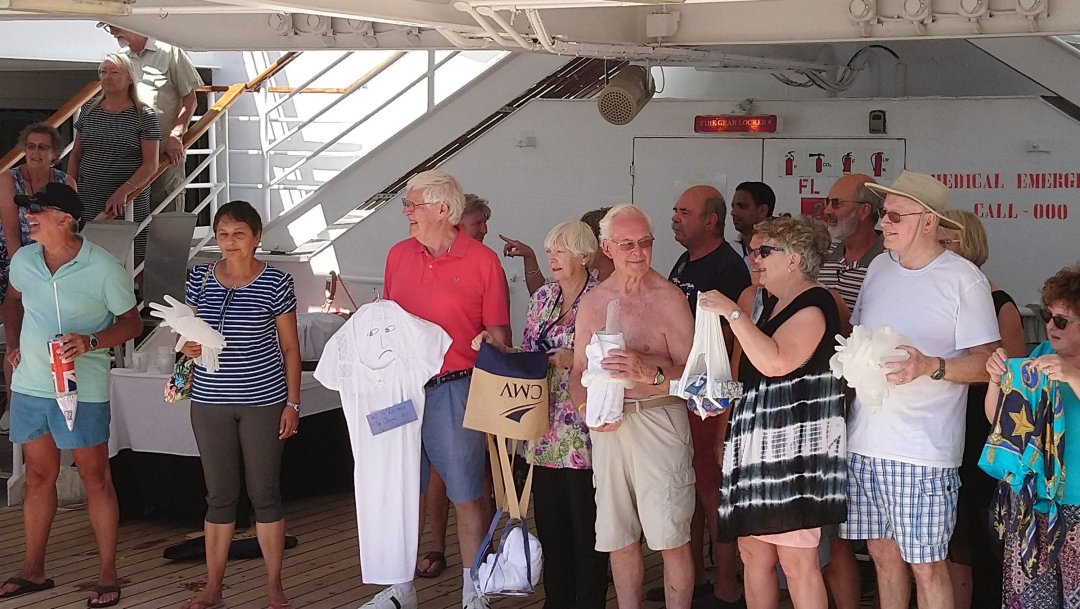
Onboard, there are many one-off activities each day to entertain the passengers, alongside the usual quizzes, games, lectures, clubs, and film screenings. One event, however, stood out. Through our daily update magazine, passengers were invited to design a structure that would prevent an egg from breaking when dropped from Deck 14 onto Deck 12, with the aim of landing as close as possible to a target.
I have a few engineer friends who would have loved such a challenge, and it seems a large number of passengers did too. It was an absolute hoot. Some of the contraptions looked as if they had come straight out of the Wacky Races factory, and so did their creators! Yet, surprisingly, most designs worked (after a fashion), and in the end, victory was less about precision and more about sheer luck. I hope they run the competition again, I might just give it a go next time.
On one of the sea days, Sue had another story to share when we met again after separate activities. An elderly Welsh lady in her eighties had confided in her about why she was cruising alone. She had originally planned to travel with a friend, for whom she had generously covered all expenses, including insurance and excursions, as her friend could not afford them herself. However, shortly before departure, her friend developed medical issues that prevented her from travelling. Unfortunately, she had failed to declare her pre-existing conditions or a scheduled medical appointment on her insurance forms, leading the company to reject her claim for reimbursement.
That was bad enough, but there was more. Since the Welsh lady’s husband had passed away in 2000, this same friend had been living with her rent-free, with all food and expenses covered. To make matters worse, she had recently amended her will to stipulate that, in the event of her passing, her friend could continue living in the property rent-free until her death, after which it would be passed on to the Welsh lady’s daughter. A deeply unfortunate situation, made even worse by the fact that the friend had yet to apologise. Understandably, the lady was upset, but she was determined to move on and enjoy her cruise. Good for her, it’s quite literally water under the boat until she returns home.
On the 25th, we docked in Puerto Quetzal, the main port on Guatemala’s Pacific coast, at 7:30 am. First impressions were not particularly inspiring, as this is primarily an industrial city, and the surrounding landscape was flat; there wasn’t much of interest to see from the decks, unless, of course, you happened to be an industrialist. We had originally been scheduled to dock at a smaller port designed for cruise ships, but a recent incident had forced a change of plans. A large cargo vessel carrying charcoal had smashed into the dock, and repairs were still underway.
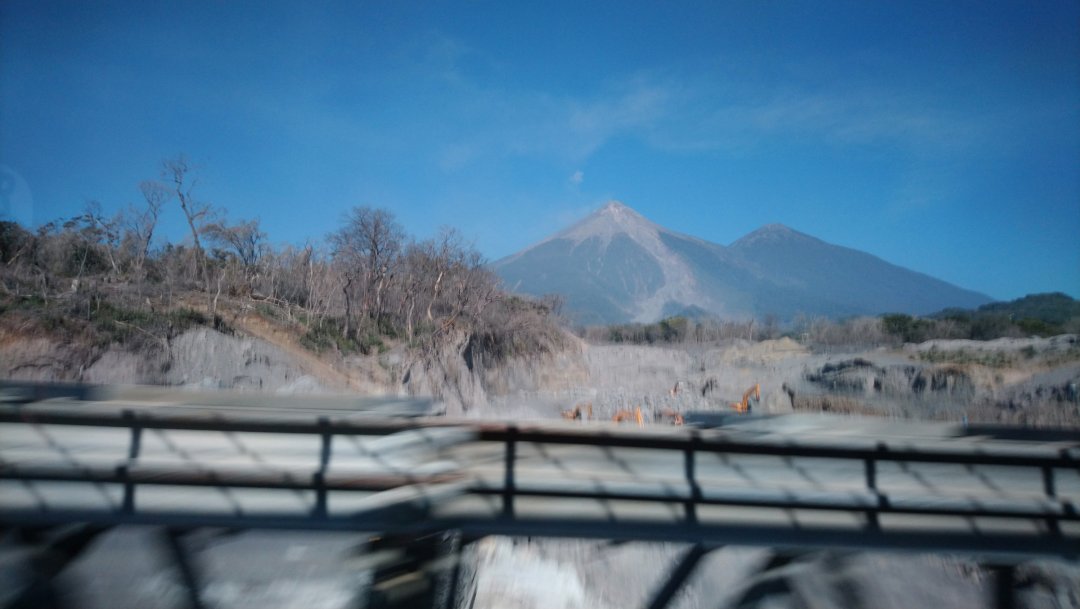
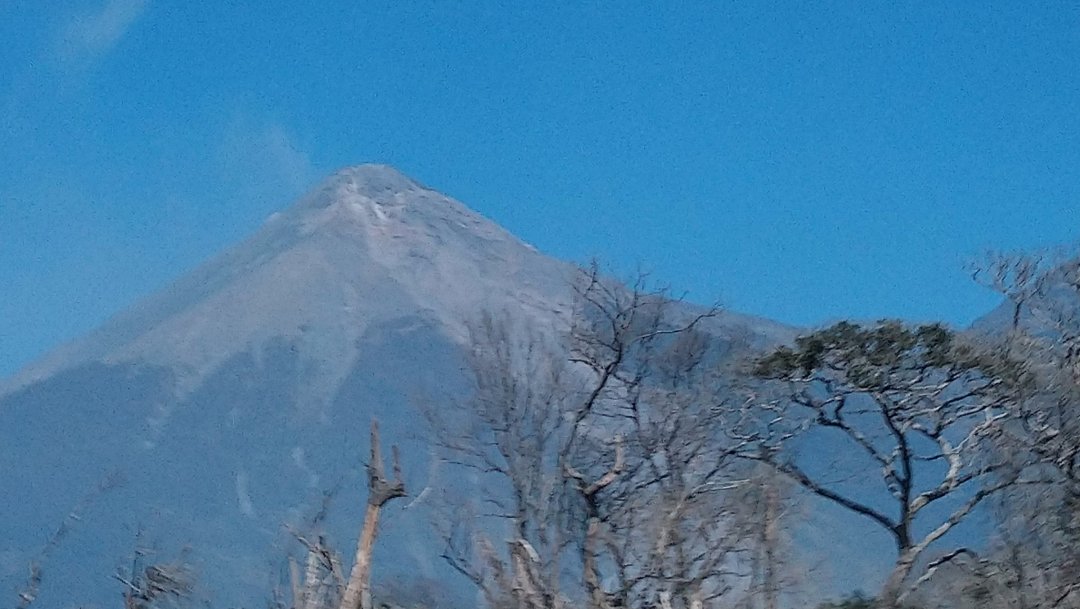
By 8:45 am, we were seated with others in a minibus, ready for our transfer to Antigua, the former capital of the country. Guatemala sits on a fault line where two tectonic plates collide, making it a highly volcanic region. It wasn’t long before we encountered our first volcanoes. Most were dormant, but as we ascended from sea level to our 5,000m destination, we passed one that was still intermittently erupting, sending regular plumes of dark smoke billowing into the clear blue sky.
It was around this point that we hit a stretch of dusty roadworks, slowing our progress to a crawl and giving us time to take in the surrounding devastation. Just last June, the towering mass of rock and ash we had been blithely approaching had erupted with catastrophic consequences. A pyroclastic cloud had thundered down the very slope we were now traversing, obliterating the road in its path.
All around us, a stark, scorched landscape unfolded, and barren trees stood eerily against a sea of grey rubble. On closer inspection, we could make out the tops of buildings and other structures barely visible above the thick layer of volcanic ash that had buried them. Even now, efforts were underway to dig out the remains of those who had been trapped beneath. A sobering moment, and a stark reminder of how fortunate we are to live in more geologically stable parts of the world.
As expected, the roads were in poor condition, and in several places, our vehicle bounced in and out of deep potholes. These jolts not only shook the passengers but, as we would later discover, also had a detrimental effect on the bus itself.
Our journey to Antigua took an hour and a half. The town is beautifully picturesque, nestled among three volcanoes, with entirely cobbled streets. However, navigating them requires careful attention, as frequent earth movements in this seismically active region have dislodged many of the cobbles. Even vehicles must proceed cautiously, while pedestrians risk a twisted ankle or worse if not careful.
To make the most of our short five-hour visit, we decided to hire a guide for the day. For $15 each, we secured the services of an English-speaking guide and were joined by another couple.
At the time of our visit, Antigua was hosting a South American convention, meaning the town was teeming with heads of state and diplomats staying in local hotels. As a result, security was highly visible, with armed troops and police stationed on nearly every street corner, their presence reinforced by a formidable array of weaponry.
Our first stop was an ancient monastery, now transformed into the town’s most prestigious hotel. Once destroyed by earthquakes, the site was later bought by an entrepreneur who saw an opportunity, preserving the ruins, establishing several museums, and converting the space into a chic hotel that now serves as the convention centre, accommodating the visiting dignitaries.
I was surprised that we were allowed inside, but our guide had a quiet word at the entrance, and we were nodded through without issue. This wasn’t the first time we had encountered relaxed South American security. In Cusco, during a ceremony, I once found myself standing just two metres away from the President while carrying a rucksack. Perhaps they believe an overwhelming show of firepower is a deterrent enough.
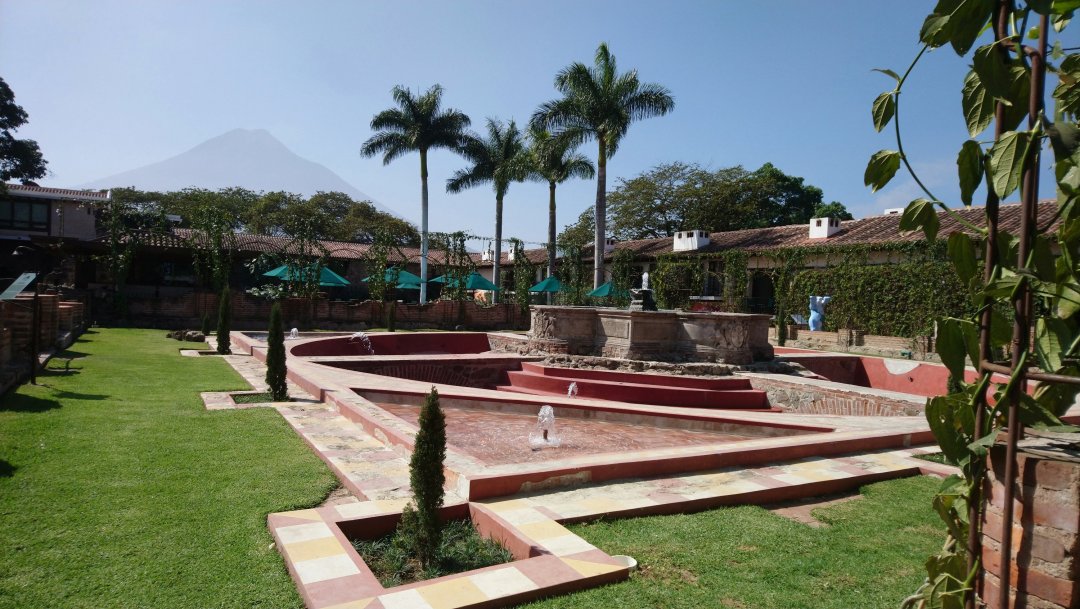
We explored the hotel, monastery, museum, convention centre, and gardens, all housed within the same beautifully restored complex. As expected, it was an exceptionally picturesque place to spend some time, especially with the striking backdrop of volcanoes drawing the eye. We wandered in and out of the various preserved chapels, caught intriguing glimpses of the luxurious hotel through open doorways, and photographed the elegant gardens with their fountains before eventually finding ourselves back on Antigua’s cobbled streets.
Antigua is not a large town, so thankfully, the main sights were within easy walking distance. This was a relief, as navigating the uneven streets required care, not only to avoid twisting an ankle on the shifting cobblestones but also to dodge the low-hanging balconies, which posed an even greater risk to the unwary. Hugging the wildly undulating pavements for safety wasn’t always an option either, as every so often, a vehicle would rattle and bounce its way down the narrow streets, forcing pedestrians to remain alert at all times.

We passed and photographed several ornate Catholic churches, each bearing the marks of past earthquakes. While we ventured inside one to admire its gold-covered chapels, we satisfied ourselves with standing outside the others, listening to their histories in whatever shade we could find. The resilience of the local population was evident in their repeated efforts to rebuild these churches over the centuries. The most striking, however, was little more than a facade; behind its grand frontage, nothing remained.
Next, we stopped at a small café and bar, which our guide claimed brewed the best Guatemalan coffee in town. I can’t say for certain whether his boast was true, but the coffee was rich, full-bodied, and packed a punch. I had been feeling a bit sluggish in the heat, but after a cup, I was decidedly more alert!
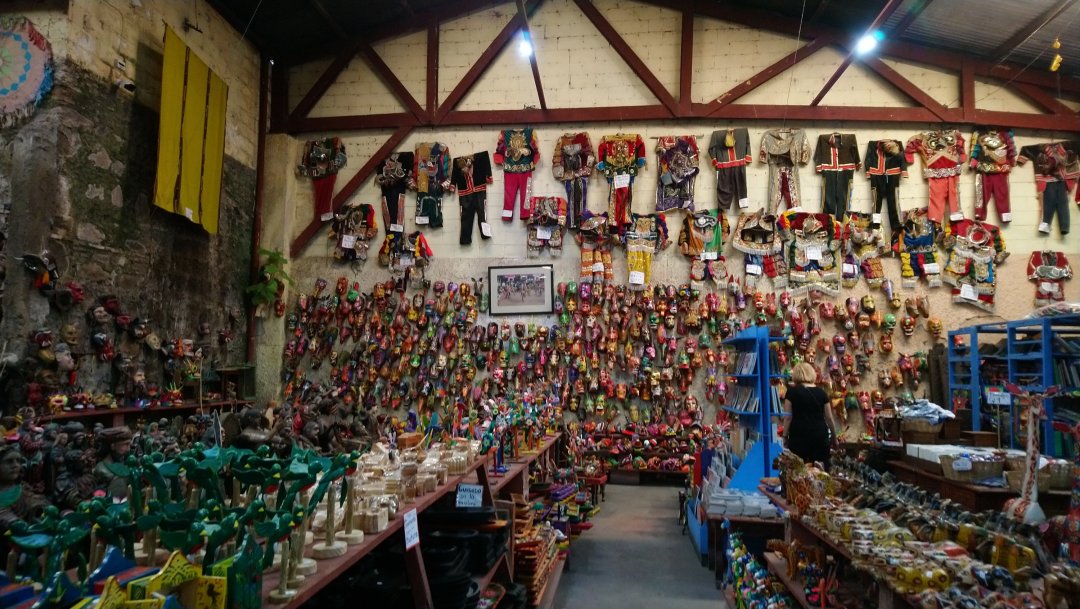
We wandered through a few local markets, where Sue took full advantage of the shopping opportunities while my wallet grew noticeably lighter. The stalls were bursting with vibrantly coloured trinkets, clothing, and ornaments, an effective strategy for catching the eye of somewhat drab-looking European tourists like ourselves.
Central Park is surrounded by more grand churches, impressive government buildings, bustling shops, and elegant hotels. It’s a picturesque setting, clearly as popular with locals as it is with tourists. As we arrived, schoolchildren in crisp uniforms were making their way through the square. The girls’ attire, interestingly, featured pleated tartan skirts, surprisingly reminiscent of traditional Scottish dress.
The park is also home to numerous shoe-shine stalls and street vendors. However, unlike their counterparts in the Middle East, the hawkers here are refreshingly low-key. They briefly display their wares, and if you decline or show disinterest, they simply move on without protest. There’s no relentless pursuit, no trinkets thrust in your face, no incessant refrain of “Which do you want?”, just a quiet acceptance and a search for the next potential customer.

After making our way around the square and learning about its history, as well as that of the surrounding buildings, we decided on 45 minutes of free time before regrouping with our guide for the journey back. The other couple set off in search of a bar playing live music, while we wandered through the nearby streets.
Our exploration led us to yet another market, where, unsurprisingly, my wallet grew even lighter, before stumbling upon a chocolate museum. The rich, decadent aroma wafting through the air was absolutely divine, making it impossible to resist stepping inside.

When we arrived at our meeting point, we discovered that the earlier potholes had indeed taken their toll; our minibus was now out of action. A replacement had been sent for, but about twenty minutes later, we were informed that the driver had managed to fix the issue. The only catch? The air conditioning no longer worked.
Rather than wait for the new bus to arrive, we all agreed to make the journey back with the windows open. After all, most of us were from a generation that had driven without air conditioning; when you needed to cool down, you simply rolled down a window. Though the dry season made for a dusty ride, we took it in our stride and arrived back in time to board the Columbus before it set sail.
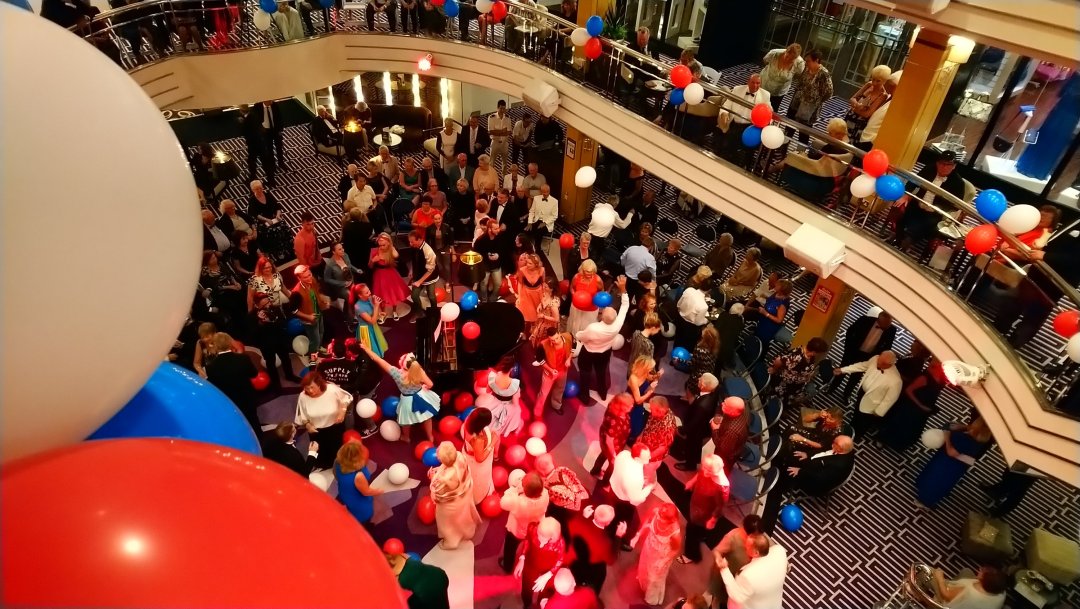
That evening, we bid farewell to Guatemala. As it was Burns Night, and with a good number of Scots among both the passengers and crew, the ship came alive with celebrations.
 Palmer Family
Leave a comment