2nd June 2017
The altitude of 4,000 metres has undoubtedly taken its toll on both us and our fellow travellers. At its mildest, the symptoms include a constant dull or throbbing headache, a lack of appetite, and occasional nausea. Any physical activity results in breathlessness and overwhelming fatigue. While we’ve managed to alleviate our headaches with tablets, nobody has escaped the relentless tiredness and gasping for air. Yesterday’s excursions into Puno and the archaeological site proved too strenuous for some of our group, leaving them to remain seated in the minibus. Upon returning to the hotel, they retired to bed without even attempting an evening meal.
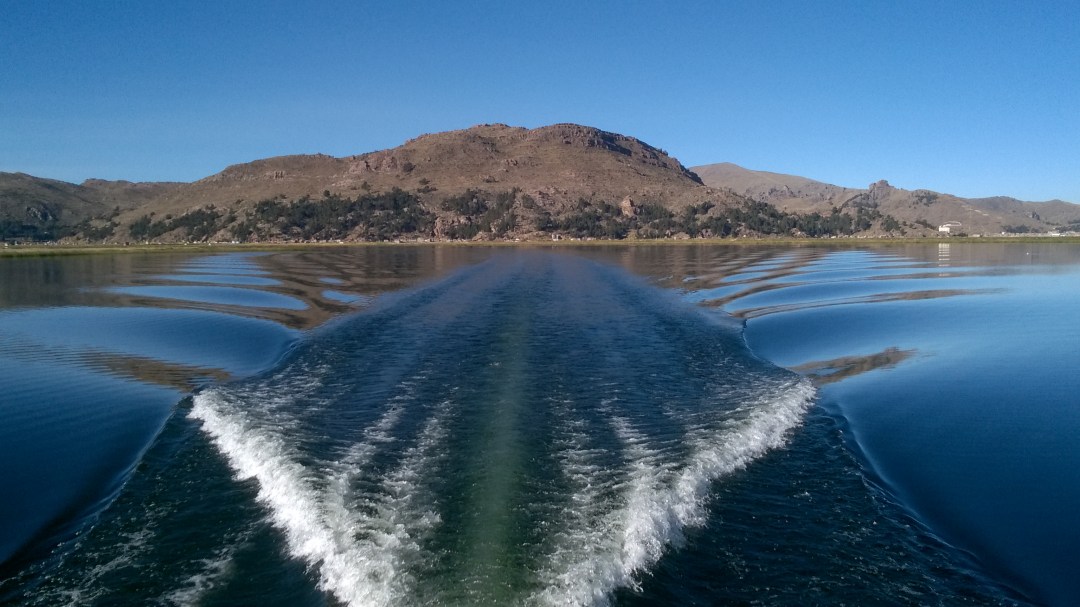
This morning began with another early start. After breakfast, we boarded a small cruiser from the hotel’s private pier, the same one I photographed upon arrival. It was a glorious day, with the lake lying calm and tranquil beneath an endless blue sky. The sun stretched from horizon to horizon, bathing everything in golden light.
Our destination was the Uros floating islands, about 30 minutes away. These remarkable, man-made islands are constructed from totora reeds, and the descendants of the Altiplano people still live on these platforms. The area was bustling with activity as numerous small boats wove their way between the countless floating islands.
Motoring slowly through this unique community was an unforgettable experience. We photographed the islands and waved to the colourful locals, who eagerly returned our greetings. Their warm hospitality was expressed through singing, dancing, and cheerful waving; their joy at our visit radiated through their gestures and songs. It was a truly special and heartwarming encounter.
We found our berth alongside one of these reed islands, which was dotted with small huts and a tower, apparently a mandatory feature to keep an eye on the neighbours. If a dispute arises between island inhabitants, the solution seems simple: they just move the entire island to another location. It struck me as a rather fitting analogy for a Peruvian Brexit, Perexit, perhaps? A lighthearted way of maintaining peace and distance!
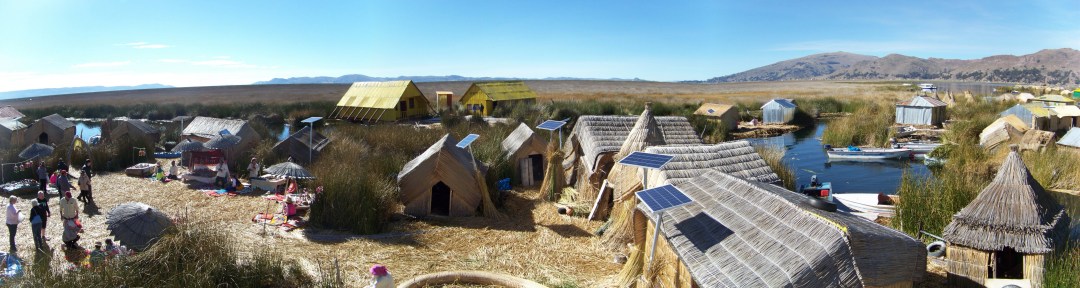
As we disembarked, we were warmly greeted with song and handshakes. We took our seats on reed chairs arranged in a semi-circle and were given an informative description of life on the island. This was followed by a demonstration of how the island itself was constructed. It was built 15 years ago and is expected to last for around 30 years. The platform is 2 metres thick, made up of 1 metre of crisscrossed reeds piled on top of a 1-metre bed of reed roots, all tied together with pegs and rope. Beneath this is 300 metres of very cold water.
To wrap up our visit, we were treated to a performance by the traditionally dressed women of the island. They staged a little play that depicted a market day, which was both highly amusing and sparked raucous laughter from everyone. The charm of the experience was not just in the novelty of the floating islands but in the warmth and humour of the people who call this unique place home.


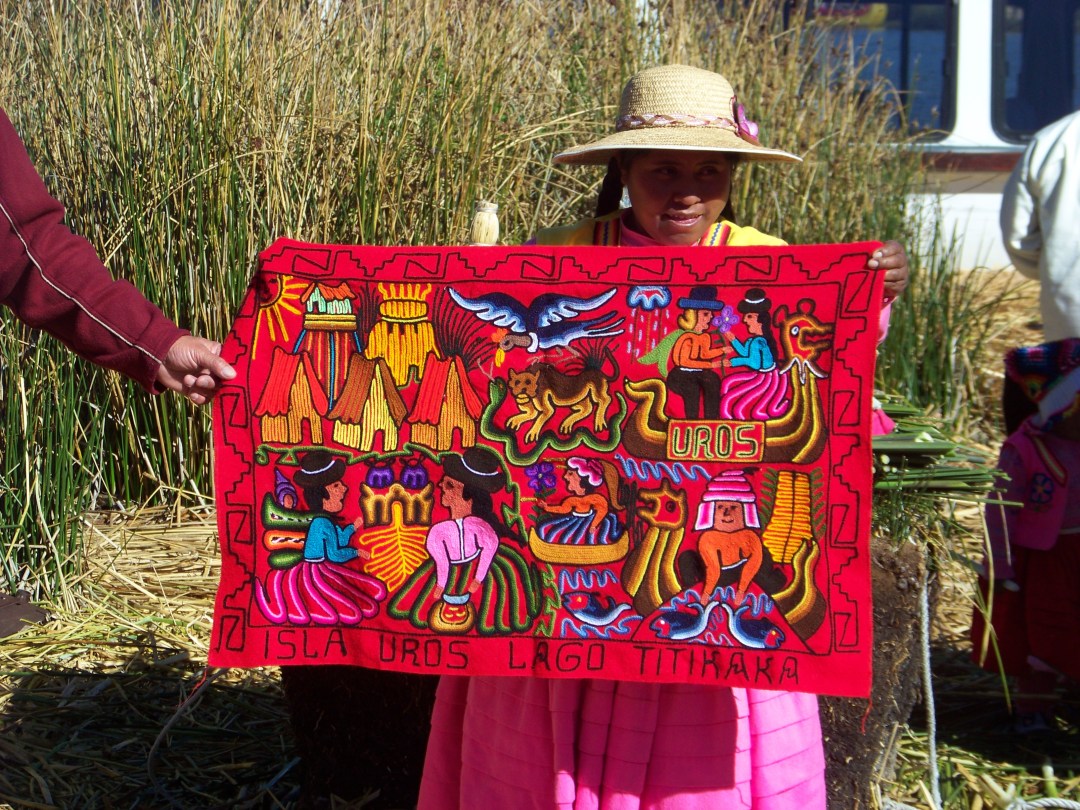
We were then invited to explore the rest of the village, where we learned that there are 21 inhabitants, and they are led by a chief who oversees their daily lives. We were welcomed into one of the huts, where we got a closer look at their simple, yet practical, way of living. Afterwards, we had the opportunity to purchase some of the handmade trinkets and crafts they had created. Most of us took the chance to buy a souvenir, a token of the unique experience.
It was a truly memorable visit, offering a glimpse into a way of life that is gradually fading. Many of the younger generation, as is so often the case, leave the islands for a more modern life on solid ground. The contrast between the timeless traditions of the islanders and the inevitable pull of modernity felt poignant, highlighting the delicate balance between preserving culture and adapting to change.
Finally, we were treated to an enchanting ride on a reed boat, similar to the ones used on the Kon-Tiki expedition. It was a wonderfully relaxing experience, and I even had the chance to practice my limited school Spanish with Juan, one of the two oarsmen. As we drifted along, we were serenaded by a young child playing the panpipes, adding to the serene atmosphere.
Our attention was also caught by an enchanting little girl, no more than two years old, who entertained us with her delightful antics. There was no health and safety concern here; as she moved around the cramped little boat, once, I had to catch her when she slipped, nearly falling into the lake. But no one seemed the least bit worried; life on the islands appeared to be lived with a carefree attitude. It was a charming moment, underscoring the simplicity and resilience of their way of life.

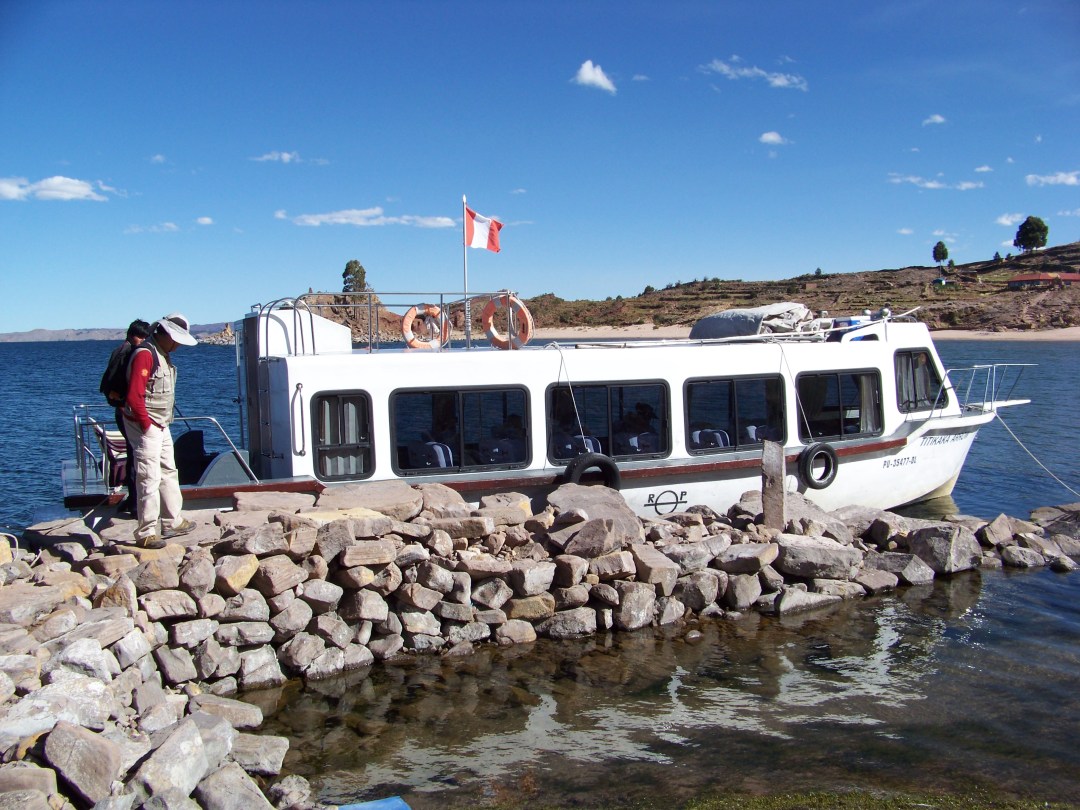
Returning to our new, second island home, we boarded our cruiser and set off south into the heart of Lake Titicaca. Our destination was Taquile Island, approximately 35 kilometres away, and the journey took about an hour and a half. I spent much of the time on the roof of the boat, lying on a tarpaulin mat, soaking in the unique scenery as it drifted by. The landscape was stark, yet incredibly beautiful, with the mountains, clouds, and beaches reflecting off the surface of the lake, creating a mirror-like effect. To the south, the snow-capped peaks of the Andes on the Bolivian side could be seen in the distance. I was occasionally joined by a few others from our party, but they quickly retreated from the chill. I wasn’t about to miss the view by gazing through a window; it was too spectacular for that.
Upon arrival at the island, we moored alongside another cruiser that had already docked. Gathering on the shore, we began the slow climb up the hill, following a well-trodden path. After around 100 metres, we encountered two locals dressed in traditional black and white garments. They were there to collect the fee for visiting the island from our guide. The island’s 2,000 inhabitants are indigenous people, untouched by Spanish colonial influence. As a result, they remain independent of the Peruvian government, making their own laws by consensus. Sadly, like many rural communities, they are also experiencing depopulation.

We slowly made our way to the top of the island, stopping frequently to catch our breath and take photos along the way. The climb was worth it, as the views were simply breathtaking. After reaching the summit, we descended to the other side and arrived at a small homestead perched above a picturesque beach. Here, we were treated to a delicious meal that was truly a highlight of the day. We started with quinoa soup, which was rich and flavourful, followed by lake trout with vegetables that had an incredible depth of taste. We were well satisfied after such a meal.
Afterwards, we had around half an hour to explore at our leisure. Sue and I decided to visit the beach, where we ventured into the lake for a paddle. It was chilly but refreshing, definitely a bracing experience!

I don’t really remember the return journey, as I fell asleep against the window on the sunny side of the boat. I woke up when the guide began giving us instructions for the next day’s journey to Cusco. To my surprise, Sue had spent the entire time at the back of the boat, taking in the views and enjoying the scenery. It was a peaceful journey, and despite missing a lot of it, I was refreshed for the next leg of our adventure!
We decided to eat at the hotel again rather than take a taxi into Puno to find a restaurant, as some of our group were planning. Alpaca was on the hotel menu, and we couldn’t resist trying it. Both of our meals were fabulous. Alpaca is a lean meat, so tender it slices like butter. It has the texture of chicken but the delicate taste of pork. As an added bonus, we were serenaded by a talented Peruvian band. They were so good that I ended up buying their CD and DVD as a souvenir.
And yes, it’s another early start tomorrow, 6:20 am!!!
 Palmer Family
Leave a comment