16th May 2017
Today, we were heading further north to Waipoua Forest, renowned for being home to New Zealand’s largest living kauri tree, Tane Mahuta, the ‘Lord of the Forest.’ We were eager to discover why it attracts so much admiration.
The journey was approximately 200 kilometres, and with an early start, we arrived at the small dedicated car park by 9:30 am. Beforehand, we made a brief detour to visit the park’s information office, located just a couple of kilometres away.
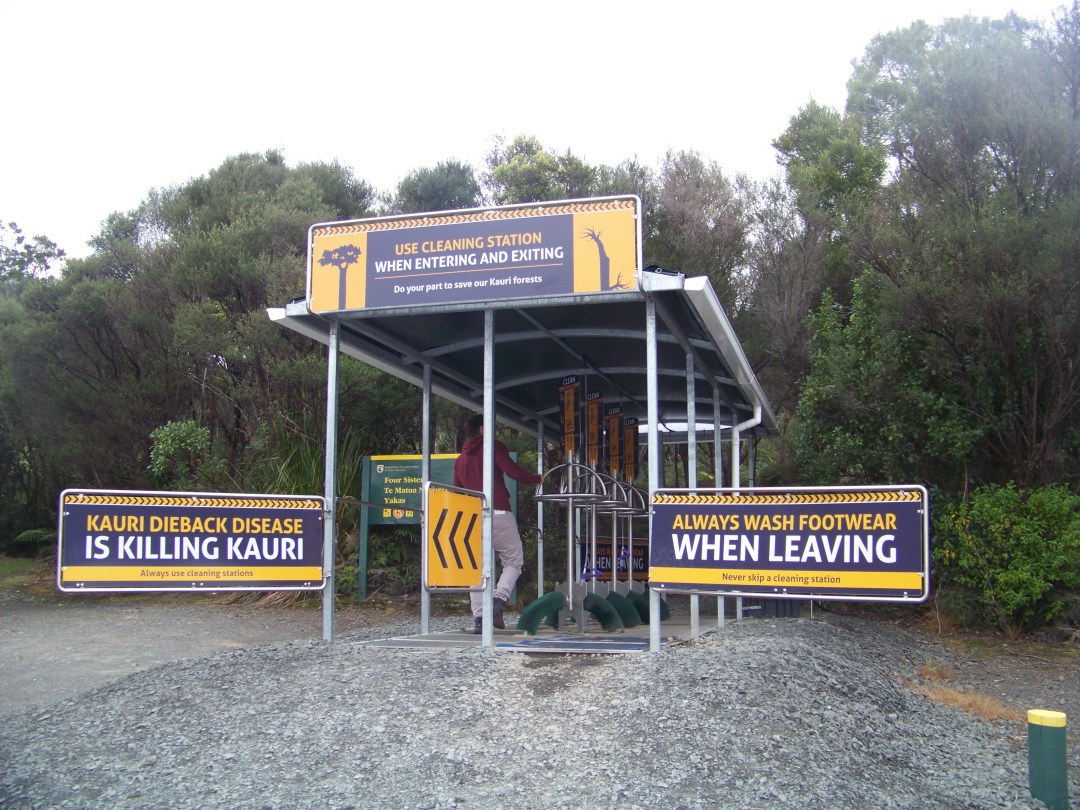
At the entrance to the forest, there is a small decontamination station where visitors must first brush and then spray their boots. This precaution is essential to prevent the spread of the devastating kauri dieback disease, which poses a significant threat to these ancient giants.
The tree itself is accessed via a very short stretch of walkway that meanders briefly through the lush subtropical forest. This is indeed an awe-inspiring giant: its girth measures an astonishing 13.7 metres, the trunk rises to a height of 17.68 metres, and the total canopy reaches an impressive 51.5 metres. Standing beside its massive frame, one cannot help but feel both insignificant and deeply at peace.
The trunk is remarkably straight and wide, but what sets Tane Mahuta apart are its branches, which sprout from the very top like a crown. Each branch is the size of a large tree in its own right. Capturing the tree’s immense scale in a photograph proved nearly impossible. To fit it all in one frame, I had to set my camera to panoramic mode, turn it on its side, and stitch three shots together.
We were the only visitors at this time of day, enjoying the privilege of sharing this magnificent ‘Lord’ solely with his neighbouring ‘serfs’, the surrounding trees, and the strange, enchanting calls of the forest birdlife unique to this part of the world.


We circumnavigated the lakes, pausing often to soak in the breathtaking views, before discussing our plans for the remainder of the day. An evening kiwi walk further north, in a remote area, was on our itinerary. However, with less than a quarter of a tank of fuel left and the nearest petrol station located back south in Dargaville, we decided it was wiser to refuel first. Our plan was to top up, have lunch, and then reassess our options, which is exactly what we did.
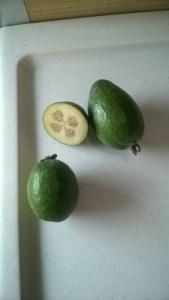
While in Dargaville, we came across some feijoa fruit. Intrigued, we purchased a bag and were so delighted by its pleasant and unique flavour that we promptly returned for a second. Feijoas are only in season for three months each year, and it’s clear the locals adore them. This year, we were told, has been a particularly abundant harvest.
Our destination for the afternoon was a campsite on the opposite coast, in a place called Sandspit. The area seemed intriguing, so we decided to explore it for ourselves. Along the way, we stopped at a small township to pick up a few provisions for our evening meal.
We arrived as night was falling and checked into what turned out to be a rather upmarket establishment, situated next to a marina filled with an array of impressive yachts.
As a change from our usual evening routine of cider and cards, we heated up a couple of boxes of sweet and sour pork in the microwave and enjoyed a meal.
 Palmer Family
Leave a comment