12th May 2017
I suppose we’ve been lucky so far, sunny days and hot afternoons are not typically the norm in New Zealand during the winter. Last night, as we drove towards our campsite on Ohawe Beach, we could see Mount Taranaki just a few miles away, standing tall against the surrounding landscape with its snow-capped peak gleaming in the late afternoon sun. However, that would not be the sight that greeted us in the morning.
Soon after settling into our makeshift nests, Jamie in the small space above the driving cab and me at the back of the van, where the table usually sits (we alternate spots nightly), the rain began. The wind picked up, shaking our little sanctuaries, and the sound of raindrops pinging against the outer casing grew louder. It was an atrocious night to be out. Luckily, rain has a way of lulling me to sleep, though not so for Jamie, but I think he eventually drifted off. No one was tempted to make the trek to the toilets, a good 50m away by the cliff top! Even ‘Plan B’, which involved baptising the rear wheels, wasn’t necessary.
We eventually stirred into life around 8:30 am, made coffee, visited the toilets, and enjoyed a hot shower (plenty of lovely hot water). It was still raining, but not as fiercely as during the night. After a quick walk down to the beach, we set off optimistically for Mount Taranaki. It had been visible the previous evening, but now it had completely disappeared. Our Satnav, however, was determined to find it.
As we sped down the main highway, the full force of the storm hit, rocking our little van from side to side and testing the windscreen wipers to their limits. We pressed on with crossed fingers, hoping the storm would soon pass. It didn’t.
We reached the lower slopes of the volcano and began the ascent along a winding, single-track road. The road was slowly turning into a stream. Meeting no one either going up or down, we eventually reached the plateau where, in 1940, a small landing strip had been laid out for rescue aircraft. We parked by the toilet block, the only feature visible in the rain and grey, with just 10m of visibility in every direction. The wind was driving the rain horizontally, and our small van was bouncing on its wheels.
First, Jamie tried to leave the vehicle, only to return seconds later, completely soaked. Thinking I might be sheltered on the opposite side of the RV, I gave it a go myself, with the same result. We decided to wait for an hour, hoping conditions would improve. If not, we’d head on to New Plymouth as planned.
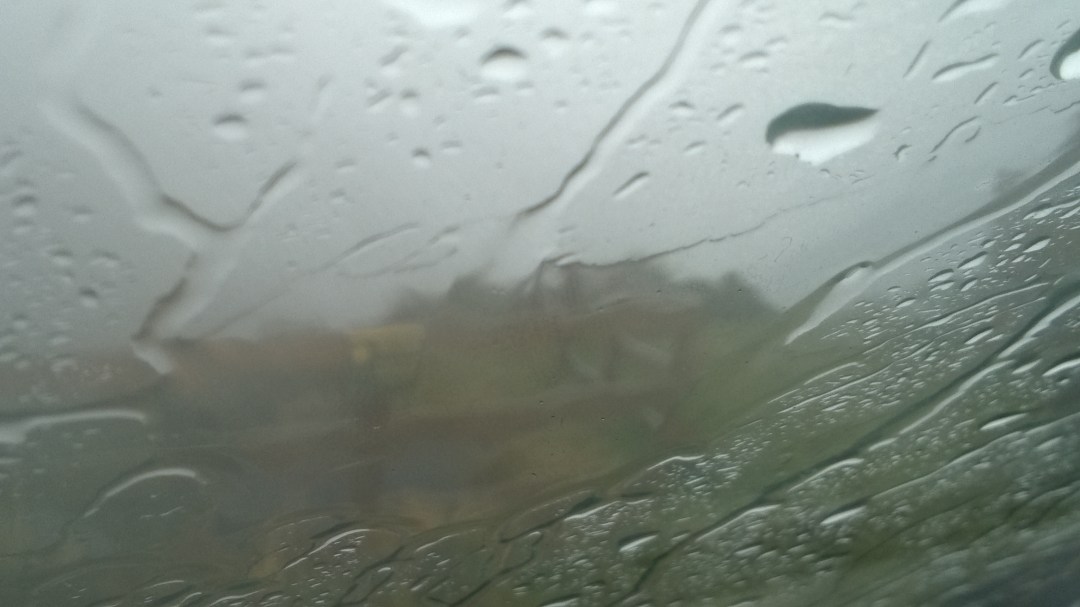
As we settled in to wait it out, my mobile pinged with a text from the NZ Met Service. They informed us that the rain would cause rivers and streams to rise rapidly, leading to flooding and landslides. It seemed like a subtle hint that Mount Taranaki was about to vanish beneath the waves.
Common sense prevailed, and we decided to retreat. We floated back down the mountain to a small hotel we’d passed earlier. There, we enjoyed coffee and watched the rain relentlessly pounding the earth outside, all while basking in the warmth of a crackling log fire.

Rested and resigned to our fate, we continued in the rain to New Plymouth. After parking by the beach in the centre of town, we had a wet wander around the shops before ducking into a large shopping mall for lunch. While searching for the tourist information office, we came across the local museum and spent a pleasant, dry hour or so exploring the displays.
One of the stories we read there was about an event in the early 1800s, when a British ship was wrecked off the coast. While all of the crew managed to scramble ashore safely, a local Māori chief rudely kidnapped the captain’s wife and children. However, the captain and crew eventually escaped and made their way to Australia. His wife and children were (supposedly) rescued by another Māori chief, though it’s unclear whether they were sold or freed. The captain later returned with a warship, recovered his family, and then destroyed the Māori tribes in the area. Serves them right!
The story was presented as an example of the first European aggression against the Māori. But I can’t help but feel this might be more of a Māori perspective. Surely, the act of attacking a shipwrecked crew and kidnapping women and children could also be seen as an example of Māori aggression towards Europeans? Or am I reading this incorrectly?

It was still raining when we visited the cinema to check the film times for our evening entertainment, and also when we checked into our campsite for the night, which was conveniently located next to the beach in the centre of town. The rain didn’t ease while later, Jamie went for a short walk, and I wrote this blog. We spent the rest of the afternoon playing cards and drying our raincoats with a portable heater.
The film we watched that evening was ‘Alien: Covenant’. It had all the suspense of the original ‘Alien’ film but suffered from being somewhat predictable, particularly the twist at the end. And, it was still raining when we returned to the campsite via Domino’s Pizza. Hopefully, tomorrow will bring better weather.
 Palmer Family
Leave a comment