4th February 2016
It was a restless night’s sleep. We had such an early start planned for today’s trip that I suppose we were worried about missing our transport from the quayside when we docked. Damn, those foolish Aussies from yesterday who tut-tutted us booking independently, they sowed the seeds of doubt in our minds!
Sue’s alarm and my mobile were both set for a 6:30 a.m. wake-up, but in the end, we gave up fidgeting at 6:15 am and got dressed. The ship’s camera, displayed on our TV, showed a sunny day as we prepared to enter the port of Lautoka.

We had a light breakfast of fruit and yoghurt in the café before returning to the cabin to collect our gear for the day.
We were among the first passengers to disembark. Today’s adventure had been booked online with a local independent agent. According to our printed instructions, we were to be met quayside by a representative holding a sign for the “Naussori Highland Tour” and guided to our transport, which would display the same label.
Arriving half an hour early, we watched as stallholders along the quay tried to sell last-minute excursions to eager, disembarking passengers. We approached several likely candidates, thrusting our confirmation papers at them, only to be met with blank stares. The official information desk examined our papers but couldn’t help either. Although the documents included phone numbers, there was no mention of a local agent’s name. Reassuring us that someone would turn up, the staff suggested we sit down and wait until 8 a.m. Fiji time, which, as we understood it, meant expecting a delay.
We waited. At 8:05 a.m., we pestered the information desk again, and they called one of the numbers provided. A fairly lengthy conversation followed, first in English and then in Fijian, not a promising sign, I thought. After hanging up, the staff member assured us it was being sorted and disappeared for a few minutes.
When he returned, he brought along a large Fijian man, who inspected our papers before telling us to follow him and wait in some air-conditioning. He led us to his spacious 4×4 Toyota, which was indeed refreshingly cool. Once inside, he made a phone call, again switching from English to Fijian mid-conversation.
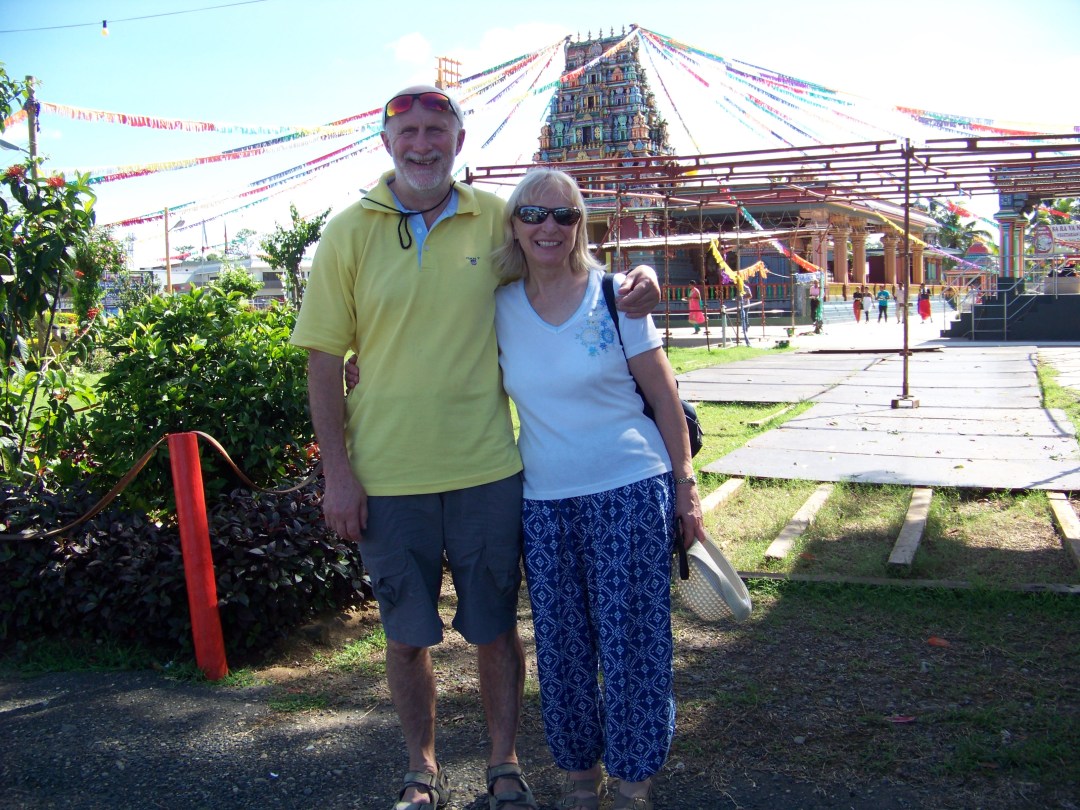
Turning around, he explained that he would be taking us on our trip. He had originally been booked for a different excursion, but his office had reassigned him to us. The office was aware of our booking but hadn’t received confirmation, so they hadn’t arranged a driver. However, they were now sorting everything out, and he would serve as both our driver and guide for the 3.5-hour journey. We were the only ones on this excursion.
Relieved that we were at least going somewhere, we relaxed in the cool comfort of the rear seats and chatted about the plans for the day. Our driver proved to be a wealth of knowledge, sharing fascinating insights about the history, flora, and fauna of the lush but stiflingly hot countryside we were passing through.
Our first stop was at his office near the airport, where we took a quick loo break while he gathered supplies for the trip. From there, we continued to the market in the next town along our route. This stop was initially to pick up a lady who would introduce us to her mountain village; nothing in Fiji happens without observing traditional protocols. She was already waiting when we arrived, but to our surprise, it was her son who climbed into the car. He would be handling the introductions.
Imagine my delight when I learned he was also a fly-half in the noble game of rugby! We hit it off instantly, chatting enthusiastically about the sport as the journey continued.
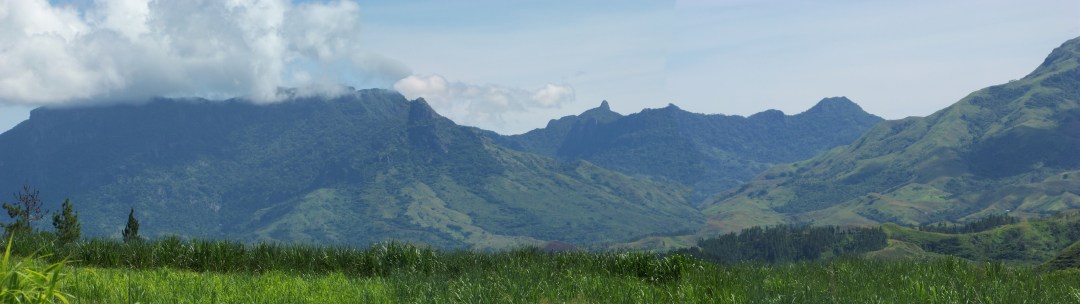
Several miles out of town, we turned onto a rough cart track and began our journey into the mountains. Naussori, the village we were to visit, lay 22 miles along an increasingly steep and winding trail that wove through breathtaking scenery. The only unsettling feature was the sheer vertical drop, ever-present on one side of the road or the other. We stopped periodically during our ascent to snap photos and feel the oppressive heat.
It had been made clear that any trace of electricity or modern comforts had been left behind the moment we turned off the paved road. Our driver’s knowledge was impressive, as he lived in the mountains. Along the way, he pointed out the stop for the school bus, which could go no further up the rugged terrain. From that point onwards, the only mode of transport for locals was horseback. Navid, our introducer, owned a horse and relied on it exclusively to get around. Like the rest of the villagers, even a moped was beyond his financial reach. He had been playing rugby that weekend for a club on the coast and had travelled there from his village on horseback. While he was away, his wife had given birth, and he was eager to return home as quickly as possible. His mother had been selling vegetables in the market and suggested he take her place.
As we talked, we learned more about Navid’s family. His wife, a teacher, had given birth to their fourth child, a baby boy. She was currently on three months of maternity leave, staying home to care for the little ones.


We dropped Navid off at the edge of the village, presumably so he could warn his wife of our arrival. With no mobile coverage and no one owning a mobile phone anyway, she must have been in for quite a surprise. Navid had been away from home for two days playing rugby, and she wasn’t expecting him back yet.
Our driver took us to the far side of the village to visit the small school. In truth, I suspect this detour was more about giving Navid’s wife time to recover from the shock and get things ready for our visit.


After allowing a suitable amount of time to pass, we drove to Navid’s house, where we were met by his exuberant children. They squealed with delight, rushing to grab our hands and guide us eagerly. Our driver had mentioned that no Europeans had visited the village in over a year, and his company hadn’t run a tour to Naussori in all that time. I suspect they hadn’t expected anyone to book such a remote trip, let alone insist on going.
We introduced ourselves to the family in the traditional manner we’d learned during our previous day’s adventure. Navid’s wife then took us on a guided walk around the village, explaining how they lived. Her children trailed along, each vying for a turn to hold our hands.
We visited the church, the priest’s house, and a significant stone that marked the village’s founding in the early 1800s. Eventually, we returned to Navid’s home. As we approached, I couldn’t help but notice a ramshackle hut, no bigger than a garden shed, with faint Fijian writing on the door. Much to her embarrassment, I correctly guessed it was the village bar. It was a surprising discovery in such a devoutly religious community.


On the verandah, Navid proudly presented his newborn son, Joe. His pride was evident as he carefully handed the baby to us, beaming as we held Joe’s tiny hands.
Before entering the house, we participated in the traditional Welcome (Bula) Ceremony, which, of course, involved kava. Sitting cross-legged on matting in the centre of the room, we watched as Navid prepared and mixed the potent brew. I’m not a fan of kava, but for some inexplicable reason, Sue seems to enjoy it.
With ritual clapping, a coconut shell filled with the earthy, lip-numbing liquid was passed to each of us. We downed it in one go, as tradition dictates. Then, in a show of appreciation or endurance, we did it all over again!


Navid’s wife brought out rolled pancakes and a fragrant tea made with lemon leaves, sweetened with raw cane sugar. It was surprisingly pleasant. As honoured guests, we were told we’d be expected to finish everything offered, including the kava!
At first, we were grateful when our driver pitched in to help with the kava, enthusiastically downing bowl after bowl as we nibbled on our pancakes to the sound of much clapping. However, when Sue couldn’t bear it any longer, she sternly forbade him from having any more, concerned about his ability to navigate the treacherous mountain roads on the way back. He reluctantly complied.
Things took a comical turn when Sue asked to use the toilet. Navid and his wife searched high and low but couldn’t find the key to the toilet door. I resisted the urge to ask why it was locked in the first place, but their earnest search made me hold my tongue to avoid embarrassing them. In the end, Sue was escorted to a neighbour’s toilet.
The moment she left, Navid and our driver resumed their kava drinking. In an effort to limit their intake, I reluctantly joined them, squatting down (which did my knees no favours) and clapping along ceremonially. I hoped Sue would return before I lost all sensation in my mouth and brain. Thankfully, she came back just in time, quickly grasping my predicament. She joined in, helping to finish off the seemingly endless supply of kava. It was clear the drive back down the mountain would be one to take with crossed fingers.
With the food and kava finally consumed, we were invited to peek into the kitchen. From my seat in the lounge, I’d already spotted an ancient cooker, but it turned out to be purely decorative. At the back of the modest kitchen, a fire blazed beneath a bubbling stew pot, sending smoke billowing out. This would be their lunch. Navid’s wife proudly showed us the freshly prepared vegetables. No doubt they would have eaten earlier, but hosting unexpected guests took precedence. It’s a level of hospitality rarely seen in our culture.
Navid’s family had been lucky in one regard. Five years ago, an Australian woman visited the village just after their daughter, Mare, was born. She promised to support the child and has kept her word, regularly sending supplies and occasionally visiting. Thanks to her, they now have a generator, the only one in the village, and a small TV. Despite his wife being a teacher, such luxuries would otherwise be beyond their means. Navid, when not playing rugby, works as a farmer.
Their dream is to one day move to one of the islands, where his wife might be posted to a school, allowing them to catch and eat fresh fish. For now, she teaches at a school in the island’s centre, requiring the family to relocate there during term time. While the government provides teachers and school buildings, it’s up to the local villagers to supply living quarters, meaning they could be sent anywhere.
After heartfelt goodbyes to the family and villagers, we climbed into the vehicle, steeling ourselves for the journey back down the winding mountain track, fingers firmly crossed for a safe descent.


Partway down the mountain, we stopped so our driver could pick some wild guavas from a tree leaning precariously above a fearsome drop. After inching his way along an overhanging branch, he picked some fruit and eagerly shared them with us, and while they were quite flavoursome, they seemed to suit his palate far more than ours. After our brief snack, we continued our descent and eventually reached the highway.
Despite our mild protestations, he then decided that we’d take a detour to Merryl Island, a former mangrove swamp that had been reclaimed and transformed into a luxury destination. Now, it boasted a golf course, a water park, and five 5-star hotels. We circumnavigated the island, marvelling at its development, and made a stop at the Sheraton Hotel. There, we strolled through the grand reception area and took a walk along the beach and had a snack on the buffet table laid out for guests. It was an impressive display of modern luxury, but as our driver aptly remarked, “Beyond the means of most Fijians.”


On the way back, we stopped in Nadi for a spot of shopping. Sue picked up a lovely dress, and I couldn’t resist adding another Fijian rugby shirt to my collection. It looked really cool!
We returned to the ship by 3:15 pm. What was advertised as a 3.5-hour trip had turned into a seven-hour adventure, and we couldn’t have been happier with how it turned out.
Back on board, we indulged in coffee, cake, and buns at the café before heading to our cabin. The kava seemed to have caught up with Sue, as she soon dozed off on the bed, while I took the opportunity to read my book. Feeling refreshed, we changed for dinner and then headed to the theatre for a piano concert. The performer, a well-known Australian pianist who also played the violin, entertained us with a mix of popular classical pieces and a lively modern medley. We’d chosen to enter the theatre from Deck 5, which placed us in the top tier. While this gave us a grand view of the auditorium, it made the stage seem a bit distant, making it hard for Sue to focus. Fortunately, her ears did all the work, and we stayed put.
Dinner was with our usual two dining companions, and we spent the meal swapping stories about our respective adventures between courses. Afterwards, Sue and I took a leisurely stroll around the decks, pausing to admire the starry sky. We ended the evening by watching a delightful duet perform on the promenade before finally retiring for the night.
 Palmer Family
Leave a comment