
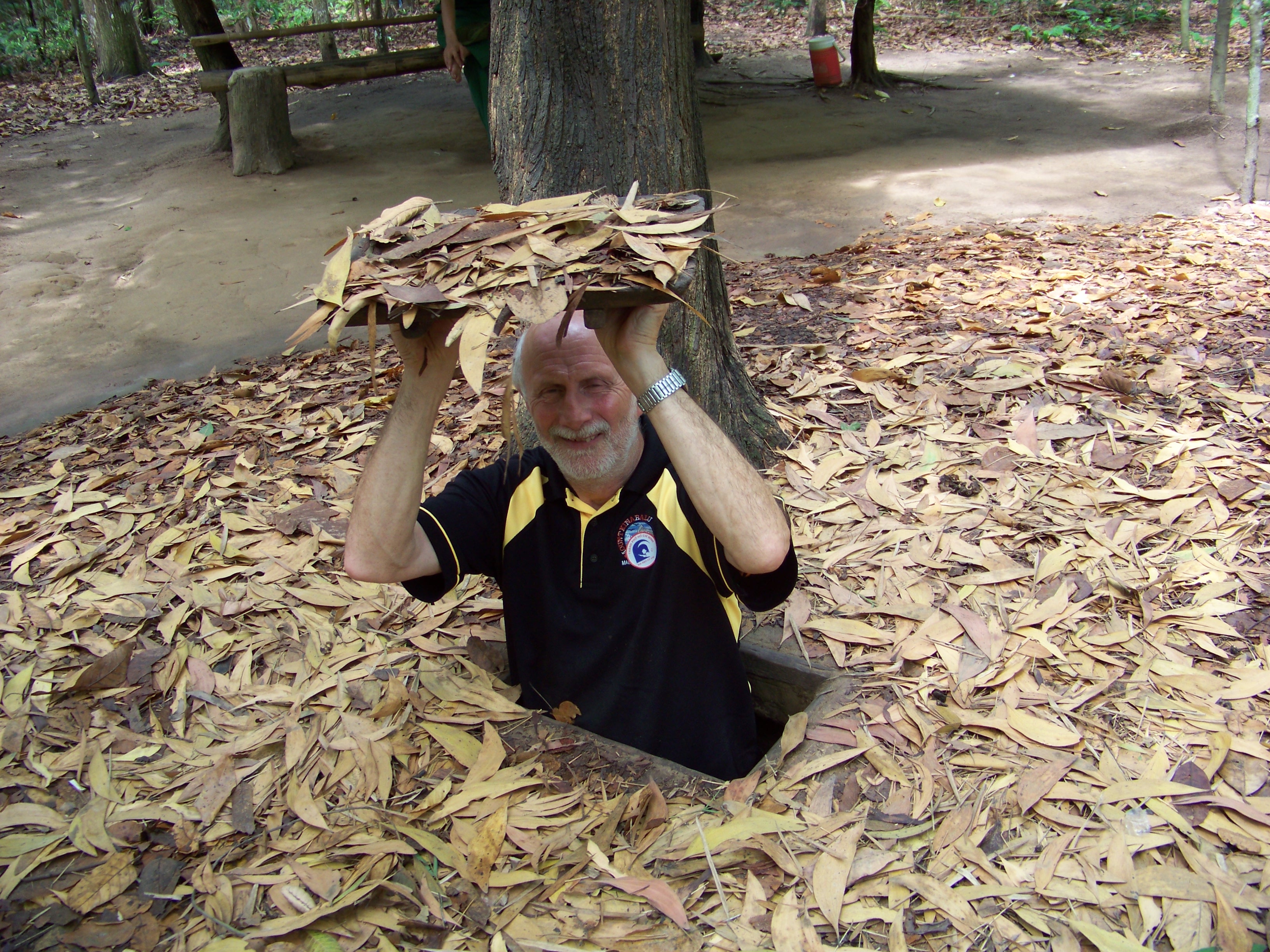
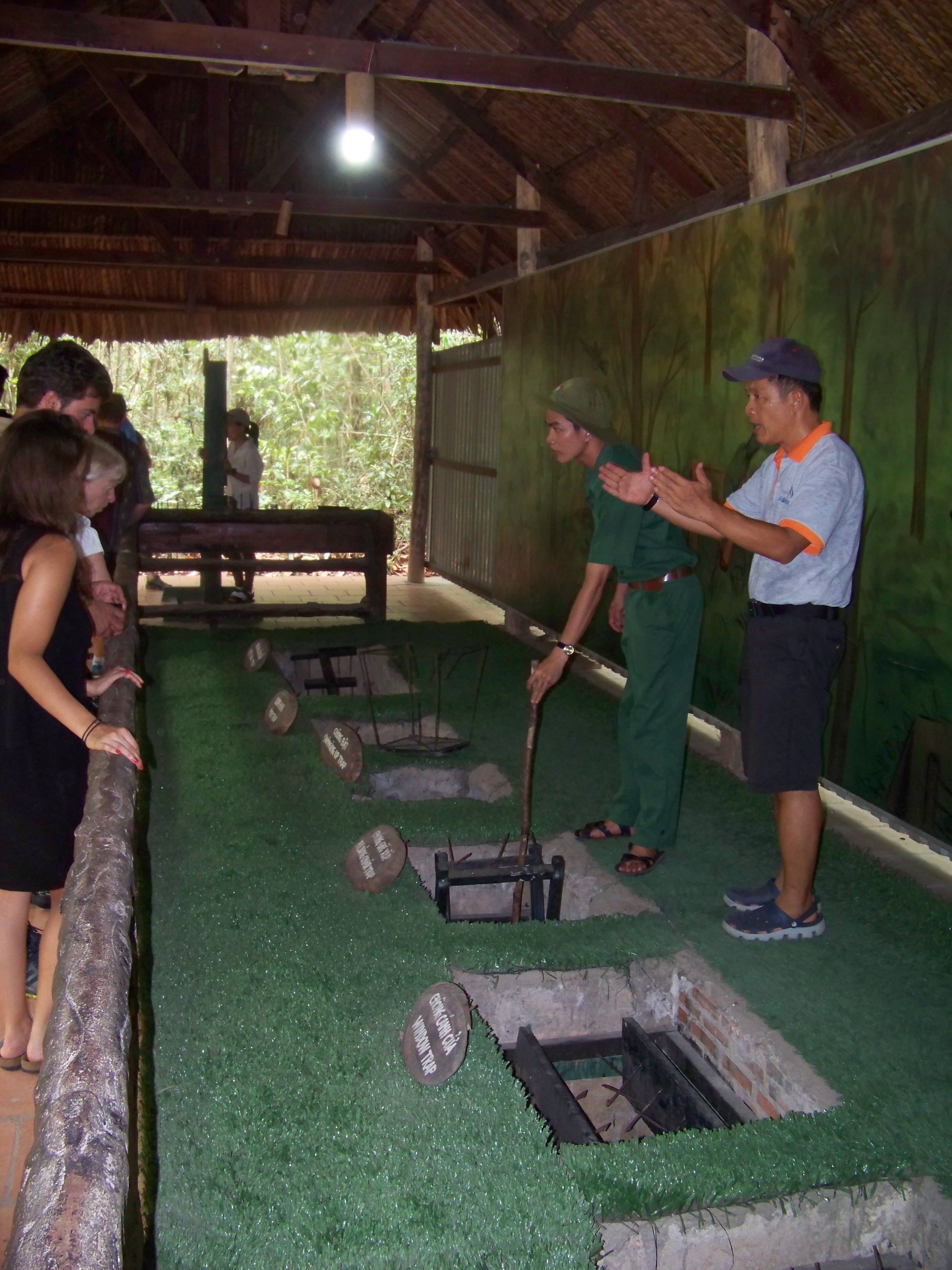
We were then shown a demonstration of the many booby trap devices used against the GIs. It was unsettling to think about falling into one of these traps, especially as they weren’t always designed to be lethal, but certainly permanently disabling.
A little later, we learned more about how the Vietcong lived and worked in the tunnels. At their peak, as many as 8,000 people resided underground, only emerging at night to rest or launch attacks against the enemy. The tunnels were equipped with everything needed to support life, including hospitals, kitchens, laundries, and more, effectively creating an underground town.
It was truly remarkable, particularly when you consider the cramped size of the tunnels and rooms. Ingeniously, the Vietcong even melted down shrapnel from bombs dropped on them to create the barbs for their booby traps, as well as crafting their own versions of landmines from unexploded ordnance.

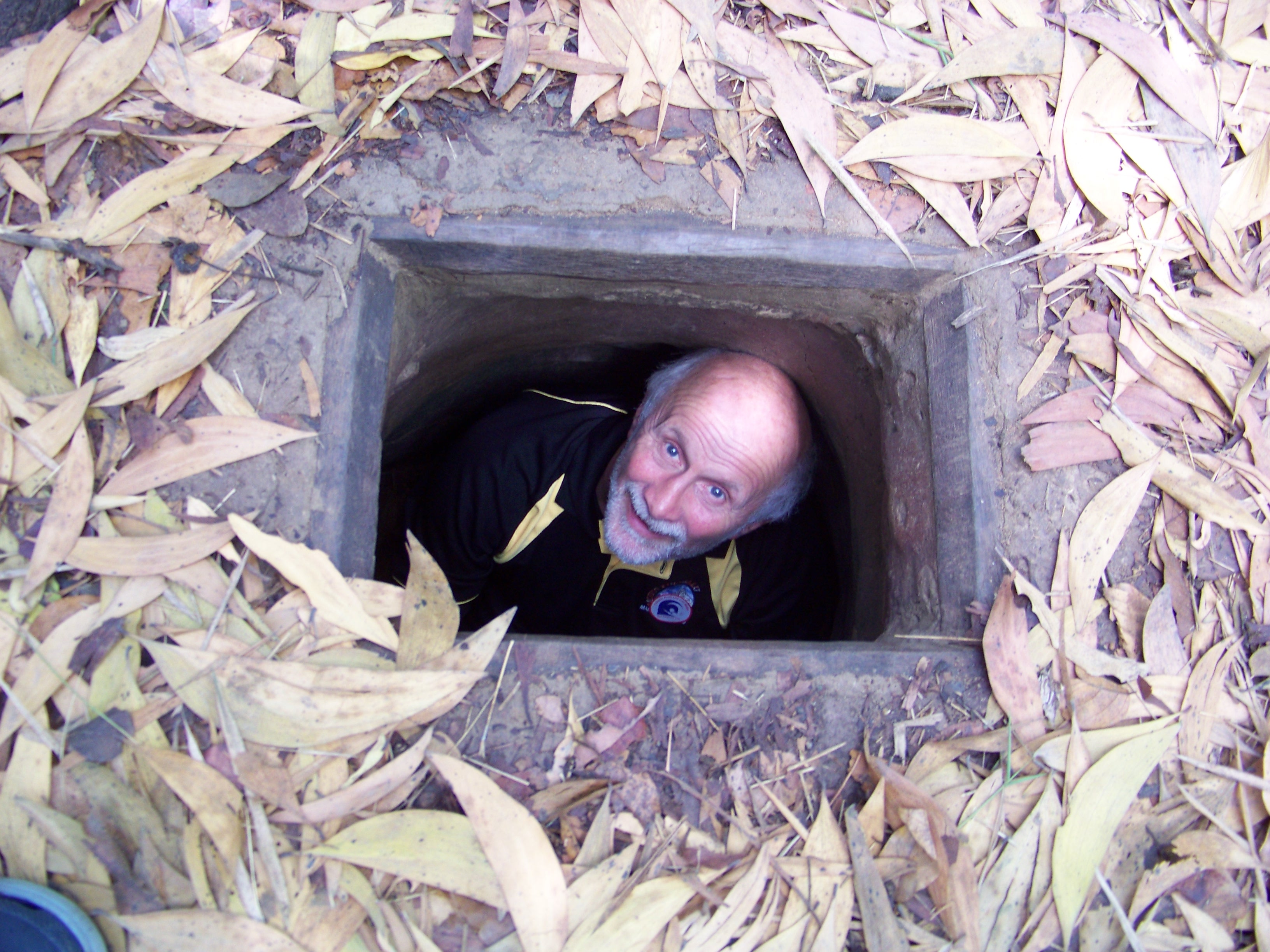
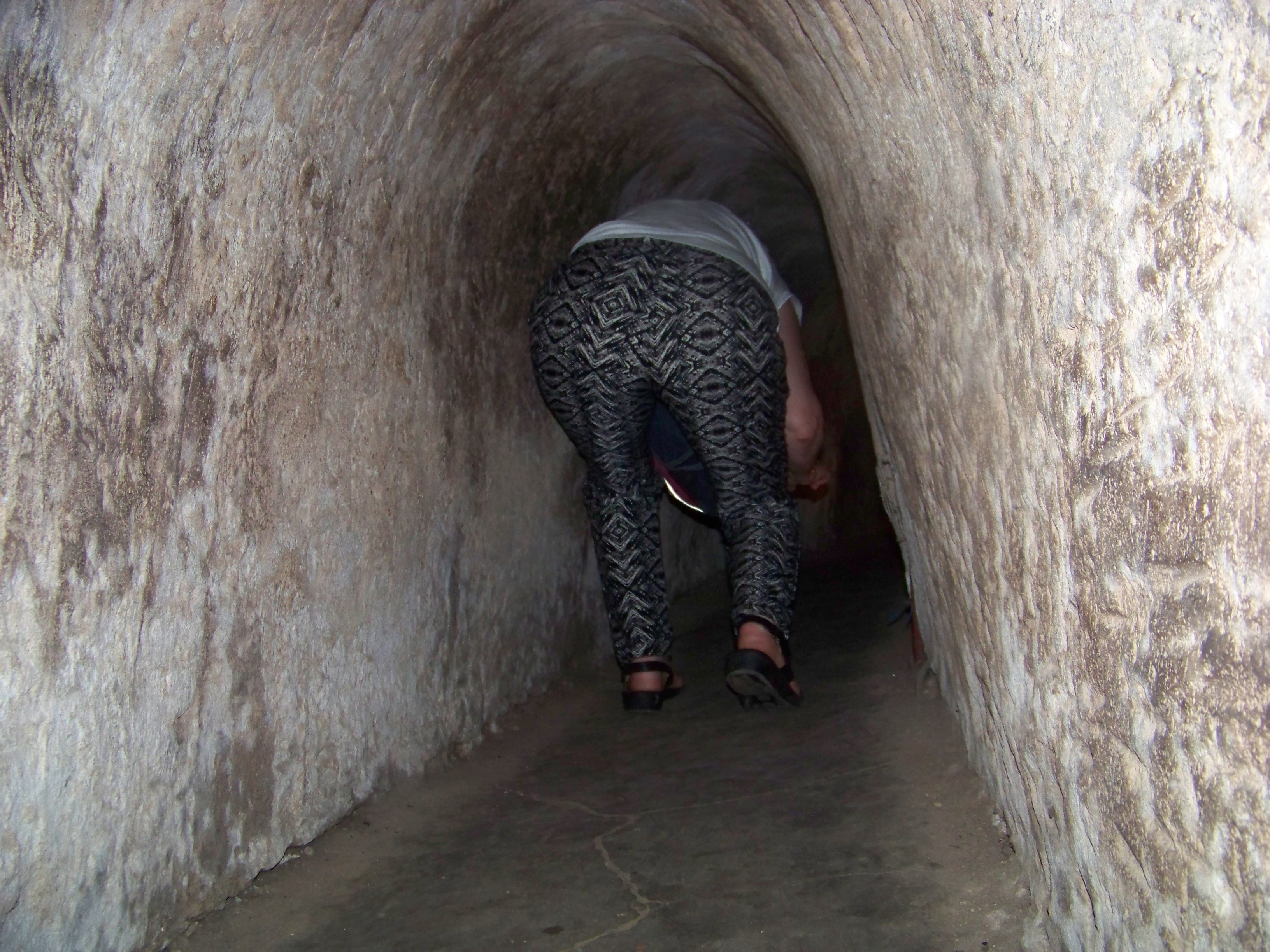
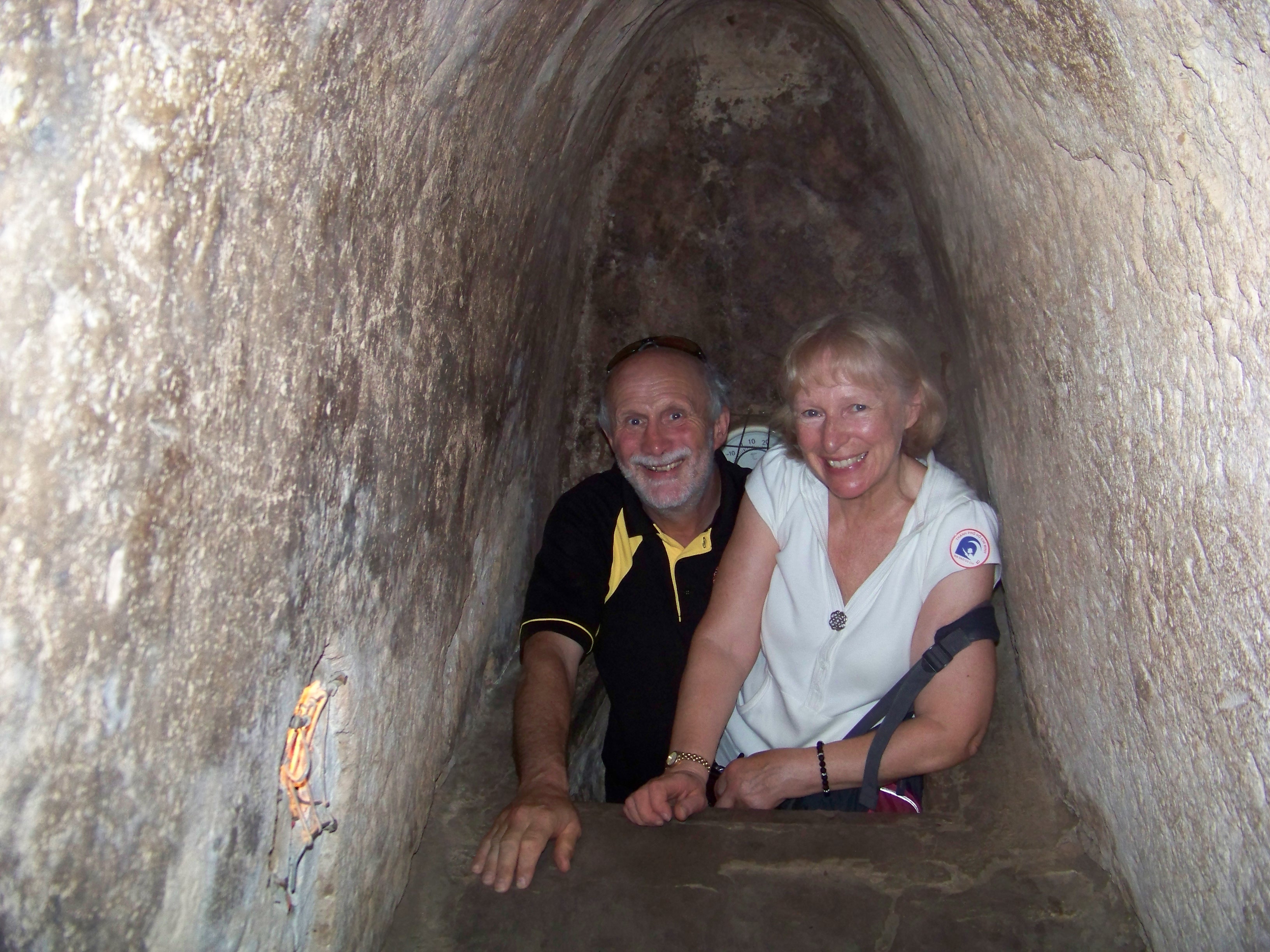
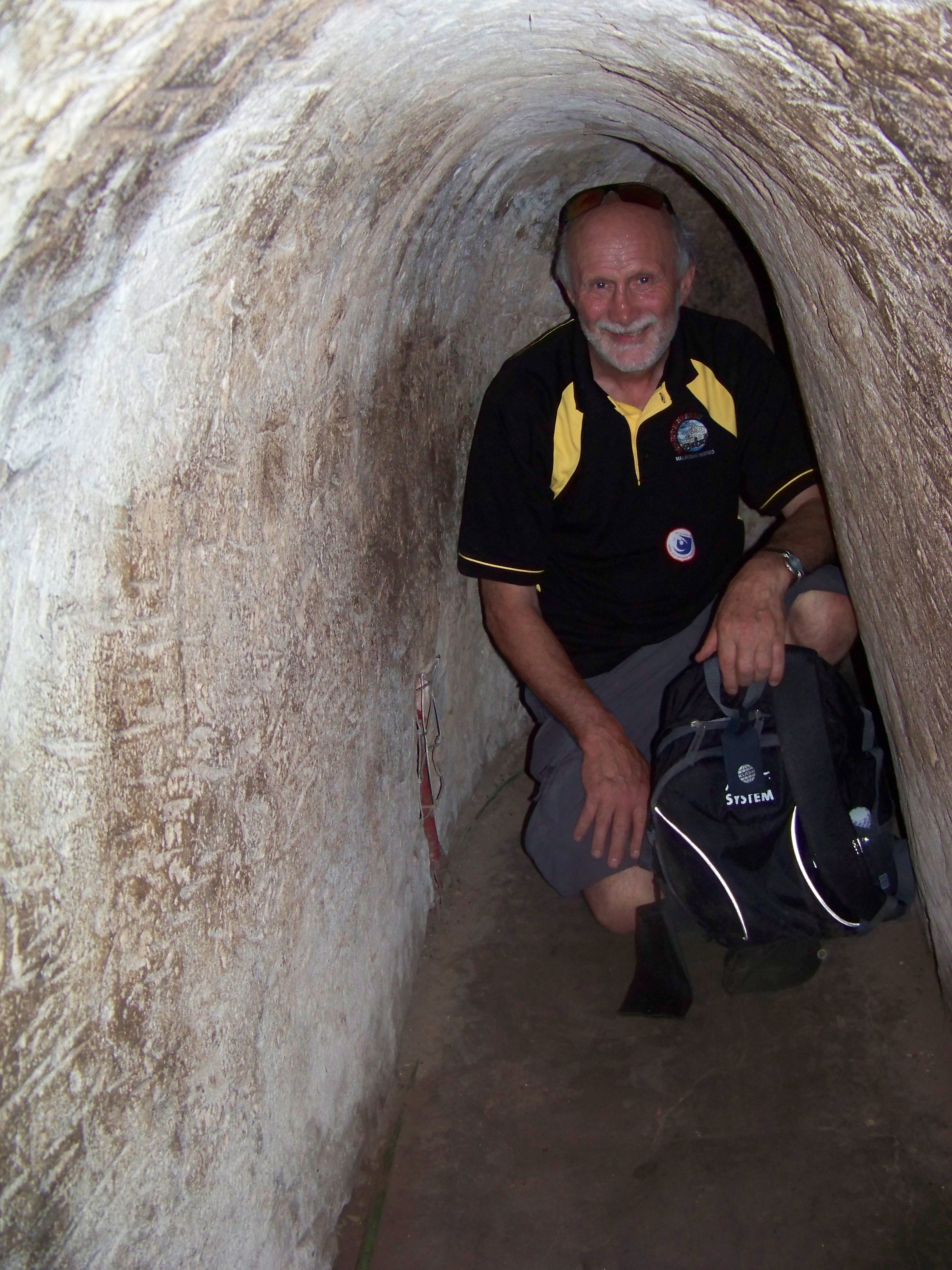
 The highlight of the visit was navigating ourselves through the tunnels, what a tight squeeze! It was fortunate that no one in our group was on the larger side, or they might have gotten stuck. As it was, Sue faced a bit of a challenge due to her broken wrist, which left her with limited strength in her left hand.
In one particularly tricky section, we had to manoeuvre around a bend and then climb over a ledge. Sue struggled to pull herself through, but luckily, I was at the back of the group and right behind her. A gentle push was all it took to help ease her into the next section. Thankfully, she didn’t seem to mind the extra assistance or being manhandled!

Afterwards, we were treated to a traditional Vietcong meal of tapioca root and tea. The root had been boiled for half an hour, and while it didn’t have much flavour on its own, we were given a small bowl of spices to make it more palatable. It was simple yet edible. Our guide shared that after the war, he had been arrested while trying to escape the country as one of the ‘Boat People’. He spent six months in a Hanoi prison, surviving solely on tapioca, so the meal brought back poignant memories for him.
On our way out, we passed through the shop where I picked up a small trinket. We then returned to Saigon for a much-needed shower and change of clothes. Once again, we skipped lunch; it was simply too hot to eat.
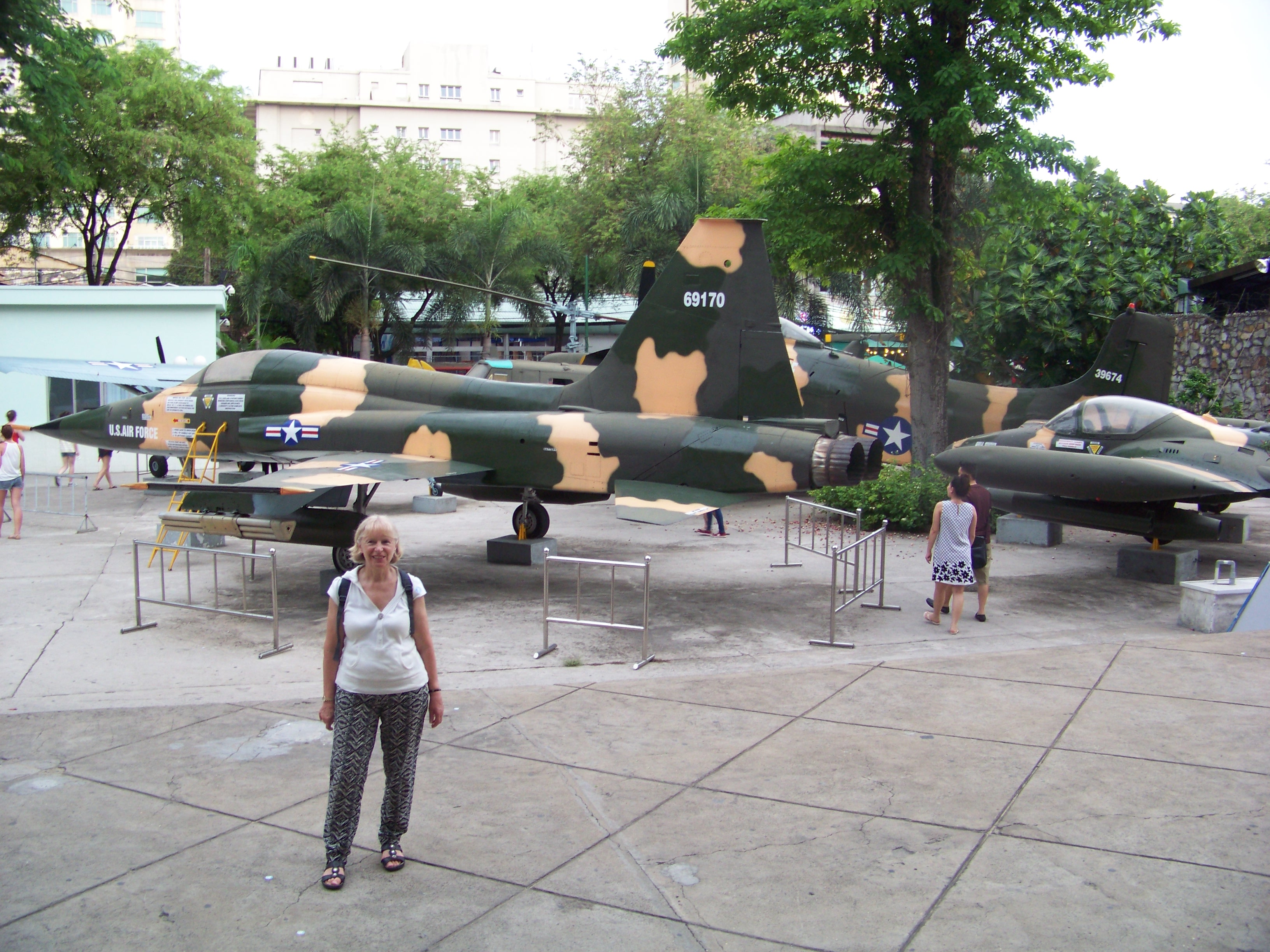
In the afternoon, we visited the ‘War Remnants Museum’. It was an incredibly moving experience. The museum spans three floors, and as we explored the exhibits and the many photographs documenting the Vietnam War, the atmosphere was sombre and silent.
The displays highlighted the devastating impact of the war on the local population, particularly the horrors of the My Lai Massacre and the long-lasting effects of Agent Orange. I noticed some visitors had tears in their eyes as they absorbed the images and stories. It was a deeply sobering place to visit, leaving us with much to reflect on.

 After returning to the hotel for another shower and a change, we got ready for our evening meal and the much-anticipated show at the Opera House.
Dressed in our finest, we set off in search of a restaurant before the performance. With so many options near the hotel, choosing one proved challenging. While perusing the menu outside one establishment, we were coaxed inside and directed up a flight of stairs. The restaurant turned out to be quite small, with only five empty tables, not the most promising start. In the corner, a middle-aged woman strummed a guitar, and when the menu arrived, it was far less extensive than we had expected. Exchanging hesitant glances, we decided to ‘tough it out’ and stay.
The menu leaned heavily on spring rolls, soups, and rice dishes. I opted for crab and prawn soup paired with Hue-style spring rolls, while Sue chose shrimp and crab rice. As we waited, the guitarist brought over some surprisingly delicious flatbread. I noticed a display on one wall featuring various trophies and shields, some of which looked like they might be for golf. When I asked her about it, she confirmed they were indeed golfing trophies, all won by her.
That revelation sparked a fascinating conversation. She explained that she competes on the amateur circuit and has played in tournaments in Australia and the UK, including Gleneagles. She then mentioned that Vietnam has only one professional golfer, her son! She proudly showed us an article in a well-known golfing magazine about him, revealing that he is currently sponsored by Glenmorangie. To our amazement, she added that he was in the kitchen cooking our meal.
When the food arrived, it was exceptional. Sue and I both agreed it was one of the best meals we’d had. As we dined, word seemed to spread, and the previously empty restaurant quickly filled up. Although I had initially wanted to thank the golfing chef personally, he was too busy in the kitchen, so we expressed our gratitude to his mother instead. After finishing our meal, accompanied by a soothing pot of ginger tea, we departed for the show.
We arrived at the Opera House an hour early and settled into the auditorium with a glass of wine. It was clear that sophistication wasn’t a strong point here. When I ordered my drink, the barman offered me potato chips to “improve the taste.” After my first sip, I had to admit he might have had a point!
The show started promptly, and our upgraded second-row seats (yes, the tickets were stamped “UPGRADED”) provided a brilliant view of the stage. Having seen several shows across the Far East, we knew to expect something special, and this was no exception, though I would describe it as decidedly quirky.

The AO Show was a captivating blend of storytelling through acrobatics, movement, and song. At times it was hilariously funny; at others, deeply moving. Words simply can’t do justice to the choreography, timing, and skill on display; it’s something that must be experienced rather than described. If you ever get the chance to see it in Saigon, I highly recommend it. And if I manage to find clips of the AO Show on YouTube, I’ll be sure to share them: AO Show, Saigon, Vietnam.
Returning to the hotel, we rounded off the evening with cocktails and beer in the bar before heading to bed. Tomorrow, we embark on our journey along the Mekong River.
 Palmer Family
Leave a comment