11th June 2023
Although we were leaving San Cristóbal, we were taking plenty of bright, sunny memories with us on a day that was itself warm and radiant. Our hotel pick-up was scheduled for 9:45 a.m., which gave us ample time for a leisurely breakfast and for me to enjoy one final explore. While Sue sat chatting in the reception area, I took myself off for a wander around the neighbourhood.
Just along the road from the hotel was a lovely linear park, featuring play and exercise equipment squeezed between the carriageway and the wall of the Estadio Olímpico. After walking a half-circuit of the park, I arrived at the stadium’s main entrance and found its doors wide open. Inside, a small group of schoolchildren with their teacher were playing a game of dodgeball in the centre circle of the football pitch. The stadium had seen better days; tall weeds were growing in the stands and along the circular running track that encircled the pitch. While the pitch itself was kept clear for football matches, the rest of the facility appeared neglected and unloved, a shadow of what must once have been an impressive venue.
Our group was transported on the short five-minute journey to the airport in a fleet of taxis, and before long, we were seated in the departures lounge, awaiting our 11:37 a.m. flight to Guayaquil, a wait of around an hour and a half. The flight took off on time.
A few WhatsApp messages with Exoticca later, we managed to locate our tour representative, who had not initially been there to meet us. Once he’d arrived, we were soon on our way to the River Garden Hotel, about half an hour’s drive away. After checking in and dropping our bags in the room, we headed down to the lobby to join most of the group for a three-hour city walk to get our bearings.
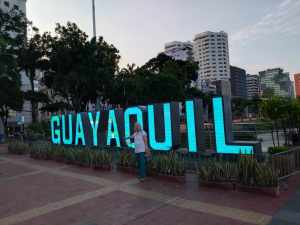
Our guide was knowledgeable and experienced, readily answering all the questions put to him and pointing out the key sites of interest for visitors, places to eat, museums, parks, historical landmarks, and more.
We had been quite apprehensive about this leg of our tour. Guayaquil has a reputation for being dangerous, largely due to the Colombian and Mexican cartels using its port as a hub for drug trafficking. In response, the government has been making significant efforts to combat the criminal gangs that terrorise the local population, efforts which, in recent times, have unfortunately included incidents of murder, kidnapping, and even gun battles with the authorities.
However, our guide was quick to reassure us that the area of the city we were visiting was considered safe, with a strong police and security presence. Our three-hour walk seemed to confirm this, as we felt secure throughout and encountered no issues.
We are the only ones in our group staying on for a few more days; the others fly home tomorrow. Thankfully, there is plenty to safely see and do while we’re here.


The hotel is situated in the old part of the city, close to the river, and from our eighth-floor room we have fine views of both. After passing several of the historic buildings near the hotel, we made our way to the riverwalk, originally built by the British in the 1960s.
Stretching along the riverbank is a beautiful promenade, full of attractions for families and tourists alike, and adorned with striking architecture and tributes to Ecuadorian history. It was too extensive to fully explore during this evening’s introductory walk, but we plan to return and see more over the coming days.
We took the opportunity to enjoy an ice cream from one of the vendors along the promenade and later sampled some traditional Ecuadorian sweets from a nearby stall. The entire riverwalk is enclosed by a tall, sturdy metal fence, with all entrances and exits guarded by police, a reassuring sign that the authorities are taking security seriously.
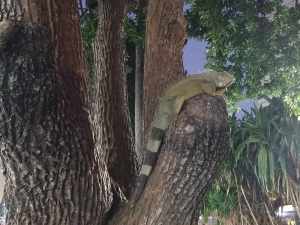
As night fell, we ventured back into the city, passing the Governor’s residence and various administrative buildings, before arriving at a large Catholic church. In the trees surrounding the church, we spotted numerous large iguanas settling down for the night. It was here that we were picked up by bus and returned to the River Garden Hotel.
We chose to have dinner in the hotel’s restaurant before retiring, thoroughly tired but content, to bed.
12th June 2024
It wasn’t the best night’s sleep. The bed was enormous and comfortable, the blackout blinds shut out every trace of outside light, and the double glazing kept the city noise at bay. However, the overly enthusiastic air conditioning blasted us with a gale-force breeze, even on its lowest setting. When left on auto, it would switch off once the room reached the set temperature, only to restart with the roar of a jet engine.
We made it down to breakfast quite late. I opted for a plate of typical Ecuadorian fare. I wasn’t entirely sure what any of the components were, but I tried them all. While they were certainly interesting in both flavour and texture, I didn’t discover a new favourite, and I don’t think I’ll be repeating the experience tomorrow.
That said, I’m still alive as I write this, so my culinary curiosity hasn’t done me any harm… yet.
With our energy levels fully restored, our first outing of the morning was just across the road from the hotel: the National Cocoa Museum, housed in the former residence of Walter Guzmán Aspiazu (Hamburg, 1896–1981) and María Violeta Mercedes Marcos Ycaza (Guayaquil, 1905–2002), who were notable cocoa farmers in the region.
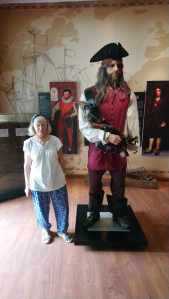
Admission was $5 each, and we spent an enjoyable hour browsing the exhibits at our own pace. I was particularly taken with the room dedicated to British pirates, who once plundered the Spanish ships of the era, a fascinating and unexpected highlight.

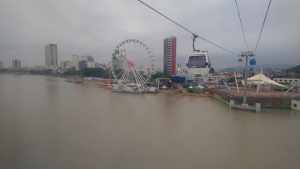
Next, we made our way upriver and took the very reasonably priced cable car across the river to the industrial town of Durán, just $1.48 return for both of us. The 15-minute journey offered lovely, relaxing views over the city and the river. Once in Durán, we spent about half an hour around the terminal, climbing to the top of a viewing platform to take some photos before catching one of the gondolas back.
Afterwards, we attempted to ride the giant Ferris wheel, similar in style to the London Eye, but were disappointed to find it closed. Our next stop was the Museo Municipal de Guayaquil, but it too was shut. The security forces were using the area for a registration day and were putting recruits through their paces. We lingered for a while, watching the exercises and picking out the ones we suspected wouldn’t make the cut.

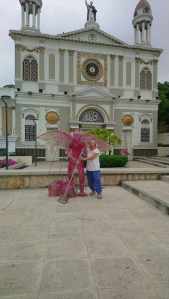
We continued to the base of the steps leading up to Santa Ana Hill, the site of the first Spanish settlement. As we arrived, a nearby secondary school was breaking up after the morning session, and the street quickly filled with students hurrying in all directions. We moved among them towards a large and decorative Catholic church across the road. In the plaza outside stood a series of modern glass statues, dedicated to the services that had supported the community during the COVID-19 pandemic. They were beautifully crafted, a striking and moving tribute to the medical workers.
It was just after midday, and from experience, we knew that in Ecuador, most shops and attractions tend to close for a few hours. So, in true Ecuadorian fashion, we returned to the hotel to relax. I picked up a six-pack of cold beer on the way.


During the afternoon, we had planned to take a boat trip down the river, but when we reached the quay, there were no staff around and no one touting for trade, so we moved on. Heading further along the river walk, we found the Ferris wheel in operation. We bought our tickets and boarded a gondola for our single revolution; we were the only passengers on the entire wheel. The air conditioning made for a comfortable and gentle ride. It’s a lovely way to view the river and this part of the city, especially if the cable car doesn’t appeal, or if you don’t happen to have an 8th-floor hotel room.

On disembarking, we discovered that the boat trip was now taking passengers, so we bought tickets at $4 each. Although we had already seen many of the sights during our city walk yesterday, it was interesting to view them from the river. Apart from a German couple seated nearby, we were the only non-Ecuadorians on board. The trip lasted just over forty minutes, taking us past the port of Santa Anna upstream before turning towards the sea and the main port of Guayaquil. The day had been humid and overcast until then, but on the return leg, the sun made a welcome late appearance.
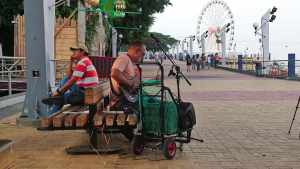
Back on the river walk, we came across a man playing Santana tracks on his guitar. We were immediately impressed by his skill, tipped him, and settled down for an hour to enjoy his music and people-watch as the sun set. What a perfect way to end the day.
We chose to dine again at the hotel restaurant, hoping to see the other members of our group before they flew home early the next morning. As most departing flights were very early, all but Linda had retired early. We had our meal with her, chatted about how much we had enjoyed Ecuador, and then said our goodbyes.
13th June 2024
We had a late breakfast at 9 a.m. The only other couple remaining in our group were American; the husband uses a wheelchair to get around. We ate with them as their flight was later that morning.


The morning was bright and sunny, with a gentle breeze, as we once again set off to the left of the hotel, down the river walk towards Santa Ana Hill and the lighthouse at Faro Las Peñas. Upon reaching the base of the 444 steps, we were pleased to find very few people around, aside from the police and numerous city workers sweeping and pruning the vegetation lining the stairway to the summit. The authorities clearly take great care to keep this part of the city spotlessly clean; everywhere we have been, we’ve seen teams of workers removing the small amount of rubbish that appears.
We took plenty of breaks on our climb up to the lighthouse, feeling reassured by the regular presence of police every 30 steps or so. Just below the summit lies the Museo El Fortín, a museum dedicated to highlighting the key events and elements involved in the city’s defence against sixteenth-century pirates. The site includes the ruins of building footings and several ancient cannons on display. It was a cool, welcome spot to rest, with replicas for those less inclined to read the accompanying literature.


Making our way to the top, we climbed the lighthouse, adding another 44 steps to our exertions. The 360º views were exceptional; we could see the port in the distance and most of the city with great clarity, thanks to the sunny conditions. The breeze was refreshingly cool after such an arduous ascent, so we spent quite some time picking out the various features of the surrounding land and seascape. On the opposite side of the plaza from the lighthouse is a small church, which we visited briefly, accompanied by a policeman.
We took our time descending the hill. About halfway down, Sue was approached by two policemen, one of whom spoke perfect English and kindly gave her advice on staying safe while in Guayaquil. His partner recorded the conversation on video. I was a little further away, sitting with a local street dog for company, when I noticed that I, too, was being photographed by another policeman. They really do take security seriously, especially when it comes to protecting tourism.

Reaching the base of the steps, we turned left and headed towards the Port of Santa Ana. Along a cobbled street, we soon came across a cluster of art galleries and spent quite some time browsing the paintings and chatting with the artists. One artist we particularly liked was Edgar Calderón, whose paintings of the Peña Barrio caught our eye with their striking imagery. We enjoyed a good chat with Edgar and his fellow artist Víctor Muñoz, who spoke excellent English, in their studio.
Continuing down the road, we came across a series of renovated buildings we had spotted from the river trip yesterday. After taking a few photos, we made our way back to the river walk and found the Anthropological and Contemporary Art Museum open, so we gave it a brief visit before returning to the hotel for some much-needed air conditioning and R&R.
 It was 3 p.m. before we ventured out again, ambling along Panama Street, we aimed to visit the Catholic Church encountered on our first day and see the green, tree Iguanas. Using Google Maps, which kept losing its GPS location, caused us to overshoot our target, but we eventually made it to the little park in front of the building and began taking yet more photos of these seemingly rigid little statues. It was while we were engaged in our photography that we were invited to board a hop-on-hop-off tour bus parked to one side. For $8 each for a two-hour ride around the city, we said OK and boarded the bus.
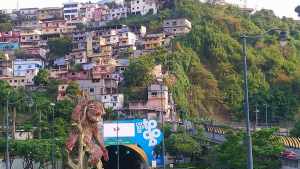

It was money well spent; the commentary was in English, and we passed through parts of the city we never would have thought to explore ourselves. We discovered that this is a very busy city, striving to be modern and clean. There are still some shackles of the past to throw off, but it seems to be happening at a good pace. The city is dotted with wonderful statues, and its citizens are blessed with some very beautiful parks, many of which have been created only recently.
Returning to our starting point, we took some photos of the iguanas before making a brief visit to the church, where we caught the end of the service.
For our evening meal, we chose to eat at a restaurant on the River Walk rather than at the hotel, watching the river traffic and the locals enjoying this superb facility. We finished the evening by purchasing some more Ecuadorian sweets from one of the stalls near the Ferris wheel.
14th June 2024

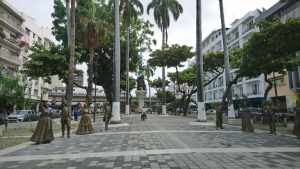
It was very hot today, and we didn’t leave the hotel until well after 10 a.m. Thankfully, we hadn’t planned anything too strenuous, just a gentle amble to the right of the hotel, downstream along the length of the river walk. The river walk stretches for around 2.5 km from end to end, and we started about a quarter of the way along it. The morning heat was such that we tried to stay within the shade of the many trees lining the path, though that wasn’t always possible. In one section, we were grateful for the air conditioning in a shopping mall.
The walk ended short of its full length, as the police had taken over the last section for their own use. Unable to proceed further, we emerged from the fenced walkway into a large plaza containing many statues of people carrying candles. We couldn’t figure out the reason for this, so we contented ourselves with taking some photos. On the return to the hotel, we stopped for large ice creams to cool down.
On arrival, we asked reception for suggestions of things to do the following day, as we had exhausted most of the nearby attractions we found interesting. She took my WhatsApp number and promised that someone would contact us. A short time later, while in our room, we received a message. We agreed to a cocoa and fruit farm experience with lunch included, and the chance to make a chocolate bar ourselves. Paying for the trip proved a little problematic, but was eventually achieved through PayPal.
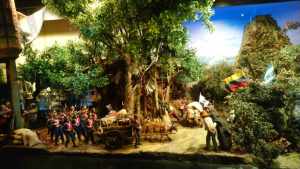
The afternoon was still very hot when we walked just 600 metres to the Museo en Miniatura: Guayaquil en la Historia. Inside, there are 14 dioramas depicting the founding of Santiago de Guayaquil, the Huncavilcas, the shipyard, the pirates, the Glorious Dawn, the Revolution of 6 March 1845, the cocoa season, the great fire, the twentieth century, and the developments of the present day. We activated all the dioramas, with their exquisitely crafted scale models, and watched each one as the light show and English commentary played out. We both thoroughly enjoyed this novel approach to telling the story of the city’s development. It was well worth the $2 entrance fee each, though the advertised air conditioning wasn’t working, and benches or seating at each scene would have been welcome, as some of the shows were quite lengthy.


We returned to the hotel via the river walk, pausing at intervals to people-watch and listen to music performed by artists stationed along its length. Once back, we chose to enjoy cool drinks by the hotel’s infinity pool on the top floor.
That evening we dined again in the hotel restaurant. Although it was a buffet, we opted to order from the menu. Frustratingly, the Spanish-speaking waiter pointed to a barcode on a cardboard leaflet to download the menu, but as neither of us had our phones with us, how was that meant to work? After decades of telling our children not to use their phones at the dinner table, why would we? We knew there were menus at the cashier’s desk, so why did he bring us an iPad instead? After ages of scrolling up and down, we finally made our selections. A little later, an elderly couple also asked to order from the menu and were subjected to the same iPad ordeal when they couldn’t manage on their phones. After more confusion, they gave up and settled for the buffet. Is this really progress?
15th June 2024
The day didn’t start well. I woke up around 1 a.m. feeling ill and made a visit to the toilet, which seemed to help. Afterwards, I dropped back to sleep, only to wake again at 7 a.m., feeling unwell, with Sue saying she wasn’t feeling great either.
Before getting out of bed, I checked in via the app for tomorrow’s American Airlines flight to Miami, and it went smoothly; boarding passes were sent securely to both our mobiles. However, when I checked the connecting flight to Heathrow, horror of horrors, it had been cancelled! Using the chat function on the BA app, I tried to find alternatives, but after entering all the critical information and being offered another flight, the app crashed twice and sent me back to the start. Giving up, I contacted the travel company Exoticca through their chat, but they couldn’t see the cancelled flight on their system. Shortly after, an email arrived from BA confirming the cancellation and offering alternative flights which, strangely, had very similar details: BA1206 instead of BA206, both flying at 5.20 p.m. and arriving within a minute of each other. I had to confirm acceptance by clicking a supplied link, which wouldn’t work no matter how many times I tried. Resorting to the BA app again, I went through the chat and told them I wished to accept the new flight. They confirmed the booking but couldn’t advise how to get boarding passes as the app still showed the flight as cancelled. Exoticca suggested we get them in Miami. We’ll have to see.
While dealing with all this, I started feeling worse. Sue had already been down for breakfast. We had to leave at 10 a.m. for a trip to a cocoa farm to try different fruits, make chocolate, and have an authentic farm lunch, so I had to cut short the chat.

Our guide, Francisco Galvez, arrived promptly, and we set off on a 50-minute journey out of the city. His English was excellent, and his commentary as we left was both engaging and informative, pointing out all the notable landmarks along the way.
Upon arriving at the farm, we began a walk through the fields of fruit trees, accompanied by one of the workers whose role was to cut down various fruits for us to inspect and taste. As I was struggling to stand for any length of time, a small seat was provided for me at each stopping point. I passed on tasting the fruits but made sure to give each one a good sniff.

As we strolled around the fields, we were fortunate enough to spot two pink spoonbills along with several other exotic bird species, managing to photograph most of them. After harvesting a ripe cocoa pod, we moved to one of the farm buildings to begin the process of turning it into chocolate.
First, the beans were heated to dry them, then lightly crushed to release the beans inside, which were then roasted. Half of the beans were crushed again, and Sue sampled them before the other half was finely ground, and she tasted the difference. The smooth paste from the latter was taken into the kitchen, where Sue was shown how to heat and stir it to make chocolate. She also had the pleasure of tasting some that had been prepared and chilled earlier.

It was now time for lunch, and we made our way to the home of our farm helper, whose wife had prepared a feast for us to enjoy, though, sadly, not for me. I made my excuses, explaining that I was flying tomorrow (hopefully) and didn’t want to risk putting anything else in my stomach. I did, however, accept a drink of guava tea, which his wife assured me would settle my stomach, and it seemed to do just that. The husband appeared quite pleased to be the recipient of my meal. Sue commented that the food was delicious, and it certainly looked so.
The journey back to the hotel was much more comfortable for my stomach, and I was able to join in the conversation with our guide, who was very keen to learn all about us, and for us to learn about him.
Back at the hotel, no further flight information had been provided. We spent the evening packing and watching a bit of TV. With fingers crossed, we hoped to be picked up at 3 a.m. tomorrow and eventually make it to Heathrow for 7 a.m. on the 17th.
 Palmer Family
Leave a comment