18th March 2024
Fresh from the land of pasta and vino, Sue and I set off from Harborough early on Monday, 18th March, for a few days in the land of laverbread and Brains Bitter.
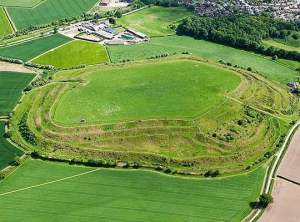
We broke our westward journey with a visit to Old Oswestry Hillfort. Built and occupied during the Iron Age, it is one of the best-preserved hillforts in Britain and remained in use for almost a thousand years. Over the years, we’ve passed this ancient monument many times on our regular trips to visit my Welsh relatives; it’s visible from the A5 just before crossing into Wales. This time, with our accommodation for the night nearby, it was the perfect opportunity to stop and explore.
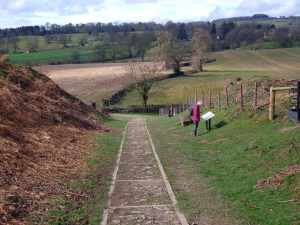

After parking up, we walked the short distance to the base of the ramparts, pausing to read the English Heritage information board before tackling the slope leading to the main entrance. A series of deep, elevated defensive ditches had to be crossed before reaching the summit, where the original settlement once stood.
The native bracken, which has caused problems in the past, is now being kept in check by a flock of sheep whose ancestry, we were intrigued to learn, can be traced back to the Iron Age. We followed the path along the top rampart, which circumnavigates the fort, admiring the sweeping views and speculating on how such an impressive structure might have been constructed.
A large group of schoolchildren had been visiting earlier, and when we noticed the shortcut they took back to the car park, we decided to follow the same route on our descent. As it was now midday, we chose to sit on a bench beside the closeby village cricket pitch, with a fine view of the fort, and enjoy our packed lunch.
A passing local gentleman stopped and engaged us in conversation for a good twenty minutes, first asking where we were from, then sharing insights into the current maintenance and preservation of the hillfort.

Opting to set the Satnav to the shortest route, we headed off for the Mulberry Inn in Llwynmawr, Denbighshire. Choosing this mode always guarantees an interesting journey, and navigating mid-Wales did not disappoint. The lanes were narrow, the bends frequent, the country junctions many, and the road surface both steep and unpredictable. Exciting for me; somewhat concerning for Sue, especially as it was her car. We did eventually arrive safe and sound, though Sue’s Fitbit had a few complaints.
After parking in the hotel’s car park, we kitted ourselves out for a ramble and set off in search of a nearby waterfall. The walk was just over three and a half miles, with the outward stretch proving a definite test of both lungs and heart. The climb was so relentless that every 50 metres of effort seemed to require a lengthy pause to catch our breath. The final approach to the falls involved scrambling through gorse on a muddy track, with our ankles protesting at every step.
The waterfall itself, while pleasant, was less than spectacular. The return route took us across the top of the fall, no trouble at all for Sue in her hiking wellies, but in my boots, it required very careful footwork to stay dry.


Our descent along the opposite flank of the valley was just as steep, and upon discovering that the path was blocked by a double barbed wire fence, we were forced to forge an alternative route through an adjoining field. We arrived back at the hotel shortly after the designated check-in time of 3 p.m., and did so without further incident.
The Mulberry Inn is tucked away in the quiet village of Llwynmawr, nestled in the picturesque Ceiriog Valley. We were staying for just one night before continuing westward to Machynlleth. The hotel is tastefully furnished and decorated in a contemporary style, with excellent food, a perfect place to rest your head after a long day exploring the hills.
That evening, we enjoyed a three-course meal, followed by a few drinks in the bar, before retiring to our very comfortable room to watch a bit of television and wind down for the night.
Breakfast the next morning, like the evening meal, was exceptional, with a wide choice of dishes, beautifully presented. A great deal of care has gone into the running of this establishment, both in its décor and its facilities. It’s no surprise that, despite its remote location deep in the Ceiriog Valley, most of the rooms appeared to be occupied.
This time, the Satnav was set to the fastest route for our journey southwest to Machynlleth and The Wynnstay Hotel, our accommodation for the next two nights. We usually like to break up a journey by visiting a building or viewpoint we’ve previously researched, somewhere of historical or scenic interest. But today, we decided to let the road surprise us.
Disappointingly, there were no signposts enticing us to stop and explore, just mile after mile of glorious mid-Wales mountain scenery. Sue was able to take it all in from the comfort of the passenger seat, while I caught only fleeting glimpses, my attention fixed on the twisting ribbons of tarmac and the occasional oncoming vehicle.
We arrived too early to check in, so we parked at the rear of the hotel and set off to explore the town. After browsing the main shopping area along Newtown Road, we attempted to visit the Owain Glyndŵr Centre, built on the site of the historic parliament of 1404, where Owain was crowned Prince of Wales. Though the centre itself was closed, a very helpful woman in the adjacent café generously spent twenty minutes telling us about the history and significance of the building, as well as pointing out other important landmarks around the town.
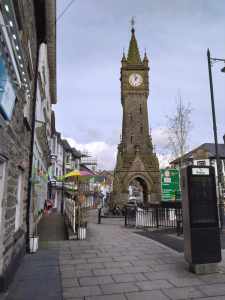
Further wandering brought us to Machynlleth’s famous town clock, a striking landmark that stands proudly at the heart of the town.
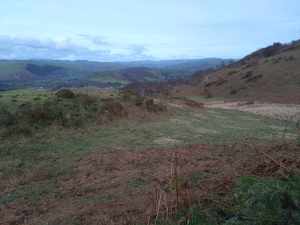

Returning to the car, we laced up our hiking boots and set off on a planned 3.9-mile walk, beginning at the ‘Roman Steps’ and following part of Glyndŵr’s Way. The ascent of the mountain above the town proved far less gruelling and muddy than the previous day’s ramble. This allowed us to pause and discuss various features we encountered along the way, rather than using every stop to catch our breath.
At the summit, we both agreed that the panoramic view over the town and the surrounding mountains more than justified the effort. We were surprised to have passed only one other couple along what is, after all, a section of a national trail.
Back in town, we checked into the Wynnstay and eased our tired limbs with a warm bath in our room, followed by dinner in the hotel restaurant. Afterwards, we retired to our room to watch a little television before drifting off to sleep.
The next morning greeted us with miserable, wet weather. We had planned a variety of outdoor activities, from observing ospreys at the nearby RSPB centre to yet another mountain hike to a waterfall. However, the persistent rain put paid to any venture involving soggy ground and obscured views under a blanket of low cloud. Instead, we opted to catch a train to Aberystwyth.
We booked our tickets online and walked the ten-minute journey to Machynlleth station through a steady drizzle. We boarded the 10:50 a.m. train, which traces the course of the River Dyfi before reaching its estuary and emptying into Cardigan Bay, then turns south along the coast towards the seaside resort and administrative hub of the west coast, also home to the University of Wales. ‘Aber’, as it’s affectionately known, is nestled between three hills and two beaches, and boasts castle ruins, a pier, and a small harbour. We arrived in just over half an hour.
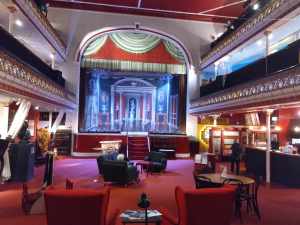
By the time we left the train carriage behind, the drizzle had mostly eased, giving us a more pleasant welcome to Aberystwyth. We made our way to the excellent Ceredigion Museum, housed in a beautifully preserved Edwardian theatre situated near the seafront in the heart of the town. We spent a thoroughly enjoyable hour exploring its displays, which offered a vivid portrayal of historical Welsh life among many other fascinating exhibits.
Leaving the museum, we wandered south along the seafront in the direction of the ruined castle and harbour. The beach here consists mainly of exposed bedrock, coarse sand, and pebbles, ideal for dog-walking and rock pooling, though not so suitable for sandcastles or sunbathing. The thick layer of pebbles and sand strewn along the promenade bore witness to the ferocious winter storms that regularly batter this exposed stretch of coastline.
After a thorough exploration of the castle ruins, we found a bench beneath its weathered walls, where we enjoyed a light snack we had packed, sharing a few crumbs with two obliging pigeons. We ended the first part of our ramble with a detour into the small fishing port, taking a moment to admire the neatly moored boats, safely sheltered from the sea by an imposing breakwater.

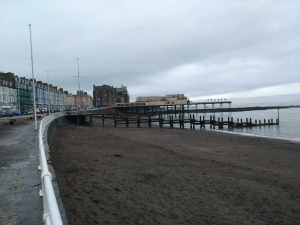
We retraced our steps and continued north along the promenade, where the shoreline gradually gave way to a more inviting stretch of beach, finer sand and gentler waves making it seem a more appealing spot to relax.
Our intention was to ride the Electric Cliff Railway up Constitution Hill to the viewpoint and café, but we were disappointed to find it wasn’t operating that day. Undeterred, we set off on foot. At the summit, we spent a while searching for a hidden geocache, eventually locating it before settling on a bench to take in the panoramic views. The sky was beginning to brighten, and under its gentle light, the town, bay, and surrounding hills looked all the more splendid.

Returning to sea level, we made our way back to the railway station, only to discover that the next train to Machynlleth wasn’t due for another couple of hours. We filled the time hunting down another geocache in the town centre and browsing the local shops, before eventually returning to the station and enjoying some refreshments in the Wetherspoons situated there.
The return journey treated us to bright sunshine, revealing the estuarial scenery that had been hidden by rain and mist earlier in the day. We caught glimpses of white egrets, barnacle geese and, surprisingly, an owl, as the train whisked us back to Machynlleth.
Back safely at the Wynnstay, we joined the other guests for our evening meal in the restaurant before retiring to our room to watch television and sleep.
The following morning was overcast as we pulled out of the hotel car park after breakfast to begin our journey home. We had planned a stop en route to visit the medieval fortress and grand country house of Powis Castle near Welshpool. Sue has fond memories of visiting with her parents as a child and was curious to see what, if anything, had changed. However, our satnav (TomTom) had other ideas and attempted to guide us down a muddy farm track just outside Welshpool. A quick switch to Google Maps soon had us back on track, and we arrived at the correct entrance just as the rain began to fall. We paid our entrance fee and headed inside.

The present castle dates back to the 13th century. In the late 16th century, it was purchased by Edward Herbert, and in 1784, Henrietta Herbert married Edward Clive, the eldest son of Clive of India. The Herbert family continue to live in part of the castle under an arrangement with the National Trust, which has cared for the property since 1952.
Due to the rain, we decided to explore the interior of this impressive building. Being among the first visitors of the day, we were fortunate to receive lengthy and informative descriptions of each room from the dedicated army of volunteers who staff the castle. Much of the castle’s opulence stems from the era of Clive, who returned from India with a fortune that not only cleared family debts but also funded extensive remodelling of the building.
We followed the designated route through each floor, taking our time to explore the rooms at leisure, pausing to read signage or chat with volunteers about exhibits or architectural features that piqued our interest. It must have been a very comfortable place to live, although, for our modern tastes, the furniture and décor are rather fussy. Still, we could easily forgive that were we ever fortunate enough to live here ourselves.
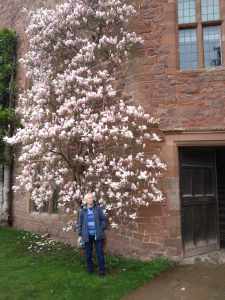
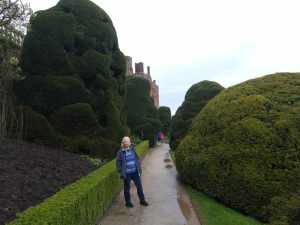
After thoroughly exploring the castle’s interior, we were pleased to find the rain had ceased as we stepped outside to explore the gardens. The small valley on which the castle is perched is tiered with south-facing terraces that slope down to a large grassy lawn, which I imagine was once used as a football pitch and now serves as an activity or showground during the summer months. The top two terraces are lined with ancient clipped yew trees, some 400 years old, within which you can shelter.
We made our way down the terraces, pausing to admire beds of labelled spring flowers alongside their summer counterparts pushing through the rich soil. Several magnolias were in full bloom, looking as spectacular as they always do. On our return to the car, we passed a growing number of late risers, all eager to enjoy the castle and its grounds.
The journey back to Harborough was not without incident. The M6 through Birmingham is notorious for its hold-ups, but thankfully, motorway signs warned us of an incident ahead and a carriageway closure. This time, TomTom behaved itself, directing us smoothly around the blockage, and we only lost about twenty minutes in the city traffic.
 Palmer Family
Leave a comment