17th February 2024
February continued much like the preceding months; rain was never far away. Even on the rare days when the clouds parted, and we glimpsed a few rays of hope, the sodden ground refused to shed its watery undergarment. The Welland remained swollen, and most fields lay baptised beneath an icy brown blanket.
Thanks to Sean, who had booked a few days in Ireland using a Wowcher mystery destination voucher, hoping for Portugal or somewhere equally warm, I was invited along for the adventure. At 2 a.m. on the 12th, he picked me up outside Willow Bank to drive to Birmingham Airport to catch the 5:50 a.m. Ryanair flight to Dublin.
Despite the ungodly hour and it being the first flight of the day, the plane was full. We landed 15 minutes ahead of schedule at a very quiet airport. Opting for value over speed, we took the local No. 16 bus into the city centre. The journey took about 40 minutes, meandering through residential estates, and cost just €2.60, far cheaper than the €7 city shuttle.
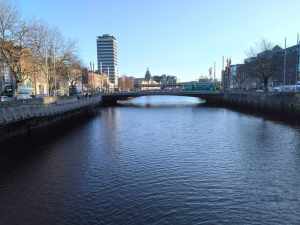

We disembarked on O’Connell Street, named in honour of the nationalist leader Daniel O’Connell, whose statue stands at the lower end of the street, facing O’Connell Bridge and running alongside the River Liffey. Our hotel, the Academy Plaza, was just off this street, and it was there we opted to have breakfast, check that our room had twin beds, and leave our bags in storage. The hotel appeared particularly popular with student groups from Canadian and American universities, who made up the bulk of the diners in the restaurant.
With our appetites satisfied, we made our way to a stop on O’Connell Street to catch a packed bus to Newcastle, a suburb of the city, about 45 minutes away, and another €2.60 fare. We were travelling to visit Sean’s Aunt Ruby, aged 96, who lives in a care home there. She is a fascinating woman with a mind as sharp as a pin and a wonderfully dry sense of humour. We had coffee and biscuits with her in the café and spent nearly two hours chatting before returning to her room to say our goodbye.
On the journey back to the city centre, we were entertained by one of our fellow passengers spontaneously breaking into song, not something you’d often witness on a bus in Market Harborough, but seemingly quite normal here.
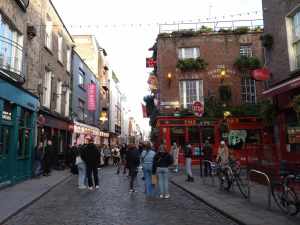
Before checking into the hotel, we spent a pleasant hour wandering around Dublin Castle, then strolled down O’Connell Street to soak up the atmosphere. We crossed the Ha’penny Bridge and later found a pair of jeans that fitted Sean perfectly in a vintage clothes outlet. Despite the time of year, the city centre and its attractions were thronged with tourists from all over the world, many travelling in large guided groups, which often caused locals and more independent visitors like us to weave our way around them.
It was around 5 p.m. by the time we checked in. Not long after, we headed to Temple Bar, the lively district on the south bank of the River Liffey. Bounded by the river to the north, Dame Street to the south, Westmoreland Street to the east, and Fishamble Street to the west, it’s known as Dublin’s ‘cultural quarter’ and the heart of its nightlife.
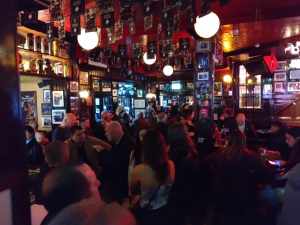
There, in a selection of its many pubs and restaurants, we enjoyed an evening meal of Irish stew, washed down with several glasses of Guinness. While savouring a pint of the black stuff and listening to a local singer-guitarist in the iconic Temple Bar pub, we were surprised to meet Ricky Hatton, a former British professional boxer, now a boxing promoter and trainer. Known as the fifth greatest British boxer of all time, he held multiple world championships at light-welterweight and one at welterweight. Despite the packed bar, he was happy to pose for photos.
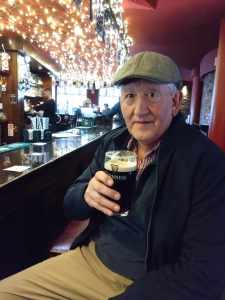
They say Guinness tastes best in Ireland. Not being a regular drinker of the brew, I can’t confirm whether that’s true, but the ambience of Dublin certainly complements it, and holding a glass of the dark stuff somehow just feels like the right thing to be doing. It was very late by the time we finally turned in at the Academy Plaza.
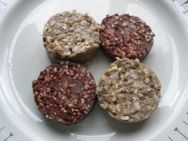
Breakfast with the students the following morning was excellent and included both black and white Irish pudding.
We set off early on a 40-minute walk to the St James’s Gate Brewery, home of the Guinness Storehouse, stopping briefly at the nearby Gate Theatre to collect tickets for that evening’s performance. Fortunately, we had managed to book the last two remaining seats the night before.
The Guinness story began in 1759, when Arthur Guinness became the first Master Brewer at St James’s Gate. It’s likely he inherited his passion for brewing from his father, Richard, who is said to have overseen brewing on the Celbridge estate of Dr Arthur Price, later Archbishop of Cashel. On 31st December 1759, Arthur signed a 9,000-year lease on the brewery, and so the legend was born.


There are several Guinness experiences to choose from, but we opted for the basic package, which included a self-guided tour, a lesson on how to drink the beer properly, and a token for a pint of Guinness in the rooftop bar. The exhibitions are spread across several floors, and visitors follow a well-trodden, clearly signposted route as they make their way upwards.
Given that Guinness is one of the most innovative and successfully marketed drinks in the world, I expected this foray into its history to be more entertaining than dry and cerebral, and indeed, it was. While the journey upwards is rich in information, attractively presented, and occasionally interactive, it’s clear that most visitors are primarily focused on reaching the top floor of this former storehouse and soaking in the view, along with their pint. For many, the exhibitions serve as a necessary pilgrimage en route to the rooftop, legitimising any future boast of “I’ve been there.”
That said, the ascent is far from wasted time; it’s informative, engaging, and peppered with memorable insights into the Guinness story. Well worth a moment or two to absorb some of the lore behind the iconic brew.
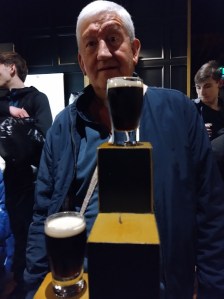
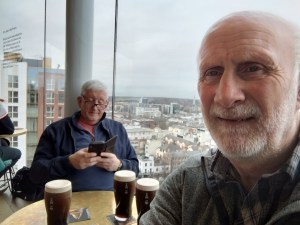
After an amusing group tutorial on how to quaff a fifth of a glass of ale, alongside a large crowd of mildly impatient and increasingly thirsty devotees, we finally reached our zenith and entered the bar. The panoramic view across the city towards the distant mountains is truly unique, though few seemed to notice it until they had a dark glass of liquid, brewed from roasted and malted barley and hops, gripped firmly in hand.
Our very chatty barmaid forgot to collect our ‘free’ Guinness tokens, so once we’d drained our glasses, we returned to the bar and exchanged them, entirely legitimately, for a second round. As fortune would have it, we were later ‘gifted’ even more tickets by departing visitors who also hadn’t been relieved of theirs. During breakfast, we’d prepared a little ‘pack-up’ of ham and cheese rolls, which we now devoured while sipping stout by the window, enjoying the soft winter sunshine and debating the merits of black versus white pudding and other essential Irish matters. We thoroughly enjoyed our time in this increasingly ‘free’ bar.
Strolling back into the city centre, we passed once more through Parliament Square and Trinity College on our way to the Chester Beatty Library. This impressive collection of manuscripts, rare books, and artefacts promotes a greater understanding of global cultures, with items from Europe, the Middle East, North Africa and Asia. We idled our way through its three floors of exhibits until it was time to return to the hotel and change for the evening’s entertainment.
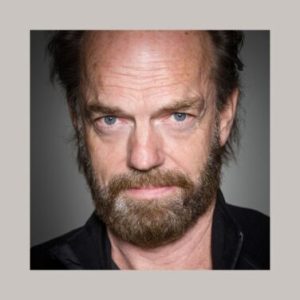
Posters for The President were plastered all over the city, not least on the side of every passing bus. The Gate Theatre was proudly hosting the Irish premiere of Thomas Bernhard’s classic The President, starring Hugo Weaving (The Lord of the Rings, The Matrix, The Adventures of Priscilla, Queen of the Desert) and Olwen Fouéré (iGirl, Salomé, Terminus, riverrun), directed by Tom Creed. Olwen, we noted, is currently appearing in The Tourist, a BBC series.
Smartly attired, we joined our fellow theatregoers in a cosy bar somewhere deep within the bowels of the building, sipping glasses of red wine until the bell summoned us to our seats. The auditorium, seating 371, was full. The play was in three acts, the first two each lasting around an hour, separated by a 20-minute intermission. The third act, however, came as a surprise and proved to be the most intriguing of the evening.
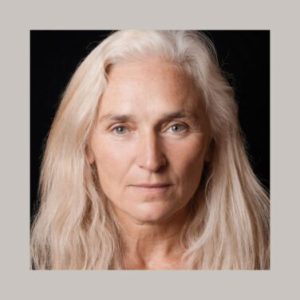 ABOUT:
In a small, unnamed country, there has been an assassination. However, the gunmen missed their intended targets, the President and the First Lady, killing instead a loyal bodyguard and the First Lady’s beloved dog.
As a revolution brews right outside their front door, the First Lady sits with a mixture of hysterics, rage and obsession. The President holds forth in a verbal tsunami of self-aggrandisement and vainglory, while his mistress, an actress, gambles his cash away in the blackjack room next door.
With its depictions of the abuses of power, the disdain and paranoia of privilege, and prophecies of the age of surveillance, corruption and terrorism, The President is as striking and resonant as when it was first performed in 1975.
We both found the performance entertaining, though undeniably ‘wordy’. It was undoubtedly well acted, but there was very little action, and it leaned heavily into the unpleasantness of the two main characters. However, the third act did go some way towards addressing this lack of movement; when the audience was invited onto the stage to file past the President lying in state. And so, we can now claim to have appeared in a minor role on stage at the Gate Theatre, Dublin. Cheers to that, I’ll drink a Guinness in celebration!
It was raining when we left the theatre. Seeking shelter, we ducked into a fast-food place and enjoyed a very late meal of chicken burgers and chips before making our way back to the hotel.

It was Valentine’s Day. Another cheese and ham ‘pack-up’ was prepared during breakfast; the combination seems to pair particularly well with a pint of stout. Sean’s great-grandfather had been a member of the Dublin Garda, and he was eager to visit the Garda Museum, located within Dublin Castle, so that was our first destination of the day. We checked out of the hotel, once again leaving our bags in storage to collect later.
The museum houses artefacts relating to organised policing in Ireland, dating back to the establishment of the County Constabulary in 1822. Prior to that, a rudimentary force known as the Peace Preservation Force had been formed in 1816, through an Act of the Westminster Parliament, sponsored by Robert Peel, then Chief Secretary for Ireland. Though small, the museum is free to enter and filled with fascinating displays. At the entrance, Sean explained that he had come to see if they held any records relating to his relative, who had once served as an inspector and coached the constabulary’s tug-of-war team. The staff were very interested in the photographs he had on his tablet; they took copies for their archives and promised to look into his family connection, with a view to emailing him their findings.
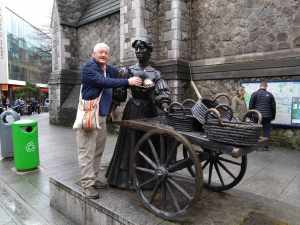
Moving on, we first visited the statue of Molly Malone, who, according to legend, was a fishmonger known for selling cockles and mussels by day through the streets of Dublin. By night, driven by poverty, she is said to have sold her beauty to strangers to survive.
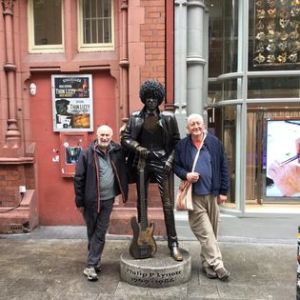
Next, we made our way to another of Dublin’s iconic statues, Phil Lynott. Although born on 20 August 1949 in West Bromwich, Birmingham, he later became celebrated as an Irish musician, songwriter, and poet. He was the co-founder, lead vocalist, bassist, and principal songwriter for the hard rock band Thin Lizzy.
We paused on a bench in St. Stephen’s Green, watching Dubliners go about their day while feeding a few crumbs from our ‘pack-up’ to an obliging pigeon. In the distance, a street singer’s voice drifted through the air, a familiar soundtrack to life in this ‘fair city’.
For our final pint of Guinness, we chose the Bruxelles Pub, a traditional Irish establishment located next to Phil’s statue. As with every pub we’d visited over the past few days, it wasn’t long before the regulars struck up friendly conversation and a laugh, it’s what they call the Irish Craic.
We returned to the hotel to collect our bags and made our way to the airport on the number 16 bus.
Our 8 p.m. flight departed on time, and just 40 minutes later, we landed back in Birmingham. After a brief search for Sean’s car in the car park, we were on the road and home in Harborough within 50 minutes.
Review: Dublin is an engaging city, rich in history and culture, with more than enough to hold one’s interest for a long weekend or so. The locals are extremely friendly, quick-witted, and they (mostly) speak the same language. Prices are comparable to the UK, as is the food. I would gladly visit again.
 Palmer Family
Leave a comment