5th October 2023
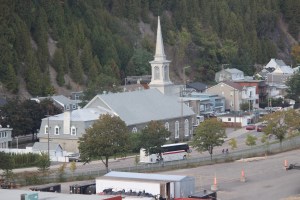
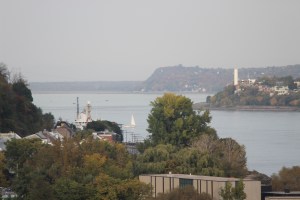
A misty morning greeted us as we docked on the outskirts of the Port of Quebec. We had originally been scheduled to moor closer to the city centre, but the arrival of the liner Queen Mary 2 took precedence, and so we were obliged to take a shuttle bus into town.
We had booked a morning excursion, though our departure was slightly delayed to 9.30 a.m. due to strike action by some of the port workers. As we boarded the tour bus, we passed a group of striking employees looking rather bored, seated in a tent by the port gates. Their method of protest was somewhat symbolic, placing a small hurdle in front of vehicles entering and leaving, only to remove it a few minutes later.
Our itinerary for the day included a visit to Montmorency Falls, which stands some 30 metres higher than Niagara Falls; a stop at the Albert Gilles Copper Museum; and finally, a journey to the Basilica of Sainte-Anne-de-Beaupré, dedicated to Saint Anne, the patron saint of sailors, located in the picturesque village of the same name.
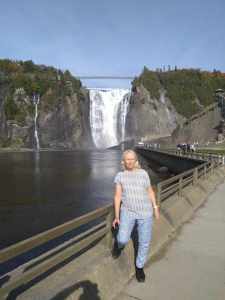
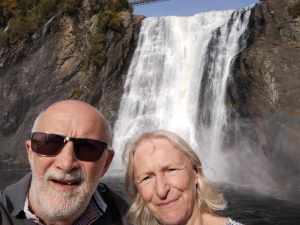
We reached Montmorency Falls after a half-hour drive through the city and along the river. At 83 metres high, the falls are a spectacular sight, with the vast expanse of the St. Lawrence River stretching out not far from the base of the cliffs.
After parking, we were given 45 minutes before we had to return to the coach. That was just enough time for a brisk walk from the entrance building along the shingle path to the base of the falls, a few quick photos, and then the return stretch. As is often the case with organised tours, there simply wasn’t enough time to fully appreciate the location.
The falls have a cable car that takes visitors to the top, and from the base, a wooden staircase winds its way up the cliff face. I’ve no doubt the views from both would have been stunning, but, unfortunately, we had time for neither.

The day was warming up considerably as we set off for the next leg of our tour. Travelling a little further along the river, we arrived at the Albert Gilles Copper Museum, established 88 years ago by artisan Albert Gilles. His family has produced exquisite copperwork and architectural pieces for clients around the world, including several found in the basilica we were due to visit next.
After a brief explanation of the embossing process, where copper sheets are transformed into intricate and elaborate works of art, we had some time to explore the exhibits and browse the gift shop. Although there were many fine examples available for purchase, we chose not to buy anything.

Continuing further along the St. Lawrence River, we arrived at the grand Basilica of Sainte-Anne-de-Beaupré. The shrine houses three notable relics: a portion of Saint Anne’s finger bone, a 4-inch section of her forearm bone, and her full forearm. The basilica itself is an imposing structure, although extensive maintenance works currently detract from the exterior’s photographic appeal.
Inside, the basilica is richly adorned with vibrant paintings and murals. Surrounding the main altar are numerous small chapels, which naturally raises the question, why so many? Our guide provided a detailed explanation of the building’s history and its various features before leading us down to the lower level, where we found an equally expansive and lavishly decorated space.
As we were leaving, a wedding was about to begin in the main church. We caught a glimpse of the bride just as she entered the building, a lovely end to our visit.
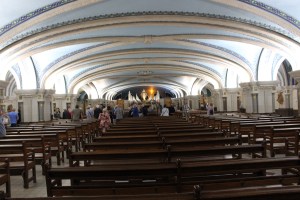
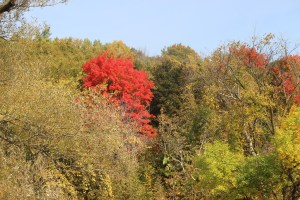
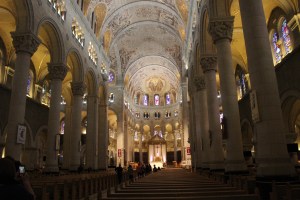 We had hoped to witness some of Canada’s famous autumnal colours on this cruise, but unfortunately, a late and cold spring followed by an unusually wet summer has delayed the trees from putting on their usual spectacular display. That said, we did spot a few early turners, scattered trees bravely leading the way into autumn.
Our return to the ship was once again delayed by the protesting port workers. We arrived just in time for a late lunch. Sue spent the afternoon on the upper decks, reading and scanning the shoreline for anything of interest, while I opted to watch New Zealand take on Uruguay in the Rugby World Cup.
As we were docked in port for two days, the evening’s entertainment featured a local folk group, Folklorique Québec. They performed a lively mix of traditional reels and tap dancing, set to music with clear Irish influences. To our surprise, the performance was thoroughly enjoyable, especially the violinist, whose skill and energy had everyone tapping their feet in time with the music.
6th October 2023
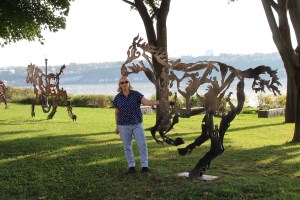
No tour today, just a half-hour walk into the city along the port road to take in the sights. Another large cruise ship had docked behind the Sky Princess during the night, and the striking dock workers were still stationed at the port gates, appearing even more militant than the day before, stopping every vehicle regardless of its purpose. As a result, the first shuttle of the day was delayed by an hour. Observing the growing queue of passengers waiting to board, only to sit idle at the gates, Sue and I decided not to join them. Instead, we set off on foot down Boulevard Champlain beneath a blue sky and a warm breeze, stopping to photograph anything that caught our interest.
Upon arriving in Lower Town, we could clearly see the Queen Mary 2, and soon noticed yet another large cruise ship moored behind her, with a smaller one tucked in further still. A short while later, we spotted yet another sizeable vessel berthed near the grain silos, bringing the total to six shiploads of tourists pouring into the city!
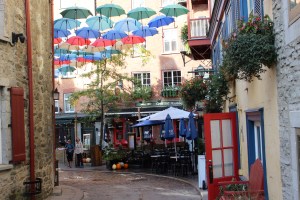
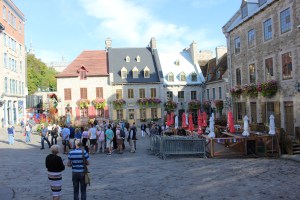
It was just past 9 a.m. when we plunged into the narrow, cobbled streets of Old Quebec, and the tourist groups were already on the march, crocodile fashion, with a flagged guide leading the way. Taking photos quickly became a challenge, as any carefully framed shot was instantly overrun by a procession of zombified nationalities, each determined to secure their pristine souvenir image. The most successful photographs were those taken above door level, or from atop walls and fences looking downward.
Our wanderings led us into a variety of art and craft shops in search of that elusive special item to remind us of our trip to Quebec. Although nothing quite hit the mark, the hunt itself was part of the enjoyment. With Lower Town thoroughly explored, we set our sights on Upper Town. Our first stop was St. Andrew’s Presbyterian Church, reached via St. John Gate, part of the original city ramparts first constructed by the British in 1690 to defend Upper Quebec.
Inside the church is an exhibition titled Gifts of the King, featuring items donated by King George III, who visited Quebec on several occasions during the early 1800s.

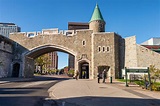
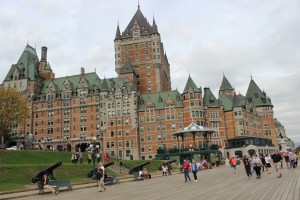
From there, we made our way to the iconic Château Frontenac (Fairmont Le Château Frontenac), stopping off at several more art and craft outlets en route. The hotel, designed by Bruce Price and built by the Canadian Pacific Railway Company, opened in 1893. With its 18 floors, it dominates the skyline of Quebec.
Cheekily, we put on our best we belong here look and had a good nose around the reception area, restaurant, and bars, taking a few discreet photos and making use of their facilities. Our impression was that, in terms of style and décor, it’s firmly anchored in the 1920s and 30s. Surprisingly, it was also very busy. Either the hotel was filled to capacity with actual guests, or, more likely, many of those bustling around us were fellow undercover tourists, doing just as we were.
Next, after browsing a few more touristy shops, we made our way to La Citadelle de Québec. Unsurprisingly, we found ourselves among a great number of like-minded visitors, all intent on reaching the highest point in the city to capture sweeping panoramic shots of the city and river. As with the Citadel in Halifax, the climb to the top of the ramparts was an exhausting undertaking, not one for anyone with heart or breathing issues.
It is the largest British fortress in North America and forms an integral part of Quebec’s historic fortifications, perched atop Cape Diamond. Today, members of the Royal 22e Régiment bring military traditions to life within its walls for the benefit of visitors.
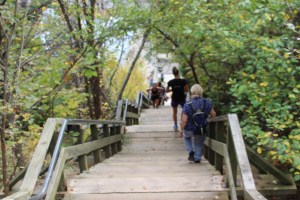
A wide wooden walkway leads from the Citadel high above the river, clinging to the cliffside. It is accessed by a 320-step wooden staircase and conveniently takes us back to the Sky Princess via a 410-step descent. The views along the river and the bustling water traffic were well worth the lung-busting effort. However, on our way down, Sue’s knee gave way, and she painfully limped back to the sanctuary of cabin A714.
That evening’s entertainment featured a magician from Pittsburgh, Michael Misko. Described as a “Magician, Comedian, Cracker of Wise,” he brought a unique blend of deft sleight-of-hand magic and charming, wry comedy, peppered with a hefty dose of rapier wit!
An audience largely made up of Brits can be a tough crowd for any American comic, and he was clearly nervous. Sue and I have often struggled to grasp the humour of American comedians on previous cruises, especially when playing to mainly fellow countrymen, usually leaving us completely baffled as to why everyone else is laughing. Although his magic tricks were nothing new to those of our generation, Michael Misko provided a decent evening’s entertainment and managed to keep his quick-fire repartee mostly within the grasp of us Brits.
 Palmer Family
Leave a comment