26th July 2023
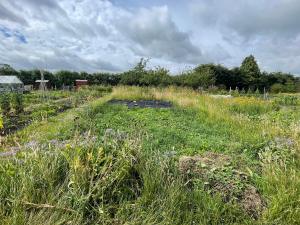
Jamie’s allotment
“I am not absent-minded. It is the presence of mind that makes me unaware of everything else.”
―
Finally, I’ve finished editing the hundreds of photos and videos taken during our April trip to Ethiopia and have arranged them in sequence to create a video. It’s now been uploaded and published in standard format to YouTube. You can view it here: 2023 Ethiopia.
The month began with a typically British summer, warm, with a mix of sunshine and scattered showers. As usual, this played havoc not only with the (Ashes) cricket series and Wimbledon but also with various family plans for outings and outdoor activities. Nevertheless, the extended Palmer family somehow managed to stay mostly dry and enjoy themselves.
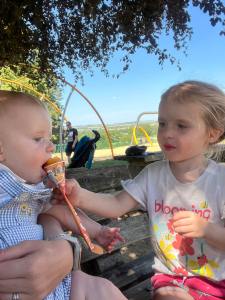


On the 4th of July, Sue and I spent the day visiting Jamie in Waltham on the Wolds. It had been a while since our last visit, and although showers were forecast, we managed to avoid them. We joined him on a walk with the dogs, taking in the local allotments before enjoying a very pleasant lunch at the village pub.
Jamie told us that he had applied to the local Parish Council for one of the allotment plots and was awaiting a decision. Later that week, he received confirmation that his application had been successful and is now making plans. A photo of the plot reveals that there’s quite a bit of work to be done before he can start planting, but fortunately, Charlotte and Sarah, both former allotment holders, are proving to be excellent sources of advice.

On a bright 7th of July, Sue accompanied Sarah, Alice, and Archie to East Carlton Park for a picnic, while I took Mia on a short walk to Lubenham for lunch at the pub with Sean and his daughter’s dog (also offloaded for the day). By mid-afternoon, the heat had become so intense that the picnic was cut short, and they decided to visit Charlotte and her family before heading home.

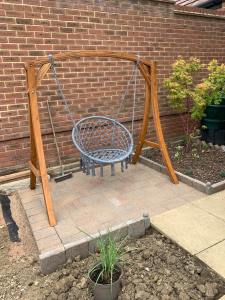
The Rothwells have been undertaking a major remodelling of their garden. Last month, the fencing line was repositioned, and work began on levelling much of the sloping area. Earlier this week, Charlotte decided to create a slabbed section and, in no time at all, had laid a very neat patio complete with a swinging chair.
A couple of family members have recently had professional photographs taken. The family’s newest addition is Archie, while the youngest of the Rothwells is Ellis.
Ellis has fully embraced his time with the Air Cadets and is thoroughly enjoying every aspect of life in the troop. He eagerly volunteers for a wide range of force and charity activities and takes great pride in immersing himself in the routines and values of military life.
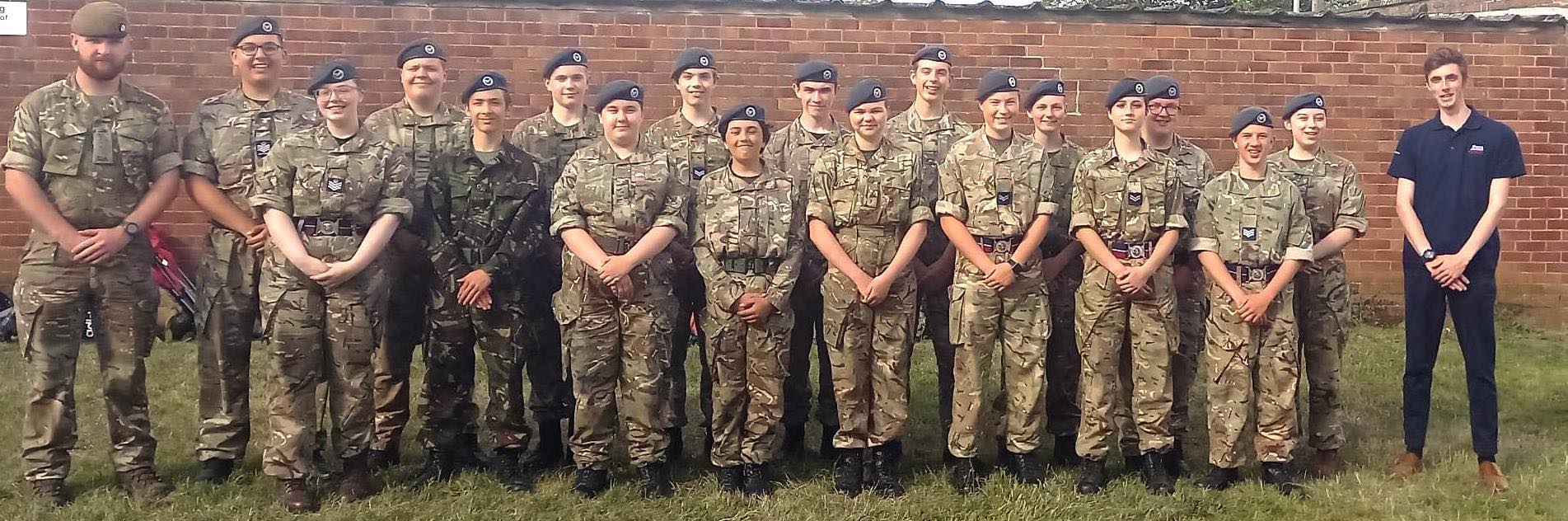
Ellis is in the middle.
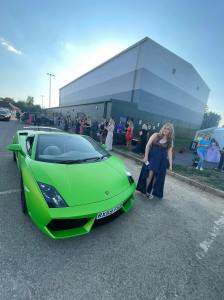
On the 8th of July, Jamie came to Harborough in his Lamborghini to chauffeur his friend’s daughter to the Robert Smyth School end-of-year prom. On such occasions, it’s not uncommon to see limousines driving around town, filled with excited teenagers dressed smartly on their way to the ball. It was a lovely gesture from Jamie to help make the evening extra special for his passenger.
The following Monday, Sue and I drove to the Stoke Place Hotel near Stoke Poges for a couple of nights. Unusually for us, we hadn’t planned much in advance beyond the simple pleasure of being away from home. It wasn’t until the night before that we began to think about what we might do during our stay.
On the journey south, we decided to stop in St Albans to see the remains of the Roman wall, before continuing to visit Harmondsworth Barn. Built in 1426 by Winchester College as part of its manor farm at Harmondsworth, the oak-framed barn is an outstanding example of medieval carpentry. At nearly 60 metres long, 12 metres wide, and 11 metres tall, it is supported by 13 massive oak trusses and boasts one of the most intact interiors of its kind.

Despite a showery forecast, we were fortunate to avoid any rain. The Satnav efficiently guided us to a nearby lay-by on King Harry’s Lane, from where we ambled along with several dog walkers through a hedge and onto a path that wound through a small wood to the ruins of the once-defensive wall of Roman Verulamium. This ancient wall, which once encircled the city of St Albans, can still be traced for much of its original two-mile circuit.
Built between 265 and 270 AD from mortared flint rubble with layers of brick bonding, the wall was originally faced with dressed flints. However, little of this facing remains, much of it having been robbed out over the centuries for building materials.
We followed the surviving sections, pausing to read the information boards along the way and regularly stopping to admire the Cathedral in the near distance, its tower impressively rising above the trees beyond the lake and park.
The 100-acre parkland was shared with several school groups, moving in crocodile fashion and working through clipboard-tick lists of locations. We gave them a wide berth.
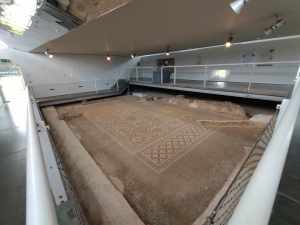
The River Ver, which flows through the park, is a rare chalk stream fed by an underground aquifer. We sat for a while near the point where it enters the lake, watching the park staff busily manicuring the grassy areas with their strimmers, before continuing to the Hypocaust and Mosaic. These are housed within a protective building in the centre of the park and were discovered in the 1930s by archaeologists Sir Mortimer Wheeler and his wife, Tessa.
We had the building to ourselves, allowing for an unhurried perusal of the site without the distracting chatter of children, usually punctuated by intermittent words of wisdom or warning from their guardians.
With our minds filled with British Roman history, we returned to the car to collect our picnic chairs and food. Finding a spot that offered a view across the entire park and town, we settled down to satisfy our appetites with a very British lunch of salad and crisps.
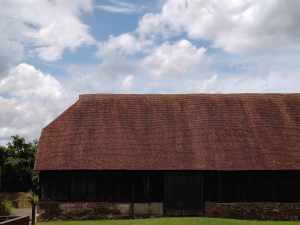

Moving on and heading closer to our hotel, we took a detour to visit another English Heritage site. The barn at Harmondsworth was built between 1425 and 1427 on land purchased by William of Wykeham, Bishop of Winchester, in 1391 to endow Winchester College. Primarily used for storing cereal crops before threshing, it remained in agricultural use until the 1970s.
At 58 metres long and 11.4 metres wide, the barn is one of the largest ever known to have been built in the British Isles, and it holds the distinction of being the largest intact medieval timber-framed barn in England. Unfortunately, it is only open to visitors on Sundays. However, by circumnavigating the grounds of the neighbouring church, we were able to get a good enough view of this splendid structure.
After a brief walk around the pretty little village, nestled rather incongruously close to the end of Heathrow’s runways, our ears buffeted by the roar of jet engines, we set off on the final leg of our journey.

We arrived at the Stoke Place Hotel a little before check-in time, so we chose to sit in the bar with some refreshments and reflect on what we had seen earlier in the day. Shortly after dropping our bags in the room, we took a stroll through the hotel’s extensive grounds to work up an appetite for the evening meal. Around the lake, we spotted a large flock of Canada Geese, several coots, and a pair of swans accompanied by four cygnets, providing an ideal opportunity for me to practise with the new zoom lens on my camera.
The hotel is reputed for its excellent food, and dinner certainly lived up to that reputation. Our three-course meal was an absolute delight and well worthy of the praise it receives.
After a restful night’s sleep, we enjoyed a superb breakfast before braving the inevitable congestion of London commuter traffic. Our plan for the day was to visit Kew Gardens. According to the website, the small car park fills up quickly, so we aimed to arrive early. However, as non-members, we were only permitted entry at 10 am, whereas members could enter from 8 am.
We arrived at 9:50 am, expecting a struggle to find parking, but aside from three other cars, the car park was empty. After paying the £9 all-day parking fee, we joined a small queue of seven others at the entrance kiosk, waiting for the gardens to open.

Having paid the £19.50 concessionary entrance fee each, we eagerly strode into the grounds. Kew Gardens is a renowned botanical garden in southwest London, home to the largest and most diverse botanical and mycological collections in the world. Founded in 1840, from what was originally the exotic garden at Kew Park, it now boasts living collections featuring some 27,000 plant species. Its herbarium, one of the largest in existence, holds over 8.5 million preserved plant and fungal specimens.
Armed with a site map acquired at the entrance, we decided to follow the Explorers Path, which led us around the outer areas of the park. We planned to start with the wider perimeter and then work our way inward, visiting the central exhibits afterwards.
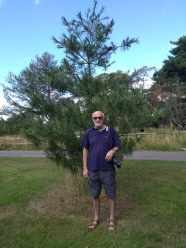
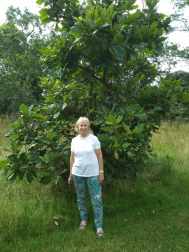
We began our visit in the area dedicated to the oak collection, fully expecting to quickly become disinterested and move on to more exciting zones, but we were very much mistaken! It was fascinating to discover just how unique this familiar tree truly is, and how many distinctive varieties exist around the world. We spent ages examining only a small fraction of the collection; it could easily have taken the entire day if we had resolved to study every single variety on display. We both came away with a newfound respect for this stalwart of the British medieval shipping industry.
As we passed through the Giant Redwood forest, we noticed a series of quotes from philosophers and artists (none of whom we recognised) displayed on boards scattered among the trees. We couldn’t help but wonder why these magnificent trees surely need no description or clever words to speak for themselves.
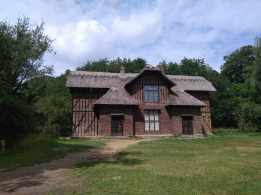
We made a slight detour to visit the 18th-century Queen Charlotte’s Cottage, nestled in a quiet glade within a pine forest. Built in 1774, its design is said to be attributed to Queen Charlotte herself. Unfortunately, the cottage was closed when we arrived, but a barcode on the signage provided access to a video tour of the interior. We settled on a nearby bench and watched it for a while.
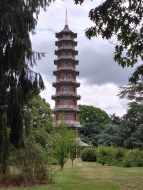
Next, we moved on to the Japan zone, exploring the Japanese Gateway and Garden, followed by the iconic Pagoda. After paying £4.50 each to climb to the top, we enjoyed panoramic views over the gardens and, on the horizon, the centre of London. Being directly under the flight path into Heathrow, planes thundered overhead every 30 seconds, wheels down as they searched for the firmness of a concrete runway.
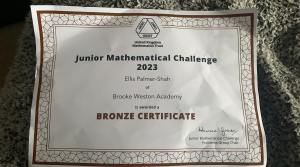
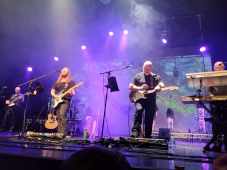

Recently, Ellis represented his school in a national maths competition and achieved a very creditable third place. It goes without saying that everyone in the family is immensely proud of his accomplishment. In the evening, we heard the good news, Sue and I went to see a Pink Floyd tribute band, The Floyd Effect. Despite a terrible stormy journey to Corby Cube, the band proved to be remarkably faithful to the original, making for a thoroughly enjoyable evening. The family had kindly pooled together to buy us both tickets as a Father’s Day present.


We took charge of Rocky and Nala on the same day for a week, while Jamie, Ruth and Joey spent the week at a villa near Alicante in Spain with two other families (friends). Alongside the USA, southern Europe is experiencing a Cerberus heatwave, with temperatures in Italy, Spain, and Greece soaring towards 49°C.
The biggest (and most onerous) gardening task of the year is trimming the rear garden hedges. Unfortunately, I was unable to tackle this arduous job last autumn due to problems with my left foot and ankle, which made standing on a ladder for long periods impossible. Two years’ growth of Leyland Cypress, averaging 3–4 feet per year, was a chore I was not looking forward to.
Hoping to save myself some considerable effort this year, I bought a small 6-inch cordless electric chainsaw from Amazon before starting the work. Looking ahead, I was determined to reduce the height of the longest section by a couple of feet (60.9 cm), making next year’s job easier. I use a 2-metre platform, enhanced by a rigid, upturned box to increase my reach when levelling the hedge top.
In the past, I had tackled the Leylandii using a combination of an electric hedge trimmer, an extended petrol trimmer, and a large petrol chainsaw, a regimen that exhausts every upper-body muscle. The dust, skin irritation, and strong resin smell from crushed foliage made it an unpleasant experience. This year, it took a full week of four-hour sessions to complete the task, but thanks to my new ‘wonder machine’, levelling the hedge went particularly well, slicing through trunks and branches up to the full 6 inches like butter. I was so impressed with its performance that I bought another as a present for Charlotte’s upcoming birthday.
The final stage involved trimming a 50-metre section along a public alleyway. For this, I enlisted Lucas’s help for a small fee. Dropping the hedge tops directly onto the well-used pathway would have caused problems, so I cut them off carefully, and my grandson wheelbarrowed the cuttings away. Afterwards, we chopped them further, filled two large builders’ sacks (adding to the ten previously processed), and took everything to the Recycling Centre.
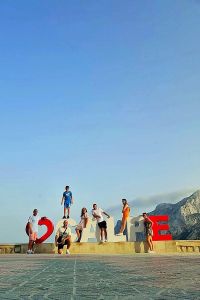

Having endured terrible internet throughout the house for around six months, with slow speeds and frequent drop-outs, on 20th July, we had a BT engineer come to investigate the system. He replaced the fibre socket with the Hub and concluded that the problem was due to poor coverage inside the house. He ordered three Discs to strengthen the WiFi signal, but explained that I needed to contact BT to confirm the order before they would be sent. I did so.
Thinking I was already on BT’s best plan, Halo 3, I soon discovered they had introduced Halo 3+, and that I needed to upgrade to this plan to receive the Discs free of charge. This would mean an additional £2 per month, but it was then explained that my mobile bill would be reduced by £4, while my mobile data limit would increase to 20 GB, so overall, my bill would actually drop by £2. It sounded crazy, but it was to my advantage. All the equipment arrived within a couple of days: six pieces in total, plus two new SIM cards.
On a very rainy Saturday, while Jamie, family, and friends returned from a frazzled Spain, I began installing the new kit. The technology itself was straightforward to set up, but transferring cameras, switches, lights, TV, and audio equipment proved more complicated. We now enjoy internet speeds of 50–60 Mbps throughout the property, and the smart WiFi automatically switches to maintain the best speed between 2.4 GHz, 5 GHz, and 5 G. However, some of the switches and cameras only work on 2.4 GHz, so I have kept the Home plugs in the system to ensure they continue functioning.

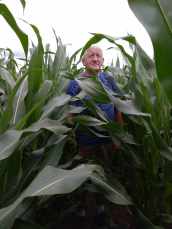
Where are we?
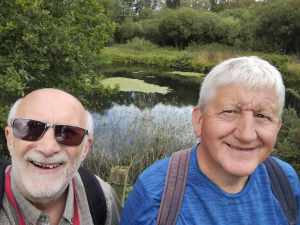
On the 18th, I drove to Newbold Verdon with Sean Perry to take Mia for a five-mile walk and have lunch at the Windmill. It was a perfect day for a ramble, dry, with a cooling breeze and sunshine. We collected Mia at 10.30 am and set off on a pleasant route that Sue and I had walked a couple of years earlier. After a very damp spell, the fields were lush with growth, making a particularly large field of sweetcorn tricky to navigate. Without my GPS, we might have wandered through the crop for hours.
Disappointingly, our planned lunch at the Windmill did not happen as they were carrying out building work. Instead, after dropping Mia off, we drove to the Red Lion in Ibstock and enjoyed spicy burgers and chips. On the way home, we called in at the shoe warehouse in Newbold Verdon to look for some sandals for Sean, but came away empty-handed.
 Palmer Family
Leave a comment