30th May 2023
Since returning from Ethiopia, Sue has thrown herself back into her U3A groups, going on several rambles and attending a range of interest group sessions. I, meanwhile, have been hard at work in the garden and on the vegetable plots, planting four rows of main crop potatoes and preparing several beds for future sowings. The greenhouse is now full of seedlings, tomatoes, cucumbers, cape gooseberries, and tomatillos, all coming along nicely.
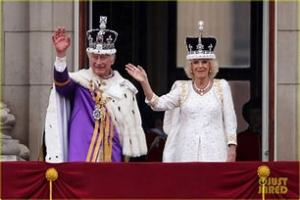
Unfortunately for Sue, Coronation Day (6th May) began with her feeling rather unwell, and she spent much of it asleep. She did, however, manage to watch the crowning at Westminster Abbey. The day wasn’t particularly kind to King Charles either, with light rain falling for much of the ceremony. That said, the weather did little to dampen the enthusiasm of the crowds who had travelled to London to witness the event. As ever, Britain displayed its unmatched flair for ‘pomp and circumstance’, seamlessly blending centuries-old tradition with a subtle touch of modernity.

 In the afternoon, I took the train to Leicester to meet Jamie, Ruth, and Joey for a rugby match, Tigers versus Harlequins, as a birthday treat from Jamie. It’s been a long time since the two of us watched a match together, and although the Tigers lost narrowly, it was a thoroughly enjoyable day.
The country was treated to a long weekend of celebrations, with a Bank Holiday on the Monday to mark the coronation. While there were countless street parties, concerts, and rallies taking place, the Palmer clan celebrated in their unique ways: Jamie painted his garden fencing and pergola; Sarah entered a baking competition and came second with a delicious-looking toffee apple sponge topped with vanilla buttercream; poor Charlotte spent the time sanding down a scaffolding plank for an ongoing project and, in the process, managed to badly sprain her ankle.


On the 9th, my ailing Fiesta went into the garage to have a new purge valve fitted, as indicated by the dashboard warning light and confirmed by a diagnostic check. The valve was duly replaced, and the warning light extinguished, only for it to illuminate again the moment I started the engine to drive home. Rather confusingly, the issue persisted, so the car was booked in again for further investigation.
The following day, Sue and I set off for a short break in Blakeney, Norfolk. Sue hadn’t been feeling too well, still suffering from the side effects of the malaria tablets we’d been taking following our trip to Ethiopia, and she was very much in need of some rest and recuperation. The weather forecast for our three-day stay wasn’t promising, with heavy showers expected, but, in typical British fashion, we were pleasantly surprised to be greeted by a lovely warm day with not a cloud in sight.
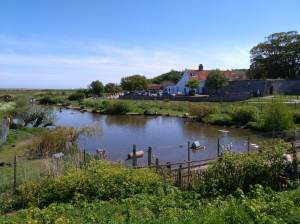
We arrived at our hotel, the Blakeney Manor Hotel, around midday. It describes itself as a boutique hotel nestled in the heart of Norfolk, surrounded by breathtaking views and steeped in rich history, and it certainly lives up to the claim. We had planned to make use of our English Heritage membership to visit several local sites and to explore the surrounding marshland, rich in wildlife.
Blakeney was once a thriving commercial seaport until the early 20th century. Today, the harbour has silted up, and only small boats can navigate out past Blakeney Point to the sea.
We enjoyed a picnic opposite the hotel, sitting on one of the benches beside a large pond that serves as a rather lively duck sanctuary. Unsurprisingly, we soon added to the ruckus by attracting a considerable number of birds with the crusts from our sandwiches. Not only ducks, but also geese, ravens, gulls, and blackbirds joined the fray, all unafraid to approach closely and quick to squabble aggressively over any morsel thrown into the water or onto the bank.

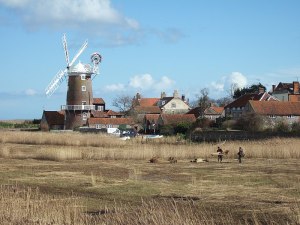
Afterwards, we changed into our hiking boots and set off on a 3.5-mile circular ramble through the marshes, following the River Glaven, which runs alongside the route for part of the way. Once a navigable waterway, the Glaven served the ports of Wiveton and Cley. Although it was low tide, there was an abundance of birdlife searching along the muddy banks of the many tributaries we passed, as well as among the reeds and grassy tussocks.
To our surprise, we encountered sheep and cattle grazing contentedly on the lush vegetation in the warmth of the afternoon. In the distance, the dunes blocked our view of the sea, but just beyond them, we could see the white rotating arms of dozens of wind turbines peeping above the horizon.
Upon reaching Cley-next-the-Sea, we paused to admire its prominent windmill before joining the main coast road and heading back towards Blakeney.

On the outskirts, we came across the 13th-century Church of St Nicholas, notable for its unusual architectural feature: a second tower, once used as a beacon to aid the mariners of Blakeney port. The church was open, and pinned to the door was an invitation to climb the tower and admire the views, so we did.
From the ground, the structure didn’t seem especially high, but the tight stone spiral staircase seemed to go on forever. We reached the roof breathless and questioning whether we ought to be tackling such exertions at our age. Still, the views from the top made the effort worthwhile.
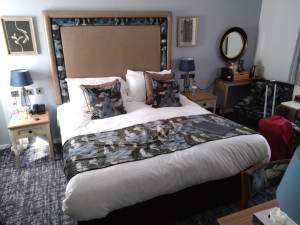
Returning to the hotel, we checked in and dropped our bags in a very plush, well-appointed room before finding the bar and sitting out at the front of the building. We quenched our thirst while admiring the views over the marsh, soaking up the warmth of the late afternoon sun.
That evening, we dined on fish and chips in the hotel restaurant, it’s traditional, and simply has to be done at the seaside!
The 11th of May was forecast for localised showers throughout the day, and there were, but fortunately, never where we were. The closest we came to getting wet was a couple of distant claps of thunder, though we saw plenty of evidence of downpours on the wet roads as we drove from venue to venue.

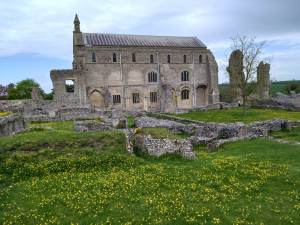
After a very tasty breakfast and a walk along the harbourfront to recover a spring from my GPS (lost the previous afternoon), we set off towards Binham Priory, the most complete and impressive monastic ruins in Norfolk, still in use today. Built of local flint and Barnack limestone, the stone was brought from Northamptonshire by river and sea in barges, then up the River Stiffkey.
This Benedictine priory was founded in 1091 by Peter des Valoines, a nephew of William the Conqueror. Many of its priors were unscrupulous, and the history of the priory is one of almost continuous scandal. The site is quite extensive, and the English Heritage information boards are numerous and packed with fascinating history. It took quite a while before we felt we had uncovered all there was to see. I also managed to engage in conversation with a couple of cows leaning over the fence in an adjacent field, they seemed to find our presence worthy of several mooving comments…

We returned to Blakeney to explore the streets leading off the port, popping into a few shops along the way. Afterwards, we took a short drive to Cley and saw where the small fishing boats are hauled into the sea from their high protective shingle bank. The overcast sky and biting wind meant we only stayed briefly, snapping a couple of photographs of this bleak landing point before moving on to Baconsthorpe Castle.
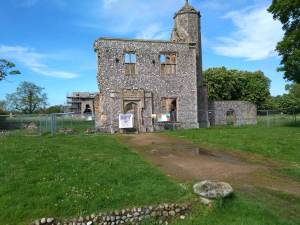
This moated and fortified 15th-century manor house stands as a testament to the rise and fall of the prominent Norfolk Heydon family. Unfortunately, English Heritage has earmarked the castle for restoration, so all but the gatehouse was fenced off, with scaffolding erected around the inner walls and buildings. The castle’s remote setting, resplendent with its moat and attached lake, was breathtaking, though it was clear the structure was in dire need of major repairs. We managed to get as close as possible to take some photos and took our time reading the information boards. The Heydons certainly knew how to live the ‘high life,’ which, as so often happens, proved to be their eventual downfall.
Back at the hotel, we chose to dine that evening at the King’s Arms, a 250-year-old Georgian pub in the village. The landlord has lovingly preserved the decor and atmosphere to match the inn’s age. We played cards, enjoyed our meal, and savoured the local beer in a cosy setting until it was time to return to the Manor for a well-earned rest.
The next morning was overcast and chilly as we crossed the courtyard for breakfast, but after a substantial meal, we felt optimistic and made plans to visit a priory and a castle on our journey home. Before leaving, Sue took a moment to feed the ducks with our leftover toast.
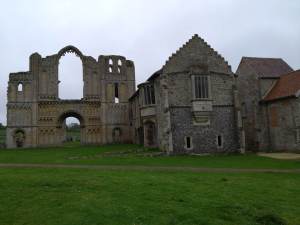
The village of Castle Acre takes its name from the walled castle built in the 12th century by the Normans at the point where the River Nar is crossed by an ancient route known as the Peddars Way. It was a 22-mile drive from Blakeney. We decided to visit the Priory first before tackling the castle, as the sky threatened rain, which arrived just as we pulled into the car park.
Castle Acre Priory is one of England’s largest and best-preserved monastic sites, dating back to 1090. It was home to the first Cluniac order of monks in England, who originated from France. Apart from a small party of sixth form students, we had the site mostly to ourselves and wandered freely through its impressive and extensive ruins, following the information boards and listening to the audio descriptions on the little device we collected at the ticket office.
Part of the main building, where the Prior’s quarters were located, remains well-preserved and roofed. We chose to duck inside during a passing shower. The contrast between the relative opulence of the Prior’s rooms and the austere accommodations of the monks, who slept in one long dormitory, unheated and in their clothes, was quite stark.

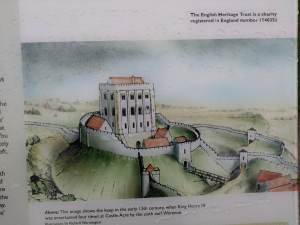
Moving on, we drove the short distance to Castle Acre Castle, founded soon after the Battle of Hastings by William de Warenne, a close associate of William the Conqueror. It is a well-preserved example of a motte-and-bailey castle and remains one of the most impressive Norman earthworks in the country.
Despite a chilly breeze and the threat of more rain, we wrapped ourselves tightly in wet-weather gear and followed the narrow paths and wooden bridges spanning the earthworks as we explored this ancient monument. It was clear that this had been a formidable fortress in its heyday and the home of successive generations of the Warennes.
Today, little remains of the keep and its brickwork, but the protective earthworks are still remarkably impressive.

Before continuing our journey home, we decided to explore the town and visit the parish church of Saint James the Great. The day was rapidly turning bitterly cold, and the church provided a welcome refuge, though it held little to capture our interest beyond a series of fabric paintings depicting the Stations of the Cross. After a quick browse in a small antique shop, we resumed what turned out to be an uneventful drive home.
Over the weekend, Jamie’s Lamborghini was wrapped in a striking green colour, making quite an impression.
On Monday morning, I met Sarah and her family in a lay-by near the M1 at Lutterworth to collect Mia, who will be staying with us while they enjoy a holiday in Devon.
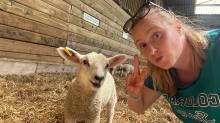

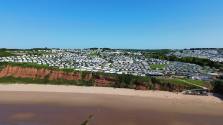


On their way south, they stopped overnight in Bath to break up the journey. The following day, they called in to see Philippa and Paul, Sue’s sister, to enjoy a ride on a steam train.
On the 16th of May, I picked up Sean Perry, and together with Mia, we drove to King’s Cliffe for a very pleasant ramble on a perfect walking day, bright sunshine with a refreshing cooling breeze. I used this hike to test my foot, which had held up well during a 3.7-mile route in the Blakeney marshes. Although it was a little sore at the end of the 5.5-mile undulating walk, it stood up well. We finished the day with an excellent meal at the King’s Head in the village.
The week’s weather was very pleasant, allowing me, between walks with Mia, to spend time in the greenhouse and tend the fruit and vegetable plots. Lawns and paths were mown, hedges trimmed back, and soil turned over in preparation for a crop of tasty sweetcorn. Onions, potatoes, parsnips, and beetroot are regularly watered, as are several hundred seedlings of all types in the greenhouse. May truly is a wonderful time of year when the weather witches behave themselves. Sue has been busy clearing winter debris around the house and garden, filling bin bags with weeds, sticks, and wind-blown rubbish, while making the most of warm days to wash anything remotely grubby.

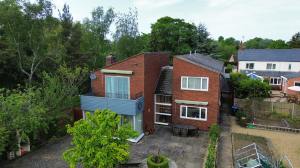
Sarah and Lee collected Mia on Friday afternoon (the 19th) on their way home from a brilliant stay in Exmouth. They stayed long enough to tell us all about their holiday and for the grandparents to enjoy some playtime with Alice and Archie. Lee had time to fly his drone and capture aerial photographs of the house and the surrounding area. I was quite surprised at the quality of images produced by such a small machine.
After returning from Ethiopia, I realised my passport had only six months left before expiry. Since many countries require at least six months’ validity on a passport, I applied for a new one. Over the years, I’ve usually received new passports within about a week, but this time I was informed by email to expect it in around 10 weeks, with no chance of viewing it for 6 weeks! As a result of this uncertainty, we won’t be leaving the UK until I receive this essential little document.
Surprisingly, another wholly government service, the NHS, appears far more efficient despite its massive funding challenges. After receiving a text message inviting me to book a shingles vaccination appointment, I had the injection just two days later. Unfortunately, Sue will have to wait until she turns seventy before she is eligible for the vaccine.


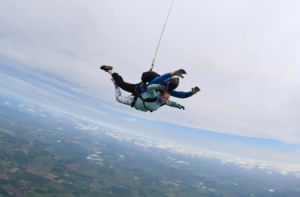
On the 23rd, Sarah celebrated her 30th birthday with a thrilling skydive at Langar Airfield near Nottingham. Charlotte picked up Sue, who, along with Lee, Alice, and Archie, were eager spectators of the daring jump. It was a beautifully warm day with clear skies, perfect conditions for throwing yourself out of an aircraft strapped to a professional tandem skydiver. The adrenaline-packed adventure ended safely, with both Sarah and Charlotte landing without mishap.
That same day, I attended the funeral of David Creighton, aged 69. David was a former rugby-playing friend who, unfortunately, had been diagnosed a couple of years ago with terminal lung and spinal cancer. He was a true character who lived life to the fullest and was deeply loved by his family.
 The following day, the 24th, Sue and I drove to North Wales to spend a few days in Llangollen. We were looking forward to visiting relatives and friends as well as making the most of our English Heritage membership. The weather continued to be excellent, ideal for rambling through the rugged Welsh countryside.
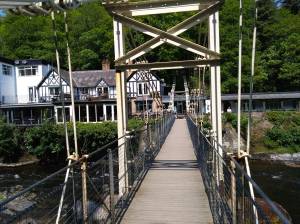
We arrived at our accommodation, the historic riverside Chainbridge Hotel, located about a mile outside the town of Llangollen, right around noon. With stunning views of the fast-flowing River Dee, the two-hundred-year-old chain bridge, and Llangollen’s popular steam railway, it’s hard to imagine a more beautiful setting to relax, explore, and unwind.
We had planned to meet up with friends Noel and Gay Headley at the hotel, and as arranged, they arrived at 12:30 pm. After a lengthy catch-up in the sunshine on the balcony overlooking the river, we all drove into Llangollen for a very tasty late lunch at the Cornmill restaurant, nestled alongside the River Dee and the town’s main bridge.
Afterwards, we returned to the hotel to enjoy drinks on the balcony, watching the waterfowl and canoeists gliding along the river below.
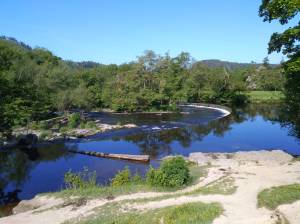
After our friends left for home, we checked into our room. Feeling rather full from our late lunch, we opted later in the evening for just coffee and biscuits. Afterwards, we took a walk along the canal behind the hotel, heading towards Horseshoe Falls and then on to Llantysilio parish church, dedicated to St. Tysilio, who lived in the 7th century. Although the church was closed, we enjoyed admiring the stunning views of the river and surrounding mountains before returning to the Chainbridge Hotel. On the way back, we paused to watch some hardy locals swimming in the chilly waters of the Dee near the falls.
After a comfortable and very quiet night’s sleep, we had breakfast in the hotel’s restaurant overlooking the iconic Chainbridge. Built in 1817 by local entrepreneur Exuperius Pickering to transport coal and limestone to the A5 and the upper Dee valley, the bridge provided a vital link between the Llangollen railway and the canal, spanning the River Dee.
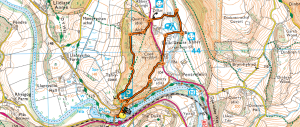
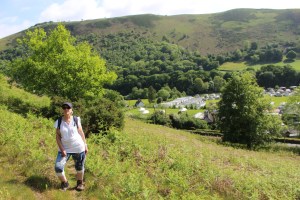
I had planned a short, but challenging, two-and-a-half-mile ramble from the hotel around Velvet Hill, passing the remains of Valle Crucis Abbey, founded in 1201 by Prince Madog ap Gruffydd and the ‘white monks’ of the Cistercian order. Under a clear blue sky, we enjoyed the cool morning air as we climbed up from the river and followed the hill’s flank before descending through a caravan park to a tributary of the Dee, passing close by the (closed) abbey on our right. After following the stream for a while, our route took us back to Velvet Hill, where we faced a lung-bursting slog up its steep slope to the summit. We took our time to recover by using binoculars to scan the surrounding countryside; the views from the top were tremendous and well worth the effort. Returning to the hotel, we quickly changed out of our rambling gear.
The drive to Brymbo over the mountains was exceptional. The vibrant colours of spring on a bright and warm May day made the journey a rare pleasure as we wound through the rugged Welsh countryside. Aunt Josie was waiting for us upon arrival, and soon we were heading toward Caergwrle to collect Aunt Doreen. On the way, we were pleased to see a lady with heavy shopping bags resting in the sun on my mother’s memorial bench at the foot of Caergwrle Castle.
Aunt Doreen was ready and smartly dressed, waiting for us, and again we headed back into the village to enjoy a very pleasant lunch at the Holly Bush. The two aunts don’t get out much these days, and they certainly seemed to enjoy this little escapade. As we returned Doreen home, we met her daughter Carys, who was waiting to take her for a COVID booster injection. Coincidentally, as we dropped Josie off, two of her daughters and their children arrived for a visit.
On our return to Llangollen, we stopped at a cider farm and purchased some of its produce from a very friendly farmer.
Later in the evening, after a fairly long walk along the canal toward Llangollen to admire the rather impressive waterside houses, we ate dinner in the hotel restaurant before retiring to our room to watch TV and sleep.

Departure day began with another sumptuous breakfast overlooking the River Dee, glittering in the early morning sunshine. Before checking out, we took another leisurely stroll along the canal to Llantysilio Parish Church, hoping it would be open, and indeed, it was. Inside, the church houses a memorial plaque to the English poet Robert Browning (1812–1889), who worshipped regularly here in 1886 during a ten-week stay at the Hand Hotel in Llangollen. Skeletons exhumed in the 19th century from Valle Crucis Abbey were reburied in the churchyard. In 1864, a stained glass window was installed in memory of Charlotte Andrew of Plas Newydd, who, along with her partner, sought to continue the tradition of the Ladies of Llangollen.
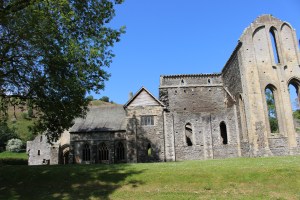
After checking out of the hotel, we drove the short distance to Valle Crucis Abbey, founded in 1201 by Prince Madog ap Gruffydd and the ‘white monks’ of the Cistercian order. Though the abbey began in austerity, it later gained a reputation celebrated by poets for its lavish hospitality, meals served in silver vessels, and ale said to flow “like a river.” Much of the abbey now lies in ruins, but the Chapter House and Dormitories have been sympathetically restored. Within the grounds lies an ancient fishpond, the only one remaining in Wales. The Cistercians preferred to build their abbeys in isolated locations, and this certainly fits the bill. Yet, the surrounding landscape is stunning, awe-inspiring, and deeply spiritual, a perfect place for worship.
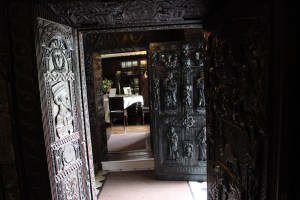

Moving on from the abbey, we set off to Plas Newydd, located on the outskirts of town. This historic house was once visited by Ann Lister of Shibden Hall to see Lady Eleanor Butler and Sarah Ponsonby, two upper-class Irish women who lived together as a couple. Among the many local and national dignitaries who visited them were Shelley, the Duke of Wellington, William Wordsworth, Robert Southey, Caroline Lamb, Sir Walter Scott, and the industrialist Josiah Wedgwood.
The house and grounds were fascinating and well worth the delay on our journey home. Throughout many of the rooms, there was a display of costumes from the TV drama Gentleman Jack, alongside artefacts belonging to the two ladies themselves, all beautifully described and thoughtfully presented. I found their diaries particularly engaging; like Ann Lister’s, they were very detailed and offered an excellent insight into their (not so) private lives. I smiled at an entry detailing the payment of one shilling and three pence for killing a neighbour’s cat. I suspect their carriage may have accidentally run over the unfortunate creature, but that is just my surmise.
Both the exterior and interior of the building are adorned with the most intricate wooden carvings, many donated by visitors or salvaged from other, more elaborate properties. Notably, Lord Wellington gifted the two lions flanking the front door.
We concluded our visit with a stroll through the extensive gardens surrounding the property before heading home.
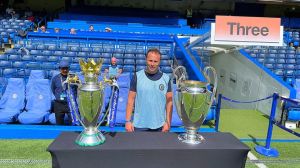
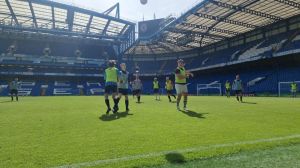

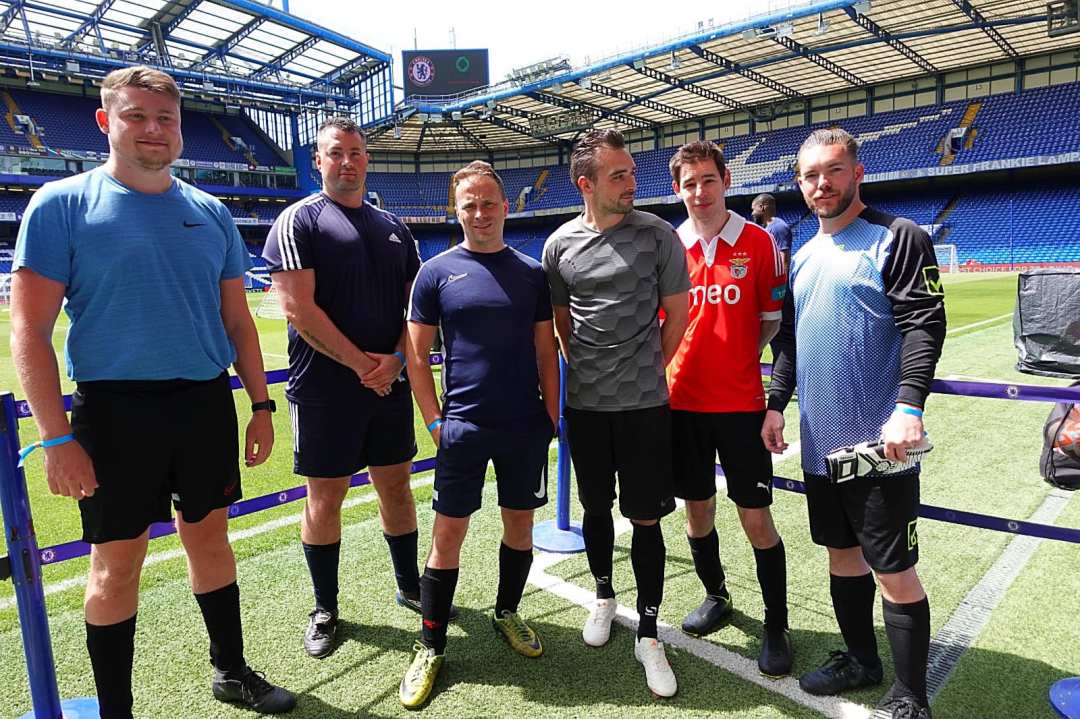
On the May Bank Holiday (29th), Jamie and six members of his Binary Destroyer business travelled to Stamford Bridge, the home of Chelsea FC, to take part in a soccer tournament. On another brilliantly sunny day, they enjoyed playing on the first team pitch. Although they unfortunately didn’t win any games, the experience was fantastic and one I’m sure they will never forget.
 Palmer Family
Leave a comment