7th February 2020
As usual, the Magellan docked at breakfast time in the port of Castries, joining two other cruise ships that had already secured their moorings. It was set to be a busy day for the inhabitants of the second-largest island in the Windward chain.

St. Lucia was discovered by Juan de Cosa, who sailed with Columbus, but it is believed that the first European to settle on the island was a French pirate named François Le Clerc, better known as Jambe de Bois or “Wooden Leg.” For the next 150 years, the island changed hands between the French and British before being ceded to Britain in 1814. It gained independence in 1979. Sensibly, they drive on the left and speak English, as all civilised nations should.
Castries has had a turbulent history, having been destroyed by fire on three occasions: in 1805, 1813, and more recently, in 1948. By that pattern, it is probably overdue for another.
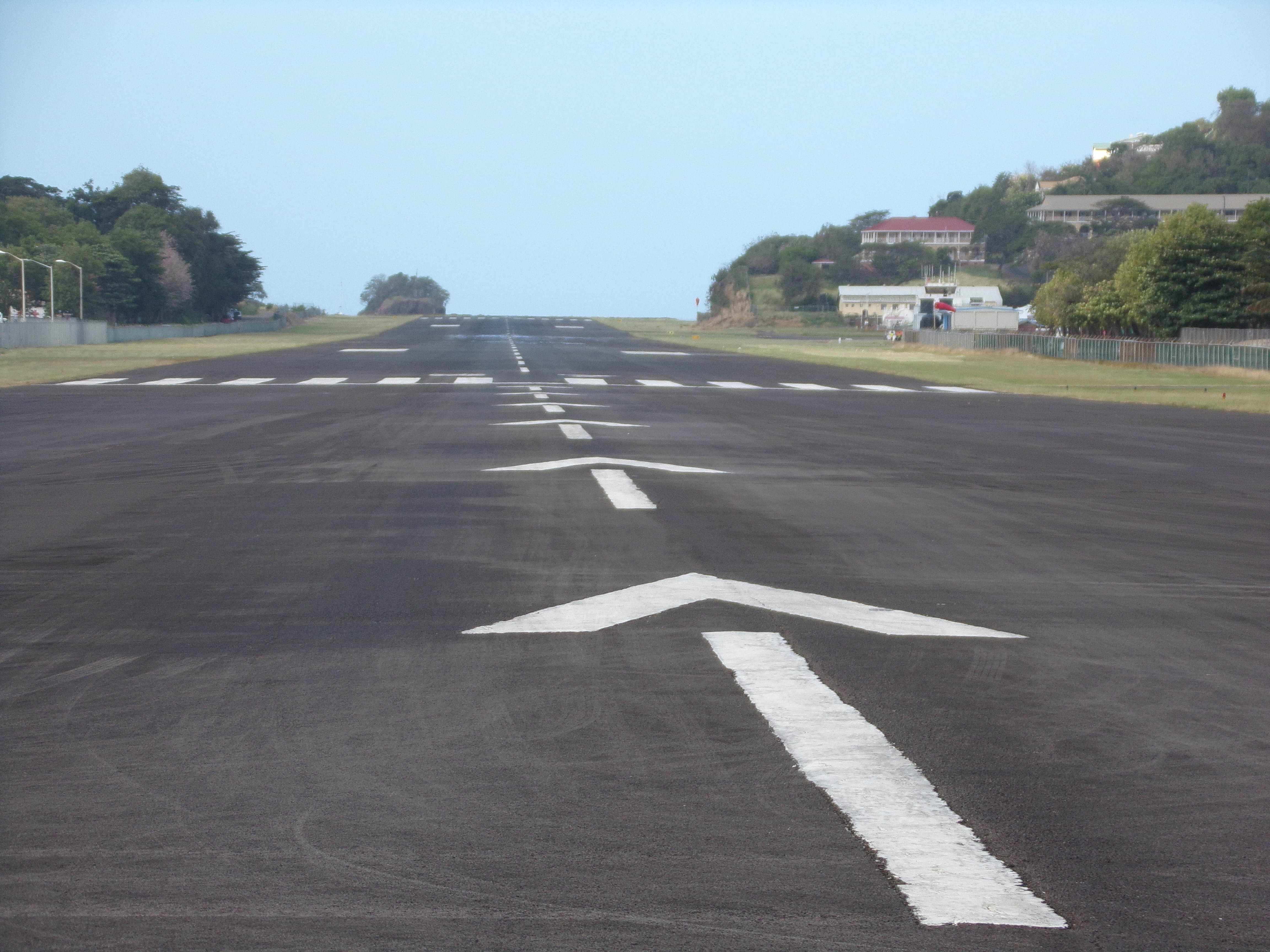
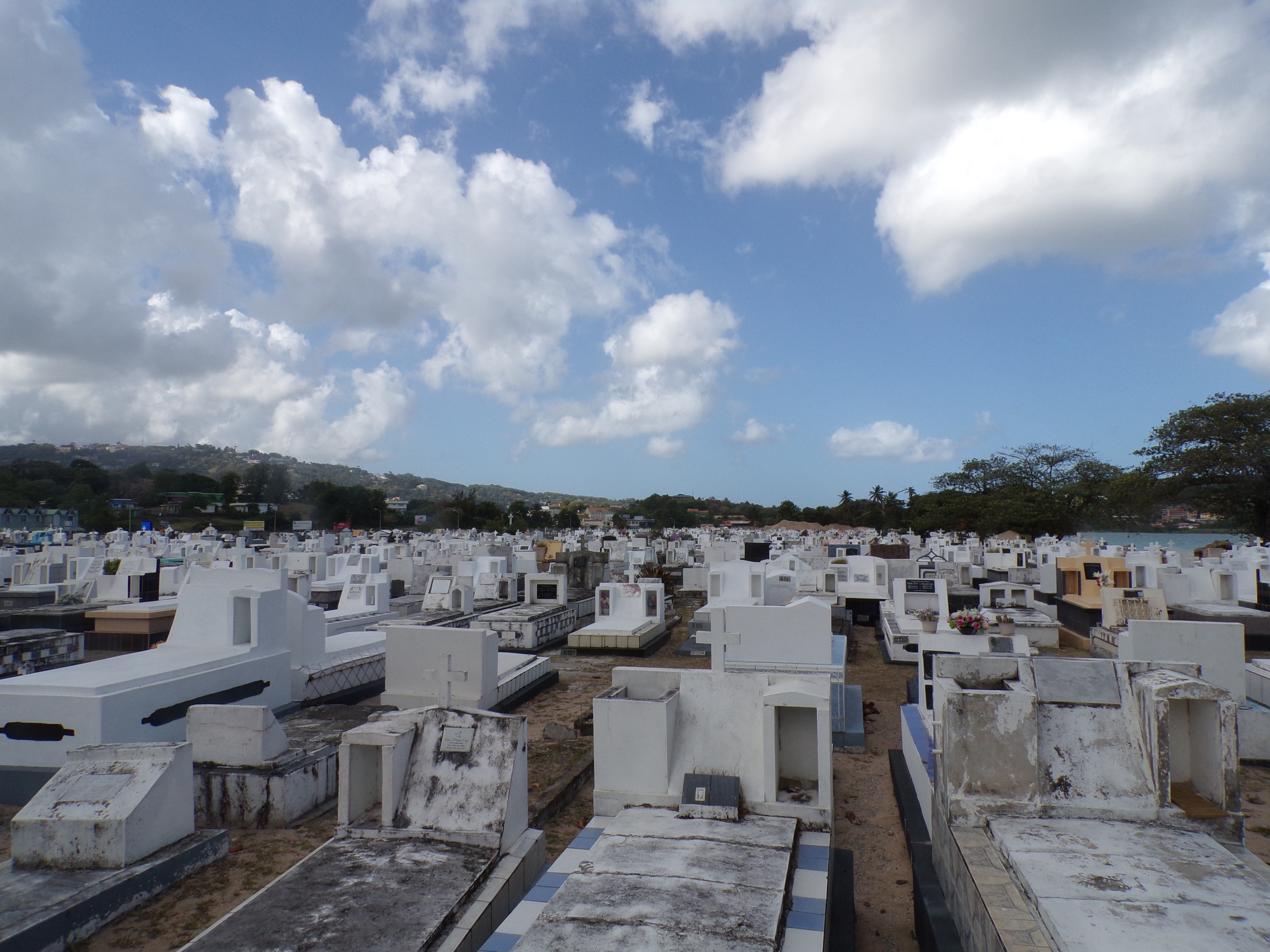
When planning our cruise, we had earmarked this port as one of our designated chill-out days. So, after an early breakfast, we disembarked as soon as allowed at 8:30 am and set off on foot for Vigie Beach. The walk took us through the town and along the landward side of the island’s airstrip, a journey of about half an hour. The beach itself was a narrow strip of silver sand, fringed with trees, running parallel to a densely packed cemetery, which in turn separated it from the seaward side of the airstrip.

We secured a prime spot under a large, leafy tree that leaned precariously over the beach, providing much-needed shade. Our chosen location came with added intrigue; it was right next to a long rectangular section of the graveyard. Despite being within 500 metres of a small hotel, the beach was relatively deserted, save for the occasional passerby enjoying the warmth of the sea lapping at their toes.
Apart from a few obvious locals, most of those strolling by were English, either staying at the nearby hotel or visiting from one of the cruise ships. From one couple, we learned that the graves behind our little encampment were Commonwealth War Graves (Choc Bay War Cemetery). We spent the entire morning under the tree, paddling in the waves and chatting with those who passed by.
 As a finale to our morning, we strolled down the beach until the novelty of sun, sand, sea, and the occasional light aircraft taking off or landing began to wane. When we returned to our earlier spot, we found it had been claimed by another couple, so we continued along the beach to the hotel frontage, stopping for a while to lounge on one of their comfortable, shaded beach sofas. Somewhat disappointed that no staff approached us to offer drinks, we moved on to a small beach stall, where Sue spotted a pretty little dress, perfect for Sarah’s baby girl, and promptly made a purchase.
For our return journey to the ship, we chose a different route, following a road that led us over a small hill and through the bustling suburbs of Castries. The streets teemed with motorised traffic of all kinds, yet the drivers displayed remarkable awareness of pedestrians, giving them a wide berth and stopping without hesitation whenever we indicated our intent to cross.
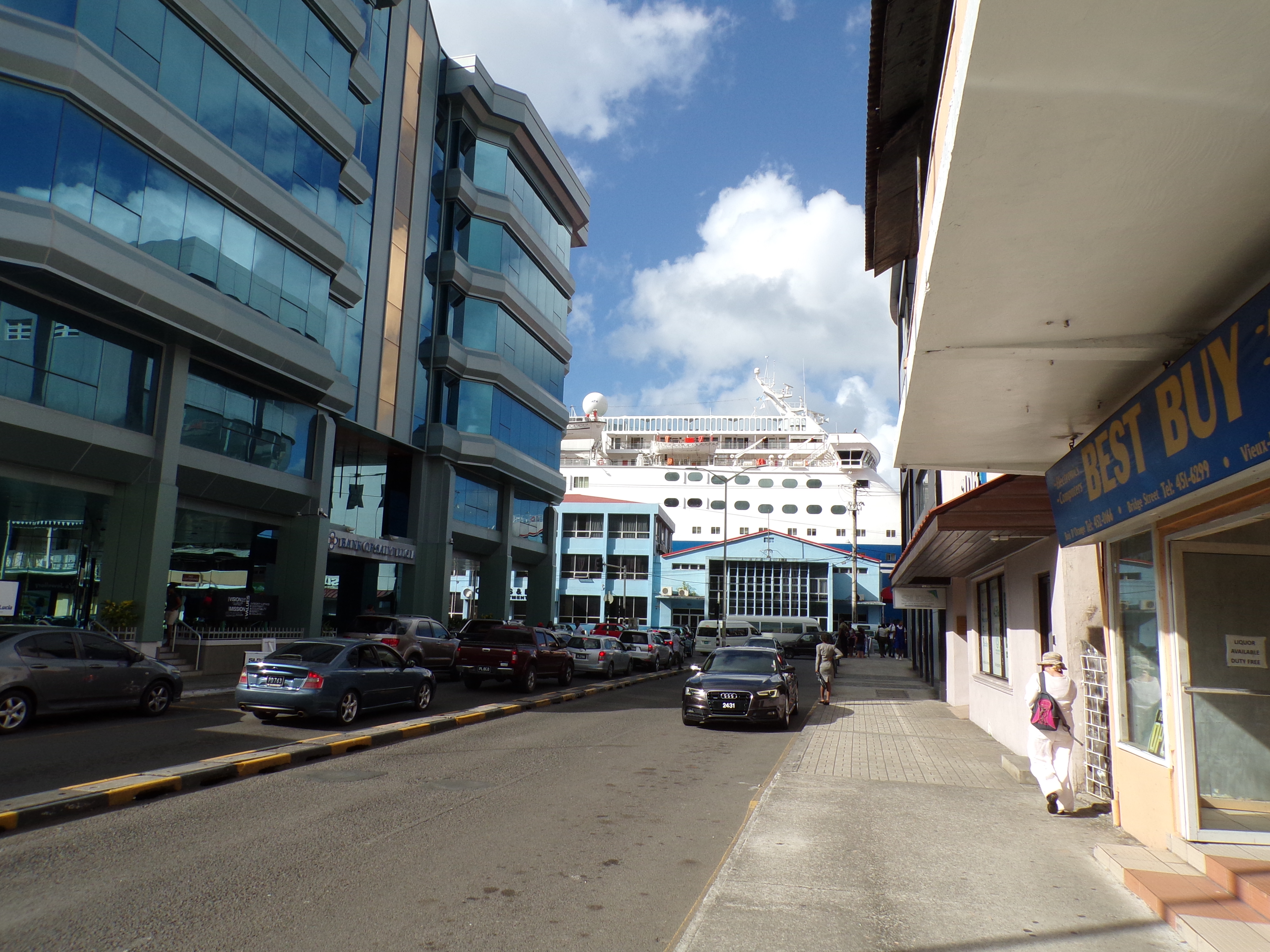
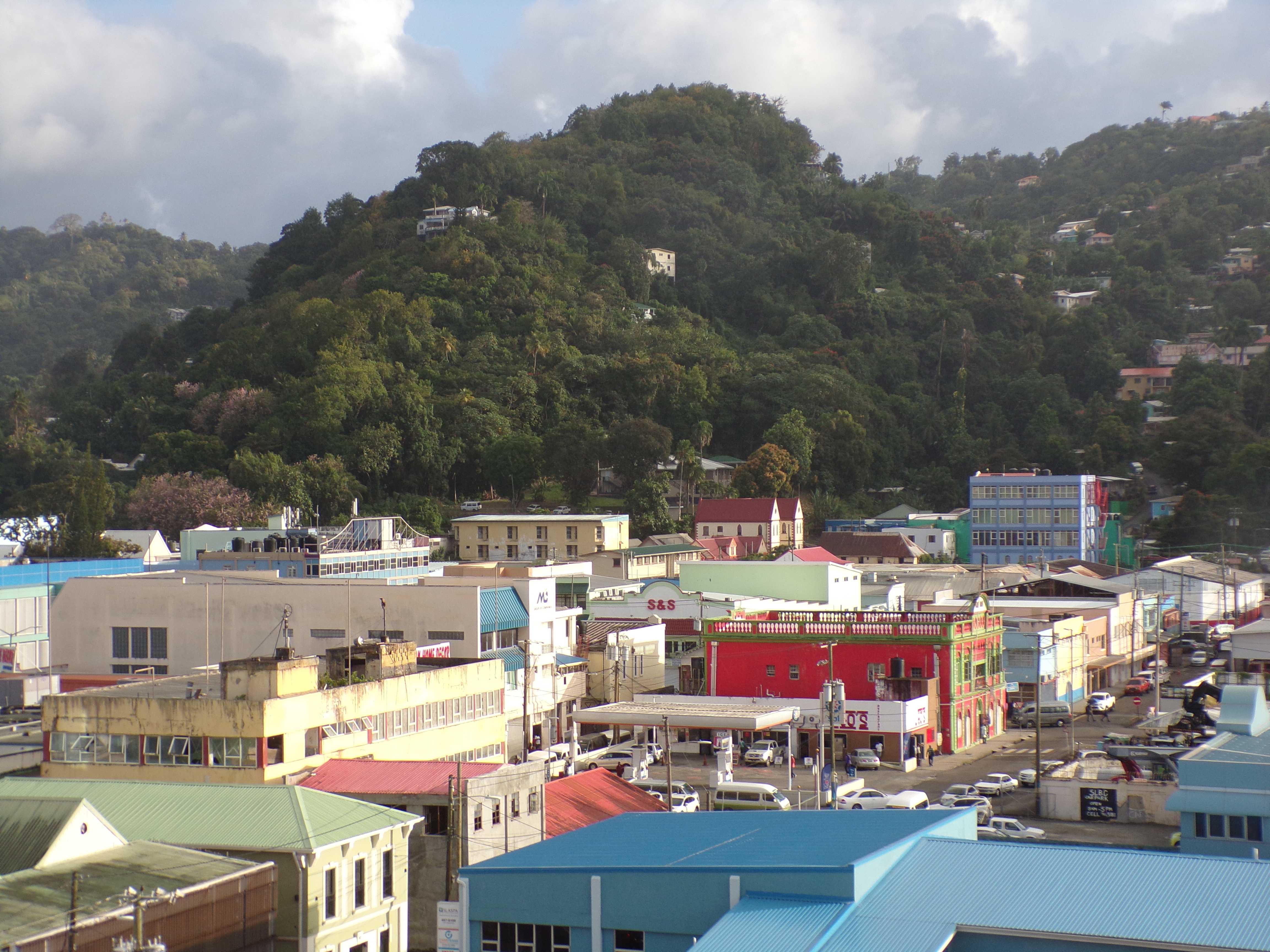
The city centre was a frenetic hive of activity, its noise and energy more reminiscent of a much larger metropolis. A small river meandered through the shopping district, but rather than adding charm, it served as a stark contrast, more an open sewer than a waterway, its filthy black currents carrying an assortment of debris downstream. It was a disappointing sight, an unfortunate blemish on a city otherwise framed by lush green hills dotted with elegant, expensive-looking homes.
On our way back to the Magellan for lunch, we passed a few unfortunate beggars. The contrast between their struggles and the comfort awaiting us on board was sobering. There but for the grace of God go I, I thought. It never sits well in my mind when I choose not to be a good Samaritan.

With our appetites satisfied, we once again plunged into the organised chaos of Castries; conveniently, the Magellan was berthed less than 50 metres away. We navigated the maze of narrow, dimly lit passages lined with stalls selling all manner of colourful and touristy trinkets alongside an array of fresh fruit and vegetables. Surprisingly, we spotted a couple of fellow passengers buying mangoes and papayas. Surely, they couldn’t still be hungry?
During our wandering, we stumbled upon the cathedral by chance. Outside a side door, a large crowd dressed smartly in red and black had gathered, and from within, the solemn tones of a sermon drifted out. Ever inquisitive, we stepped through the door and saw that every seat was occupied; a funeral was taking place. A well-dressed gentleman leaning against the entrance caught my eye, and I sheepishly suggested, “He must have been a very popular man.” His response was a noncommittal “Maybe.”
Curious, we made our way around to the cathedral’s main entrance, where we found the adjoining square and surrounding streets similarly packed with mourners in red and black. A large group stood out in matching football kits, and as we struck up a conversation with a woman seated nearby, she explained that she had been born in London but moved to Antigua six years ago. The deceased, she told us, had been a prominent supporter of the island’s Labour Party (whose colours were red and black) and was also involved with the local football team. She confessed she had never seen such a large funeral gathering before; many in attendance, like herself, had never met the man but had come to pay their respects. Clearly, he was well-regarded in St. Lucia. Unfortunately, we never caught his name, though later, a bit of online research led me to a rather unsettling news article in the St. Lucia Times.
Moving on, we spent some time hunting for a dress for Sue, but despite sifting through what felt like a million possibilities, none met her exacting standards. However, it didn’t take me nearly as long to stock up on my small cache of local beers; it pays not to be so fussy.
We made sure to be back on the ship by 4 p.m. for a special performance in the theatre by students from the St. Lucia Dunnottar School for children with developmental disabilities. The group consisted of a small calypso band, eight children accompanied by a remarkably talented teacher who had nurtured them into producing some truly beautiful rhythms. Their proud mothers, acting as chaperones, could be seen joyfully swaying in the wings, unable to resist dancing along to the infectious tunes.
Needless to say, they were a huge hit with our fellow passengers. By the end of their performance, they had earned a well-deserved standing ovation. The look on the children’s faces as we clapped and clapped was priceless, pure joy and pride. I have no doubt the collection taken afterwards was substantial, helping to support the school and, perhaps, purchase more musical instruments. It also eased my earlier pang of guilt for not being more philanthropic, though, truthfully, nothing could match the gift those children had given us that afternoon.

Our next-door neighbours choose to holiday in St. Lucia every year and absolutely love the island. I can see why. It has a certain charm, with its natural beauty and warm atmosphere. However, of all the Caribbean islands we’ve visited so far, the gap between rich and poor has been most striking here. The lack of attention to health and safety in urban areas is also concerning, and I can’t help but feel that the island’s leaders should be addressing these issues more urgently. Ideally, tourism should benefit the local population as a whole, but I’m not entirely convinced that it does here.
The funeral we stumbled upon left me uneasy, and what I later read about it only deepened that feeling. It seemed at odds with the polished image the tourist board would prefer to project. The gentleman in question had been murdered by an unknown person, which may have been revenge for his indiscretion with a very young girl. Perhaps I’m being overly critical; I hope so.
 Palmer Family
Leave a comment