8th January 2019
A delay in refuelling meant we didn’t leave our berth in Amsterdam until midnight, by which time we were snug in our cabin, asleep.
The following sea day meant that, on waking, we read the ship’s daily magazine in earnest and planned our activities between meals and the evening entertainment. I had intended to visit the gym for the first time, but a sore ankle, already troubling me for a couple of weeks, had not been helped by our city ramble the previous day, so that plan was postponed.
Instead, we attended two quizzes, a bingo session, and an interesting lecture on Liverpool.
We were becoming more familiar with the ship’s layout and were retracing our steps less often, though this probably meant we were getting less exercise. To compensate, we decided to forgo the lifts and stretch our legs by taking the stairs.
That evening was a formal affair, preceded by the Captain’s Welcome Reception (DJ attire required). We were first in the queue to be presented to our tall Greek ship’s captain, a mild-mannered man with a soft handshake. After a quick photograph, we took seats beside a single elderly lady from Germany, who was second in the line. A glass of champagne was followed by delicious canapés, then several more glasses of plonk while we waited for the captain to greet the rest of the guests.
Despite the language barrier, we managed a conversation with our seating partner. She was 79 years old and travelling on the full World Tour (120 days), with plans to celebrate her 80th birthday in Mumbai. She lived near the Dutch border but had started her journey in Tilbury rather than Amsterdam. She seemed rather annoyed that her travel agent had routed her via flights from Düsseldorf to Amsterdam, then Amsterdam to Gatwick, followed by a long transfer to Tilbury, when she could have boarded directly in Amsterdam. However, she appeared fit and alert for her age, as evidenced by the fact that just a couple of years ago, she had spent four months flying around South America, an adventurous feat at any age.
Once all hands had been shaken, the captain and his senior officers took centre stage to introduce themselves and wish us a pleasurable journey.
The evening show was a dance extravaganza, fittingly titled Anchors Aweigh, featuring well-known nautical tunes performed in a variety of sailor outfits. The ship’s resident singers provided the soundtrack, with enthusiastic support from a well-oiled Sue; the champagne either had magical properties or a rather high alcohol content!

Our evening meal was once again with Ian and Diane, with the remaining two place settings stubbornly unclaimed.
The following morning, alongside attending the quiz sessions, we played Jackalo, a long board game where players push wooden discs down a board, aiming to get them through small openings that attract various scores. It was fun but frustrating, with plenty of room for improvement.
The afternoon was taken up with a lecture on first names, followed by another quiz and a game of Scrabble. As we moved from one activity to the next, we passed by several others that seemed enticing, but you can’t do everything, can you? However, we did pause to listen to the newly formed passenger choir rehearsing Moon River, a rather enchanting performance. A shame, really, that Sue and I have voices that more closely resemble mating toads!
That evening’s entertainment featured a stand-up comedian from Wolverhampton. His repertoire of gentle humour managed to (mostly) avoid offending any particular category of humanity, a skill essential for any entertainer hoping to secure a long or repeat contract on a multinational cruise.
A Full Day at Sea – 9th January
The day was packed with activities, quizzes, lectures, and more. I opted out of a seminar on pain control, leaving Sue to attend while I finally made it to the gym for the first time. When we met back in our cabin, I learned that Sue had left the lecture soon after I had. The session’s core message, that pain is not good for you and is a symptom of something being wrong with your body, was hardly a revelation, so she retired early for coffee in the restaurant. Perhaps the next lecture would prove more informative.
Later, we watched our first onboard film, The Commuter, a Liam Neeson action thriller. The plot required its audience to suspend disbelief, expecting us to accept both that Neeson’s 60-year-old character could fight like Mike Tyson and that the rich and powerful might engage in sinister cover-ups. I found one of these concepts much harder to accept than the other. Can you guess which?
That evening’s show was a pantomime, Aladdin. Having seen a more polished production in Kettering over Christmas, this version was hilarious for its sheer amateurishness, plenty of fun and laughter from both cast and audience alike.
We have taken to doing a couple of turns around the deck after dinner, and it is becoming noticeably warmer each evening as we sail further south. Summer days are here again.
Life On Board
The ship carries 1,200 passengers and 620 crew, representing 28 nationalities. As this is an adults-only voyage, there are no children on board. The passenger demographic leans heavily toward the retired bracket, with only a few younger travellers (not many professions allow for four months off to complete the full World Tour). That said, a handful of passengers are working while enjoying the facilities. I came across a writer the other day, who was bitterly complaining about the patchy WiFi, though others seemed to be making do, laptops open, screens filled with spreadsheets and documents. So far, I have resisted the temptation to ask what they are working on and why.
We are now becoming familiar with the faces of our fellow travellers, and greetings are growing warmer as the days pass. With all of us in the same boat, there’s a natural incentive to be sociable. No meal passes without an exchange of pleasantries, and inevitably, conversations turn to familiar topics: How many cruises have you been on? Where are you disembarking? Where are you from? Have you been to…?
Curiously, there has been no mention of UK news, and Brexit has yet to surface in conversation, not even among the foreign passengers. What a relief.
If a chat lasts long enough, relationships and family inevitably come up. We were surprised to learn how many couples we’ve met aren’t actually couples at all; they met on previous cruises, live separate lives in different parts of the UK or Europe, and reunite on board for the next voyage. It makes sense; rather than pay a hefty single supplement, they book as a pair and share a cabin, saving a small fortune. On past cruises, we’ve noticed a scheduled daily meetup for single travellers; perhaps this is where such arrangements begin. There’s no singles gathering on Columbus (perhaps the job is already done?), but there is a club listed as ‘Friends of Bill W.’, a meeting point for Alcoholics Anonymous passengers, held daily at 5 pm in the Aft Observation Lounge. Someone clearly has a sense of humour.
Arrival in Ponta Delgada – 10th January
At 8 am, we docked gently in Ponta Delgada, so smoothly that if our alarm hadn’t gone off at the same time, we would have been unaware that we had reached our second port of call. Over breakfast, we looked out to see a grey morning and a town already bustling with activity.
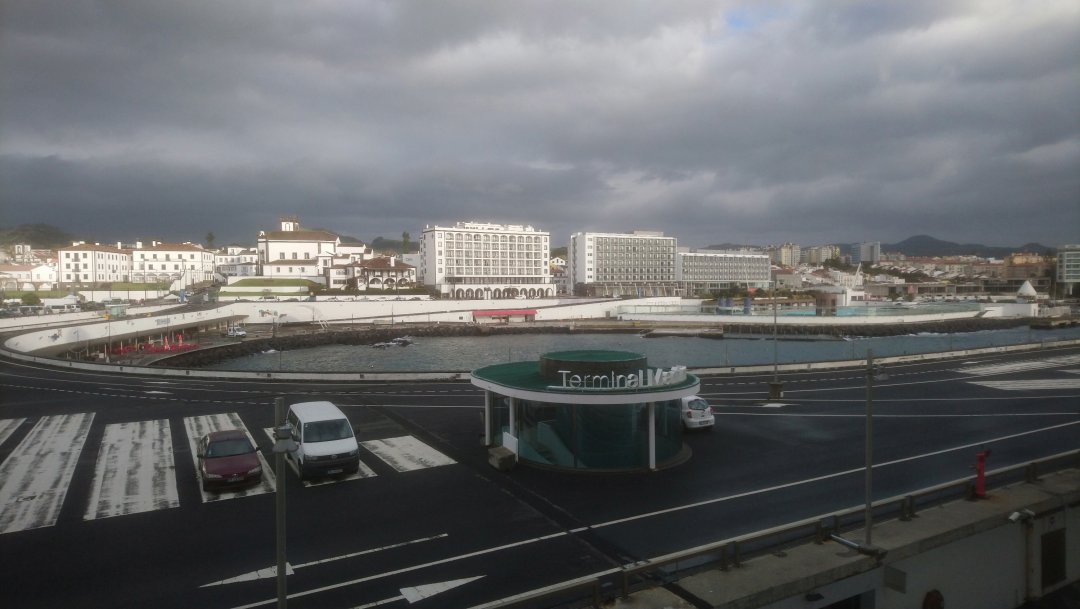
We had holidayed in the Azores a few years ago, so we felt no need to join an organised tour to explore the island; we had already done so and fallen in love with the place. By the time we disembarked, the day-trippers had already set off on their adventures. Ignoring the polite offers from taxi drivers at the end of the pier, we strolled into town, weaving through its charming black-and-white cobbled streets and immersing ourselves in Azorean culture.

First, we headed to the one landmark we knew would help us get our bearings, the Collegio Hotel, which had accommodated us on our previous visit. It remained unchanged, still exuding a sense of warmth and security. Why do we always feel drawn back to places we have visited before?
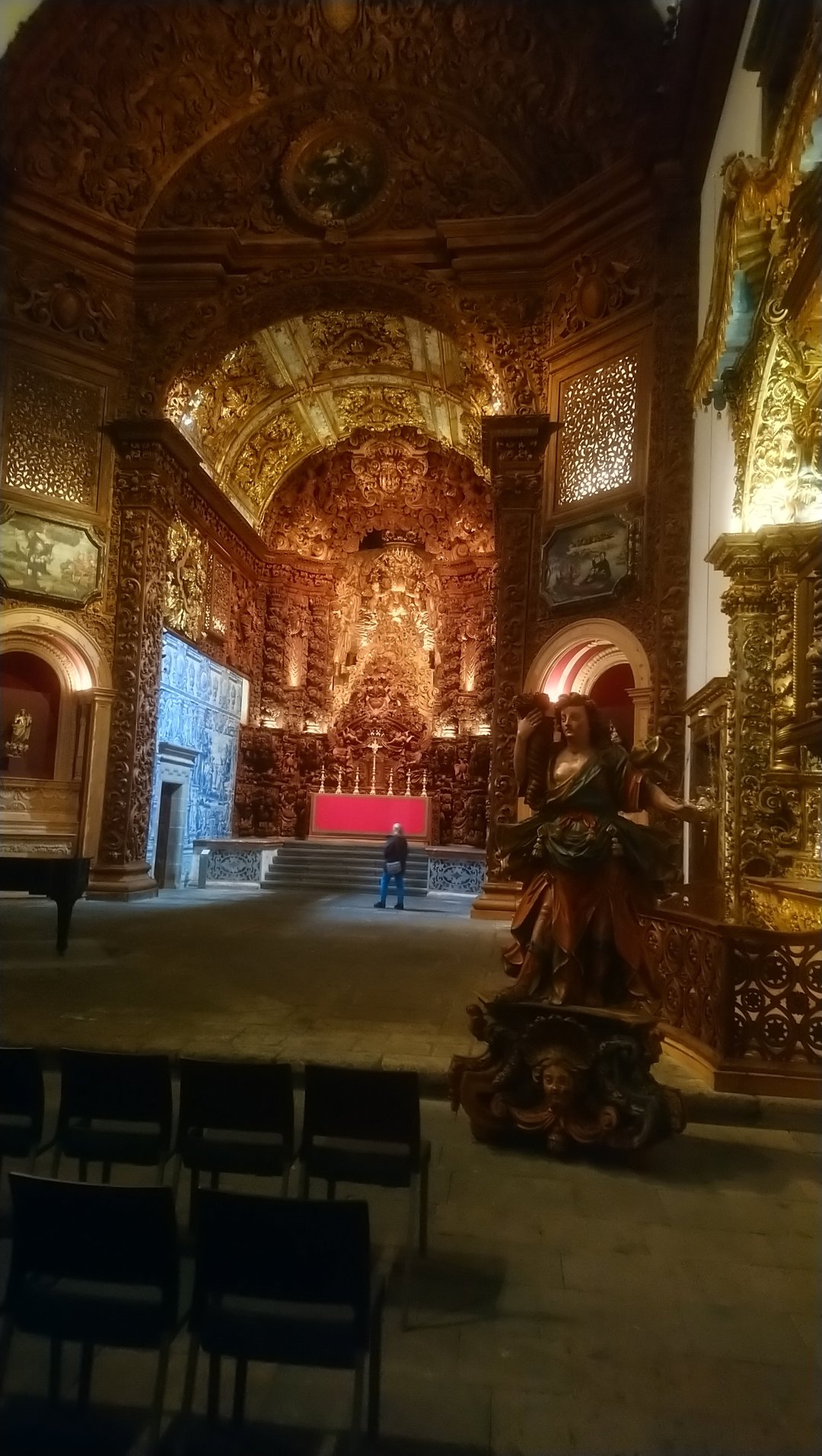
Nearby, the Arts and Culture Museum (Dept. of Sacred Art of C Machado) was open. We had attempted to visit several times in the past, only to find it closed. This time, we finally stepped inside, embarrassingly paying only 90 cents for a €1 entrance ticket (the staff kindly waved us through, perhaps they took pity on us as pensioners). The museum is housed in a former church, originally built by the Jesuits before they were expelled from the island during the Reformation. The grand altar was a masterpiece of intricate carvings, teeming with elaborate designs and figures, the most complex we had ever seen. It was originally intended to be covered in gold leaf, but the Jesuits’ departure left it unfinished. In our opinion, it was all the better for it.
Our modest 90-cent contribution seemed to earn us a personal guide, who enthusiastically recounted the building’s history and detailed the many artefacts displayed throughout the museum. We finished our visit with an exhibition on Azorean roof tile production, which I found particularly fascinating. Sue, however, seemed less enthralled, but then again, having re-roofed my stepbrother’s Bulgarian home with similar pantiles a few years ago, I had a special appreciation for the craft.
We returned to the ship for lunch before heading back into town, stopping first at an ATM to withdraw some of the devil’s coinage, the Euro.
Our next destination was the Palace of Santa Ana (Jardim do Palácio de Sant’Ana) and its gardens. The site houses the offices of the current Azorean President within a striking black-and-white mansion-like building, an architectural style seemingly obligatory in the region. While the palace itself was off-limits, we took our time wandering through the beautifully maintained gardens. Conveniently, the trees and shrubs were all labelled, inviting us to read, discuss, and admire them, which, of course, we did.

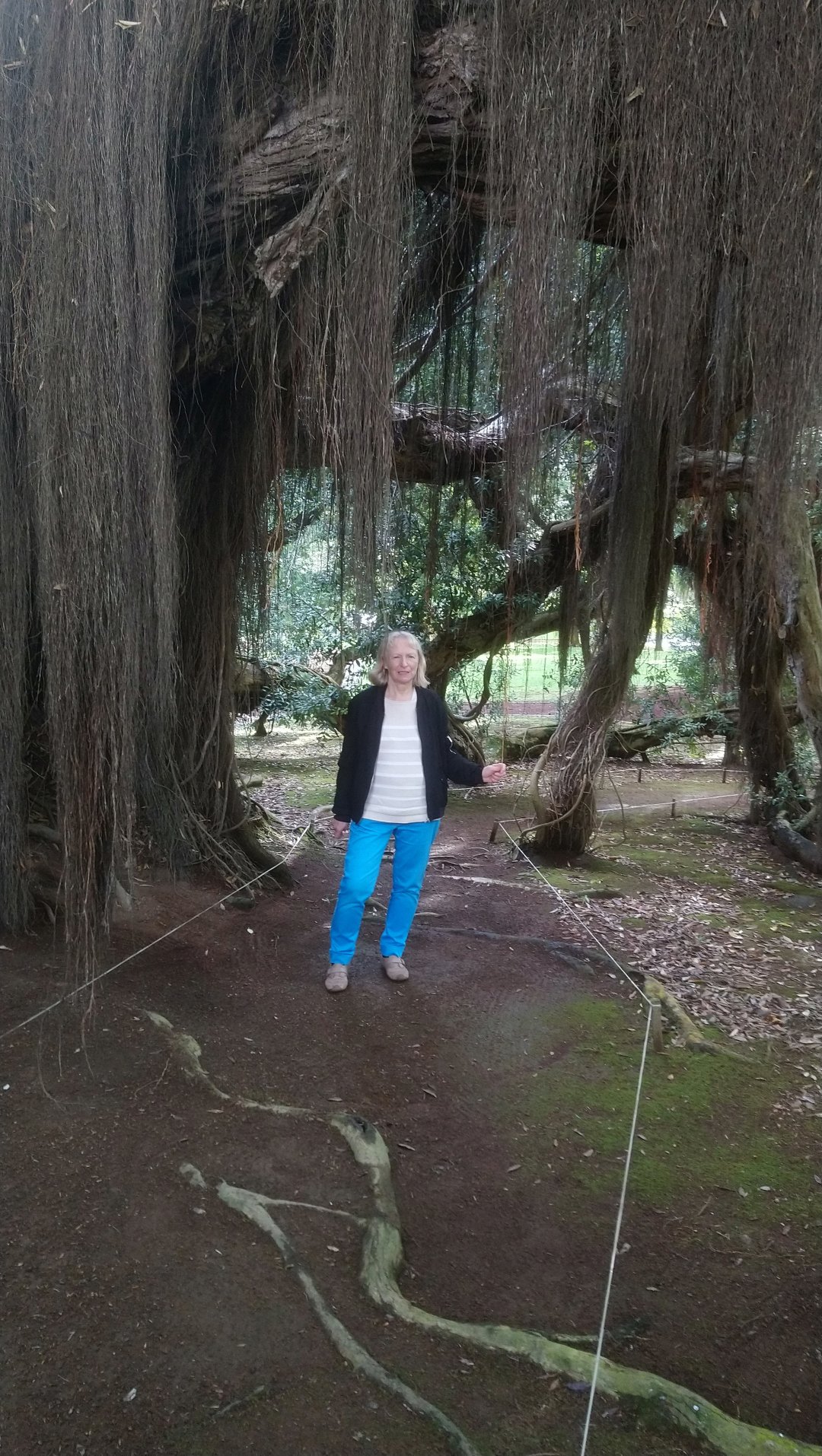
Still not content with our intake of floral knowledge, sights, and scents, we were fortunate to find the Botanical Gardens (Jardim Botânico José do Canto) just down the road. This garden, too, featured an impressive building, though it was off-limits to us, as it now serves as a 2-star hotel, the former home of José de Canto, a Portuguese landowner and intellectual who distinguished himself as a bibliographer and promoter of new agricultural technologies and species into the Azores. We began our visit by exploring the small Chapel of Santa Anna near the entrance, which was likely where José once prayed. The gardens themselves were vast, home to an array of tree and shrub species, all carefully labelled for our benefit, a task which required some time, but one we dutifully embraced. I don’t think we missed many. However, one particularly large specimen took it upon itself to drop seeds onto us from a great height, painfully so. After confirming that it was the tree playing tricks and not, as had happened before, a troop of monkeys having fun, we hurried on, none the wiser about its species, origins, or size. That particular tree shall remain a mystery.
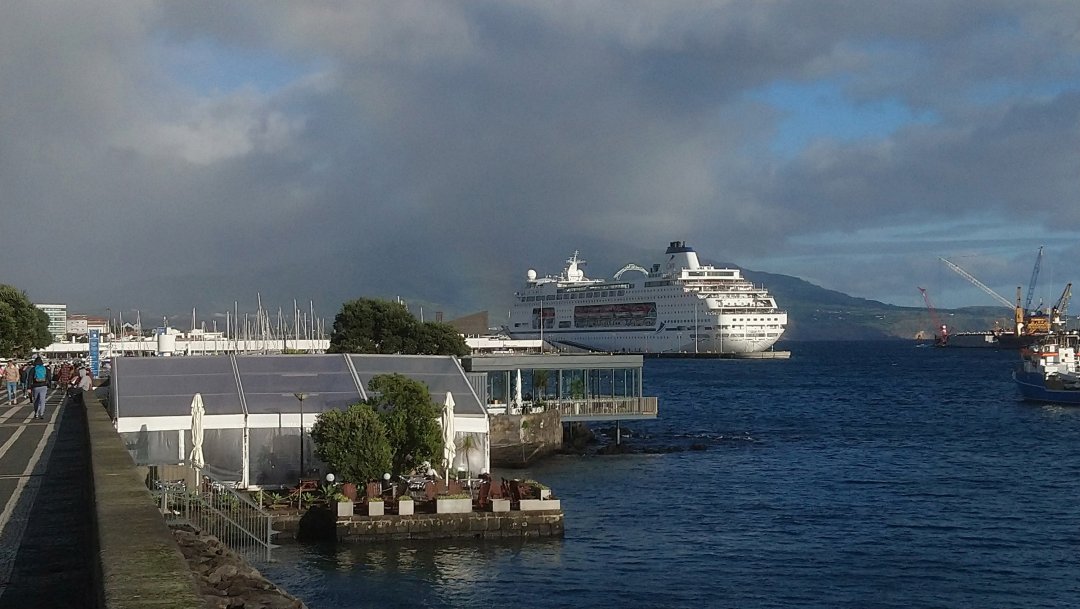
Our next stop was the fortress by the harbour. We had taken many photos there on our previous visit, so, with my feet sore (my watch informed me I’d taken 11,597 steps since waking), we simply checked that it was still in the same condition as we had left it. We then made our way back to the ship for a much-needed coffee and a well-earned rest for our feet.

The evening show featured an excellent concert of classical singing accompanied by a violin.
The captain informed us that a sea swell of 4-5m would persist throughout the night and into the following day. This should prove interesting!
 Palmer Family
Leave a comment