23rd September 2018
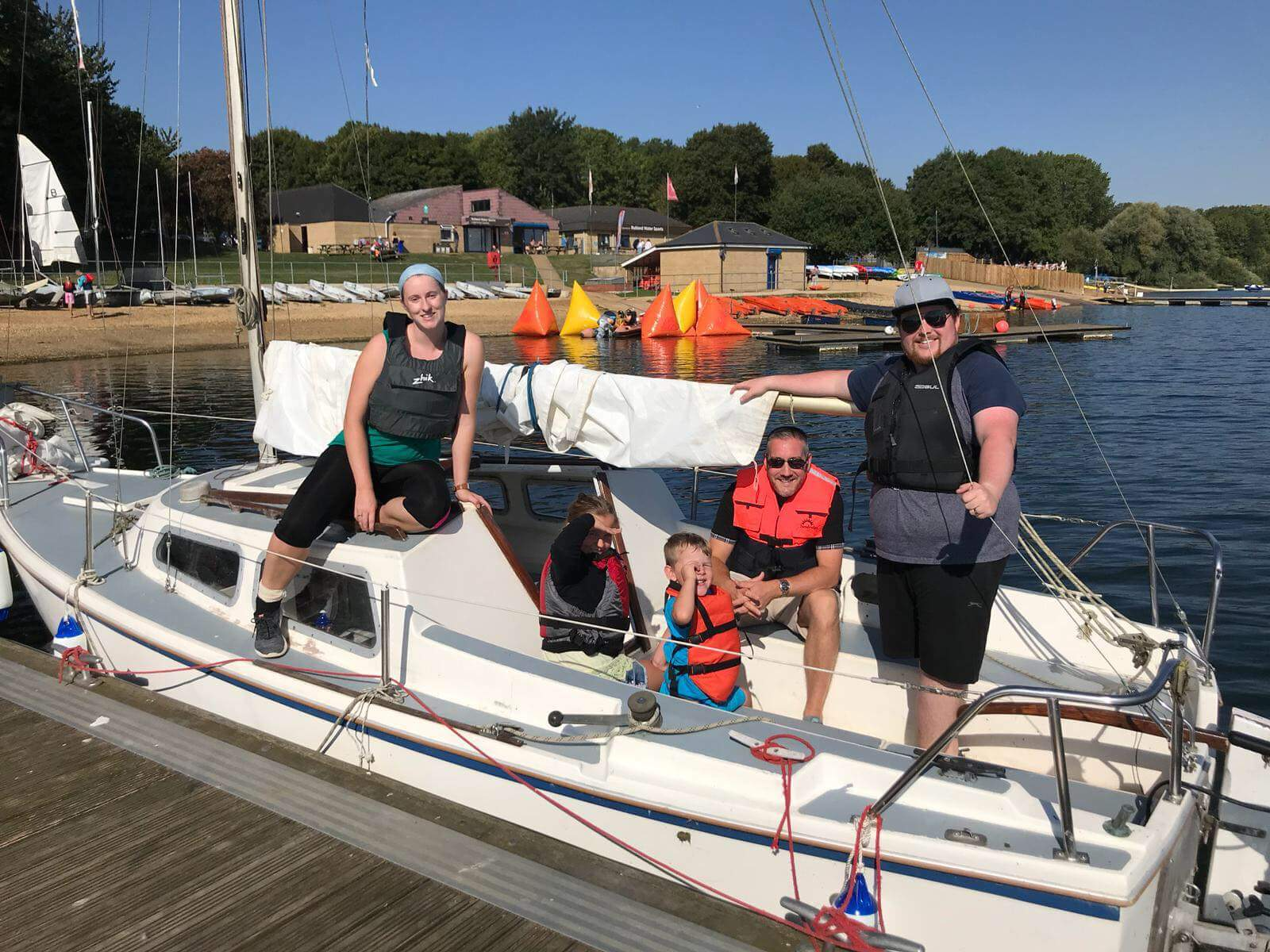
Over the August Bank Holiday, I went sailing with Sarah and Lee. They had honed their boating skills over a pleasant but sweltering summer and felt confident on the water. However, with the wind up on this occasion, they felt they needed Dad to show them how to handle more challenging conditions.
Things started well, but a minor mishap, Lee straining his wrist while lowering the keel at the jetty before raising the sails, would later have unforeseen consequences.
Up until lunchtime, the sailing went brilliantly. The sails were full, and Annie proved highly responsive to the conditions, heeling over nicely and zipping along at a good pace. It took Lee and Sarah some time to adjust to the stronger winds they hadn’t encountered before, but after a few panicked moments, they settled into a rhythm, allowing them to start enjoying what their Catalina 22 was truly capable of. After a couple of hours on the water, we returned to shore for a delightful picnic lunch.
 The afternoon sailing session did not go well. Their usual approach is to motor out of the small bay where the boats are launched before raising the sails once clear of other water users, canoeists, windsurfers, and the like. This strategy works well in calm conditions, but today was different.
Sarah and I struggled to raise the mainsail, finding it almost impossible to haul up such a large area of canvas against a rapidly strengthening wind. Meanwhile, Annie was being swiftly blown towards the dam wall, and to our frustration, we had no control over her; she simply wouldn’t turn into the wind, despite Lee working the tiller. It took me a moment to realise the problem: the motor was still running, propelling us steadily towards disaster. The instant we switched it off, Annie obediently turned into the wind. While Sarah gave it her all hauling on the mainsail sheet, I fed the canvas into the mast, then took over and sailed her safely away from danger.
For the next hour and a half, Sarah and Lee took charge of their yacht, practising in conditions that had become quite demanding. I could see them starting to work as a team, beginning to grasp that sailing requires complete concentration and plenty of preplanning; every move needs to be discussed in advance. With valuable lessons learned and confidence growing that Annie could handle anything short of a hurricane, we set course for the jetty and her trailer.
As with departure, their routine is to lower the sails upon entering the bay and cruise in using the electric motor. However, this time, with the sails down, the motor cut out about 100 metres from the jetty, and the battery was flat. Drifting slowly towards the shore, we had no choice but to call for a tow from the rescue craft on duty. There simply wasn’t enough time to raise the sails and make our way before running aground.
 Tied up alongside the pier, we called for the tractor to haul Annie out on her trailer. That was when we discovered a major problem: the keel was still down. We had assumed it had been raised, but as Annie was pulled onto the trailer, the two rear supporting hull pads snapped off. It didn’t take long to piece together what had happened: when Lee had strained his wrist earlier in the day, the keel cable must have snapped, leaving us unable to lift it.
This presented a serious dilemma. We couldn’t get Annie out of the water with the keel down, nor could we load her onto the trailer with two of the supporting pads missing. With no immediate solution, she was towed once again to a quieter pier and secured there until we could figure out what to do. As we left, I took one of the broken pads with me.
The trailer repair was relatively straightforward, but raising the keel required much more thought. A couple of days later, I returned with Peter. Using the broken pad as a template, I made two new ones and replaced them while Peter freshened up the trailer with a coat of smart grey paint. A few days later, I returned with Mia and replaced the front two supporting pads as well. They were in poor condition, and it made sense to renew the lot.
That weekend, while Annie remained in the water, Sarah and Lee took some friends for a quiet, incident-free sail.
 It isn’t possible to replace the keel cable while in the water, so we had to find a way to raise it to get it onto the trailer. Lee bought a long length of strapping and a ratchet connector to do the job. He dropped it off in Harborough for Peter and me to attempt it. It worked! By running the strapping under the hull until it caught on the dropped keel, we allowed it to sink a little way down the keel, and then by pulling back, we managed to tilt it to around 45 degrees. Keeping it under tension, we brought the strapping vertical to the boat, then connected the ratchet to the two ends and tightened further until the keel was squeezed fully up. The gods were smiling at us. I had expected to be there all day, endlessly repeating and refining the process until we either completed the task or gave up!
The tractor arrived with the trailer, and she was soon back on dry land, ensconced with her other chums in the boat park. How we replace the cable is a problem that requires further thought.
The start of September was a busy time for the Rothwells. Charlotte’s birthday fell on the 2nd, followed by her and Suraj’s wedding anniversary on the 3rd. The 4th was both Suraj’s birthday and the date of Charlotte’s spine operation, while the 5th marked Lucas’s first day at secondary school, and Ellis is moving into Year 4. They celebrated Charlotte’s birthday with a trip to the seaside at Wells-next-the-Sea. It was a gloriously warm day, giving them all a much-needed break and allowing Charlotte to enjoy one last outing before being housebound for a while after her operation.
 Suraj had booked a significant amount of time off work to ensure he could look after Charlotte following her operation. The day before, Sue and I had Ellis and Lucas stay, giving Charlotte the chance to get a decent night’s sleep.
That evening, I took the boys to Sarah and Lee’s for a fish and chip supper before heading to Leicester Lions to watch the speedway. None of us had been before, and I was probably the most excited, and it turned out to be a fantastic night. By sheer luck, we had chosen the final meeting of the year, which also happened to be the club’s 90th-anniversary celebration. Leicester had endured a tough season, sitting at the bottom of the league without a single win to their name, and they were up against the reigning champions, Somerset. Against all odds, they triumphed, even while racing against the world champion, New Zealander Jason Doyle.
 Charlotte was scheduled for her operation early in the morning as the first on the list. However, due to difficulty in finding a suitable vein for a cannula, likely worsened by exhaustion from a worried and sleepless night, she wasn’t taken into surgery until late in the afternoon. What should have been a 1.5-hour procedure ended up lasting 4.5 hours, making for a long and stressful day.
The surgeon was pleased with the outcome, and when we visited her the following day, although she was understandably sore and in pain when she moved, she was already able to lift her right leg and rub her feet together, something she hadn’t been able to do before. She looked exhausted but was feeling positive about her recovery.

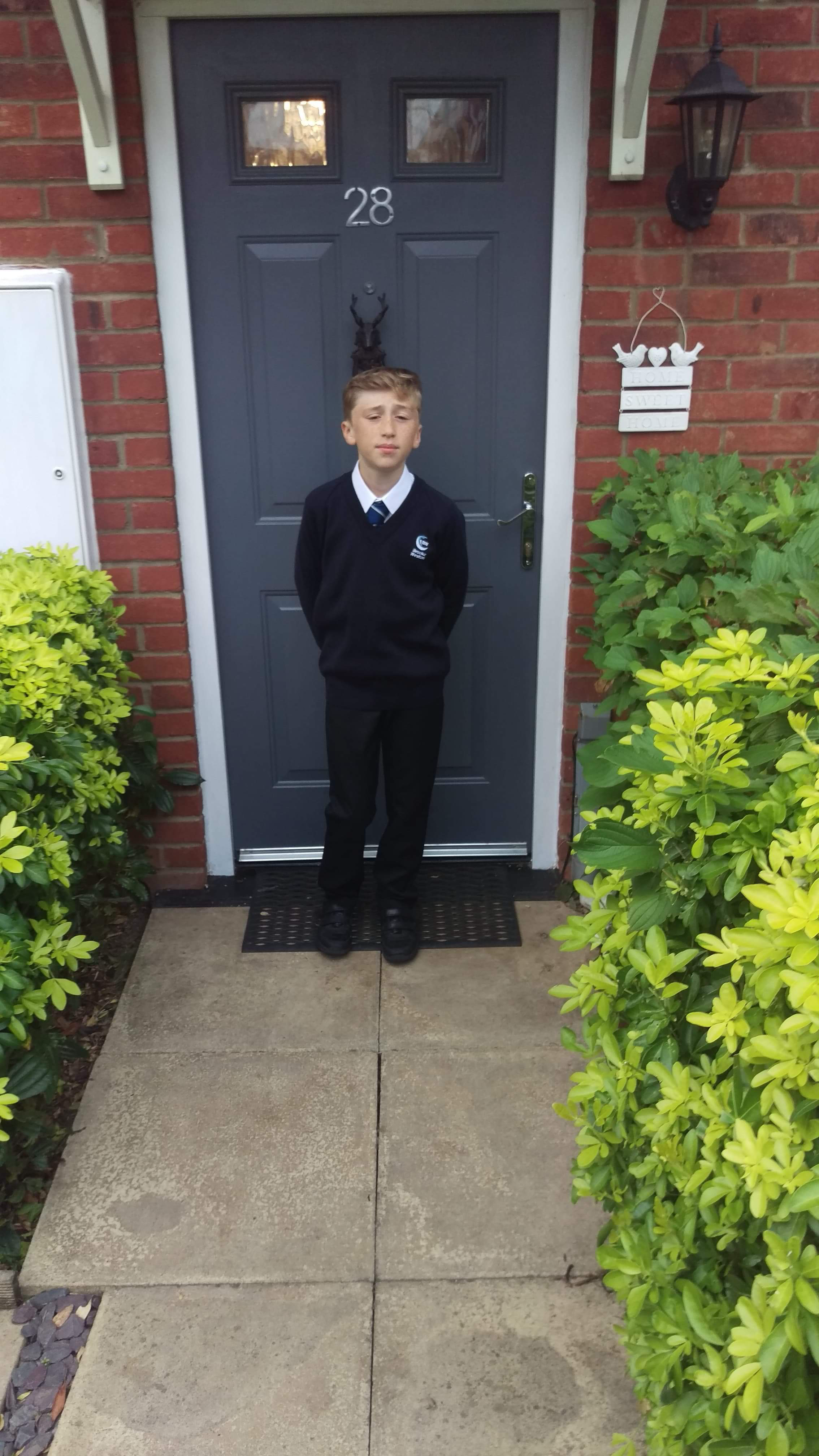 Meanwhile, Suraj had the responsibility of getting the boys ready and off to school for their first day of the new academic year. Despite the unusual circumstances, he handled it well, though Charlotte had made sure they were well-prepared in advance.
On 7th September, we had Mia stay for a few days while Lee and Sarah jetted off to Geneva for a well-earned break. They stayed in a lovely Airbnb and seemed to make the most of every sightseeing and cultural opportunity. From what they shared on Messenger, they were thoroughly impressed with the city, the lake, and the lifestyle, so much so that I suspect they wouldn’t mind relocating there. (Shall we keep Mia, then?)
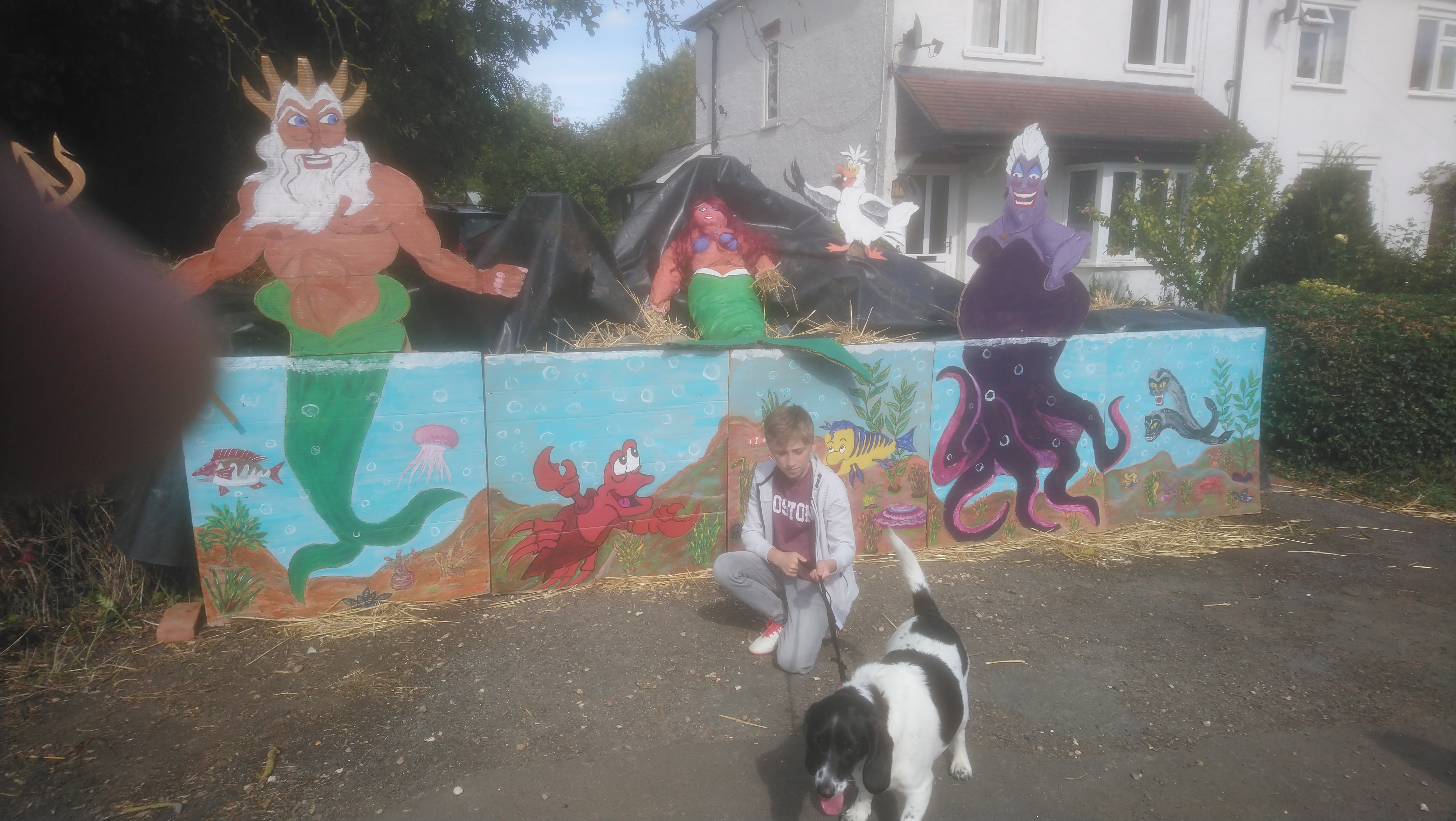
On 9th September, Sue and I took Lucas and Ellis to the Lubenham Scarecrow Festival. We go most years, weather  permitting, but this time it seemed bigger and better than ever. There were more scarecrows, more attractions, and more visitors than in previous years, a fantastic boost for the village funds and associated charities.
On the 11th, Charlotte’s car was collected for its annual service from our driveway, where it had been parked since last February. Annoyingly, the garage mishandled the paperwork for the manufacturer’s warranty, and later that day, it was returned without its service. It’s now rebooked for November. On the bright side, it did at least get a proper drive, something it hadn’t had in nearly eight months.

 The following day, my Fiesta went in for its MOT and passed with flying colours, probably helped by the fact that I had cleaned the inside for the first time in a year!

On the 14th, I went for my final eye injection. I recently came across an article about the NHS and Lucentis (my medication) and was stunned to learn that each injection costs £582! Thank you, Aneurin Bevan, without your vision (not a pun), many of us would either be very poor or just plain blind.
On the 20th, Mia arrived for another stay. This time, Lee and Charlotte were away with Lee’s extended family, celebrating his stepfather’s 60th birthday. There are 18 of them staying in a cottage in Lincoln (good luck with that!).
 Despite Charlotte’s current predicament, she has always put others before herself. A true testament to this is the thoughtful and kind-hearted initiative she has been working on through the trials of the past year. Close to her home, there is a road bridge over the A14, known to be a suicide hotspot. Despite her own struggles, Charlotte was determined to make a difference. She set about doing something about it, enlisting the help of friends, family, and social media. Her idea was to display sympathetic messages on the bridge to encourage those in despair to reconsider. The week before she went into the hospital, Charlotte, along with her loved ones, hung the messages she had created on the bridge.
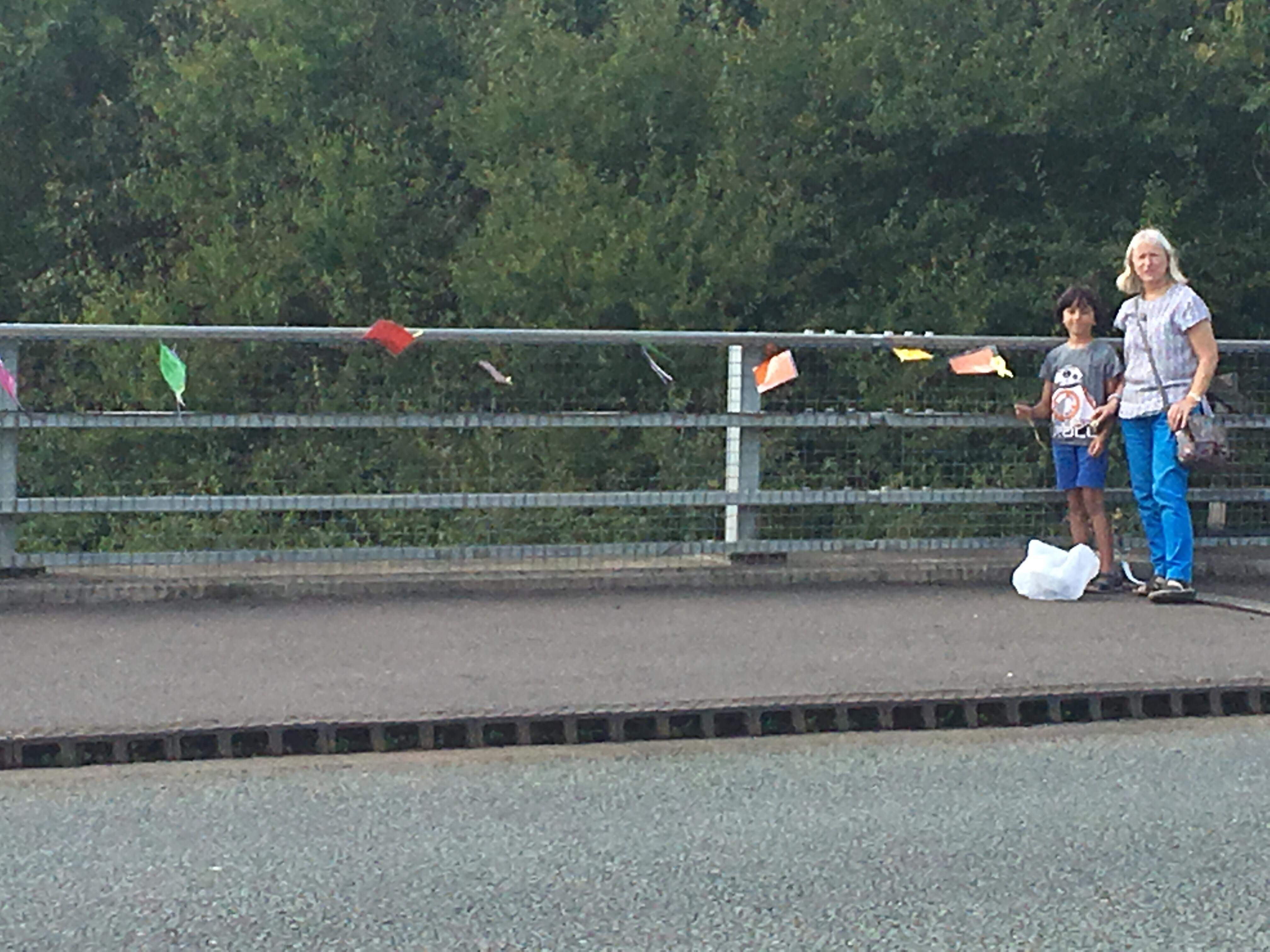 Unwisely, just six days later, the Road Authority removed the messages, citing concerns that they could be a distraction to drivers. This occurred while Charlotte was in the hospital and sparked a media storm that the authorities couldn’t ignore. Criticism came from the MP, local and national radio stations, and newspapers. Once Charlotte was discharged, she was interviewed by the press and radio on the matter. Eventually, the authorities had to yield to public sentiment and common sense. As a result, eight professionally designed messages will now be displayed on the bridge, with the possibility of expanding this initiative to other areas facing similar challenges. That’s my girl!
Newspaper article: Charlotte-Bridge
Reminisce: Quite a while ago, as a Year 3 teacher in Wigston, I had a child transfer into my class from an inner-city school. He couldn’t read and didn’t know basic phonetics. It soon became clear that he was just as bright as the other children in the class and, though shy, he had a pleasant nature that you just couldn’t help but warm to. Determined to bring his reading up to speed, I kept him in at lunchtime three times a week for 1:1 tuition throughout the rest of the year. He never complained about missing his lunchtime freedom, and I enjoyed our chats.
When I met his parents, they were supportive and asked if there was anything they could do to help with his reading. Besides ensuring that he had half an hour each night with his class reader, I suggested they subscribe to the Beano comic and read it with him so they could enjoy his progress together. By the end of the year, he was reading as well as any of the children in the class.
On the final school day, as is customary, the children often bring a small present for their teacher as a thank you (courtesy of the parents). That year, after the children had left for the summer holidays, I was stacking chairs in the classroom with the caretaker and headteacher when the lad returned, clutching a little parcel. I assumed his parents had bought a gift as an afterthought, after seeing what the other children had done. As I thanked him, he asked me, “Do you know what the best thing about this year was?”
Thinking I was about to receive some praise, and with witnesses present, I eagerly asked, “No, what’s that?”
“Reading the Beano,” he said. “The Beano taught me how to read. Without the Beano, I wouldn’t have been able to read.”
Deflated, I smiled and told him I was glad to hear that and wished him well in the future.
“There you are, boss,” said the caretaker to the headteacher. “Lots of money to be saved there, get rid of the teachers and just subscribe the kids to the Beano!”
 Palmer Family
Leave a comment