21st March 2016
Last night, we shifted to a new berth, just a mile or so across the gulf, trading Jordan for Israel.
The day began with a 5:30 am wake-up call, followed by a quick shower and an even quicker breakfast. Armed with our passports and embarkation cards, we were at Israeli immigration control by 7:15 am. The officials were thorough yet polite and efficient, and before long, we were settled on the coach, ready to depart.
We set off on time for our three-hour journey north, tracing the rift valley that separates Israel from Jordan.
Unlike the other surrounding Arab nations, these two countries have managed to maintain cordial relations, thanks to some enlightened diplomacy. It was we Brits, of course, who decided the border between them, true to form, with a straight line up the rift valley. Naturally, this caused an issue. Several Israeli farms ended up beyond the border. But instead of squabbling, the late King Hussein of Jordan brokered a pragmatic deal: the border shifted to include the farms, and in exchange, Israel agreed to supply Jordan with drinking water, a much-needed resource. This arrangement remains in place today, to everyone’s satisfaction.
Yesterday, we travelled along the valley from the Jordanian side, high up in the mountains. Today, we followed the same valley but hugged the valley floor, beneath the mountains on the Israeli side. The two ranges, just a few miles apart, towered majestically on either side. The only evidence of a border was a flimsy wire fence, with no sign of military presence, a remarkable testament to mutual trust.
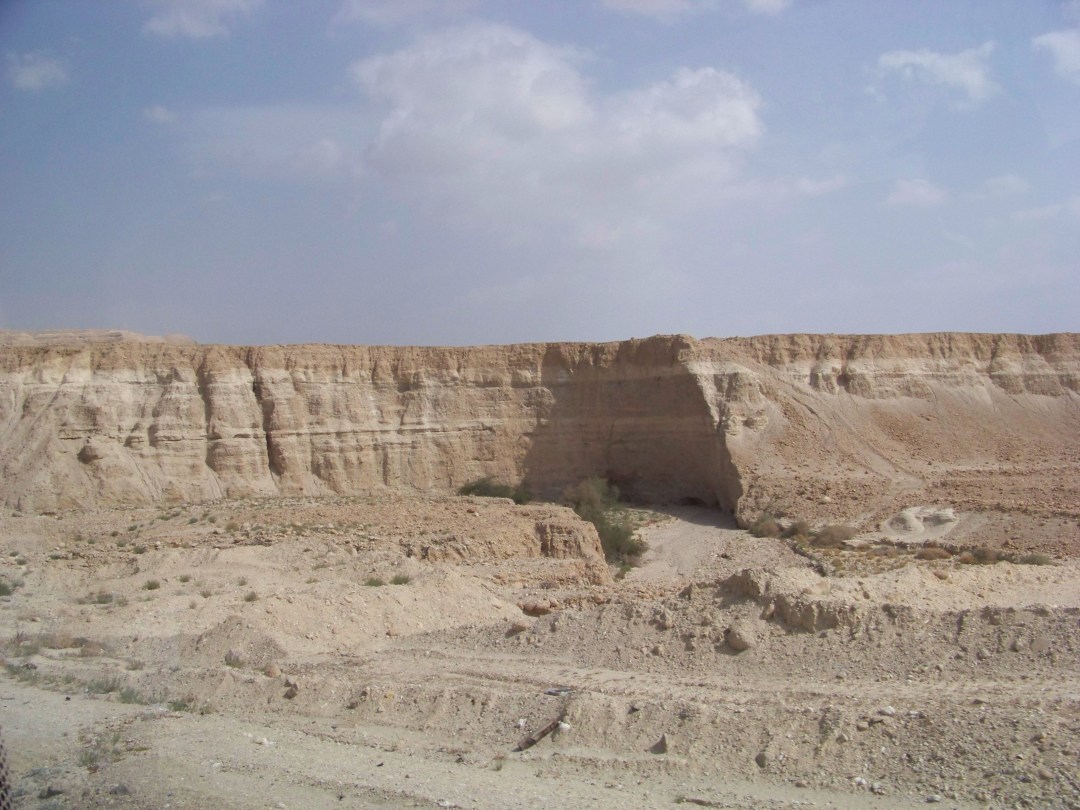
We journeyed through a predominantly desert landscape, punctuated by the occasional kibbutz, village, or factory. These were interspersed with stretches of sand and rock, breaking the monotony of the terrain. The date palm plantations provided a refreshing splash of green amidst the arid backdrop. The Israelis have truly mastered the art of making the desert productive; fields of vegetables are hidden beneath acres of netting, both to shield them from the relentless sun and to conserve precious water.
Around halfway through our journey, we stopped for a break at a combined restaurant and petrol station. Sharing the facilities with us were several other buses, including one carrying soldiers returning from their weekly home leave, which runs from Thursday to Sunday. These 18–21-year-olds were serving their National Service, each with a machine gun slung casually over their shoulder. There was an equal mix of men and women among them. They looked smart and confident but without a hint of intimidation. Remarkably, the locals paid them no heed; it seemed utterly normal. Yet, to an outsider, it was anything but. However, not living here, I’m in no position to judge, so I won’t.
Continuing our journey, we passed by the Dead Sea en route to the mountain fortress of Masada. This iconic stronghold was the site of one of the most dramatic episodes in Jewish history, a desperate resistance against the occupying Roman army. Masada was the last bastion of Jewish defiance during the Roman occupation, where around 1,000 rebels and their families held out against the might of the Roman legions.
To see the fortress from below is to marvel at its apparent impregnability; it seems impossible that it could ever have been conquered with the technology of the time. From the top, the sense of invincibility is even stronger. Yet, after numerous failed attempts, the Romans finally triumphed by constructing an enormous earth ramp, enabling them to haul a battering ram to breach the gates. Tragically, upon entering the fortress, they found no one left to subjugate. The defenders had chosen mass suicide over the prospect of a life in slavery.


Knowing its history, a visit to Masada must be deeply poignant for any Jew. Yet I imagine that any visitor, regardless of nationality or religion, cannot help but be moved when standing in this uniquely preserved monument.
The views from the top are, undeniably, astonishing. Beyond the breathtaking sight of the azure expanse of the Dead Sea far below lies the weight of history etched into the landscape. The massive Roman forts encircle the mountain, still clearly visible, silent witnesses to the siege that took place here. The towering cliffs, seemingly insurmountable, tell of the rebels’ determination. And most astounding of all is the enormous earth ramp, a monumental feat of engineering, constructed under constant bombardment of rocks, enabling the Romans to breach the gates.
For Israel, Masada stands as a majestic testament to an unyielding refusal to ‘give in,’ no matter the adversity.


Each year, the crème de la crème of the Israeli Army is chosen to join a select few regiments, with their induction ceremony taking place at the very summit of Masada. However, there’s a catch: they first have to prove their mettle by climbing the fortress via a steep pathway aptly named ‘the Snake’, all while laden with full battle gear and kit. Our guide, brimming with pride, shared that two of her sons had achieved this tremendous honour.
As for us? Well, we took the cable car.


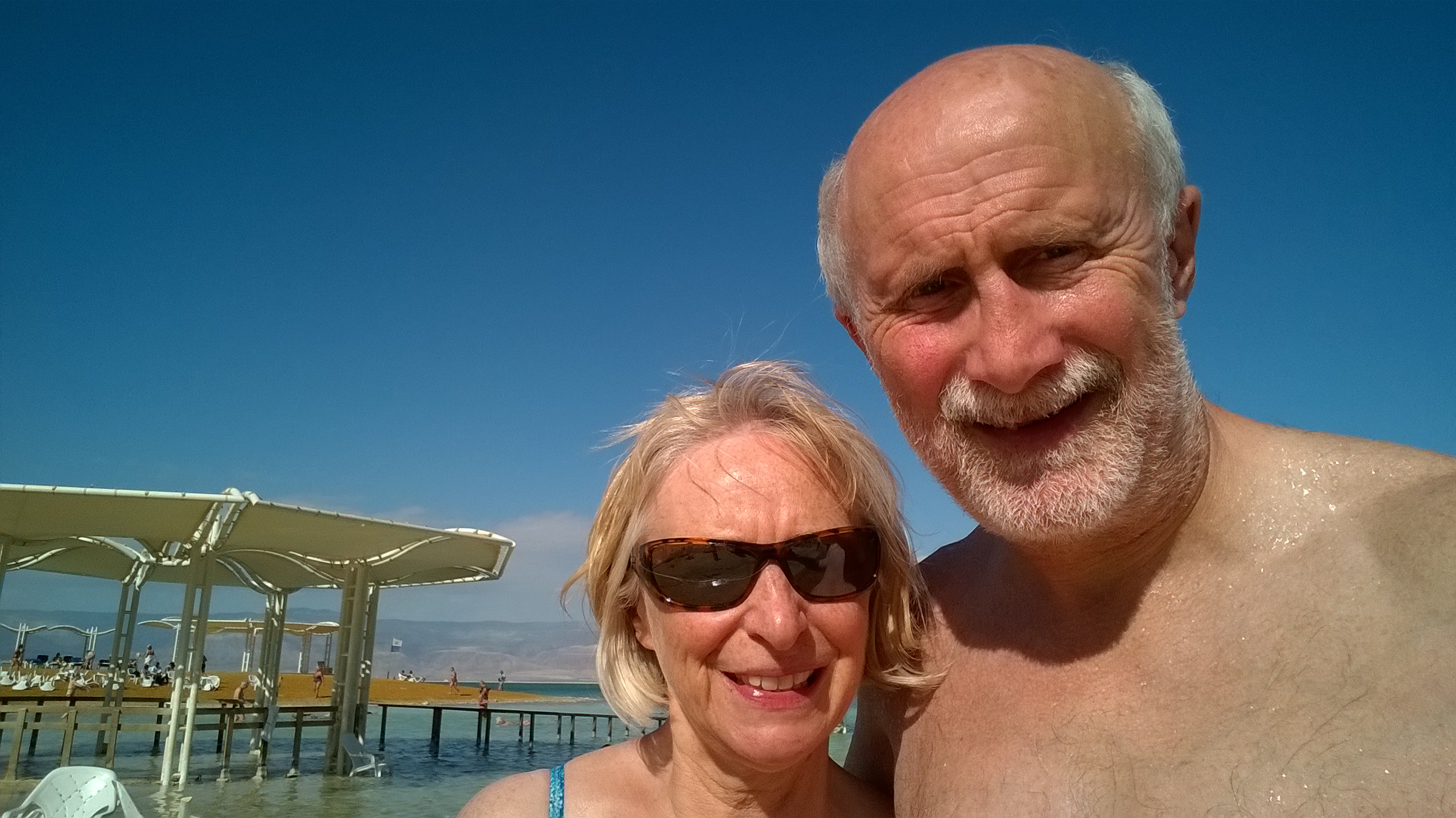
From Masada, we made our way back to the Dead Sea, where a sumptuous buffet lunch awaited us at a hotel perched right on the lake’s edge. Sue and I shared a bottle of red wine, which set the tone for a very pleasant afternoon splashing about in the famously briny waters.
What can I say about swimming in this flooded salt cellar? It’s warm. It’s salty. And, if you’re daft enough to get it in your eyes, it stings like hell. You float effortlessly, dispersing just 20 centimetres of water, but here’s the catch: it’s practically impossible to stand up in anything over 50 centimetres of depth. Try to plant your feet and you’ll flip over like an awkward sea otter (and trust me, you don’t want to go face-first).
But once you get the hang of it, it’s magic. It’s relaxing. It’s utterly wonderful.


Sue and I spent nearly two hours floating around in the stuff. They say it’s exceptionally good for your health, so I suppose we’re now officially ‘good to go!’


The three-hour journey back included a single toilet break and saw us reboard the ship under the cover of darkness at 7:30 pm. The twinkling lights of Eilat looked rather inviting, but with ‘Last Aboard’ set for 10:30 pm and us feeling thoroughly bushed (despite our newfound status as paragons of peak healthy fitness), we chose a swift evening meal, a bit of TV in the cabin, and an early night.
 Palmer Family
Leave a comment