19th May 2015
We met our driver for the day at 8 am after enjoying another full breakfast and a good night’s sleep. We planned to visit Tonle Sap, Cambodia’s largest lake. While the dry season is ideal for exploring temples, it’s perhaps less suited to visiting water features. We had been told that the lake was currently just a fraction of its usual size during the rainy season. However, having explored the best of the myriad of temples in the area, we were ready for a change of scenery.
Quad biking was off the agenda without the children, and waterfall adventures were similarly out of the question. So, a walk along a dried-up lakebed sounded like an intriguing alternative.
The drive to the lake took half an hour along bumpy countryside roads. Along the way, we passed a few hot and uncomfortable tourists rattling along in tuk-tuks. At our age, we greatly appreciate the comfort of an air-conditioned vehicle. We’ve sweated, choked, and bounced in tuk-tuks during past adventures, and that’s where those experiences will remain, in memory.
We made a brief stop en route so our driver could purchase our boat tickets. Soon, we arrived at the riverside quay where we would board. Across the river, we noticed significant development work underway. A large marina and surrounding luxury villas seemed to be in the early stages of planning. It was clear that the many straw huts, small shops, and humble restaurants currently lining the bank might eventually give way to this wave of modernisation.


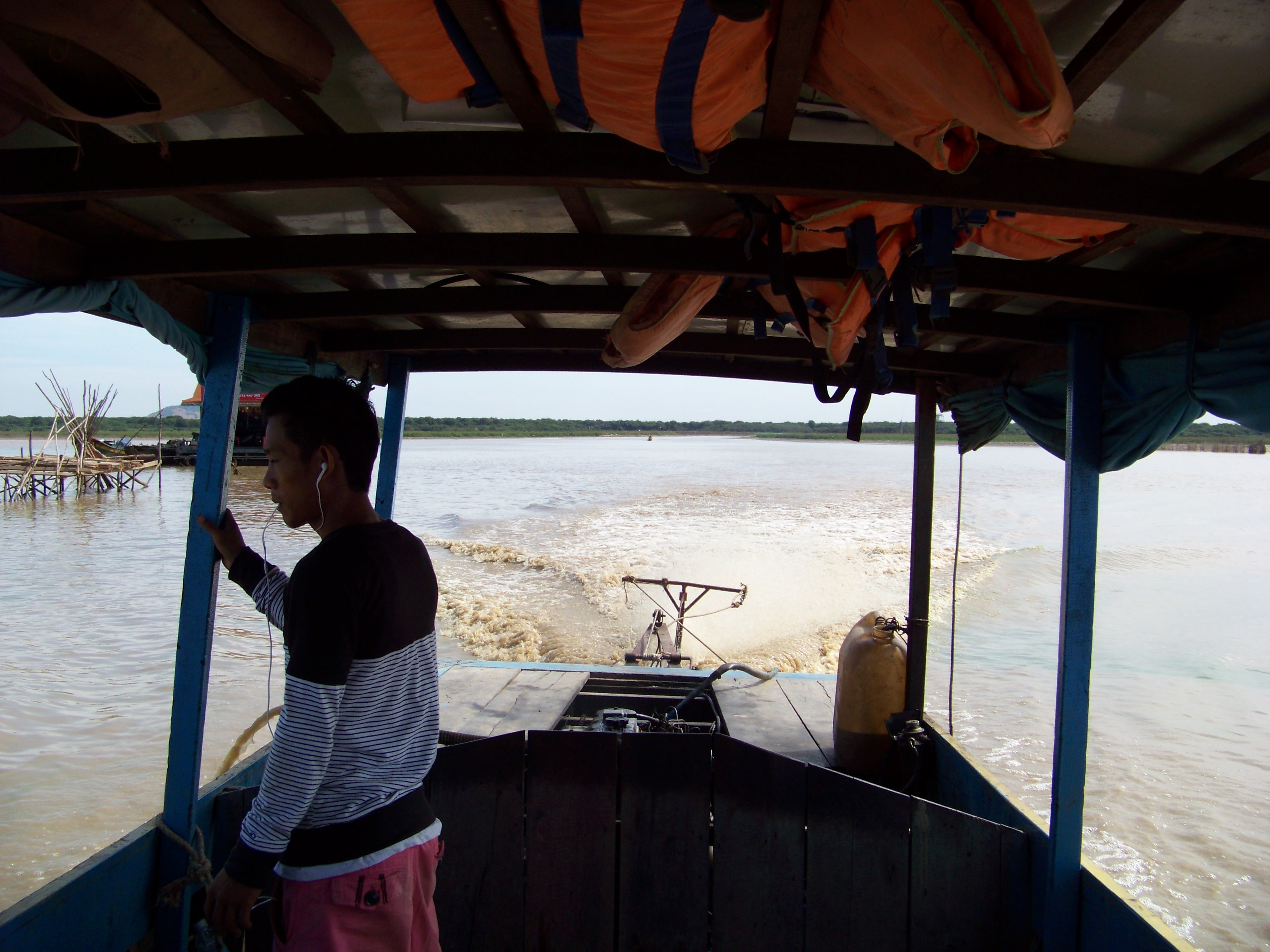
As with our mode of transport from the city, we were the only passengers on our boat. The crew consisted of three members, and while life jackets were provided, we opted to sit on them rather than endure the discomfort of the cane seats. One of the crew spoke decent English, which offered some reassurance that our cries for help would be understood in the unlikely event of an emergency.
The lake was 3 km upriver, and we set off cautiously. A slim local craft sped past us, clearly on an urgent mission. Other tourists were also navigating the river; some caught up with us, while others, who had set off earlier, were already on their return journey.
The water was a muddy brown, and according to our guide, it was 8 metres below its peak flood level. He pointed out the watermarks on pylons along the riverbank as evidence. Grounding was a constant concern for the pilot, as the river was only about a metre deep. This was demonstrated when our guide plunged an oar into the water, pulling it out coated in mud.
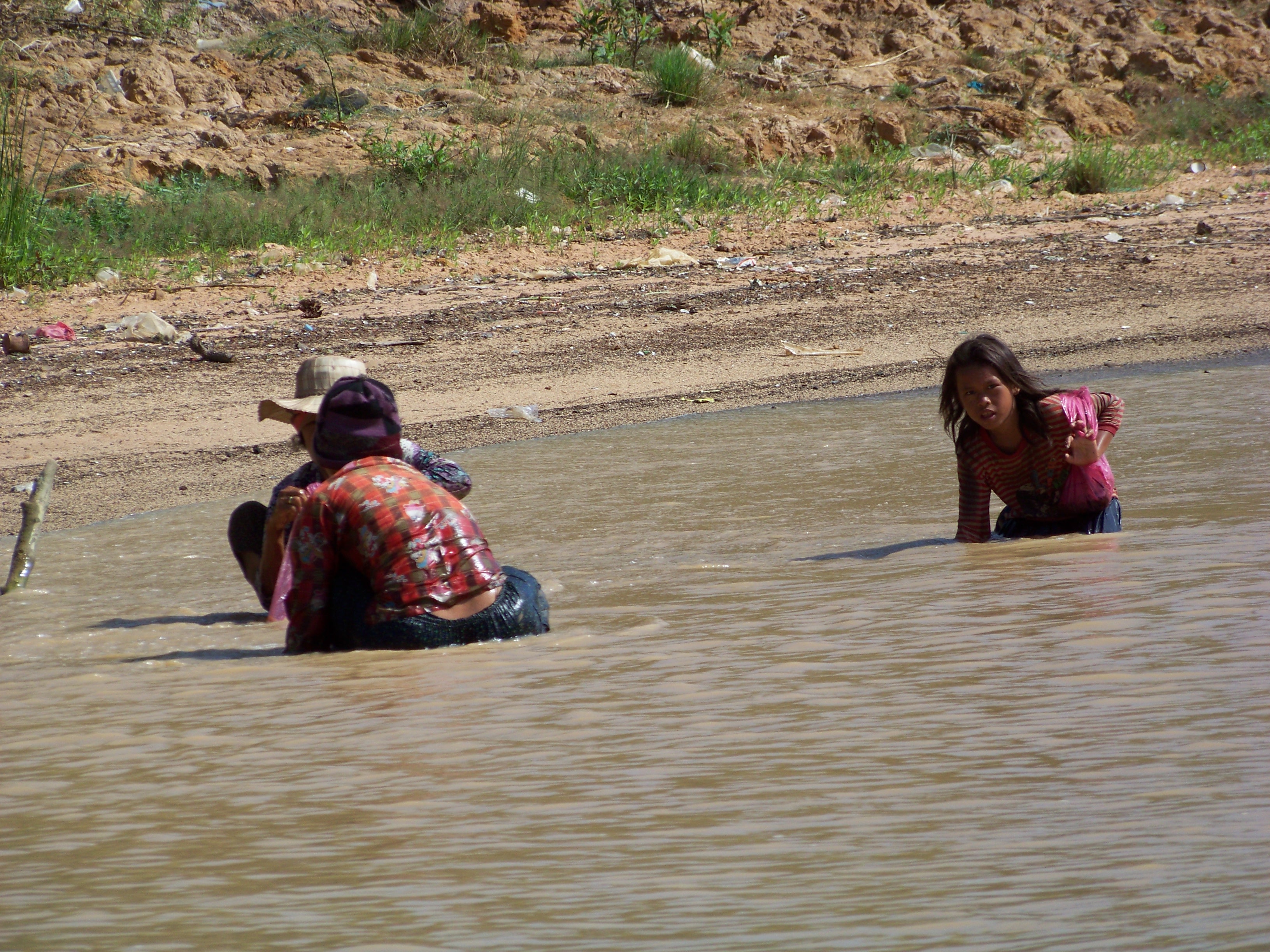
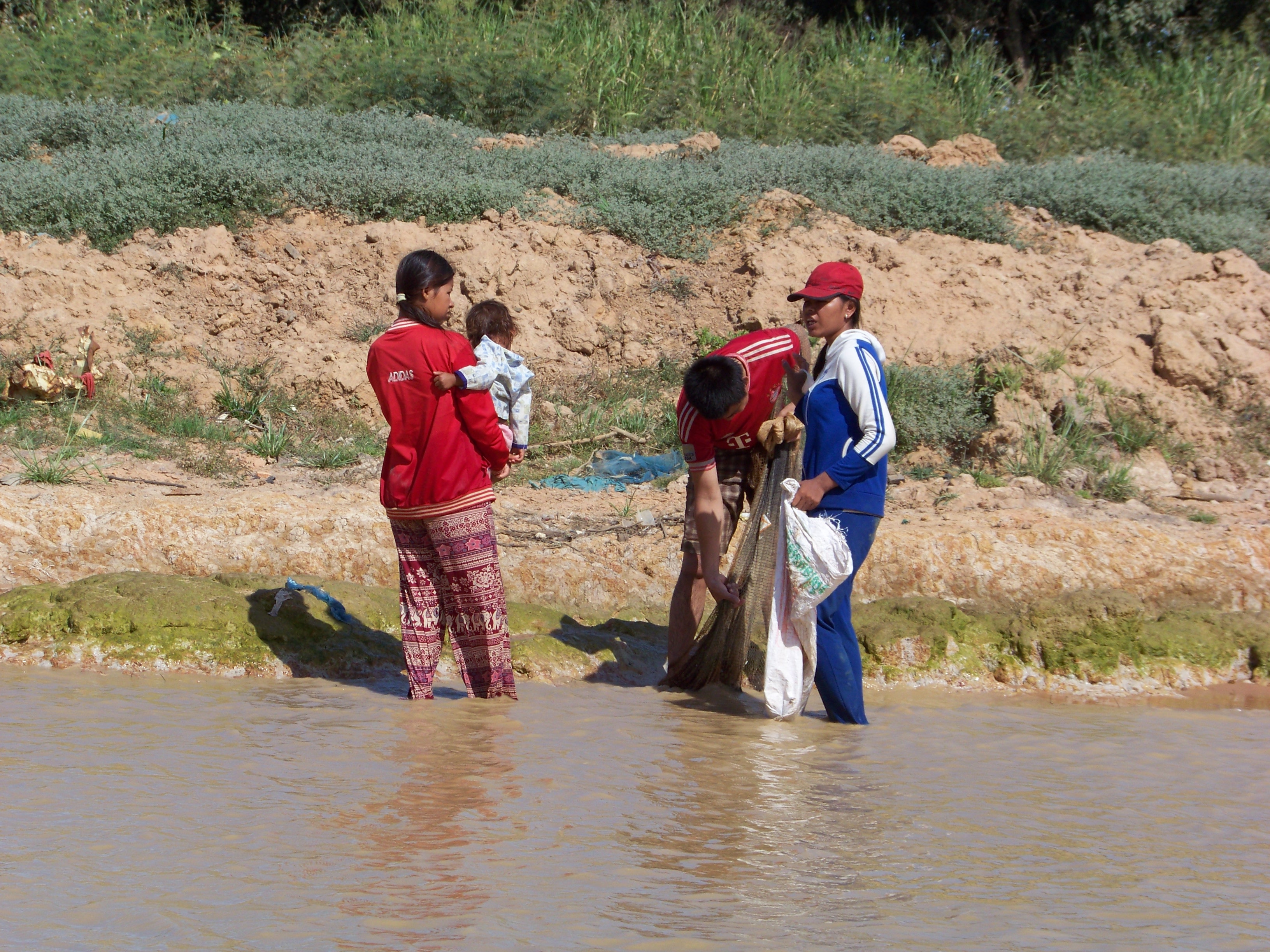
Despite the shallow waters, the fishermen were hard at work, casting their nets into the shallows. They appeared to be having some success; after wading just a few steps to the shore, they could be seen disentangling small fish from their nets.
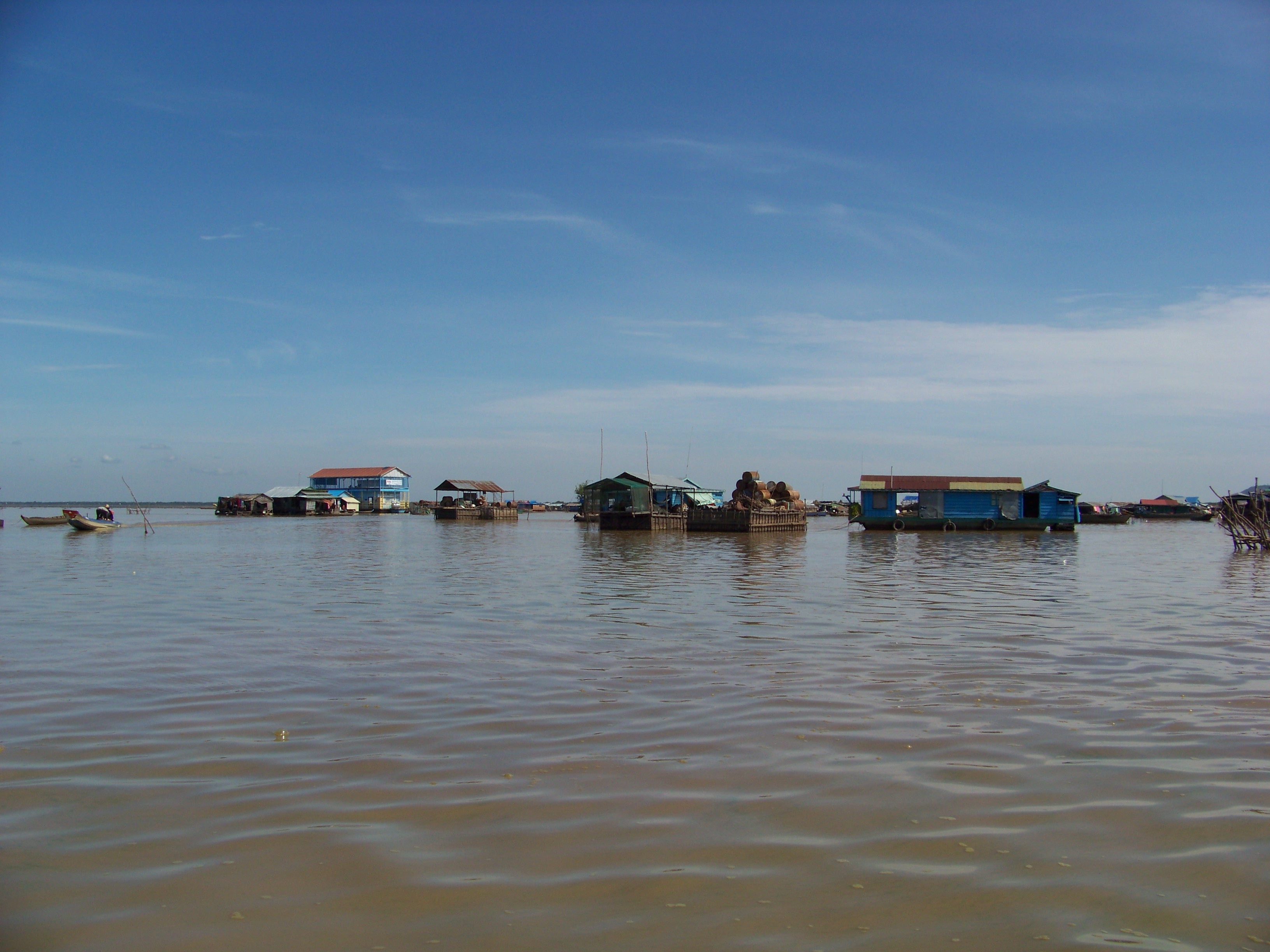
 When we finally entered the lake, the water turned a murky green, though it was surprisingly odourless. In the distance, we could just make out structures that gradually revealed themselves to be small villages of modest houseboats, anchored in what was now a drastically reduced body of water. Yet, the lake itself stretched out endlessly towards the horizon.
Our guide explained that these floating villages are relocated up to six times a year. During the rainy season, the houseboats were tethered to the tops of submerged trees as the lake expanded. At this time of year, however, they secured their homes by driving dozens of poles into the mud, much like stooks of corn, and tying their boats to them.
As we chugged along, we passed floating shops, churches, and schools, all part of this unique and adaptable community. It was fascinating to see how life continued to thrive despite the lake’s seasonal transformation.

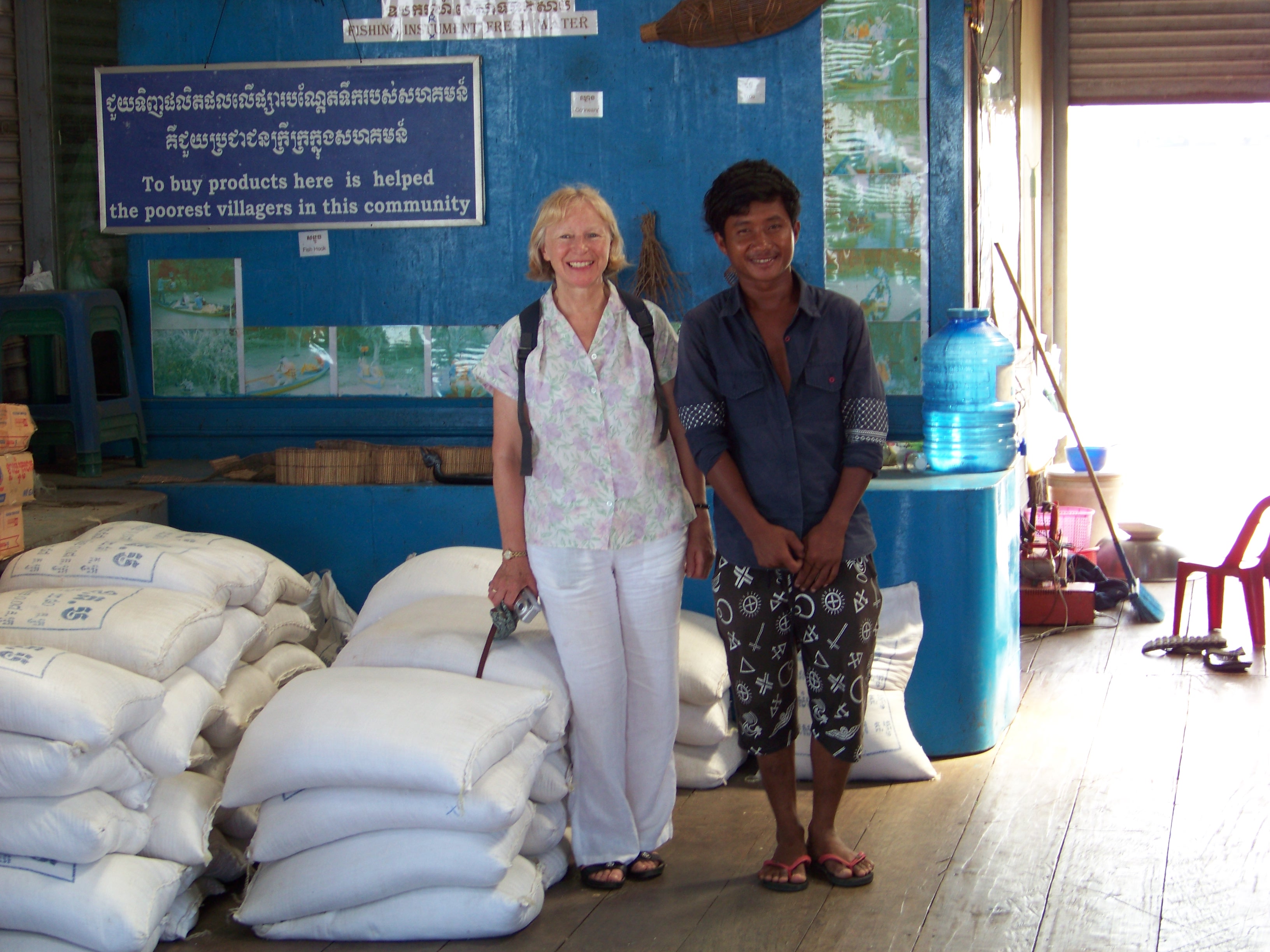
 We learned that the schools were funded by the local community and served as homes for some of the orphaned children, who lived and slept there. Tragically, many of these children succumbed to drowning or waterborne diseases. Our guide explained that we could support them by purchasing rice to help feed the students, so we decided to contribute.
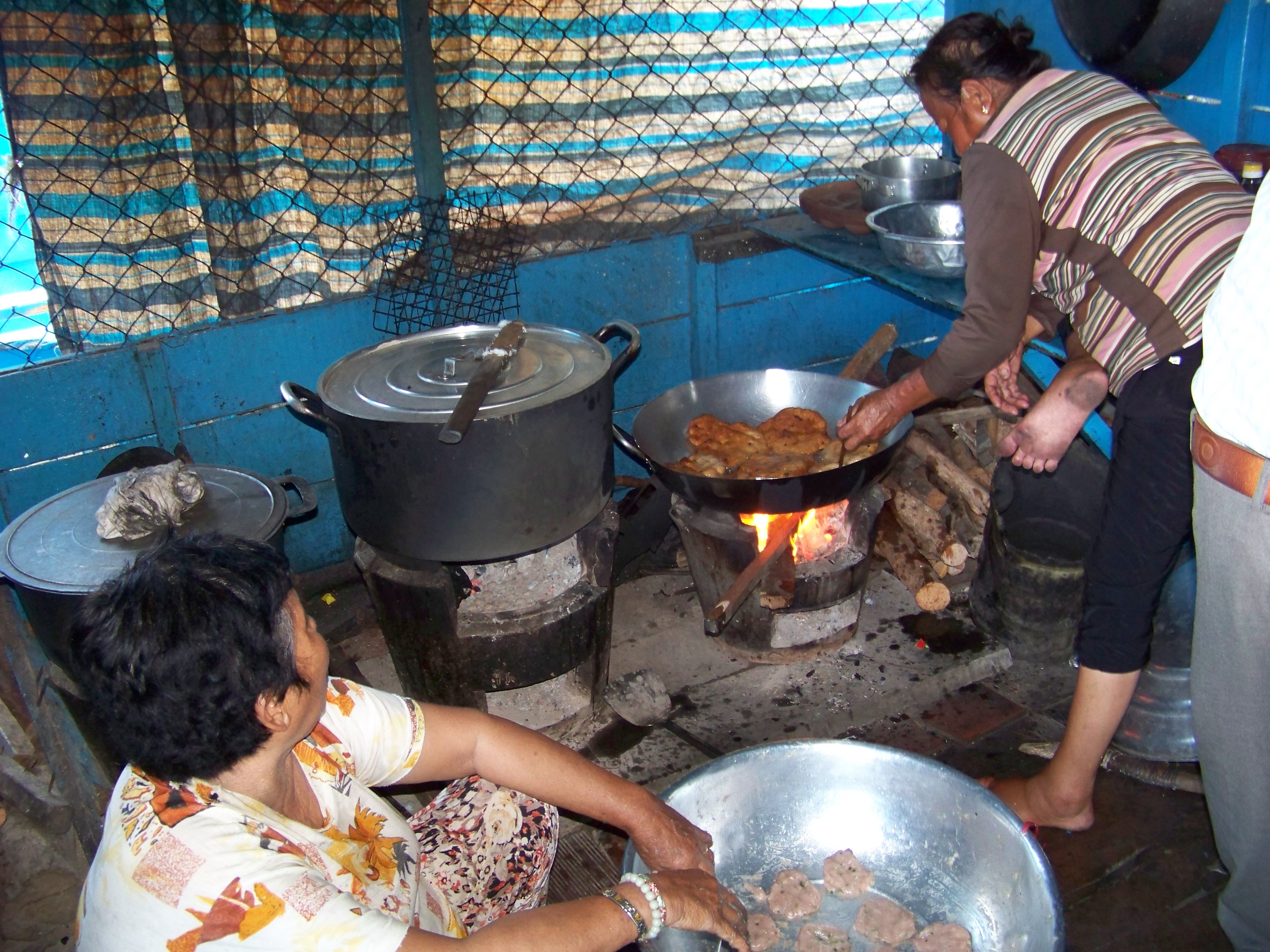
We made our way to a nearby village hut, where we bought a sack of rice for $30. Then, we headed to the school where our guide himself had been educated. Upon arrival, we handed the rice over to the cooks, who were busy at the stern of the building preparing a meal of rice and fish for the children.
In a gesture of hospitality, the women offered us a bowl of fish to taste. While it was flavourful, the texture was chewy, suggesting it had been made with dried fish rather than fresh. We nibbled politely but returned the bowls, mindful of the children who needed the food more than we did.

The school consisted of four classrooms spread across two platforms. The teachers were all volunteers, and none of them spoke English. Each class had a broad mix of ages, suggesting that placement was based on ability rather than age. We browsed through their books, and the quality of the writing, even by the five-year-olds, was impressive. However, the teaching seemed to revolve primarily around copying text from the whiteboard.
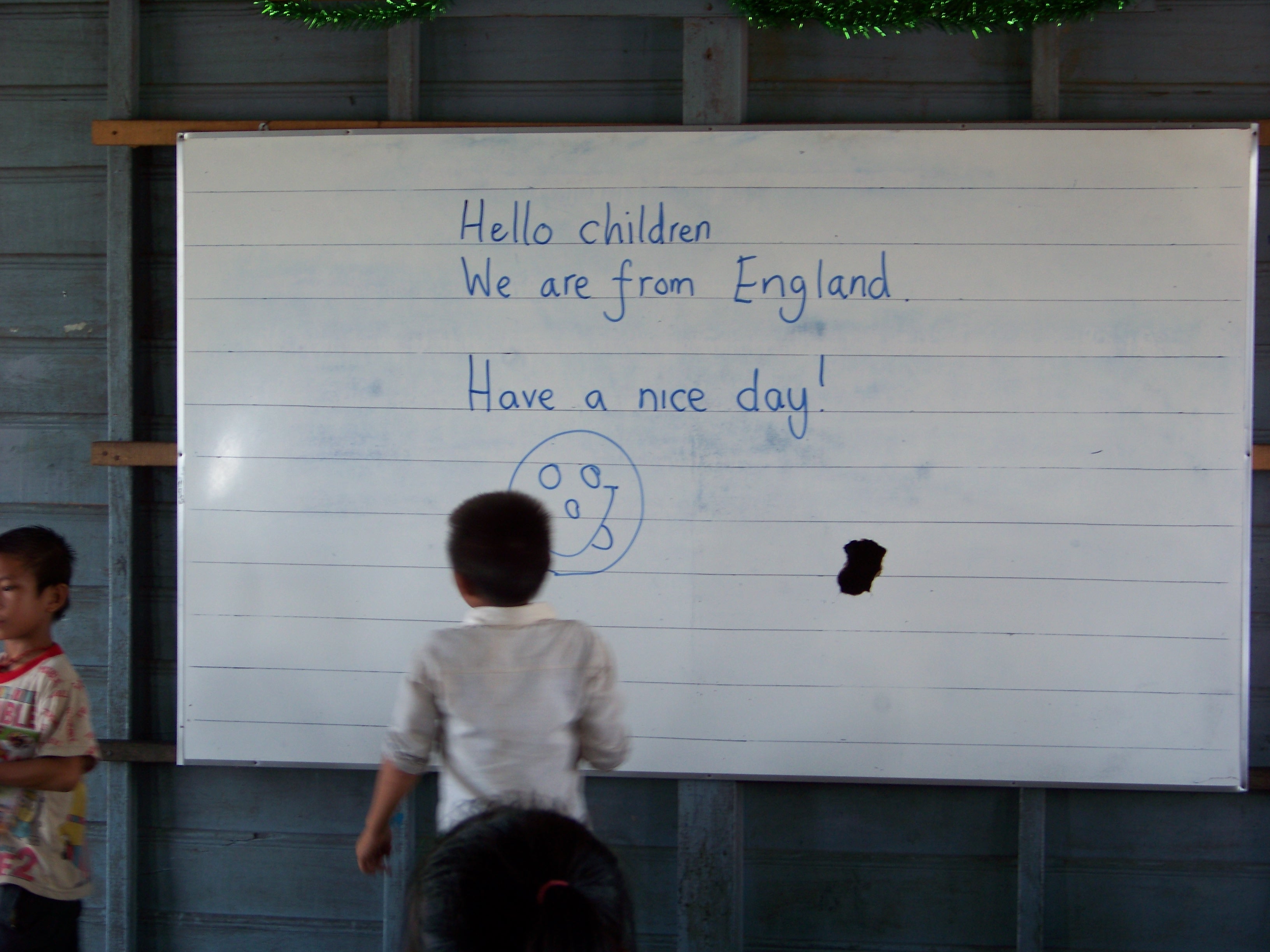
The children were delightful, smiling, engaged, and attentive despite the lack of variety in their lessons. In one classroom, we found a group of children sitting quietly without a teacher, patiently waiting for something to happen. I couldn’t resist stepping in. Opening the teacher’s desk, I rummaged for a board marker, but the first one I found didn’t work. A helpful child quickly produced another that did.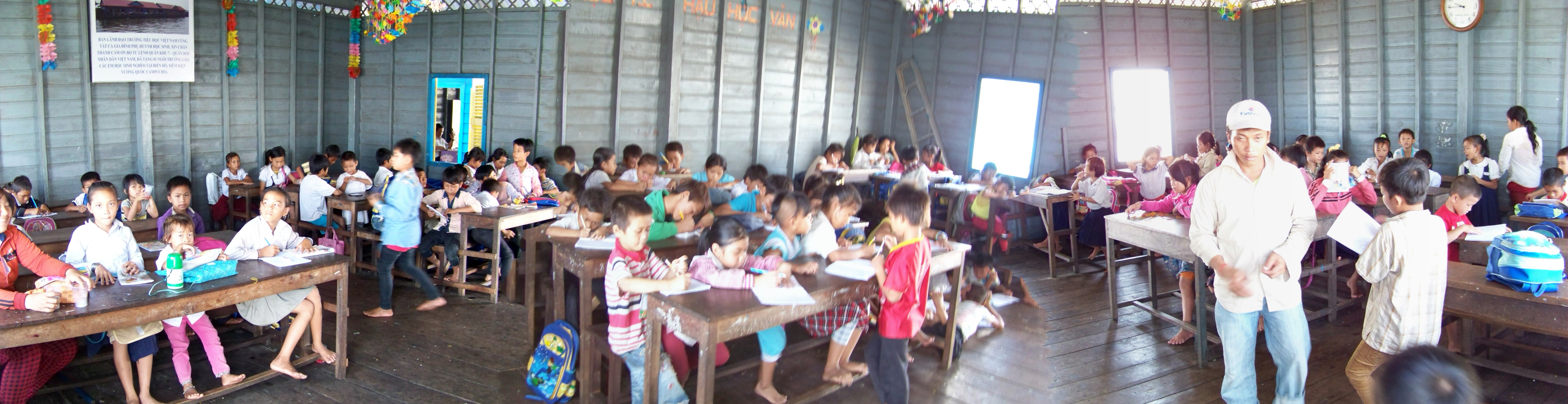
For a while, I tried teaching the class some basic English. A few of the children had a rudimentary grasp of phonics and made an admirable effort to interpret my writing. It was a heartwarming experience, and I would have loved to stay longer. However, spotting what we jokingly dubbed “the OFSTED boat” heading in our direction, we decided it was time to make a swift departure!
 Our next stop was a floating crocodile farm, where the locals sold crocodile meat and dried their skins. While Sue tried on a blouse in the small shop, I headed upstairs to take some photos of the lake and its surrounding buildings.
As we settled back on the boat, ready to leave, our guide approached us with a polite request. Some tourists were in trouble and needed assistance. No, it wasn’t another plea to buy a sack of rice; this time, their boat had broken down and sank, leaving them stranded with no way to return. We agreed to help, and the family of four, visiting from the Philippines, joined us for the journey back to the river quay.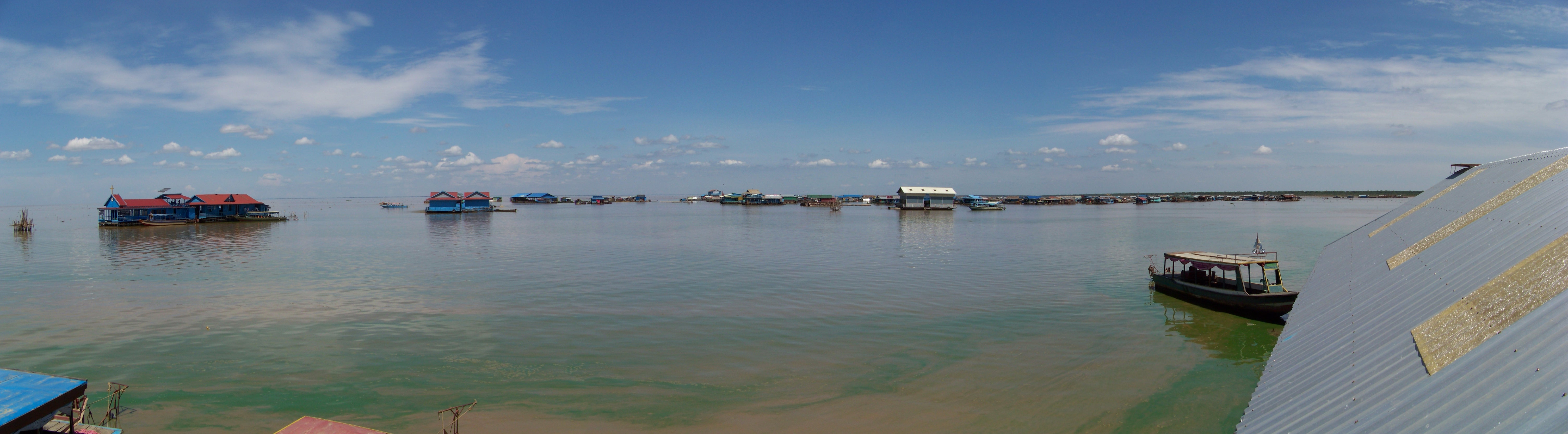
They were incredibly grateful for the rescue. On the way back, we passed their half-submerged craft and its rather forlorn skipper, who was laboriously pushing the vessel along in the metre-deep water. It was a humbling reminder of how precarious life on the lake could be.

 Back on land, Sue purchased another trinket from one of the local huts. The vendor foolishly tried to short-change her, clearly unaware of Sue’s sharp eye for detail. After resolving that little mishap, we found a nearby restaurant to enjoy some drinks before meeting our driver. We asked him to take us to a nice restaurant for dinner, and half an hour later, we were seated in a more refined establishment, enjoying a much-needed meal.
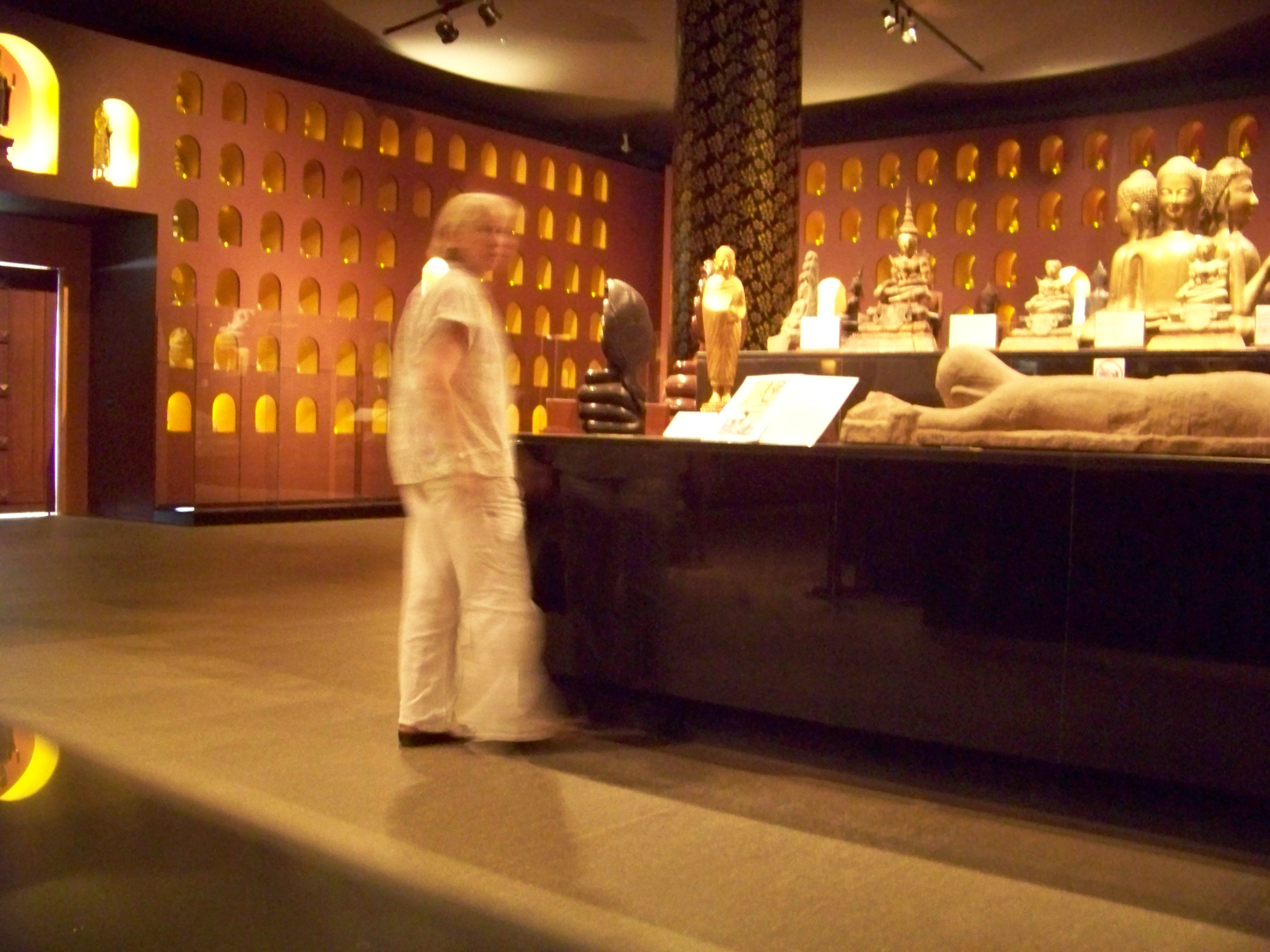
Having filled our stomachs, we asked our driver to take us to the National Museum in Siem Reap. With the temperature soaring, the promise of air conditioning made it an easy choice. Half an hour later, we were cooling off and immersing ourselves in the rich history and culture of Cambodia. We spent an engaging hour and a half exploring the museum’s various exhibits before heading back to find our driver dozing peacefully at the entrance. Outside, it had started to rain.
By the time we returned to the hotel, a full-blown thunderstorm was rattling around the skies, adding an atmospheric conclusion to our eventful day.
 After the rain eased, we took a brief stroll down one of the side streets near the hotel to explore the local area. However, from a tourist’s perspective, it was rather underwhelming, so we soon returned and opted to have our evening meal in the hotel bar.
After dinner, we struck up a conversation with a couple from Cardiff who had just arrived from Ho Chi Minh City. Keen to gather tips, we picked their brains about what to expect and do there. Naturally, being Welsh, the discussion lingered on the noble game of rugby for quite some time before drifting to other, less significant topics. It was close to 11 pm by the time we finally retired to our room, bringing the day to a pleasant close.
 Palmer Family
Leave a comment